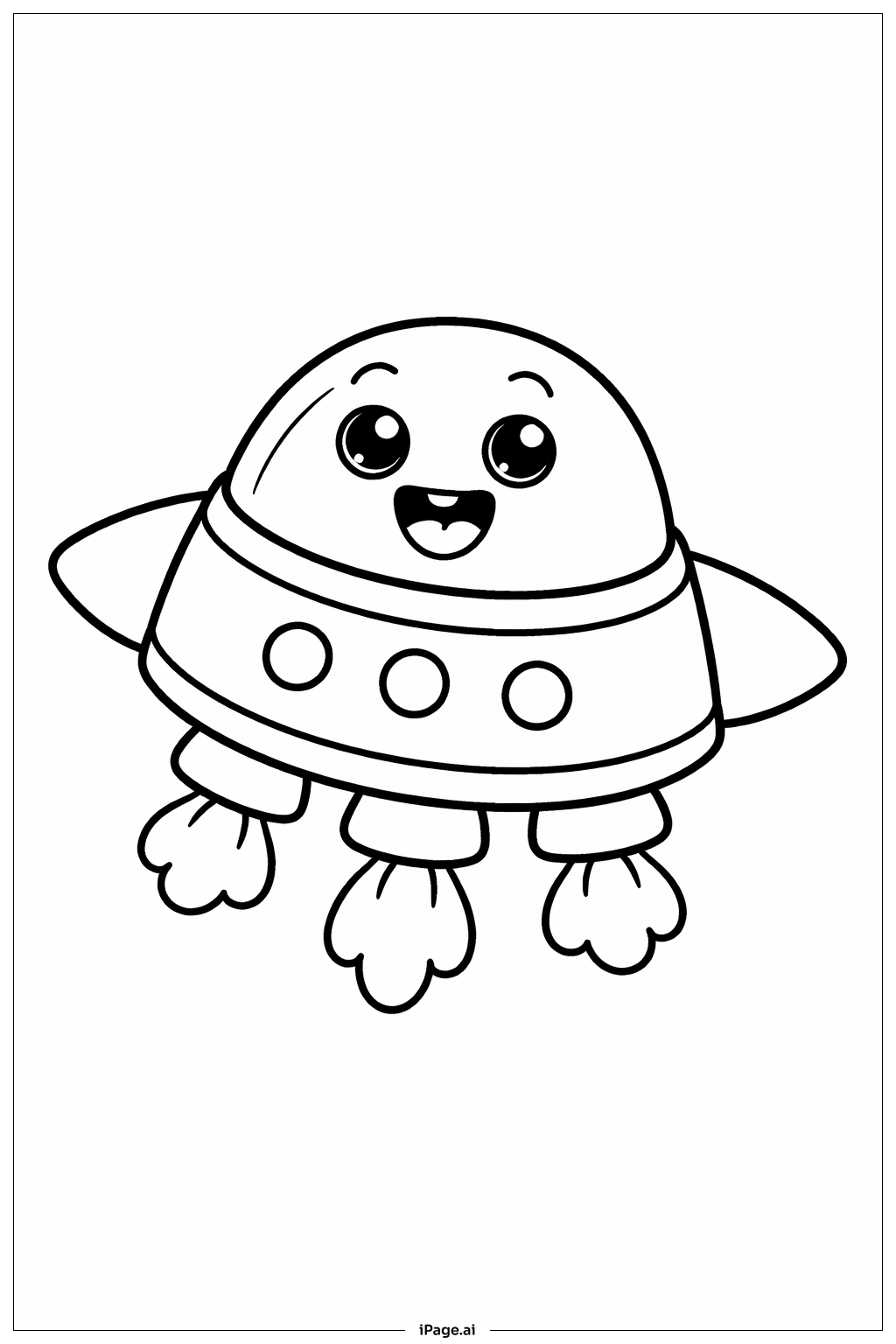
Coloring tips: How to color Smiling Spaceship coloring page well?
For the spaceship body, try bright metallic colors like silver, gray, or light blue to create a futuristic look. The cockpit dome can be colored with light blue or transparent cyan to resemble glass. Make the eyes white with black or blue pupils to bring the friendly face to life. Color the smile red or pink for a warm, welcoming expression. The rocket flames should be vibrant orange, yellow, and red, blending from yellow at the center to red at the edges for realistic fire effects. Use light blue or white for the clouds, and color the background sky in deep blue or purple. Add yellow or gold to the stars for sparkle. The landing legs can be darker gray or black for contrast. Experiment with shading to make the spaceship look three-dimensional and shiny.
Coloring challenges: Which parts are difficult to color and need attention for Smiling Spaceship coloring page?
• Flame Details: The rocket exhaust flames require careful blending of multiple warm colors including yellow, orange, and red. Young artists may find it challenging to create smooth color transitions that make the flames look realistic and dynamic. The flame shapes have curves and pointed tips that need steady hand control to stay within the lines.
• Circular Windows: The spaceship features several small circular windows that require precision coloring. Keeping colors inside these small round spaces can be difficult for younger children. Creating a glass-like effect with light blues or leaving them partially white to show reflection adds another layer of complexity that demands careful attention.
• Facial Expression Shading: While the smiling face is simple in design, adding depth to the eyes and mouth through shading techniques can be tricky. Creating highlights in the eyes to make them look glossy and alive, plus adding shadows around the smile to give it dimension, requires understanding of light and shadow that developing artists are still learning.
• Metallic Surface Effects: Achieving a realistic metallic appearance on the spaceship body involves strategic use of highlights and shadows. Artists need to leave some areas lighter or white to simulate shine while darkening others for depth. This technique of creating reflective surfaces is advanced and may frustrate children who are used to solid, even coloring.
• Background Integration: Balancing the colors of the clouds, sky, and stars so they complement rather than compete with the spaceship requires thoughtful color selection and planning before starting to color.
Benefits of coloring books: Advantages of drawing Smiling Spaceship coloring page
Coloring this Smiling Spaceship helps children develop fine motor skills as they carefully fill in the various shapes and details. The different sizes of areas, from large body sections to tiny stars, provide practice in hand-eye coordination and pencil control. The friendly face encourages emotional connection, making the activity more engaging and enjoyable. Working with the flame effects teaches color blending and introduces basic concepts of warm color families. The space theme stimulates imagination and curiosity about science, astronomy, and exploration. Children can create their own stories about where this happy spaceship is traveling. The circular windows and symmetrical design help develop spatial awareness and understanding of geometric shapes. Choosing colors for the metallic surfaces introduces concepts of light, reflection, and shading. Completing this detailed image builds patience, focus, and a sense of accomplishment that boosts confidence and self-esteem in young artists.