Coloring tips: How to color Historic Soccer Match coloring page well?
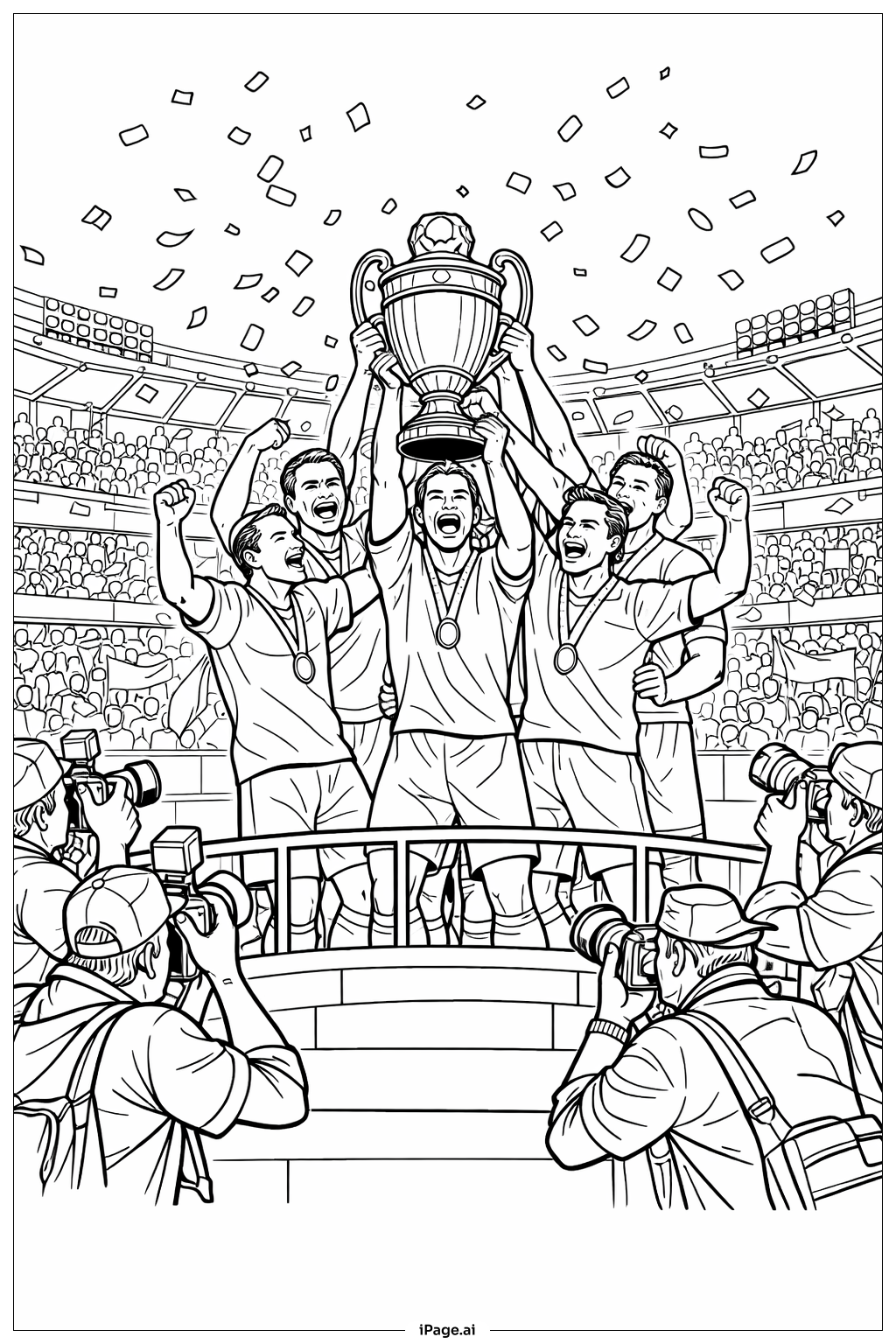
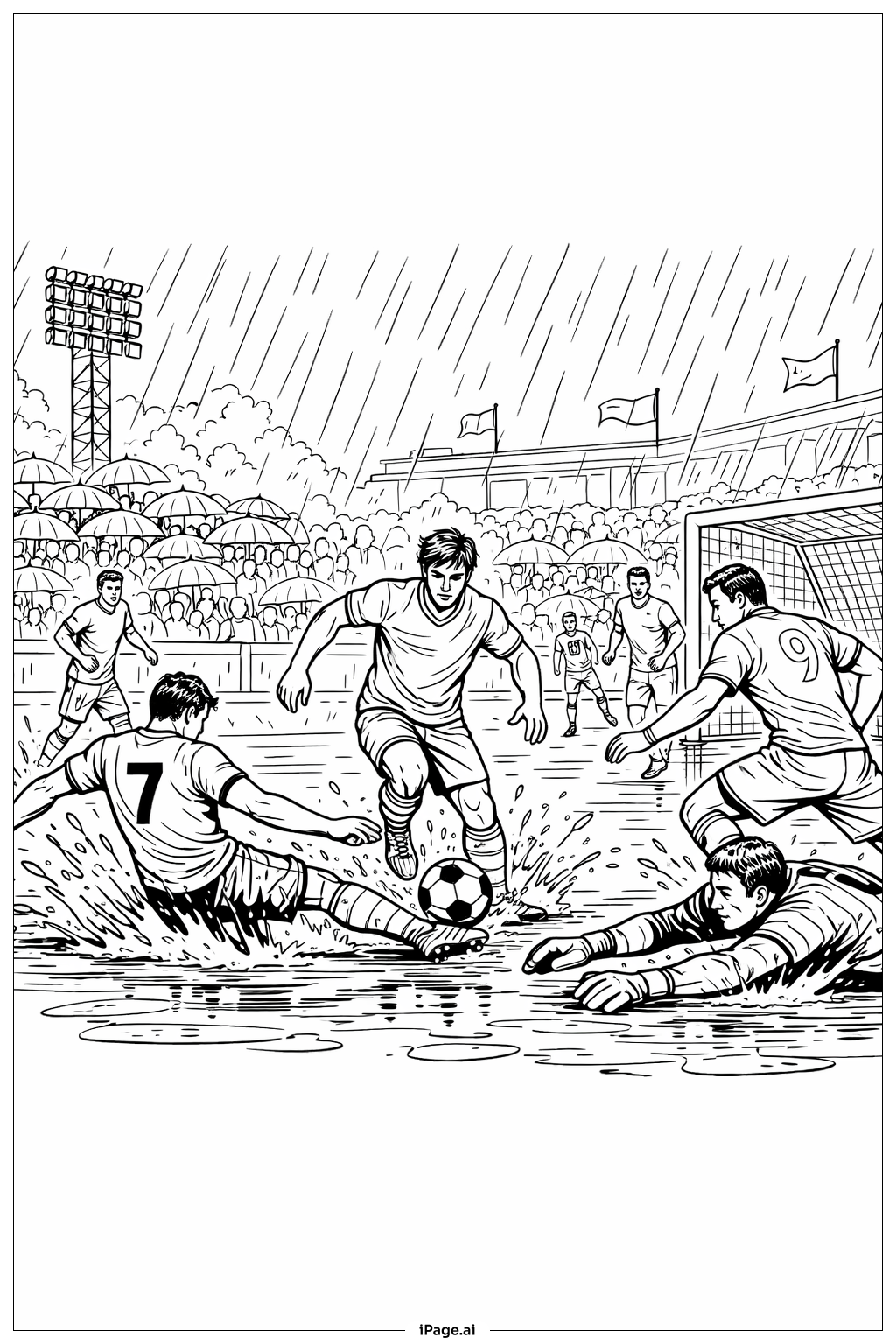
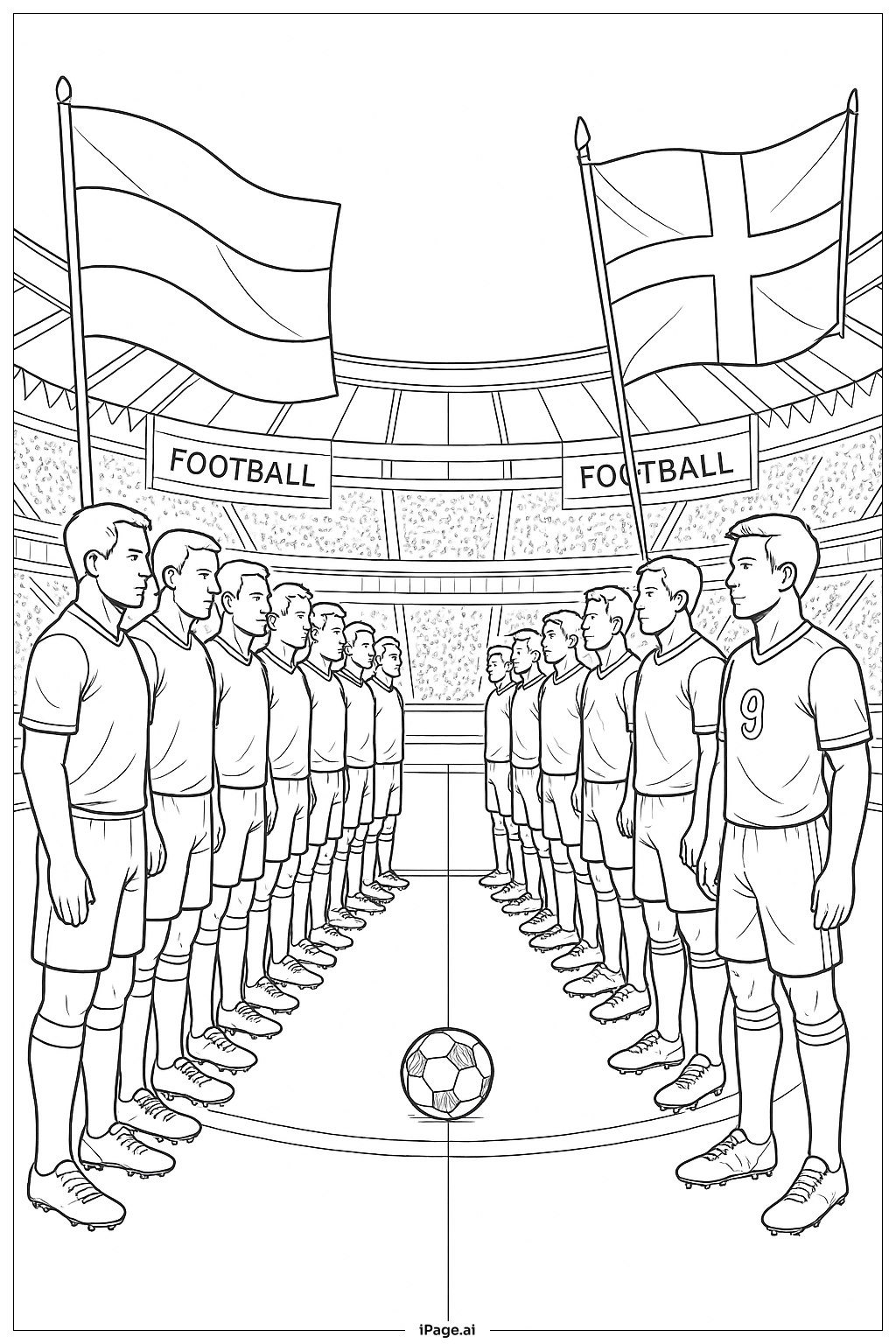
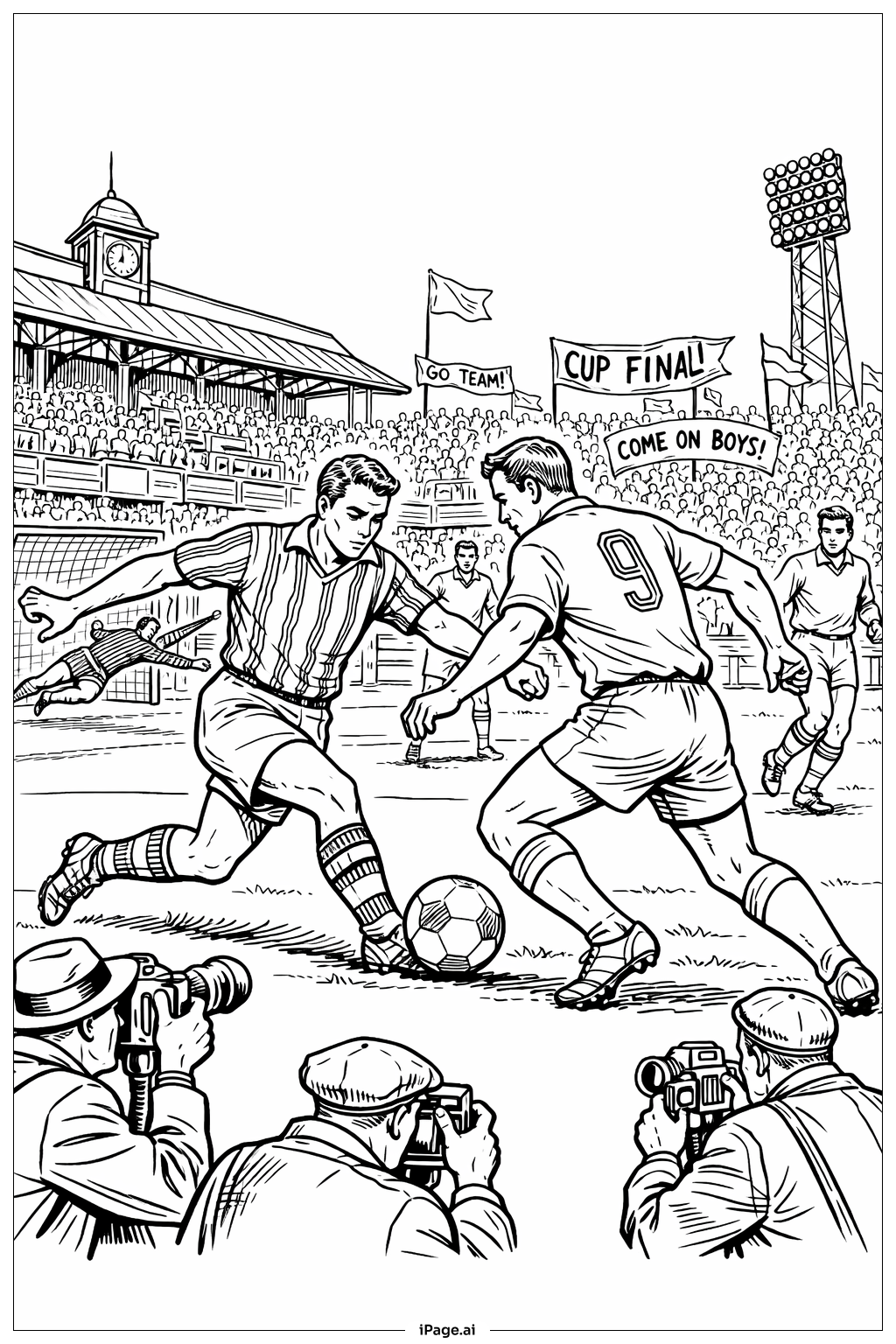
For the players' uniforms, choose contrasting team colors to make each athlete stand out. Traditional soccer colors like red, blue, green, or yellow work wonderfully for jerseys. Color the shorts in coordinating or contrasting shades. The soccer ball should feature the classic black and white pentagon pattern. For skin tones, use realistic shades like peach, tan, or brown. The crowd can be colored in multiple vibrant colors to show diversity and excitement, using reds, blues, greens, and yellows for their clothing. Consider coloring the stadium crowd in lighter shades to create depth and keep focus on the main players. The playing field can be a rich green, while you might add blue sky above the crowd for atmosphere.
Coloring challenges: Which parts are difficult to color and need attention for Historic Soccer Match coloring page?
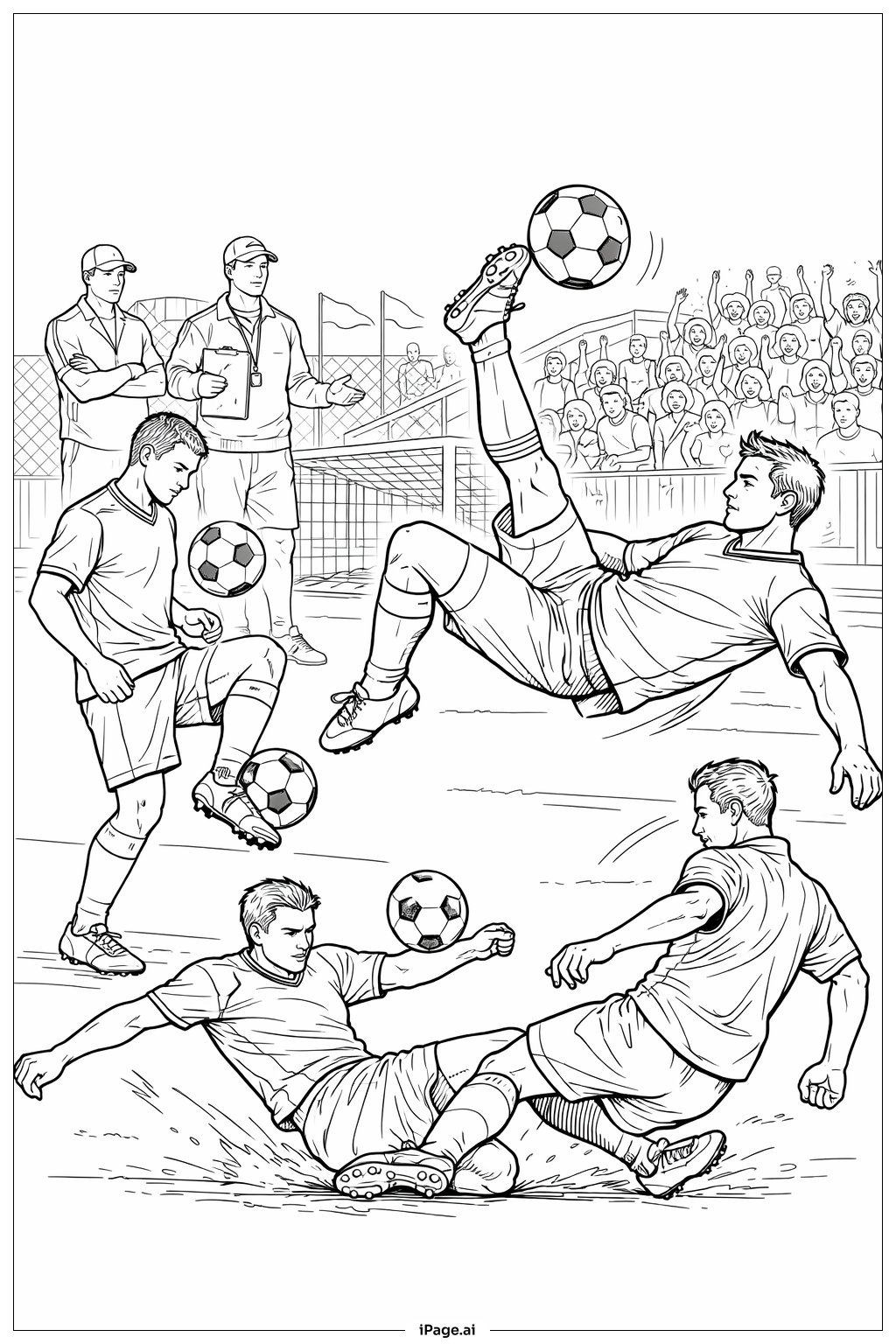
• Player Positioning and Body Angles: The scissor kick pose presents a challenge with the player's body twisted and inverted. Coloring within the lines of the legs, arms, and torso requires careful attention as these body parts overlap and create complex shapes. Young colorists may need to work slowly to distinguish where one limb ends and another begins, especially maintaining consistent color within the unusual angles.
• Uniform Details and Patterns: Soccer jerseys often feature stripes, numbers, and team emblems. This image includes clothing folds and shadows that create multiple small sections within the uniforms. Keeping colors neat within these detailed areas, especially around the collar, sleeves, and shorts, requires precision and patience. Children may find it challenging to color these small sections without crossing boundaries.
• Crowd Composition: The background spectators create a dense area with many small faces and raised arms packed together. Each figure needs individual attention, but the overlapping bodies make it difficult to distinguish separate people. Deciding on a color scheme that shows variety while maintaining visual harmony across dozens of tiny figures can be overwhelming for younger children.
• Soccer Ball Pattern: The traditional hexagon and pentagon pattern on the soccer ball requires careful color placement to achieve the iconic look. Alternating between colors while following the geometric shapes demands focus and fine motor control, especially given the ball's small size in the composition.
Benefits of coloring books: Advantages of drawing Historic Soccer Match coloring page
Coloring this historic soccer match scene helps children develop fine motor skills and hand-eye coordination through the detailed player poses and crowd elements. The dynamic action scene encourages creativity in color selection, allowing kids to design their own team uniforms and express their personal style. This image introduces children to sports culture and teamwork values while they color. The varying levels of detail, from large uniform areas to small crowd figures, accommodate different skill levels and build confidence. Working on the complex scissor kick pose helps children understand body movement and athletic ability. The crowd scene teaches about perspective and depth. Completing this exciting sports scene provides a sense of accomplishment and can spark interest in soccer and physical activity, promoting healthy lifestyle awareness.