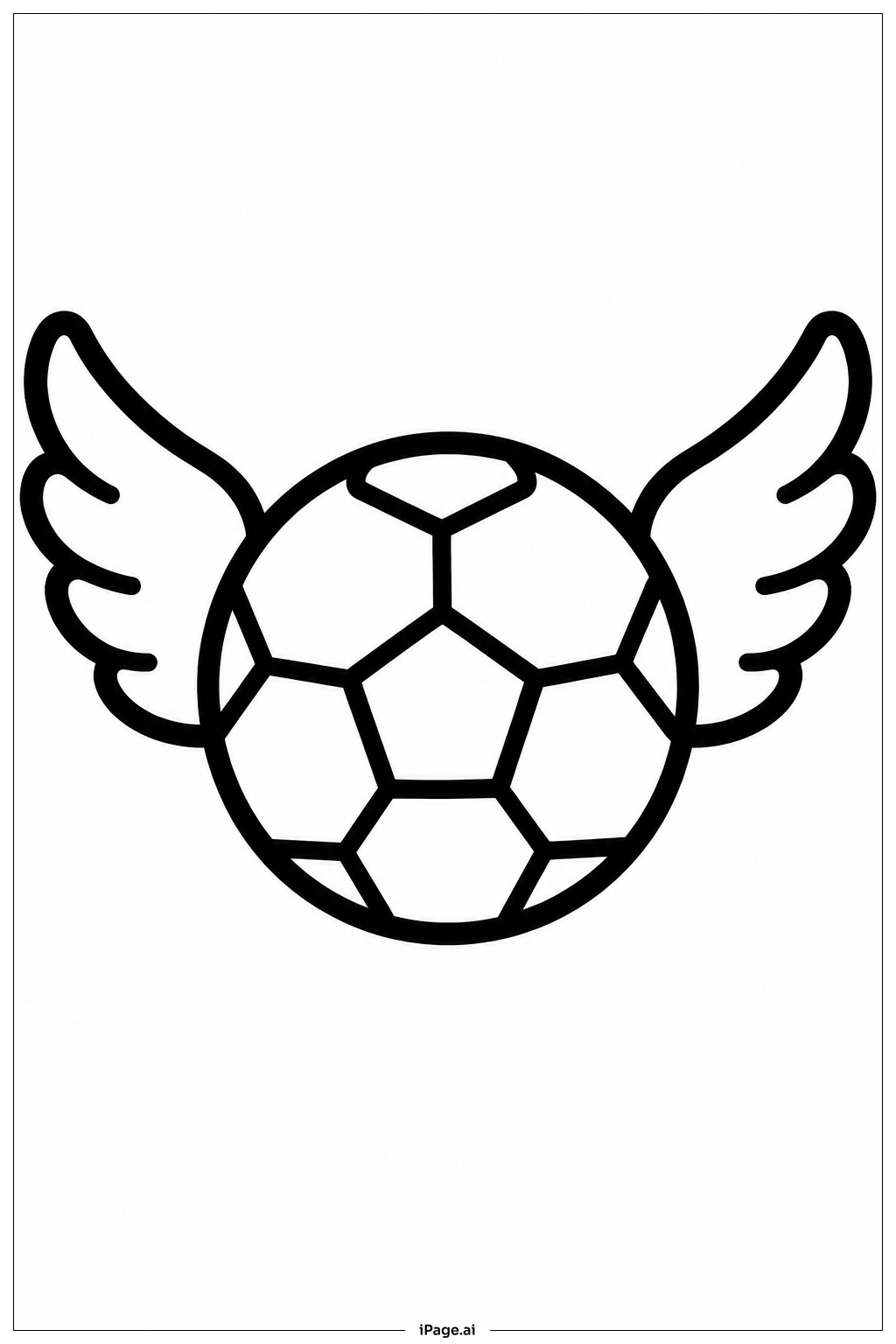
Coloring tips: How to color Soccer Ball With Wings coloring page well?
Start with the soccer ball in the center. The classic black and white look always works great, but you can also try bright colors like yellow, orange, or blue to make it stand out. For the pentagons and hexagons on the ball, use two alternating colors to keep the pattern clear and neat.
For the wings, think about the colors of real bird feathers, soft whites, creams, and light grays. You can also go bold with golden, fiery orange, or even rainbow-colored feathers to give the image a magical feel.
Shade the base of the feathers a little darker and lighten the tips to create a sense of depth. Adding a light blue or purple background can make the whole image look like the ball is soaring through the sky.
Use fine-tipped colored pencils or markers for the small feather details, and broader strokes for filling in the larger areas of the ball and wing shapes.
Coloring challenges: Which parts are difficult to color and need attention for Soccer Ball With Wings coloring page?
• Soccer Ball Panel Pattern: The hexagon and pentagon panels that cover the soccer ball follow a specific repeating pattern. Keeping track of which panels connect to which, and coloring them consistently without overlap or confusion, can be tricky. This requires careful attention and patience, especially where multiple panels meet at a single point.
• Feather Layering and Depth: Each wing is made up of many layers of feathers arranged from large at the bottom to smaller near the top. Coloring each layer in a slightly different shade to show depth and dimension is a real challenge. Without careful shading, the feathers can look flat and blend together.
• Consistent Wing Symmetry: Both wings need to look balanced and matching. If you use different colors or shading styles on each side, the image can feel uneven. Keeping both wings symmetrical in color and tone takes focus and planning before you begin.
• Fine Feather Edge Details: The edges of individual feathers have thin, delicate lines that define their shape. Staying within these fine lines without smudging or going over into neighboring feathers demands a steady hand and a sharp pencil or fine-tipped marker.
• Blending the Ball and Wings Together: Where the wings connect to the soccer ball, the two very different textures, smooth panels and soft feathers, meet in one spot. Making this transition look natural and visually pleasing without one element overpowering the other is one of the most difficult parts of coloring this image.
Benefits of coloring books: Advantages of drawing Soccer Ball With Wings coloring page
Coloring this Soccer Ball With Wings image offers a wide range of benefits for kids and young learners.
Working on the detailed feathers and ball panels helps build fine motor skills and improves hand control. Staying within the small, precise lines trains steady hand movements that are useful in writing and drawing.
The image also encourages creativity. Choosing colors for the wings and the ball lets children express their own style and imagination. There is no single right answer, which builds confidence and joy in the creative process.
Focusing on a detailed coloring page like this one helps children practice concentration and patience. Completing each feather, panel by panel, teaches them to work through a task step by step without rushing.
The combination of a soccer ball and wings also sparks imaginative thinking. Children may start telling stories about where the ball is flying or who it belongs to, which supports language development and storytelling skills.
Finally, finishing a complex and beautiful coloring page gives a strong sense of achievement. This boosts self-esteem and motivates kids to take on new creative challenges with enthusiasm.