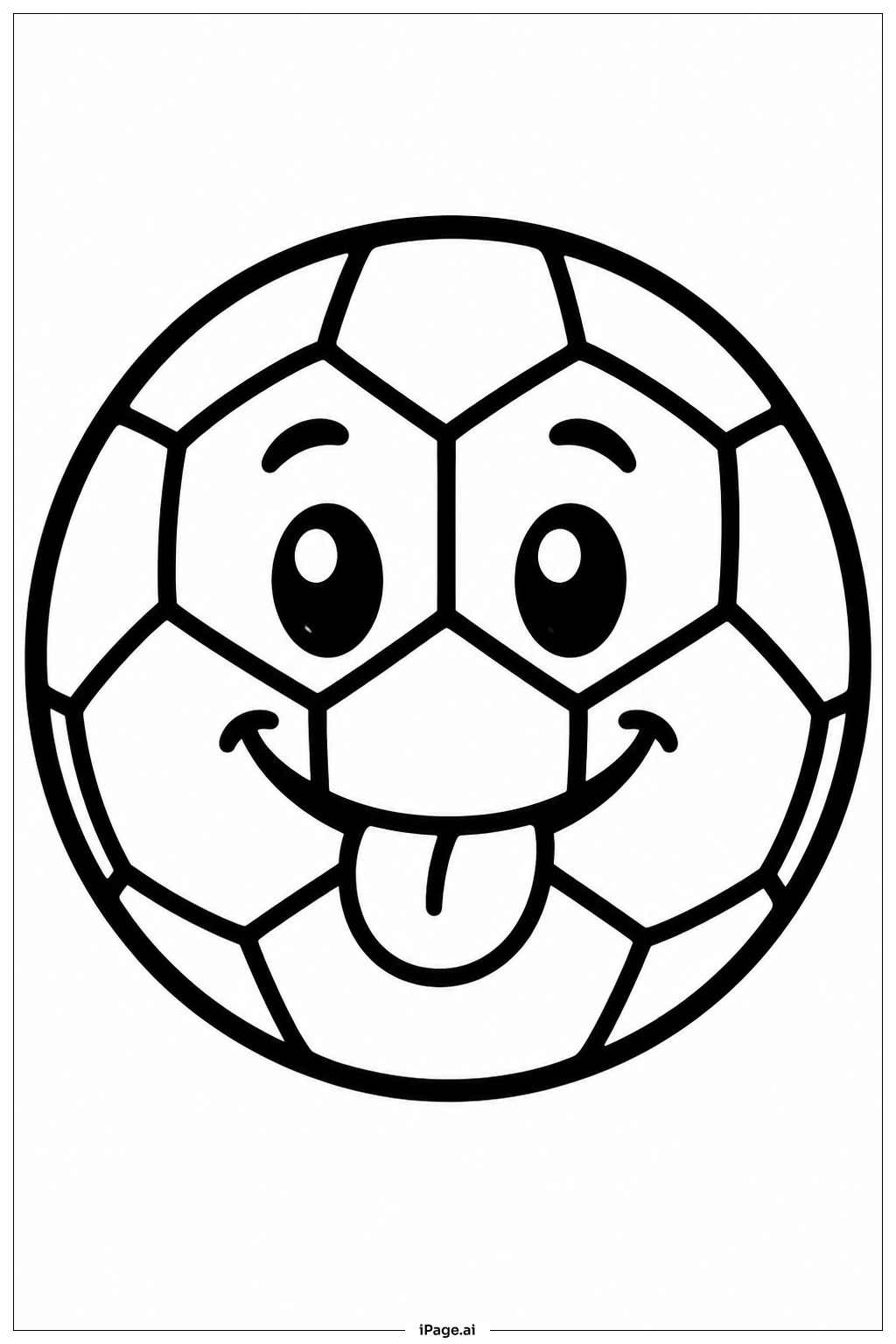
Coloring tips: How to color Soccer Ball With Smile And Tongue coloring page well?
Start by coloring the classic black pentagon panels on the soccer ball. Leave the hexagonal panels white or color them a very light gray to keep the traditional soccer ball look. If you want a more creative ball, try using bright colors like blue, red, or yellow for the panels instead. For the face, use a warm peach or light tan for the skin tone. Color the eyes with dark brown or black outlines and add a bright white highlight dot to make them look shiny and alive. Use a bold red or pink for the open mouth area, and make the tongue a fun shade of pink or coral. Add a touch of darker pink along the edges of the tongue to give it some depth. You can also add a light shadow under the ball to make it look like it is resting on the ground. Feel free to add your own colors and patterns to make this soccer ball totally unique and full of your own personality.
Coloring challenges: Which parts are difficult to color and need attention for Soccer Ball With Smile And Tongue coloring page?
• Panel Pattern Accuracy: The soccer ball is made up of a mix of hexagonal and pentagonal shapes that fit together in a specific pattern. Coloring each panel neatly without going over the lines takes patience and a steady hand. Using a fine-tipped marker or a sharpened pencil can help you stay within the boundaries of each small section.
• Consistent Panel Coloring: If you choose to use multiple colors for the panels, keeping the color pattern balanced and consistent across the whole ball can be tricky. It helps to plan your color placement before you start, so the finished ball looks even and well thought out.
• Facial Feature Details: The cartoon face sits in the middle of the panel pattern, which means the face details overlap with the panel lines. Coloring the eyes, mouth, and tongue cleanly while respecting the surrounding panel shapes requires careful attention and a light touch, especially around the edges of the face.
• Tongue Shading and Depth: The tongue sticking out is a small but important detail. Adding dimension to it by using two or more shades of pink or red makes it look more realistic and lively. Blending colors smoothly in a small space like this can be challenging for younger colorists.
• Curved Surface Shading: A soccer ball is a three-dimensional sphere. To make the ball look round and full rather than flat, you can try shading the edges of the ball slightly darker and leaving the center lighter. This gradient effect is a fun technique but requires practice to pull off smoothly.
Benefits of coloring books: Advantages of drawing Soccer Ball With Smile And Tongue coloring page
Coloring this cheerful soccer ball page offers a wide range of benefits for kids of all ages. First, it helps improve fine motor skills. Carefully filling in the small panels and the facial features trains hand-eye coordination and strengthens the small muscles in the fingers and hands, which are important for writing and other daily tasks. Second, it encourages focus and patience. The detailed panel pattern asks colorists to slow down, pay attention, and work through each section one at a time. This builds concentration skills that are useful in school and everyday life. Third, it sparks creativity. Choosing colors for the panels and the face gives kids the freedom to express themselves and make the image their own. There are no rules, so imagination can run wild. Fourth, it connects sport and art. For kids who love soccer, this page makes art feel relevant and exciting. It bridges physical play with creative activity, showing that fun can come in many forms. Finally, completing the page gives a real sense of accomplishment, which boosts confidence and encourages a positive attitude toward creative challenges.