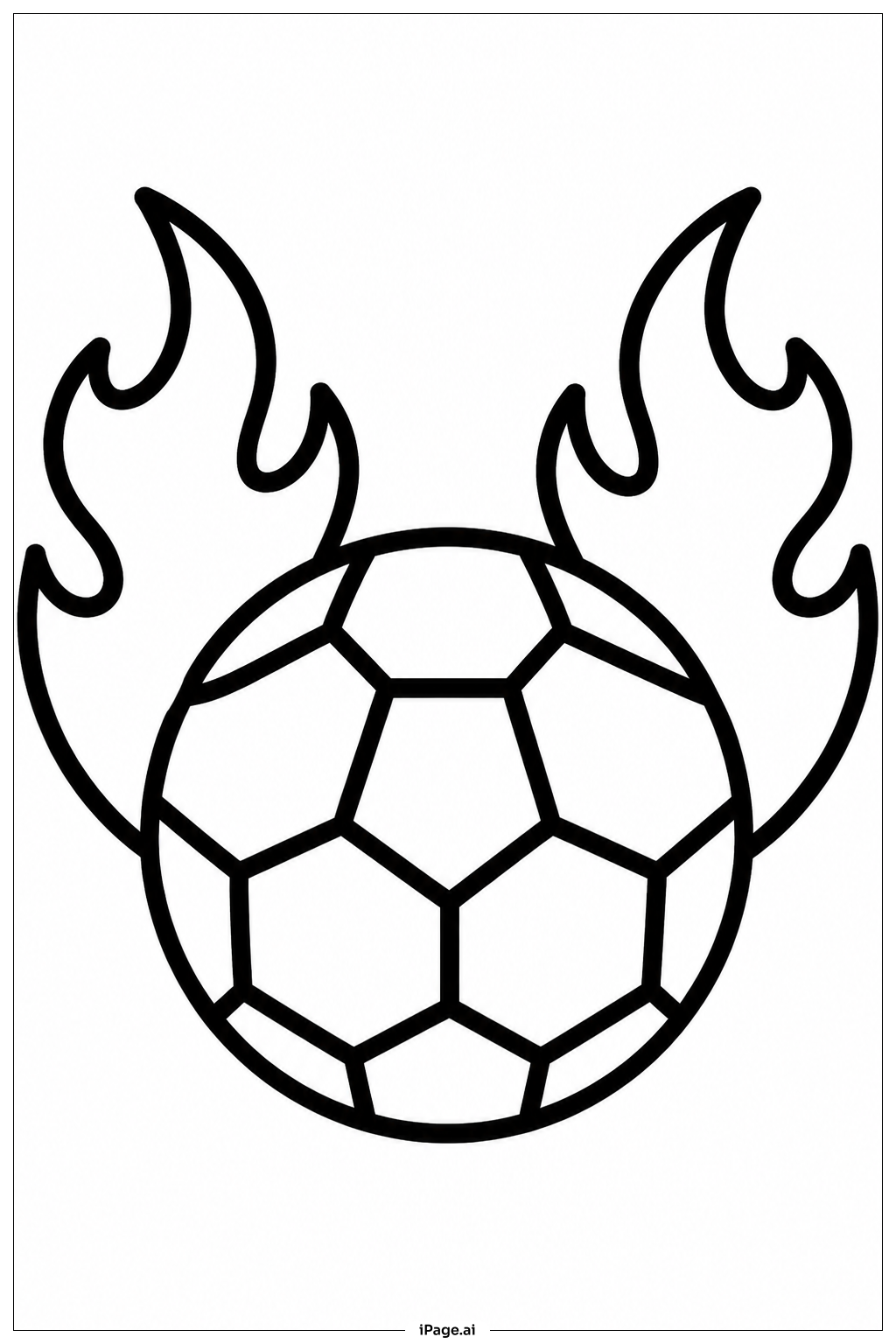
Coloring tips: How to color Soccer Ball With Simple Flames coloring page well?
Start with the soccer ball itself using traditional black and white patterns, or get creative with your favorite team colors. The pentagon shapes can be colored in darker shades like black, navy blue, or deep purple, while the hexagons can stay white or be filled with lighter colors. For the flames, use warm colors to create realistic fire effects. Begin with bright yellow at the base of each flame, transitioning to orange in the middle sections, and finishing with red or even deep red-orange at the tips. You can also experiment with non-traditional flame colors like blue, green, or purple for a magical or supernatural look. Consider adding shading inside the flames to make them appear more three-dimensional. Use colored pencils or markers to create smooth color transitions that make the flames look like they're really burning.
Coloring challenges: Which parts are difficult to color and need attention for Soccer Ball With Simple Flames coloring page?
• Pentagon and Hexagon Patterns: The soccer ball contains multiple geometric shapes that fit together like a puzzle. Keeping track of which pentagons and hexagons to color dark versus light requires careful attention and planning. Young colorists may find it challenging to maintain the traditional alternating pattern without accidentally coloring adjacent shapes the same color. Taking time to look at the whole ball before starting will help create the classic soccer ball appearance.
• Flame Color Transitions: Creating realistic-looking flames requires smooth color blending from yellow to orange to red. This gradient effect can be tricky for beginners who are still learning blending techniques. The flames have curved shapes that require following the natural flow of each flame tongue. Pressing too hard with crayons or markers can make blending difficult, while pressing too lightly may not give enough color coverage.
• Staying Within Curved Lines: Both the circular soccer ball and the flowing flames have many curved lines rather than straight edges. Younger children may find it challenging to color carefully along these curves without going outside the lines. The flame tips are especially narrow and pointed, requiring extra precision and control. Using the right coloring tools, like fine-tipped markers or sharp colored pencils, can help with these detailed areas.
• Color Coordination: Choosing colors that work well together for both the ball and flames requires some color sense. The flames should stand out against the soccer ball while still creating a unified composition. Deciding whether to use realistic colors or imaginative ones adds another layer of creative decision-making that might feel overwhelming at first.
Benefits of coloring books: Advantages of drawing Soccer Ball With Simple Flames coloring page
Coloring this action-packed soccer ball design helps children develop important skills while having fun. The geometric patterns on the ball strengthen shape recognition and spatial awareness, teaching kids how different shapes fit together. Following the curved lines of both the ball and flames improves fine motor control and hand-eye coordination, which are essential for writing and other daily activities. Planning which sections to color in different shades encourages strategic thinking and pattern recognition. The flame elements allow creative expression through color blending and experimenting with warm color families. This image is perfect for young soccer enthusiasts, letting them combine their love of sports with artistic expression. The energetic design can help children focus their attention while providing a satisfying sense of accomplishment when completed. Whether using traditional soccer colors or inventing wild new combinations, this coloring page celebrates athletic passion and creativity in one dynamic image.