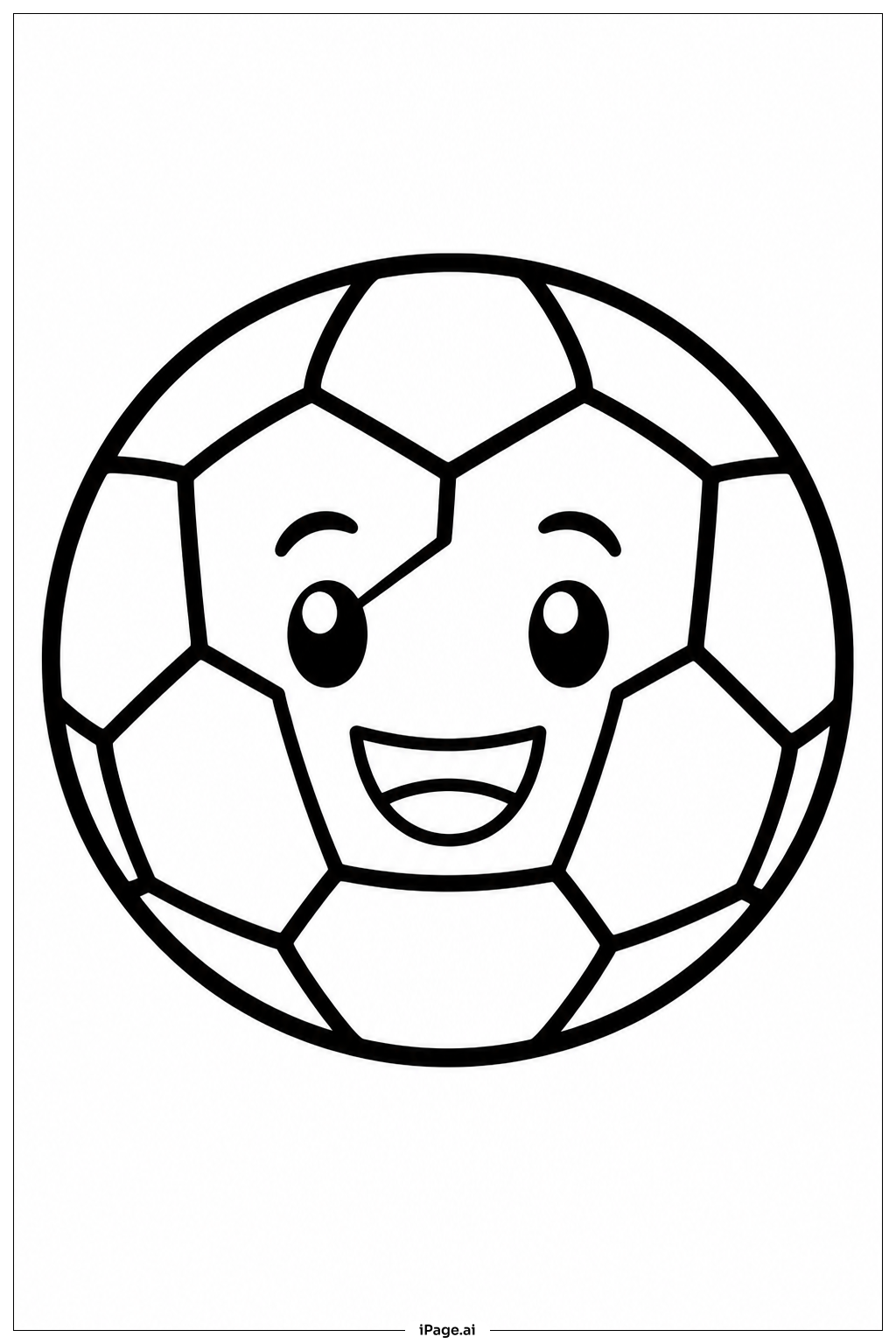
Coloring tips: How to color Soccer Ball With Simple Face coloring page well?
Start by coloring the face features first. Use black or dark brown for the eyes, nose, and smile to make them stand out. For the ball panels, the classic look uses black and white — color the pentagonal panels black and leave the hexagonal ones white or light gray. But you can also make it your own! Try bright colors like red, blue, yellow, or green for the panels instead. Mix different colors on each panel to create a rainbow soccer ball effect. Use a light skin tone or pale yellow for the area around the face. Add rosy cheeks with a light pink color to make the face look extra friendly and fun. Younger kids can keep it simple with just two or three colors, while older kids can try shading or blending to make the ball look more round and three-dimensional. The face panels can be slightly lighter in color to keep the expressions visible and easy to read. Have fun and make it your own!
Coloring challenges: Which parts are difficult to color and need attention for Soccer Ball With Simple Face coloring page?
• Panel Pattern Accuracy: The soccer ball has a mix of hexagonal and pentagonal panels that cover the whole surface. Keeping track of which panels to color with which color can be tricky, especially near the edges of the ball where the shapes get smaller and tighter. It takes patience to go panel by panel without accidentally coloring the wrong section.\n\n• Staying Inside the Lines: Each panel is outlined with curved boundary lines that follow the round shape of the ball. For younger children aged 4 to 7, it can be hard to keep the coloring tool inside these small, curved spaces. Using thinner crayons or colored pencils can help with more precise coloring.\n\n• Keeping the Face Visible: The face is placed right on the center panels of the ball. When coloring nearby sections, it is important not to let the color bleed into the eyes, nose, or mouth. Leaving a thin uncolored border around each face feature helps them stay clear and expressive.\n\n• Creating a Round Look: A flat coloring of the ball may look two-dimensional. To make the ball appear round and realistic, older kids can try shading the outer panels slightly darker and keeping the center panels lighter. This shading technique requires more control and practice.\n\n• Balancing Color Choices: Because the ball has many panels, choosing colors that look good together across the whole design can be a challenge. Using colors that are too similar can make the pattern hard to see, while too many clashing colors can look busy. Planning the color scheme before starting helps a lot.
Benefits of coloring books: Advantages of drawing Soccer Ball With Simple Face coloring page
Coloring this soccer ball with a simple face offers many great benefits for children. First, it helps build fine motor skills. Carefully coloring inside the curved panel lines strengthens hand and finger muscles, which supports better handwriting and drawing later on. Second, it encourages creativity. Kids get to choose their own colors and create a unique soccer ball design, which builds confidence in their creative choices. Third, it introduces basic geometry in a fun way. The hexagonal and pentagonal panel shapes on the ball help children notice different forms and patterns without even realizing they are learning. Fourth, coloring a friendly face on a familiar object like a soccer ball makes the activity feel connected to real life and play, which keeps kids engaged and motivated. Fifth, the focused, repetitive motion of coloring helps children calm down and practice concentration. It is a great quiet activity for winding down after a busy day. Finally, completing the image gives children a sense of achievement and pride, which boosts self-esteem. Whether a child loves soccer or just loves cute characters, this page is a fun and rewarding way to spend creative time.