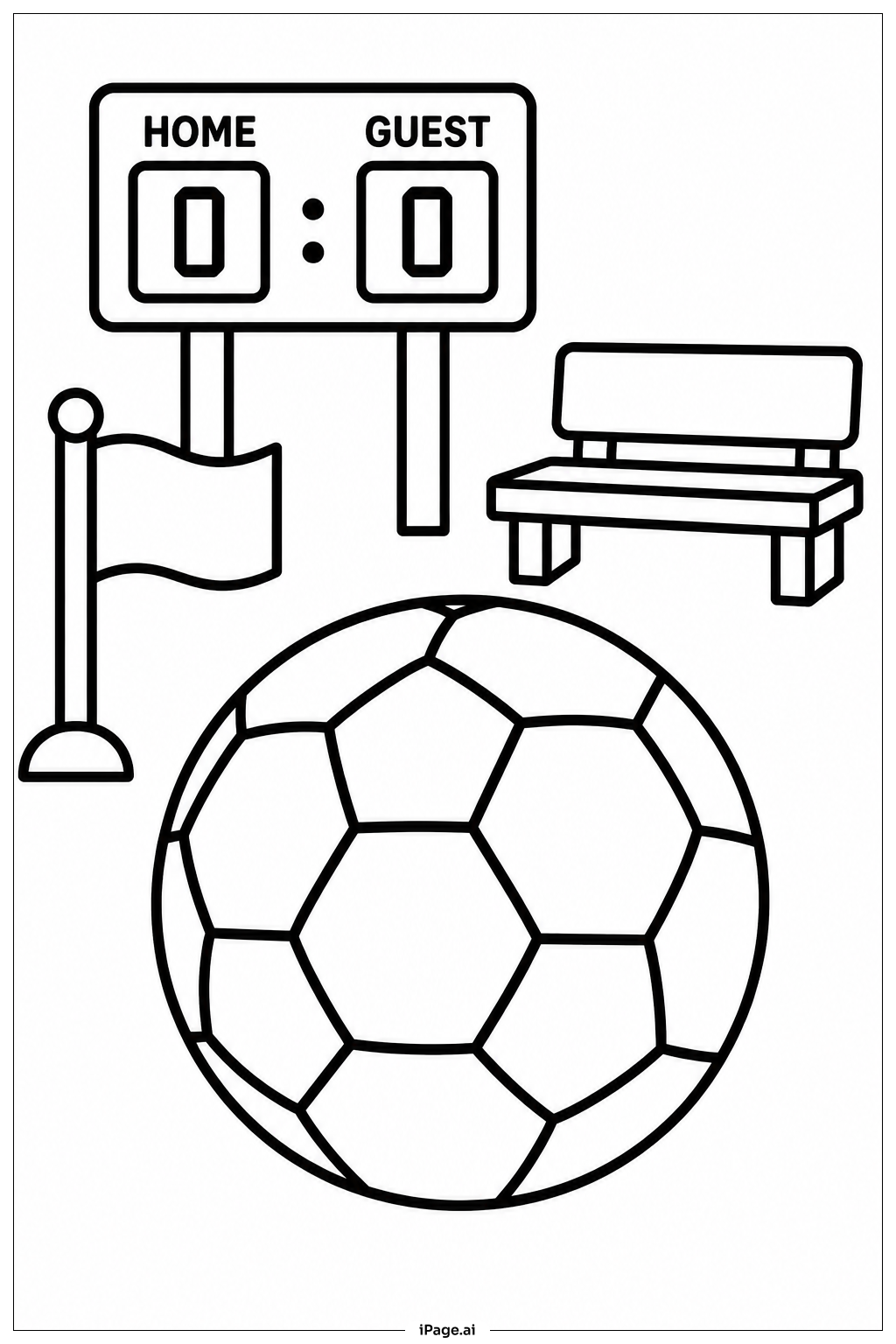
Coloring tips: How to color Soccer Ball With Scoreboard coloring page well?
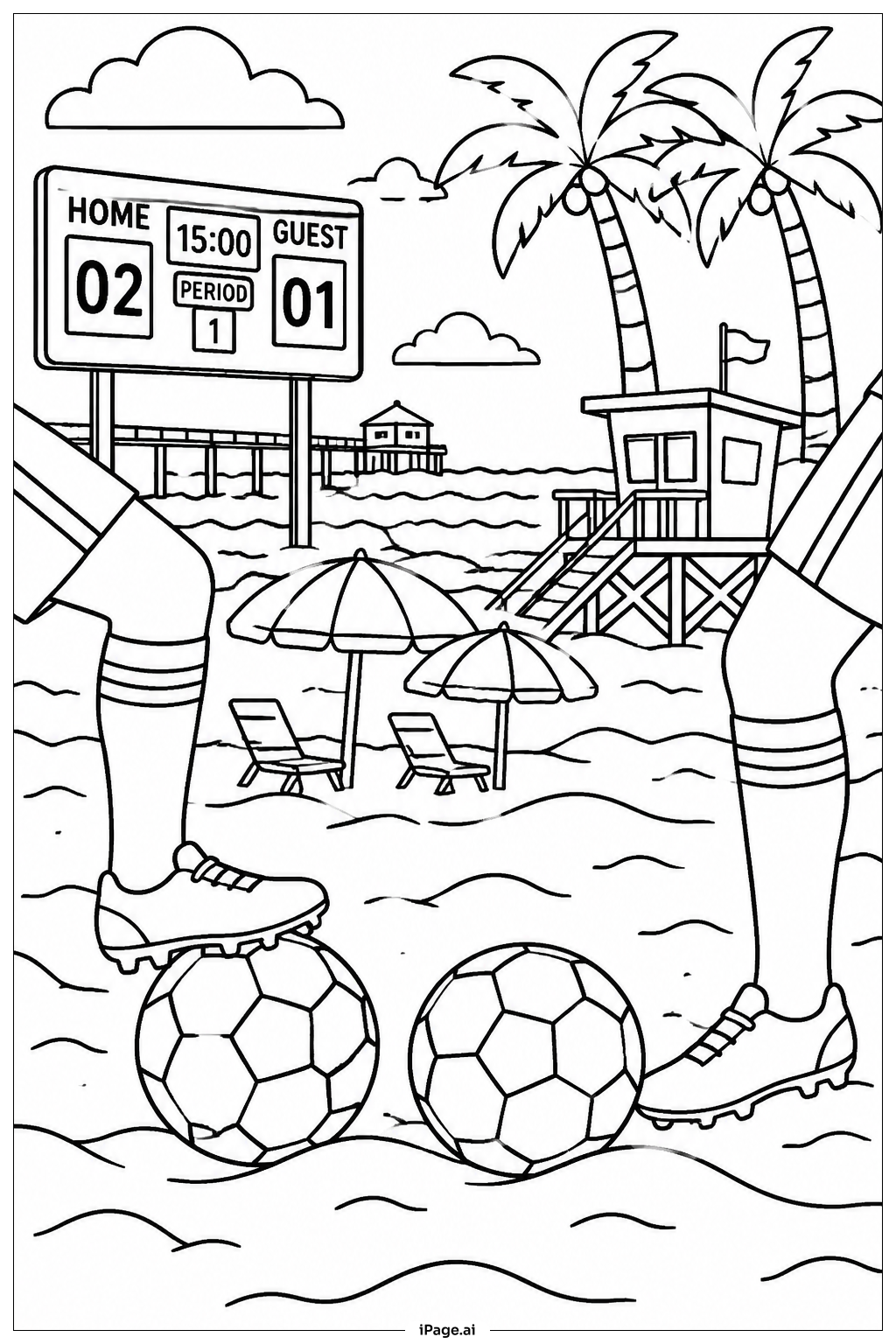
Start with the soccer ball. Color the pentagonal patches black and leave the hexagonal patches white or light gray. This gives the ball its classic look. For the scoreboard, use bright colors like red, blue, or green for the frame and border. Use yellow or white for the number display sections to make them look like they are lit up. The post holding the scoreboard can be gray or brown to look like metal or wood. Add a bright green background to suggest a grassy field. Use bold, even strokes inside the outlined sections. Younger kids can keep it simple with just a few colors. Older kids and teens can try shading the soccer ball panels to give the ball a round, three-dimensional look. Have fun mixing your favorite team's colors into the scoreboard!
Coloring challenges: Which parts are difficult to color and need attention for Soccer Ball With Scoreboard coloring page?
• Soccer Ball Panel Pattern: The soccer ball is made up of two different shapes — pentagons and hexagons — arranged in an alternating pattern. Staying inside each small section without going over the lines takes patience and a steady hand. Using a fine-tipped marker or a sharpened colored pencil helps a lot here.
• Creating a 3D Effect on the Ball: A flat circle does not look like a real ball. To make the ball look round and three-dimensional, you need to apply lighter color toward the top where light would hit and darker shading around the edges. Blending colors smoothly in such small curved sections is one of the trickiest parts of this image.
• Scoreboard Number Sections: The scoreboard contains small grid cells and number display areas. These tiny rectangular zones are easy to accidentally color over their borders. Using a very fine tip and coloring slowly in one direction helps keep each cell clean and neat.
• Scoreboard Frame and Post: The frame around the scoreboard has multiple layers — an outer border, an inner border, and the display area. Choosing colors that contrast well with each other is important so that each layer stands out clearly. Dark outlines paired with lighter fills work best.
• Overall Color Harmony: The scene has two main subjects — the ball and the scoreboard — plus a background. Making sure all the colors work together without clashing takes some planning. Sketching out your color choices on scrap paper before committing to the actual page is a smart strategy.
Benefits of coloring books: Advantages of drawing Soccer Ball With Scoreboard coloring page
Coloring this Soccer Ball With Scoreboard page brings a range of great benefits for kids of all ages. Working through the small pentagon and hexagon patches on the soccer ball builds fine motor skills and strengthens the small muscles in the fingers and hands, which helps with handwriting too. Focusing on staying inside the lines improves hand-eye coordination and concentration. Choosing which colors to use for the scoreboard, the ball, and the background encourages creative thinking and personal expression. Kids who love soccer will feel a special connection to this page, making it even more motivating to finish. The act of completing a full coloring page builds a sense of accomplishment and boosts confidence. Trying to shade the ball to look three-dimensional introduces early artistic concepts like light and shadow in a fun, low-pressure way. Overall, this page turns a love of soccer into a creative and educational activity that is both relaxing and rewarding.