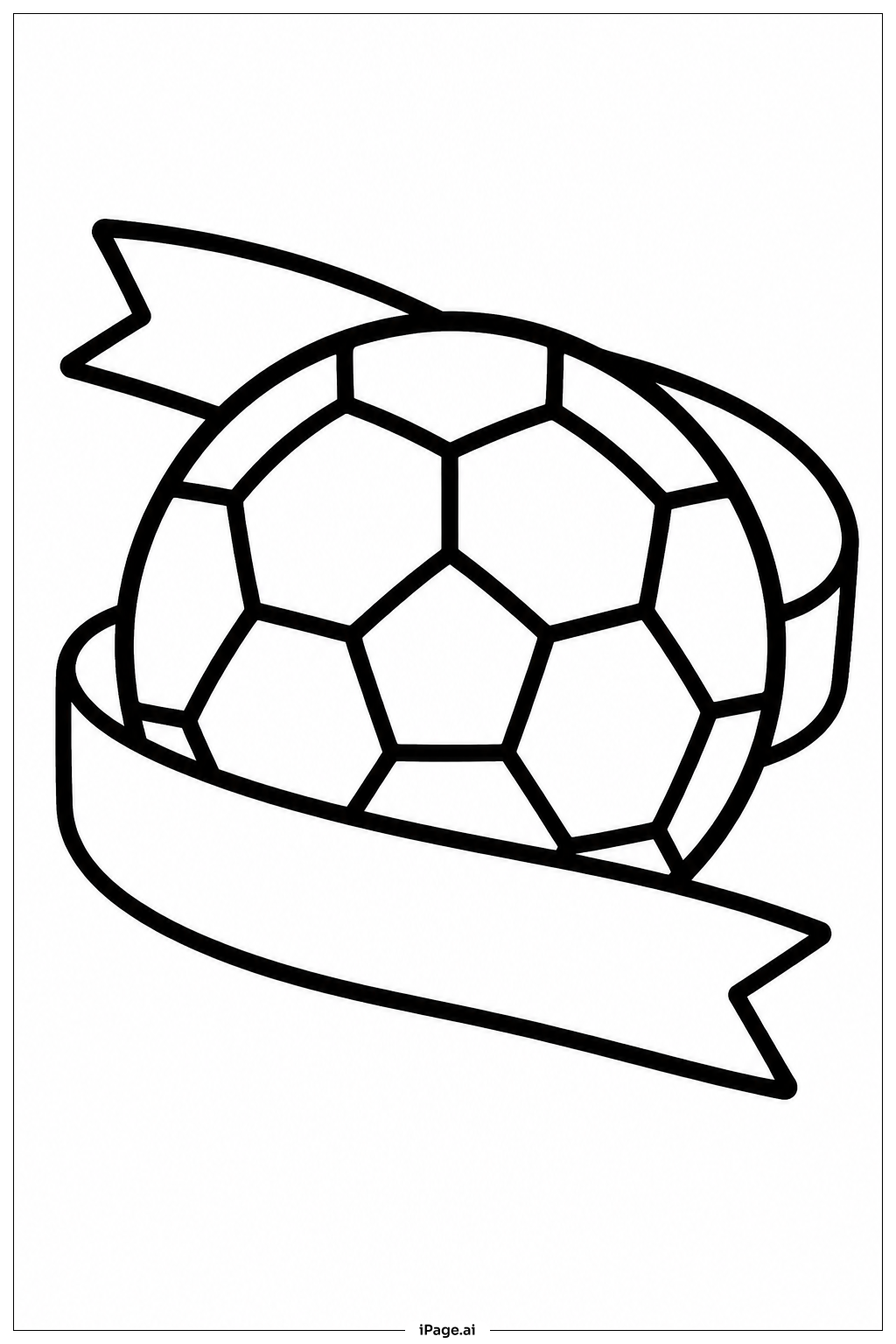
Coloring tips: How to color Soccer Ball With Ribbon coloring page well?
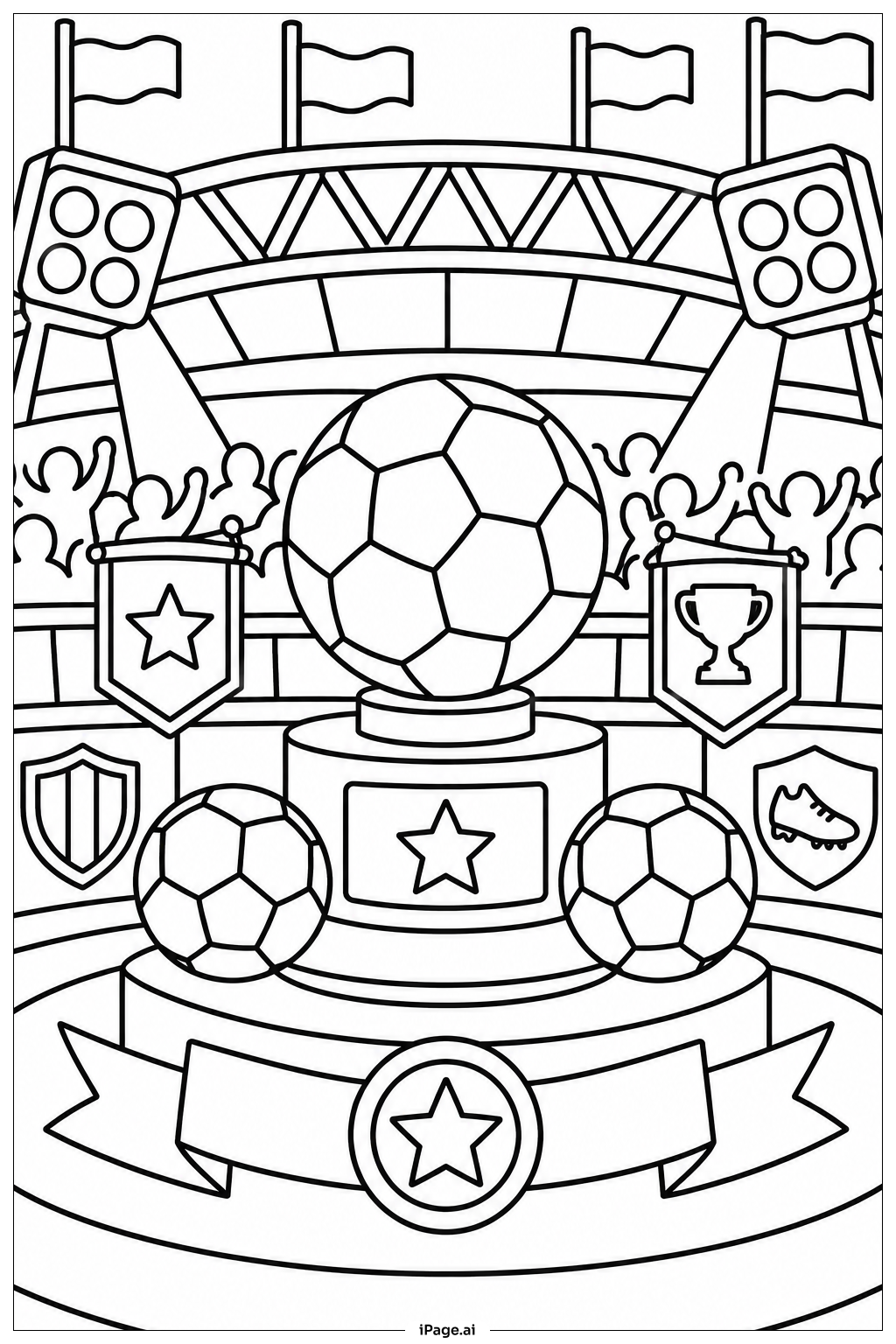
Start by coloring the soccer ball in its classic look. Use black for the pentagonal panels and leave the hexagonal panels white or light gray. You can also get creative and use your favorite team's colors instead. For the ribbon, choose a bright, cheerful color like red, blue, gold, or pink to make it stand out. Add a lighter shade of the same color to the ribbon's highlighted areas to give it a shiny, silky look. Use a slightly darker shade along the folds and edges to show depth. You can outline the ribbon's edges with a thin line of dark color to make it pop. If you want to make the soccer ball look realistic, add a soft gray shading on one side to show a light source. Have fun mixing colors and making the image your own!
Coloring challenges: Which parts are difficult to color and need attention for Soccer Ball With Ribbon coloring page?
• Panel Pattern Accuracy: The soccer ball is made up of alternating pentagonal and hexagonal panels arranged in a specific geometric pattern. Staying within the lines of each small panel without accidentally coloring over the borders can be tricky, especially near the curved edges of the ball where the panels appear narrower and more compressed. Taking your time with a fine-tipped colored pencil or marker will help keep each section neat.
• Ribbon Shading and Depth: The ribbon has multiple folds, curves, and overlapping sections. Creating a realistic, three-dimensional look requires using at least two or three shades of the same color — a base color, a highlight, and a shadow tone. Blending these smoothly along the folds without making the transitions look harsh is one of the more advanced challenges in this image.
• Overlap Between Ball and Ribbon: Where the ribbon wraps over and under the soccer ball, it is important to keep the colors clearly separated so the viewer can tell which element is in front. Carefully identifying which part of the ribbon passes in front of the ball and which passes behind it will help you color these areas correctly and avoid visual confusion.
• Curved Surface Shading on the Ball: A soccer ball is a sphere, and making it look round requires shading. Adding a soft gradient from light to dark across the ball's surface — leaving a bright spot where the light hits and deepening the color on the opposite side — adds realism but requires careful, gradual color application.
• Small Detail Areas: The ribbon's loops and tail ends contain small, tight curves and narrow spaces that are hard to color precisely. Using a sharp pencil tip or a fine-line marker for these sections will give you the best control.
Benefits of coloring books: Advantages of drawing Soccer Ball With Ribbon coloring page
Coloring this Soccer Ball With Ribbon page offers a wonderful range of benefits for kids and young artists. First, it builds fine motor skills. Carefully staying inside the small panels of the soccer ball and the narrow folds of the ribbon trains hand muscles and improves pencil control, which helps with writing too. Second, it encourages focus and patience. The detailed pattern of the ball and the layered ribbon require concentration, helping children practice staying on task and working carefully. Third, it sparks creativity. There is no single right way to color this image. Kids can choose their favorite team's colors, experiment with bright or pastel ribbons, or invent their own unique style. This freedom builds creative confidence. Fourth, it introduces basic art concepts like shading, blending, and color layering in a fun, low-pressure way. Children naturally begin to understand how light and shadow work when they try to make the ball look round or the ribbon look shiny. Finally, completing the page gives a real sense of achievement and pride, boosting self-esteem. Whether you are a soccer fan or just love coloring, this page is a joyful and rewarding activity.