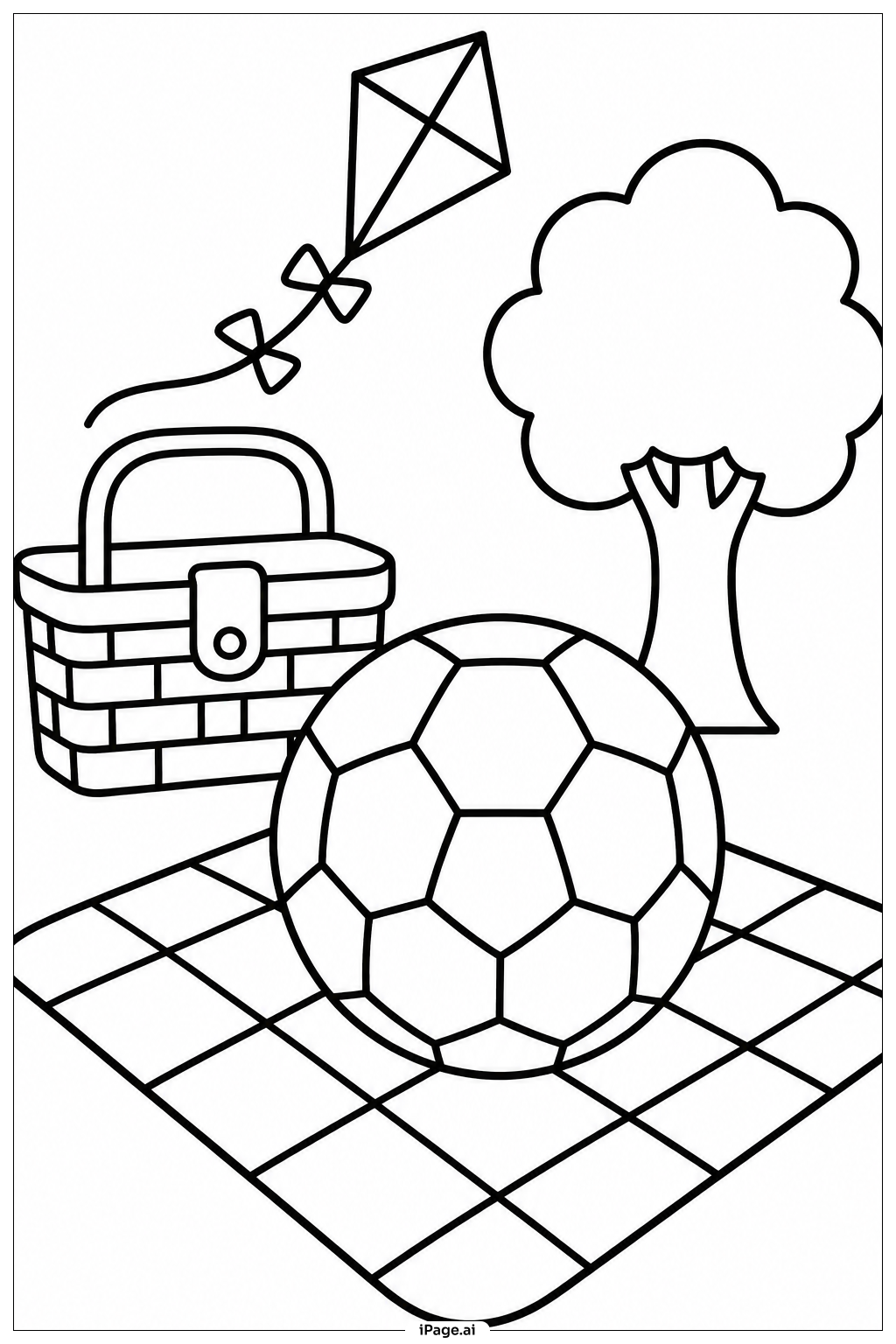
Coloring tips: How to color Soccer Ball With Picnic Blanket coloring page well?
Start with the soccer ball. Traditional soccer balls use black and white, but feel free to make it your own with bold colors like blue and yellow or red and orange. Color the pentagons one color and the hexagons another to make the pattern pop. For the picnic blanket, a classic red and white checkered pattern looks great. You can also try blue and white, or green and white for a fresh outdoor feel. Use a light green or warm tan for any ground area peeking around the blanket. Try blending two shades of the same color to give the blanket texture and depth. Keep your lines neat inside the small checkered squares. Have fun and make every section your own.
Coloring challenges: Which parts are difficult to color and need attention for Soccer Ball With Picnic Blanket coloring page?
• Soccer Ball Polygon Pattern: The soccer ball is made up of pentagons and hexagons that fit together tightly. Coloring each shape neatly without going over the lines takes patience and a steady hand. Using a fine-tipped marker or a sharpened colored pencil works best for this area.\n\n• Checkered Blanket Grid: The picnic blanket features a repeating checkered or plaid grid pattern. Keeping the alternating colors consistent across every square can be tricky, especially near the edges and corners where squares may be smaller or partially cut off. Counting the squares before you start coloring can help you stay on track.\n\n• Curved Lines on the Ball: The soccer ball has curved dividing lines that follow the round shape of the ball. Coloring smoothly along these curves without smudging or crossing the lines requires careful control, particularly for younger colorists using thicker crayons.\n\n• Shading and Depth: To make the soccer ball look round and three-dimensional, you need to apply lighter tones on one side and darker tones on the other. This kind of shading can be challenging for beginners who are still learning how to blend colors gradually.\n\n• Boundary Between Ball and Blanket: Where the soccer ball sits on the blanket, the two patterns meet closely. Keeping the colors of the ball and the blanket separate without muddying the boundary line needs extra attention and a careful approach in that contact area.
Benefits of coloring books: Advantages of drawing Soccer Ball With Picnic Blanket coloring page
Coloring this Soccer Ball With Picnic Blanket page offers a wonderful range of benefits for kids and beginners alike. The repeating geometric patterns on the soccer ball and the checkered blanket help build focus and attention to detail, encouraging children to slow down and work carefully. Filling in each pentagon, hexagon, and checkered square one at a time trains fine motor skills and improves hand control, which supports writing and drawing development. Choosing colors for the ball and blanket sparks creativity and gives children the freedom to express their own style. There is no wrong answer, so kids feel confident and proud of their finished work. The outdoor, playful theme of the image connects art with familiar activities like playing soccer and going on picnics, making the coloring experience feel personal and fun. Completing the page also builds patience and persistence, as some sections require careful, step-by-step work. For older children and beginners exploring shading, this image offers a great low-pressure space to practice blending and depth. Overall, this page combines learning, creativity, and fun in one relaxing activity.