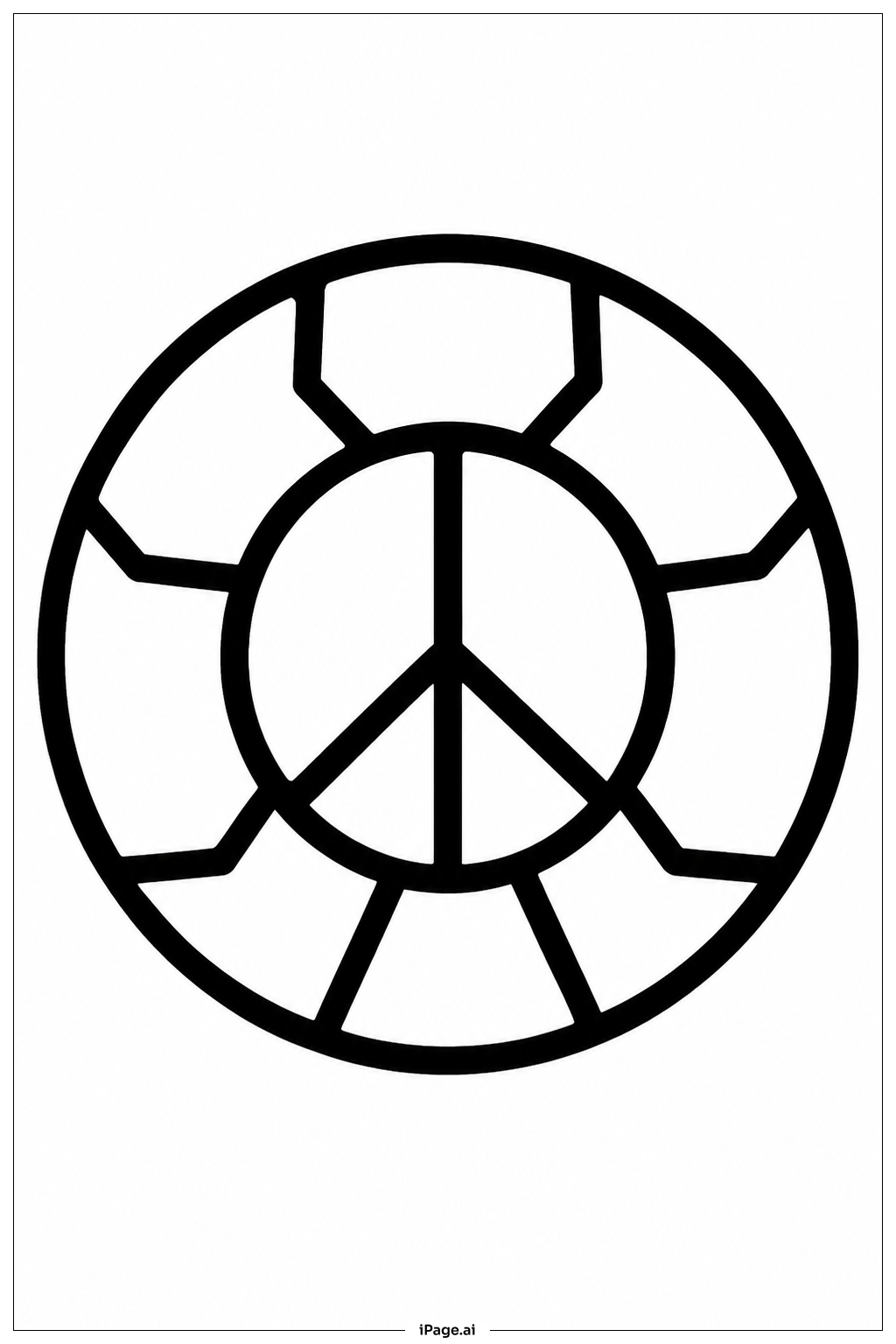
Coloring tips: How to color Soccer Ball With Peace Sign coloring page well?
Start by choosing your favorite soccer ball colors — classic black and white always looks great, but feel free to get creative! Try using your national team's colors or pick bold, bright shades like red, blue, or yellow to make it pop. For the peace sign, use a contrasting color so it stands out clearly against the ball's panels. You can color each panel section a different color to create a rainbow effect. Use darker shades along the edges of each panel to add depth and make the ball look round. For the background, light sky blue or soft green can give the feel of an outdoor soccer field. Younger kids can keep it simple with just two or three colors, while older kids can experiment with shading and blending for a more realistic or artistic look. Most importantly, have fun and make it your own!
Coloring challenges: Which parts are difficult to color and need attention for Soccer Ball With Peace Sign coloring page?
• Panel Boundaries: The soccer ball is made up of multiple curved hexagonal and pentagonal panels. Staying neatly within the curved borders of each panel can be tricky, especially where several panels meet at a single point. Young colorists need steady hands and fine-tipped tools to fill each section cleanly without crossing into neighboring panels.
• Peace Sign Integration: The peace sign overlaps several different panels on the ball. Where the peace sign lines cross panel boundaries, you need to decide whether to color the peace sign separately or blend it into the panel colors. Keeping the peace sign visible while maintaining the panel pattern beneath it requires careful planning and color choices.
• Curved Surface Shading: To make the ball look truly round and three-dimensional, you need to add shading — lighter tones in the center where light hits, and darker tones near the edges. Achieving smooth gradients on a curved surface is a real challenge, especially for beginners who are still learning blending techniques.
• Small Intersecting Sections: Where the peace sign lines divide the ball panels into smaller sub-sections, those tiny areas can be very difficult to color neatly. Fine-tipped markers or sharp colored pencils are necessary to fill those narrow spaces without going outside the lines.
• Color Consistency: Using multiple colors across many small sections while keeping the overall design looking unified and balanced takes planning. Choosing a limited, harmonious color palette beforehand helps avoid a result that looks too chaotic or uneven.
Benefits of coloring books: Advantages of drawing Soccer Ball With Peace Sign coloring page
Coloring this Soccer Ball With Peace Sign page offers a wonderful mix of fun, creativity, and meaningful learning for kids. Here are some great benefits:
Builds Fine Motor Skills: Carefully coloring within the curved panel lines and narrow peace sign sections helps children strengthen hand muscles and improve pencil control — skills that carry over into writing and drawing.
Encourages Creativity: Choosing colors for the panels, the peace sign, and the background lets kids express their personal style. There are no wrong answers, which builds confidence and encourages imaginative thinking.
Teaches Patience and Focus: Completing a detailed design like this requires concentration. Kids practice sitting with a task, working section by section, and seeing it through to the end — a great exercise in patience.
Introduces Meaningful Symbolism: The peace sign carries a powerful message of harmony and unity. Coloring it gives parents and educators a natural opening to talk with children about kindness, cooperation, and respecting others.
Connects Sports and Art: For soccer-loving kids, this page bridges their passion for the sport with artistic expression, showing them that creativity exists everywhere — even on the playing field.
Provides a Calming Activity: Coloring is a proven stress-reliever. The rhythmic, focused nature of filling in shapes helps children relax and unwind after a busy day.