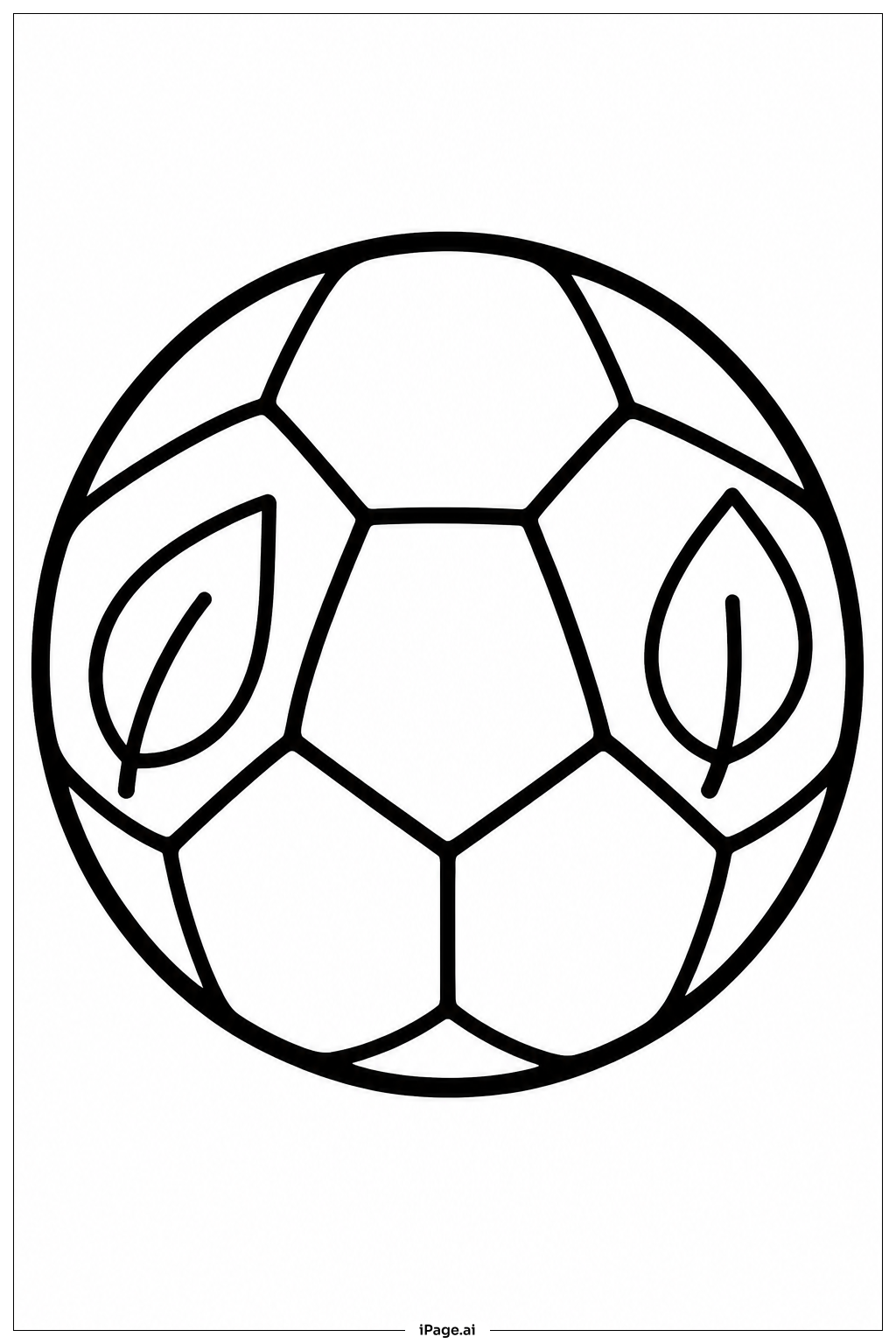
Coloring tips: How to color Soccer Ball With Leaf Motif coloring page well?
Start by coloring the soccer ball panels in traditional black and white, or try something more creative with bright colors like blue, green, or red for each panel section. Use different shades of green for the leaf motif — mix light green for smaller leaves and dark green for larger ones to create depth. Add yellow or golden tones to the leaf veins to make them stand out. You can also try an autumn theme by using orange, red, and brown for the leaves. For the border leaves and vines, use earthy tones like olive green or forest green. Keep the background light — pale yellow or sky blue works well — so the ball and leaves stay the main focus. Colored pencils work great for the fine leaf details, while markers can fill larger panel areas quickly and boldly.
Coloring challenges: Which parts are difficult to color and need attention for Soccer Ball With Leaf Motif coloring page?
• Panel Boundaries: The soccer ball is made up of multiple curved pentagonal and hexagonal panels. Staying neatly inside the curved boundary lines of each panel without smudging into neighboring sections can be tricky, especially where multiple panels meet at a single point. Take your time and use a fine-tipped tool near the edges.
• Leaf Vein Details: Each leaf contains thin, delicate vein lines running through it. Coloring around these tiny lines without covering them up requires a steady hand and a sharp pencil or fine marker. If you color over the veins, they can disappear into the leaf color and lose definition.
• Overlapping Leaf Layers: Some leaves overlap each other or overlap the ball panels. Choosing contrasting colors for overlapping sections helps separate each layer visually. Without contrast, the layers can blend together and look flat, losing the sense of depth in the design.
• Consistent Color Balance: Because the design combines both the geometric structure of a soccer ball and the organic shapes of leaves and vines, maintaining a consistent color palette across both elements is challenging. Colors that work well for the leaves may clash with the ball panels if not planned carefully in advance.
• Small Curling Edges and Vine Tendrils: Tiny curling leaf edges and thin vine tendrils require careful, controlled coloring strokes. These small areas are easy to accidentally color over or skip entirely, which can leave the finished piece looking incomplete or uneven.
Benefits of coloring books: Advantages of drawing Soccer Ball With Leaf Motif coloring page
Coloring this Soccer Ball With Leaf Motif page offers a wonderful mix of fun and learning for kids and beginners alike. The soccer ball design connects coloring to a beloved sport, making the activity feel exciting and familiar. At the same time, the leaf motif introduces elements of nature, sparking curiosity about plants and the natural world.
Working through the detailed leaf patterns helps build fine motor skills and hand-eye coordination. Carefully staying within the curved panel lines and delicate vein details trains focus and patience — skills that carry over into school and everyday life.
Choosing colors for both the geometric ball panels and the organic leaf shapes encourages creative thinking. Kids learn how to balance bold colors with softer tones, developing an early sense of color harmony and artistic confidence.
The design also offers a calming, meditative quality. Focusing on filling in each leaf or panel section one at a time helps children slow down and practice mindfulness without even realizing it. This makes coloring a healthy screen-free activity that supports emotional well-being.
Finally, completing this detailed page gives a real sense of accomplishment. Seeing a finished, colorful piece of art that they created themselves builds pride and motivates kids to keep exploring their creativity.