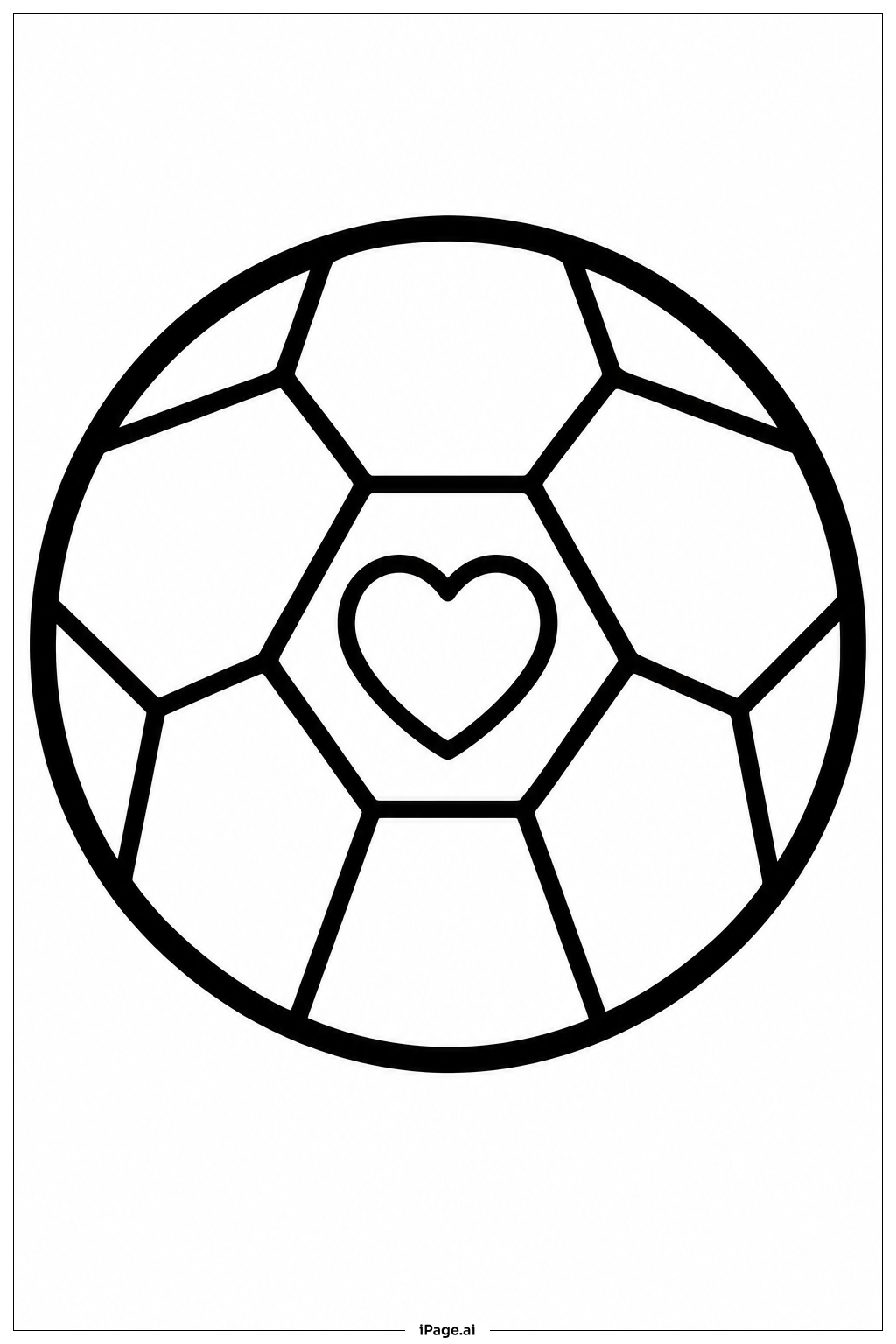
Coloring tips: How to color Soccer Ball With Heart Panel coloring page well?
Start by choosing your main ball color. White is classic, but you can also try light blue, yellow, or any color you love. Color the heart-shaped panels first using a bold, warm color like red, pink, or purple to make them stand out. Then fill in the regular panels with a darker or contrasting color, like black, navy, or dark green. This contrast will make the hearts pop. Use a light gray or leave white space around the edges of each panel to create a sense of depth and roundness. You can also add shading along the bottom of the ball to make it look like it is sitting on a surface. Feel free to mix colors and make this soccer ball your own. There are no rules — just have fun!
Coloring challenges: Which parts are difficult to color and need attention for Soccer Ball With Heart Panel coloring page?
• Heart Panel Edges: The heart-shaped panels have curved, pointed outlines that can be tricky to color inside neatly. The inward point at the top of each heart and the rounded curves at the sides require a steady hand and a well-sharpened pencil or fine-tipped marker to stay within the lines cleanly.
• Panel Boundaries: The soccer ball has many panels that sit close together. Keeping each panel's color separate without bleeding into the next one takes patience and careful control, especially where two panels meet at a narrow edge.
• Curved Surface Shading: A soccer ball is round, and showing that roundness through shading is a real challenge. To make the ball look three-dimensional, you need to gradually blend lighter and darker tones across the panels. This kind of smooth color transition can be difficult without blending tools or experience with layering colors.
• Consistent Color Balance: With both heart-shaped and regular panels on the same ball, keeping a consistent and balanced color scheme across the whole design requires planning. Coloring one side too dark or using too many different colors can make the ball look uneven or messy.
• Small Panel Details: Some panels near the edges of the ball appear smaller due to the curved perspective. Filling these tiny areas evenly and neatly — especially the smaller heart panels — requires extra care and precision tools like thin markers or fine colored pencils.
Benefits of coloring books: Advantages of drawing Soccer Ball With Heart Panel coloring page
Coloring this Soccer Ball With Heart Panel page brings together creativity and fun in one activity. For kids who love sports, it is a great way to connect with something they enjoy while also building important skills. Carefully coloring inside the heart-shaped and regular panels helps improve fine motor control and hand-eye coordination. Choosing colors and planning the design builds creative thinking and decision-making skills. The act of focusing on each panel, one at a time, also encourages patience and concentration — skills that are useful in school and everyday life. Because the design is both sporty and sweet, it appeals to a wide range of kids, Boys and Girls alike. Completing the page gives children a real sense of pride and accomplishment. Coloring can also be a calming, stress-relieving activity that helps kids unwind after a busy day. Sharing the finished artwork with friends or family adds a social and emotional dimension to the experience. Overall, this page makes coloring feel like play while quietly building real skills along the way.