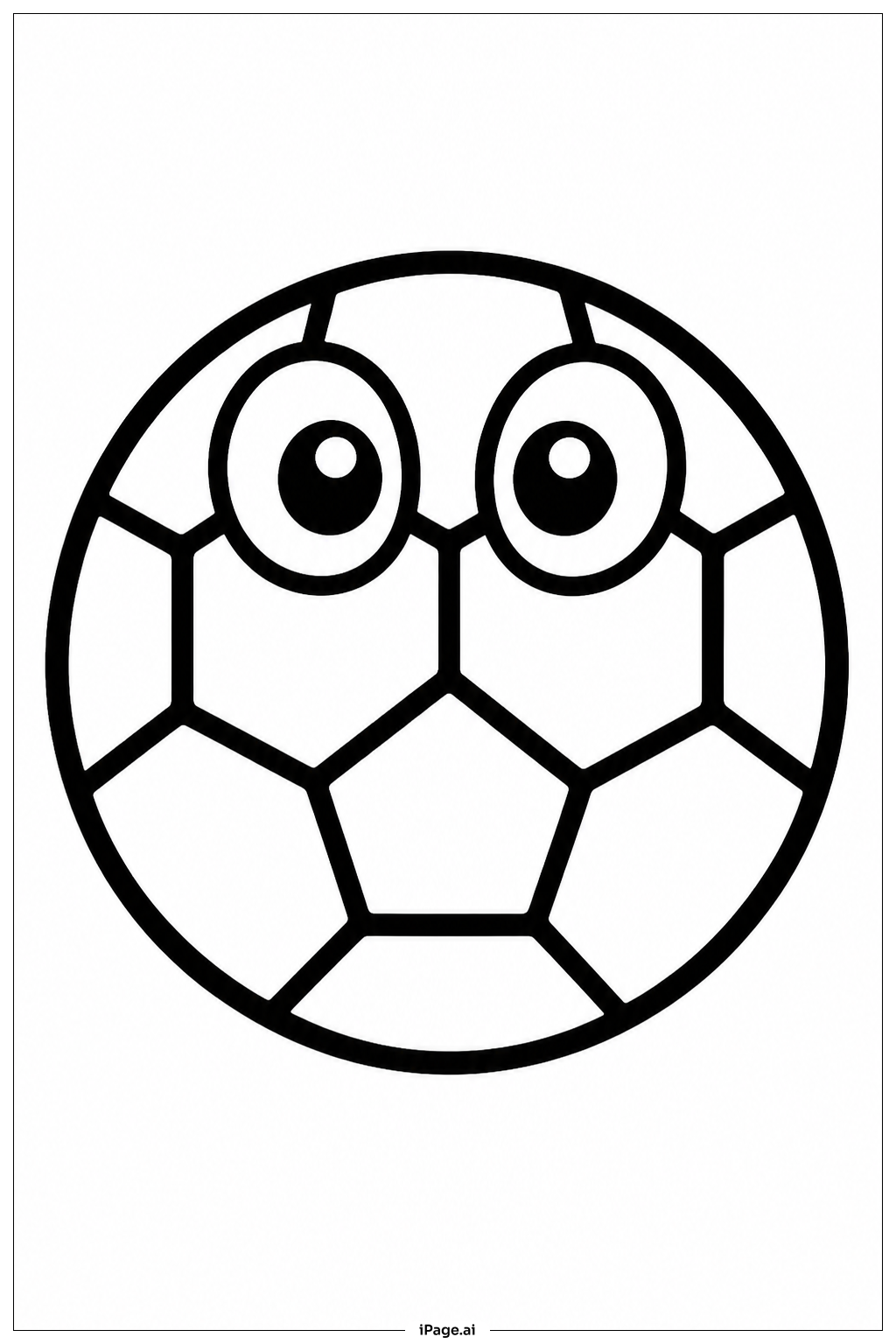
Coloring tips: How to color Soccer Ball With Cartoon Eyes coloring page well?
Start with the soccer ball's classic black and white color scheme by filling the pentagonal panels with black or dark gray and leaving the hexagonal panels white or light gray. This keeps the ball looking realistic while still being fun. For the cartoon eyes, use bright white for the eyeballs and a vivid color like blue, green, or brown for the irises. Color the pupils solid black to make them pop. Add a tiny white dot inside each pupil to create a shiny, lively look. Feel free to get creative and swap the traditional black panels for your favorite bold colors like red, blue, or purple to give the ball a totally unique style. Use colored pencils for smooth blending on the eyes and markers for bold, even fills on the panels. Kids can also try adding a light gray shadow on the bottom of the ball to make it look round and three-dimensional.
Coloring challenges: Which parts are difficult to color and need attention for Soccer Ball With Cartoon Eyes coloring page?
• Panel Pattern Consistency: The soccer ball is made up of alternating hexagonal and pentagonal panels. Keeping the colors consistent across every panel without accidentally coloring the wrong ones can be tricky. Take your time and plan which panels get which color before you start filling them in, so the classic pattern stays neat and recognizable.
• Staying Inside the Lines: The panels have curved edges where they meet, and the lines between them are close together in some spots. For younger colorists, carefully coloring inside these small curved sections without going over the outlines takes patience and a sharp pencil or a fine-tipped marker.
• Coloring the Cartoon Eyes Realistically: The eyes have several small parts — the outer eyeball, the iris, the pupil, and the highlight dot. Each part needs its own color, and the spaces are small. Using the right tool size matters here. A thin colored pencil works best to fill in the iris and pupil without muddying the details.
• Creating Depth and Roundness: A flat soccer ball can look two-dimensional if colored evenly. Adding a subtle shadow on one side and a lighter tone on the other helps the ball look round and three-dimensional. Blending lighter and darker shades smoothly is a challenge, especially for beginners who are still learning color gradients.
• Balancing Fun and Realism: Deciding whether to keep the traditional black-and-white color scheme or go full creative with bright colors is a fun challenge. Either way, making sure the eye colors and ball colors work together without clashing takes a bit of color sense and planning ahead.
Benefits of coloring books: Advantages of drawing Soccer Ball With Cartoon Eyes coloring page
Coloring this Soccer Ball With Cartoon Eyes page offers a wonderful mix of fun and learning for kids of all ages. The familiar soccer ball shape connects children to a sport they love, making the activity feel exciting and personally meaningful right from the start. Working through the geometric panel pattern — alternating hexagons and pentagons — helps young colorists practice shape recognition and build patience as they work section by section. This kind of structured coloring strengthens fine motor skills and improves hand-eye coordination, both of which are important for early childhood development. The cartoon eyes add an imaginative element that encourages creative thinking. Kids can invent a personality for their soccer ball character, choosing colors that express different moods or stories. This sparks storytelling skills and emotional expression in a relaxed, pressure-free way. Focusing on staying inside the lines and planning a color scheme also trains concentration and attention to detail. For older children, experimenting with shading and blending to make the ball look round introduces basic art concepts in a hands-on setting. Overall, this coloring page turns a simple activity into a creative workout that builds skills while delivering pure, screen-free joy.