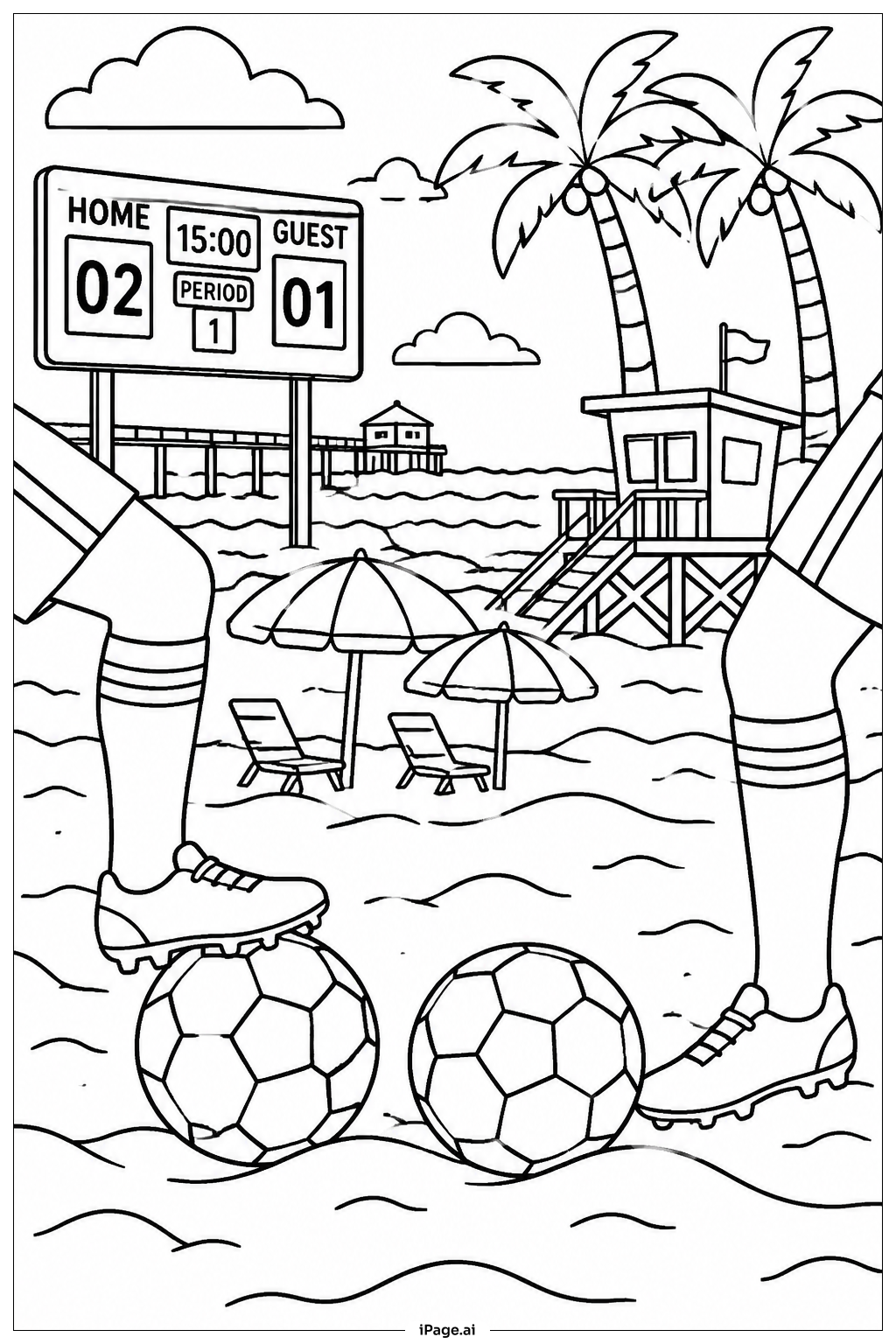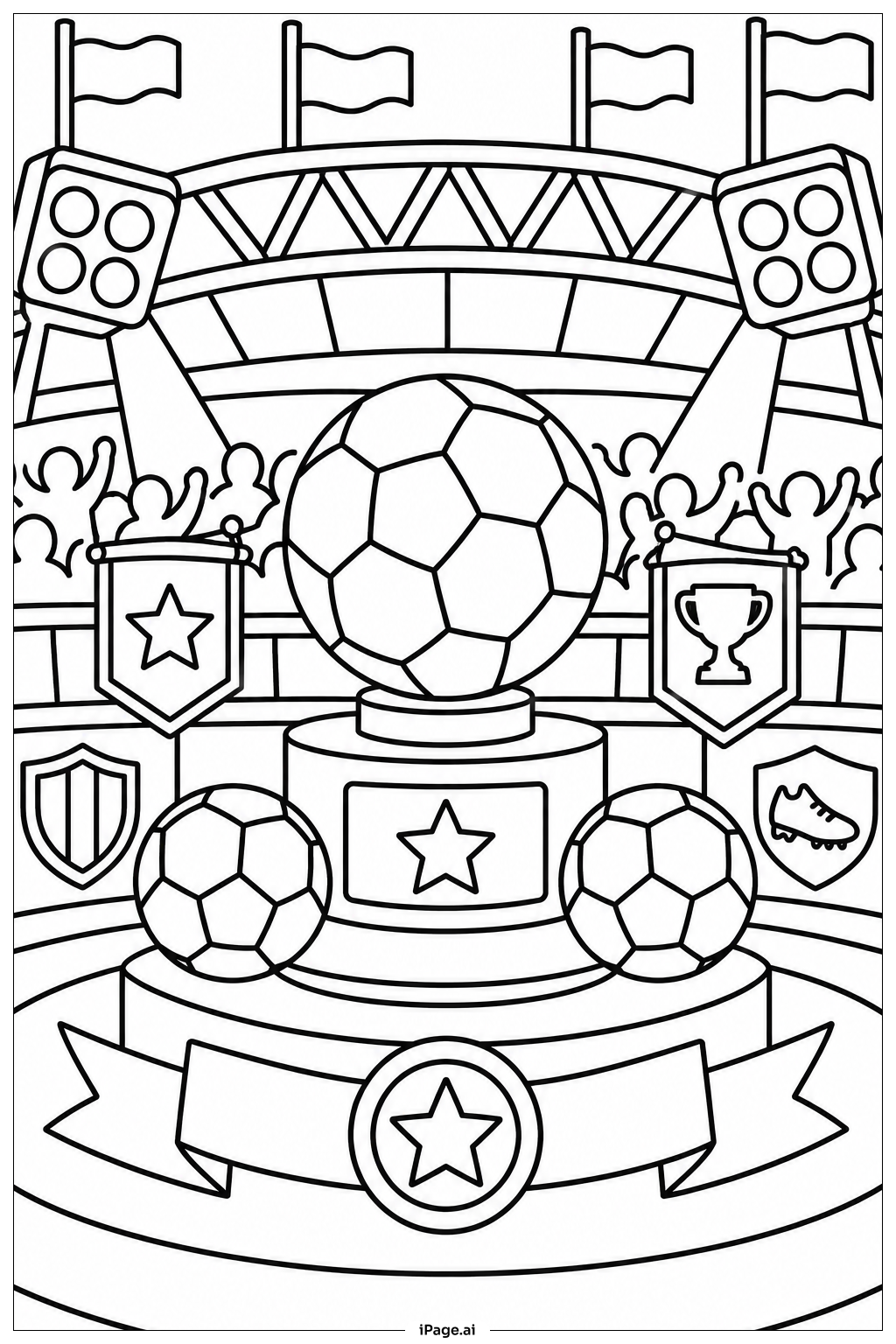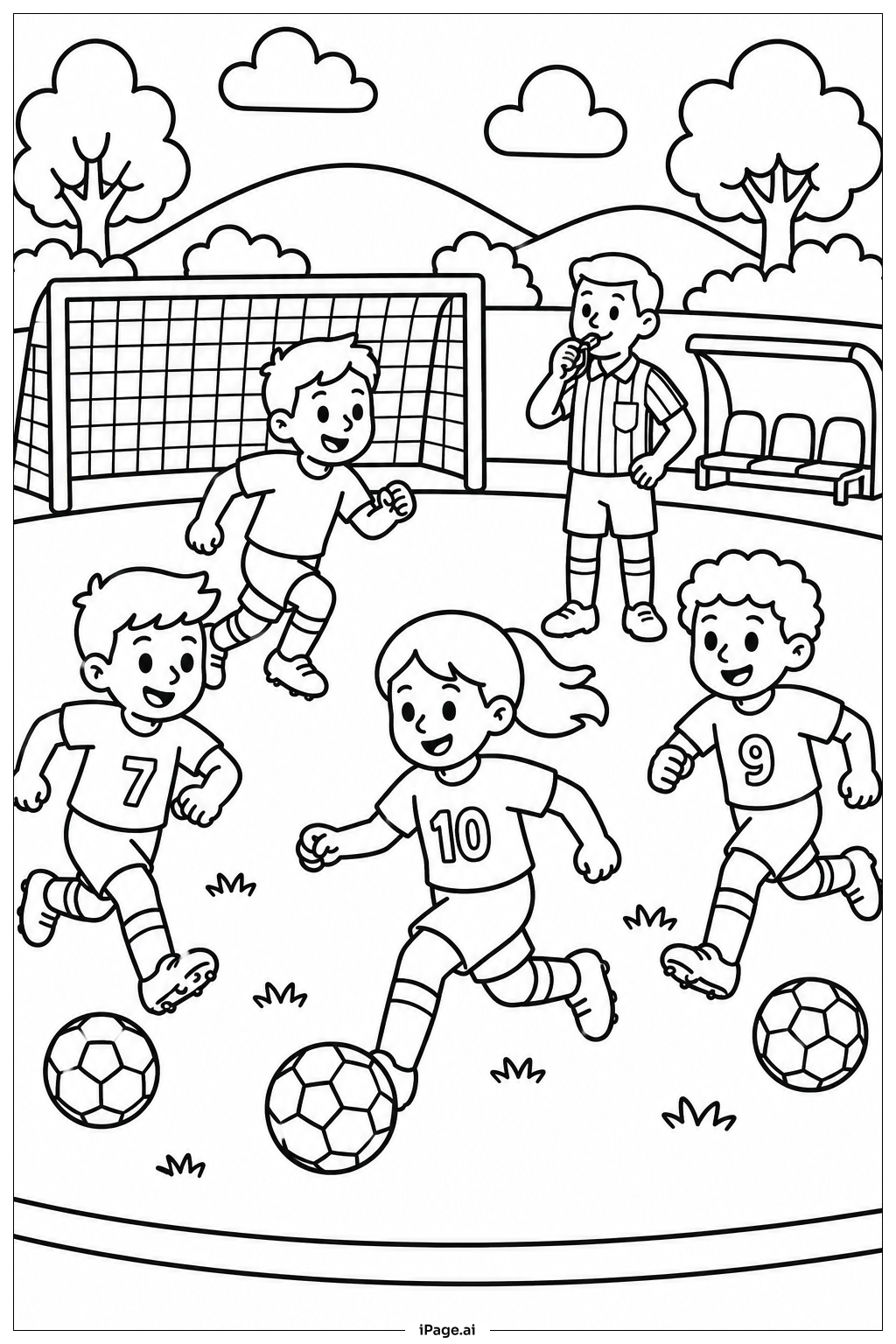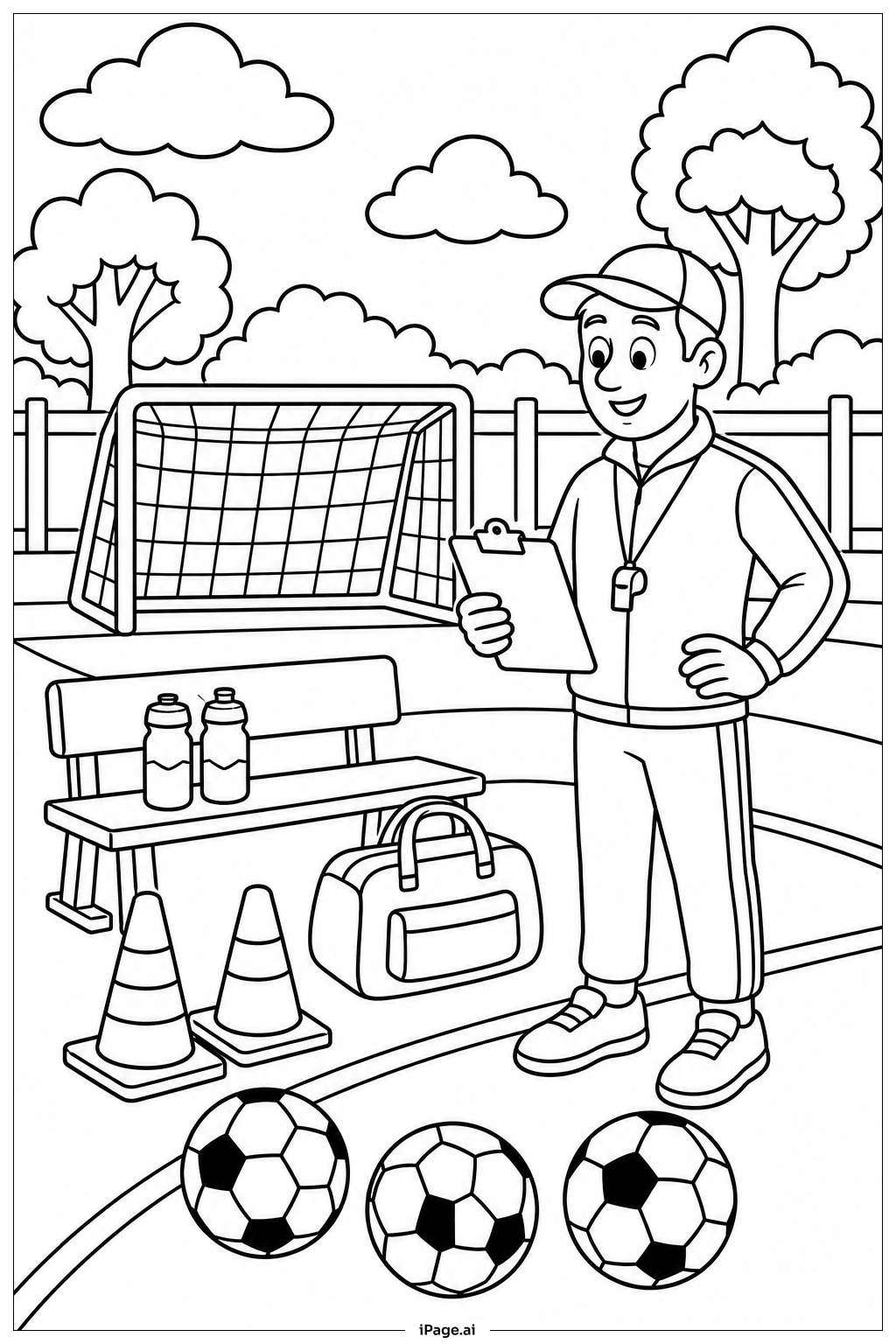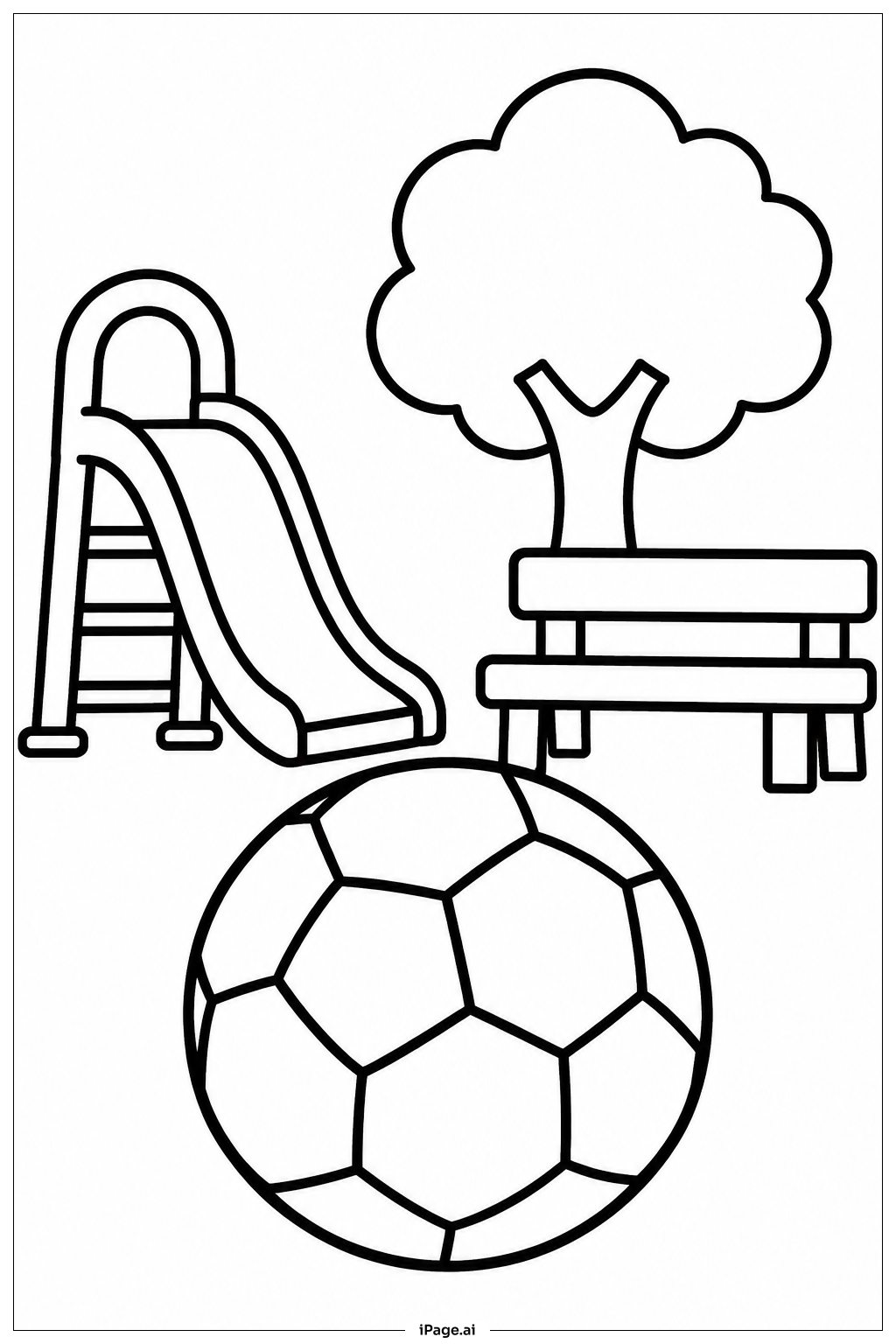
Coloring tips: How to color Soccer Ball On School Playground coloring page well?
Start with the soccer ball itself. Color the pentagonal patches black and leave the hexagonal patches white or a very light gray to keep the classic look. You can also get creative and use your favorite colors — try blue, red, or purple patches instead of black for a fun, personalized ball. For the playground ground, use sandy yellow, warm beige, or light gray to show pavement or dirt. If there is grass nearby, use bright green. Add a light blue sky in the background to bring the whole scene to life. Use darker shades along the edges of the ball's panels to show that it is round and three-dimensional. Light shading on one side and a small white highlight spot will make the ball look shiny and real. Take your time with the curved panel lines — steady hands make a big difference here.
Coloring challenges: Which parts are difficult to color and need attention for Soccer Ball On School Playground coloring page?
• Panel Boundary Accuracy: The soccer ball is made up of curved pentagonal and hexagonal panels that fit together like a puzzle. Staying inside the thin curved lines that separate each panel is tricky, especially where three or four panels meet at a single point. A fine-tipped marker or a sharpened colored pencil works best for getting clean edges along these boundaries.
• Achieving a Round, 3D Look: A flat coloring of the ball can make it look like a circle rather than a sphere. To show that the ball is round, you need to apply darker shading around the outer edges and lighter color near the center or highlight area. Blending from light to dark gradually takes patience and practice, and younger colorists may find this technique challenging.
• Consistent Panel Coloring: If you choose to color alternating panels in two or more colors, you need to plan carefully which panels get which color. Making a mistake mid-way can be hard to fix, especially with markers. It helps to lightly pencil in a plan before committing to color.
• Ground Texture and Depth: The playground surface may have cracks, lines, or texture details that need careful coloring to look realistic. Using multiple shades of the same color — for example, light tan and medium brown — helps show depth without muddying the image.
• Background Balance: Keeping the background colors light enough so they do not overpower the soccer ball in the foreground is a common challenge. Using softer, less saturated tones for the sky and ground helps the ball remain the clear focal point of the image.
Benefits of coloring books: Advantages of drawing Soccer Ball On School Playground coloring page
Coloring this soccer ball scene offers a wide range of benefits for children and young artists. First, tracing and filling in the curved panel lines of the ball helps build fine motor skills and hand-eye coordination, which are important for everyday tasks like writing and drawing. Second, deciding which colors to use — whether to keep the classic black and white or invent an entirely new color scheme — encourages creative thinking and personal expression. Kids learn that there is no single right answer, which builds confidence. Third, the focus required to stay within the curved lines and shade the ball smoothly helps children practice concentration and patience. These are skills that carry over into schoolwork and other activities. Fourth, for kids who love soccer, this image connects art with a sport they enjoy, making the coloring experience even more engaging and motivating. It can spark conversations about their favorite teams, players, or memories from recess games. Finally, completing the page gives children a real sense of accomplishment. They end up with a finished piece of art they can be proud of, reinforcing a positive attitude toward creative work and learning.