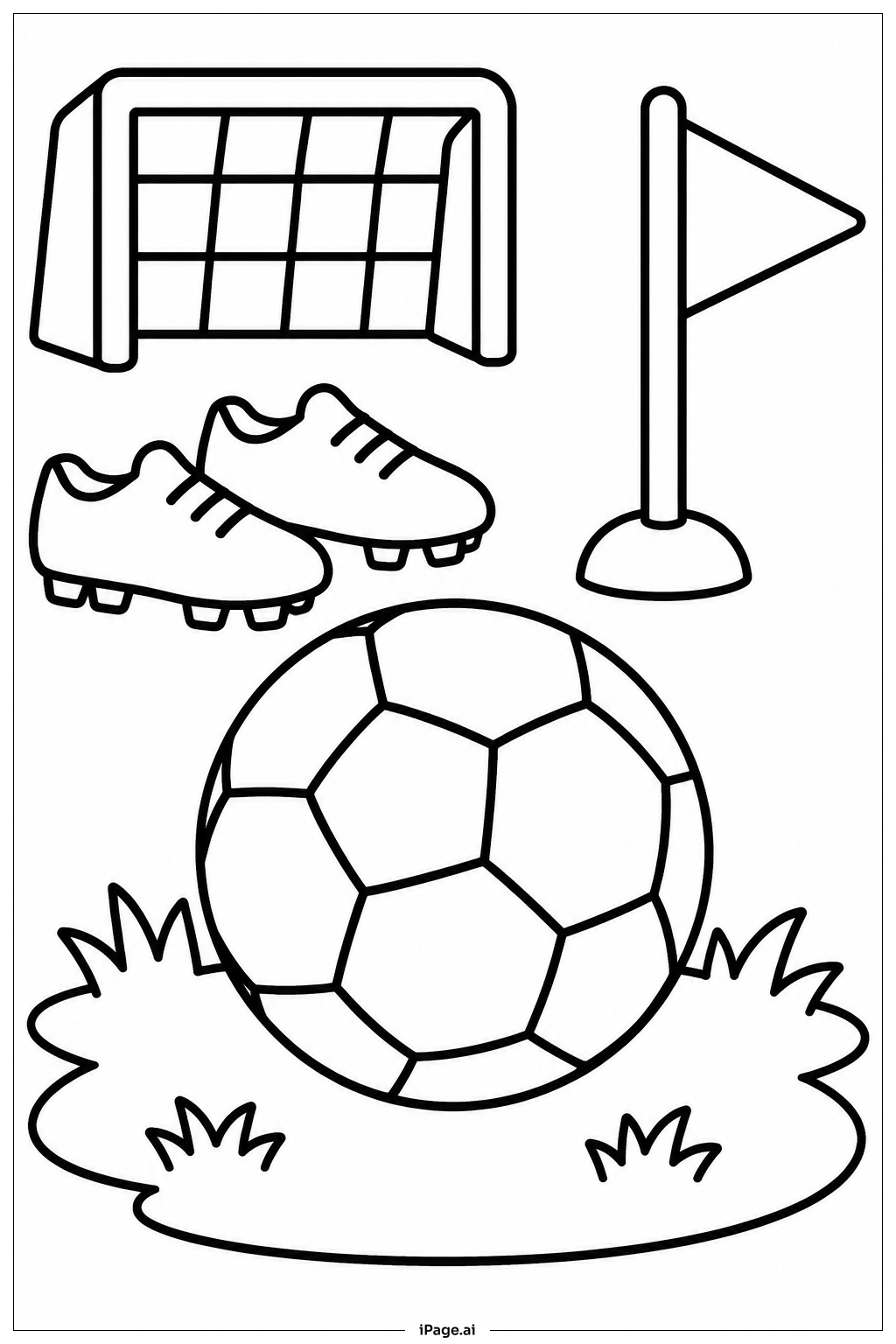
Coloring tips: How to color Soccer Ball On Grass Patch coloring page well?
Start with the soccer ball panels. Traditional soccer balls have white hexagons and black pentagons, but feel free to get creative with your own color combinations. Try bright colors like red, blue, or yellow for the panels to make the ball look fun and unique. For the grass, use different shades of green to add depth and life. Light green works well for the tips of the blades, while a darker green fills in the base. You can also add a light blue or gray shadow beneath the ball where it touches the grass. If you want a sunny day feel, leave some patches of the grass slightly lighter to show sunlight hitting the ground. Take your time with the small panels on the ball to keep the colors neat and inside the lines.
Coloring challenges: Which parts are difficult to color and need attention for Soccer Ball On Grass Patch coloring page?
• Panel Boundaries: The soccer ball is made up of multiple small pentagons and hexagons that share edges. Staying within the lines of each panel without accidentally coloring into a neighboring section can be tricky, especially near the center of the ball where panels are closely packed together. Using a fine-tipped marker or colored pencil will help with precision.
• Curved Surface Shading: The ball is round, which means realistic coloring requires adding shading to suggest a three-dimensional shape. Knowing where to place highlights and shadows on a curved surface takes practice. The light source should guide which side of the ball is brighter and which side fades into shadow.
• Grass Texture Variation: The grass patch contains many individual blades of different lengths and angles. Coloring each blade individually to create a natural, uneven texture requires patience. Using multiple shades of green and short, light strokes can help replicate the look of real grass without the patch appearing flat or uniform.
• Ball-to-Ground Contact Area: Where the ball meets the grass, there is a subtle shadow and slight compression of the blades. Capturing this area realistically by blending a soft gray or dark green into the grass beneath the ball adds depth, but it requires gentle color transitions that beginners may find challenging.
• Color Balance Between Elements: Making sure the ball and the grass complement each other without one overpowering the other is an important visual challenge. Choosing colors that contrast well while still looking natural will help the final image feel balanced and appealing.
Benefits of coloring books: Advantages of drawing Soccer Ball On Grass Patch coloring page
Coloring this soccer ball image offers a wide range of benefits for kids and beginners alike. Working on the geometric panels of the ball helps train hand-eye coordination and fine motor skills, as staying within small, clearly defined shapes takes focus and control. This kind of careful coloring strengthens the small muscles in the hands and fingers, which supports handwriting and other daily tasks.
The image also encourages creative thinking. Kids get to choose their own colors for the ball and grass, which builds confidence in making decisions and expressing personal style. Experimenting with color combinations is a fun and low-pressure way to explore art.
Focusing on a detailed image like this also promotes concentration and patience. Completing the ball panel by panel teaches children to work through a task step by step, which is a valuable habit in school and everyday life.
For children who love soccer, this image connects a favorite sport to a calming creative activity. It can spark conversations about the game, inspire imaginative play, and even motivate kids to learn more about how a soccer ball is designed. Overall, this coloring page is a simple but effective tool for building skills while having fun.