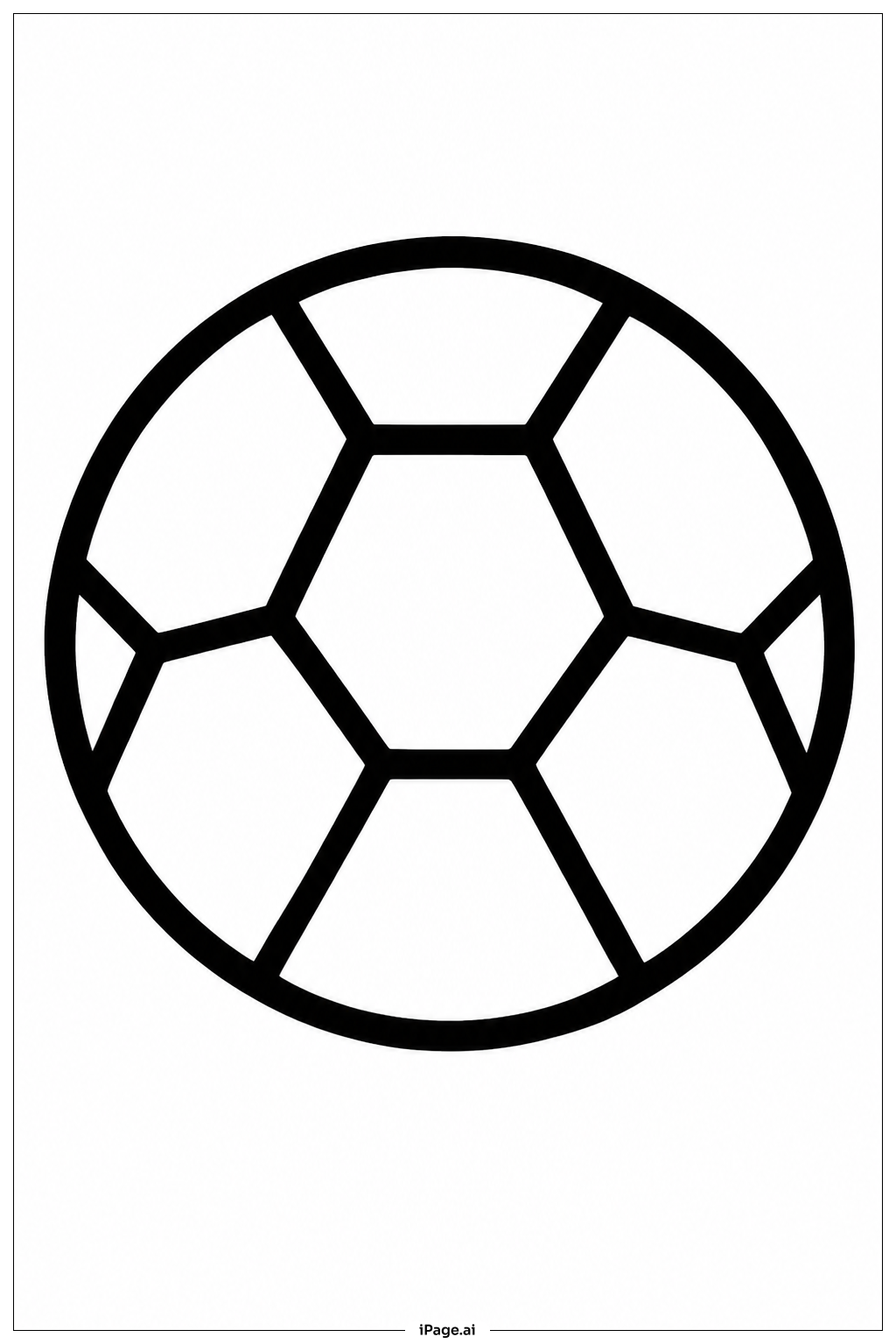
Coloring tips: How to color Soccer Ball In Circle Frame coloring page well?
Start by coloring the soccer ball's pentagonal panels. Traditional soccer balls use black for these patches, but feel free to try bold colors like dark blue, deep red, or purple to make your ball unique. Leave the hexagonal panels white or color them a light gray or cream to create contrast. For the circular frame, try a single strong color like gold, navy blue, or forest green to make it stand out. You can also add a gradient effect on the frame by blending two colors together. If you want a glowing or shiny look, leave small white highlights on the ball's panels. Younger colorists can keep it simple with two or three colors, while older kids can experiment with shading and blending to give the ball a three-dimensional, realistic appearance. Use fine-tipped markers or colored pencils for the small panel sections.
Coloring challenges: Which parts are difficult to color and need attention for Soccer Ball In Circle Frame coloring page?
• Pentagon and Hexagon Panel Accuracy: The soccer ball is made up of many small geometric panels — pentagons and hexagons — that fit tightly together. Staying within the lines of each individual panel is challenging, especially near the center of the ball where the shapes are closer together. Young colorists may find it tricky to keep colors from bleeding into neighboring panels.
• Consistent Color Distribution: Alternating colors evenly across the ball's panels requires careful planning. If you color one panel and then skip to a non-adjacent one, you may lose track of the pattern. It helps to lightly number or plan the panels before coloring to maintain a balanced, symmetrical look.
• Circular Frame Precision: The bold circular border needs smooth, even coloring to look polished. Coloring along a curved edge without going outside the lines takes a steady hand and patience. Using a fine-tipped tool near the edges of the circle will help keep the boundary clean.
• Creating Depth and Dimension: Making the ball look round and three-dimensional rather than flat is an advanced challenge. This involves shading — applying lighter tones in the highlight area and darker tones toward the edges of the ball. Blending these transitions smoothly requires practice and control over your coloring tools.
• Small Detail Areas: Where the panels meet at the seam lines, the spaces become very narrow. Filling these tiny junction areas neatly without smudging or overcoloring onto adjacent sections demands focus and fine motor control, making it a great exercise for building precision.
Benefits of coloring books: Advantages of drawing Soccer Ball In Circle Frame coloring page
Coloring this Soccer Ball In Circle Frame page offers a wide range of benefits for kids and young learners. The geometric pattern of the soccer ball — made up of pentagons and hexagons — helps children recognize and understand different shapes in a fun, hands-on way. Tracing and filling each panel strengthens fine motor skills and improves hand-eye coordination, which are important skills for everyday tasks and schoolwork. Choosing colors and deciding how to fill the frame encourages creative thinking and self-expression. Kids who love soccer will feel a personal connection to the image, making the coloring experience more engaging and enjoyable. Focusing on staying within the lines of each small panel also builds concentration and patience. For older children, trying to shade the ball and create a three-dimensional effect introduces early concepts of light, shadow, and depth. Completing the page gives a sense of achievement and boosts confidence. Overall, this page combines the joy of sports with the calming, focused activity of coloring, making it a wonderful choice for both fun and learning.