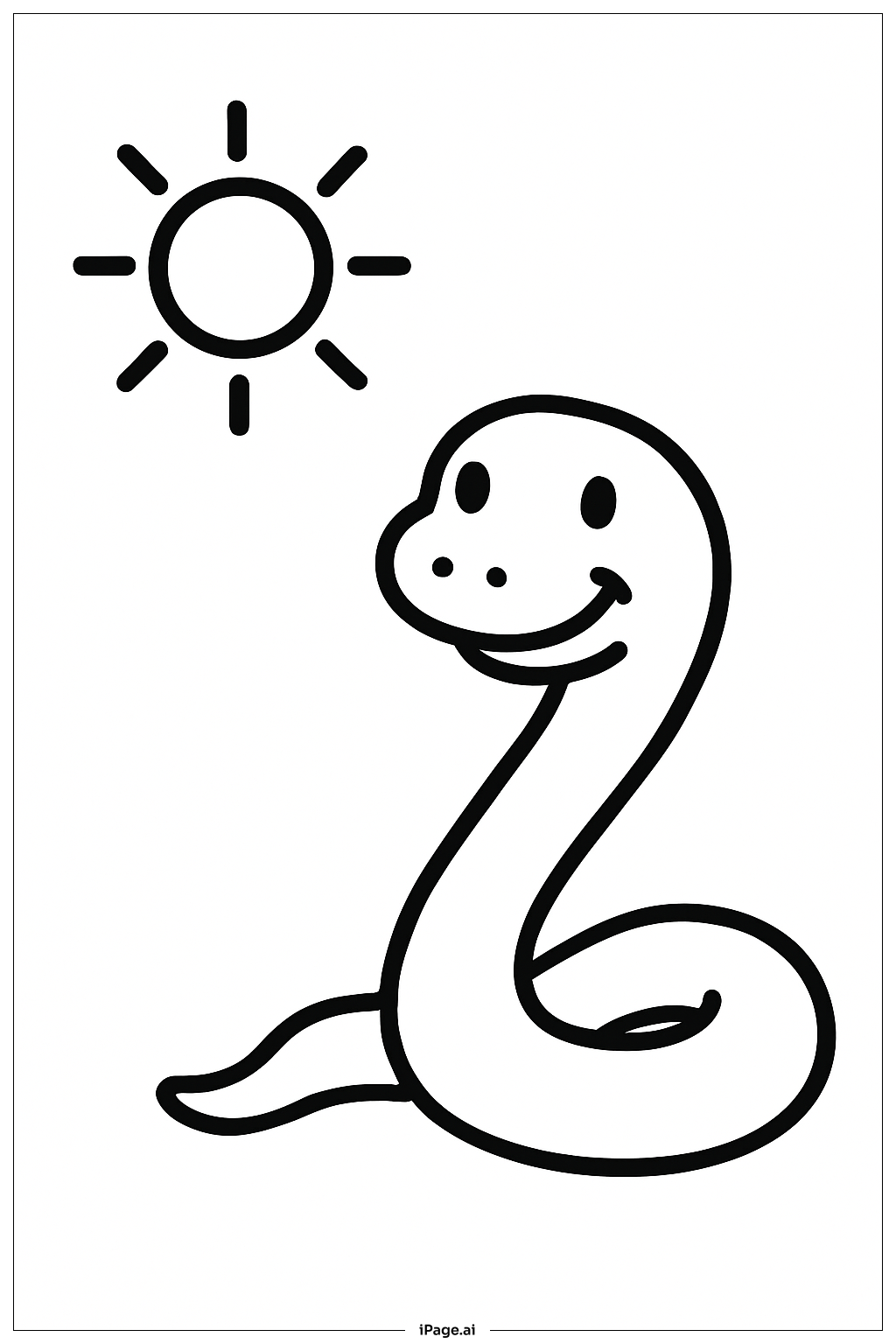
Coloring tips: How to color Snake with Sun coloring page well?
Start with the sun at the top of the page. Use a bright yellow or golden orange for the center circle, then color the rays in a slightly deeper shade like amber or light orange to create a glowing effect. For the snake's body, you can choose classic greens like lime or emerald, or get creative with blues, purples, or even rainbow colors across each scale section. Use a darker shade of your chosen color to fill in the scale outlines, giving the body more depth and texture. Try a soft pink or red for the forked tongue. Leave the eyes white and add a small colored pupil for a lively look. For the background, a light sky blue or warm yellow helps the snake and sun pop off the page. Don't be afraid to mix warm and cool tones to make your artwork stand out!
Coloring challenges: Which parts are difficult to color and need attention for Snake with Sun coloring page?
• Scale Pattern Consistency: The snake's body is covered in a repeating scale pattern. Keeping each scale consistently colored without accidentally going outside the lines can be tricky, especially where scales are small or closely spaced. Using a fine-tipped marker or a sharpened colored pencil will help you stay precise and neat throughout the entire body.
• Sun Ray Variation: The sun has many long, wavy rays spreading outward. Coloring each ray evenly while keeping a smooth gradient from the center to the tips takes patience. If the rays are thin or tapered, controlling the pressure on your coloring tool is important to avoid streaks or uneven patches.
• Curved Body Sections: The snake's coiled, curving shape means the color direction changes frequently. When using colored pencils, always follow the curve of the body rather than coloring in a single straight direction. This helps the coloring look natural and follow the snake's form realistically.
• Color Transitions on the Snake: If you want to blend multiple colors across the snake's body — for example, moving from green to teal to blue — managing smooth transitions between scale sections requires careful layering. Rushing this step can result in muddy or patchy areas where colors overlap.
• Background Space Management: Filling the background evenly around the sun's rays and the snake's coiled body requires careful attention to the negative space. The irregular shapes between the sun rays and the snake outline can be awkward to color cleanly, so take your time and work slowly around the edges with a smaller tool before filling in larger open areas.
Benefits of coloring books: Advantages of drawing Snake with Sun coloring page
Coloring this Snake with Sun page offers a wide range of benefits for children and young artists. Working on the snake's detailed scale pattern helps build fine motor skills and improves hand-eye coordination as kids practice staying inside small, repeating shapes. This kind of focused activity also strengthens pencil grip and control, which supports handwriting development.
Choosing colors for the snake and sun encourages creative thinking and color theory exploration. Kids learn how warm colors like yellow and orange can create a sense of warmth and energy, while cool greens and blues on the snake produce a calming contrast.
The image also sparks curiosity about nature. Children may become interested in learning more about different snake species, their habitats, and their relationship with the environment. This turns a simple art activity into a gateway for science exploration.
Completing the full page gives kids a real sense of achievement and builds confidence. The process of focusing on one section at a time also supports concentration, patience, and the ability to work through a task from start to finish. Overall, this page makes coloring both enjoyable and genuinely enriching.