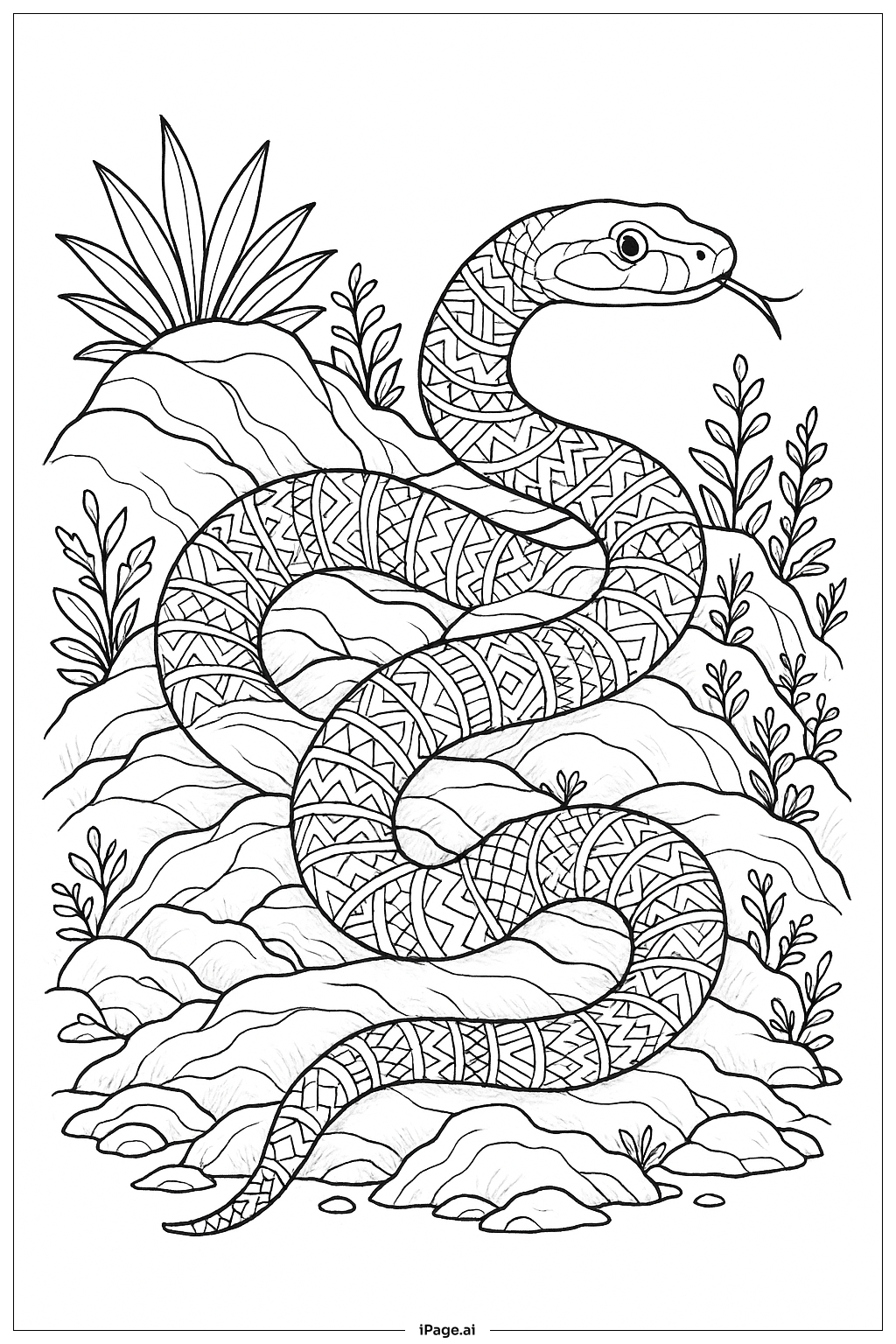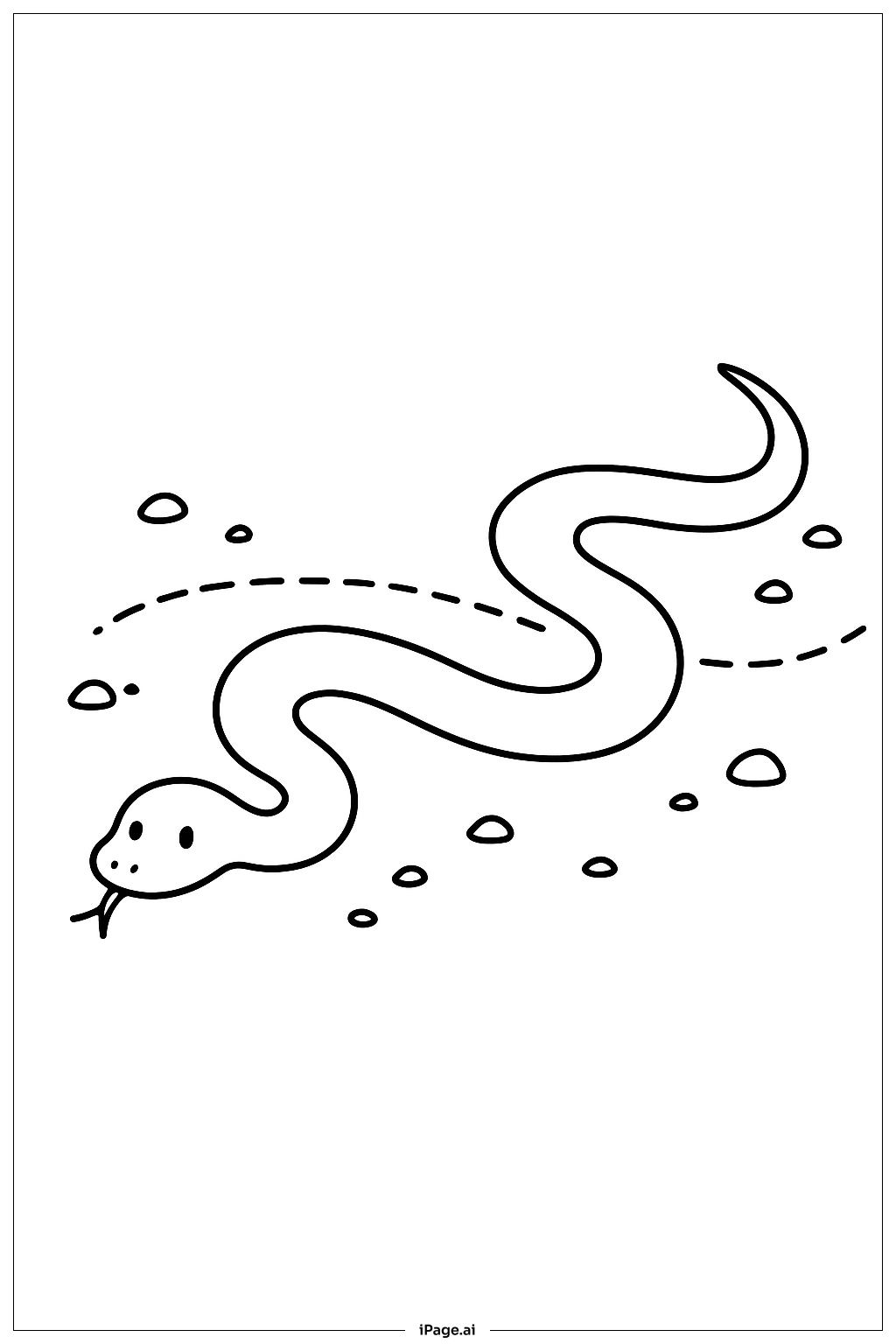
Coloring tips: How to color Snake Crossing Path coloring page well?
Try using different shades of green, brown, or yellow for the snake to make it look lively. Color the rocks in gray or brown to give them a natural look. You can use a mix of light and dark colors to show sunlight and shadow, adding depth. The ground can be colored in soft brown or light beige to match the outdoor setting. Use bright colors for the snake’s eyes and tongue to make them stand out.
Coloring challenges: Which parts are difficult to color and need attention for Snake Crossing Path coloring page?
1. Curvy body: The snake's long, winding shape can be tricky to color smoothly without going outside the lines.
2. Small details: Coloring the eyes, tongue, and tiny spots on the snake’s head requires patience and fine motor skills.
3. Rocks and path: The small rocks are scattered unevenly, so you need to color each carefully without mixing colors.
4. Maintaining natural look: Choosing colors that make the snake look realistic while keeping the image fun can be challenging.
5. Depth and shading: Adding shadows and highlights to a simple line drawing can be difficult but helps the image come alive.
Benefits of coloring books: Advantages of drawing Snake Crossing Path coloring page
Coloring this picture helps kids learn about different colors and how to mix them. It improves hand-eye coordination and fine motor skills by coloring small and large areas carefully. The image encourages attention to detail and patience, especially with the snake’s small parts and path. Coloring animals like snakes also teaches children about nature and wildlife, sparking curiosity. Overall, it provides a relaxing and creative activity for kids to enjoy.