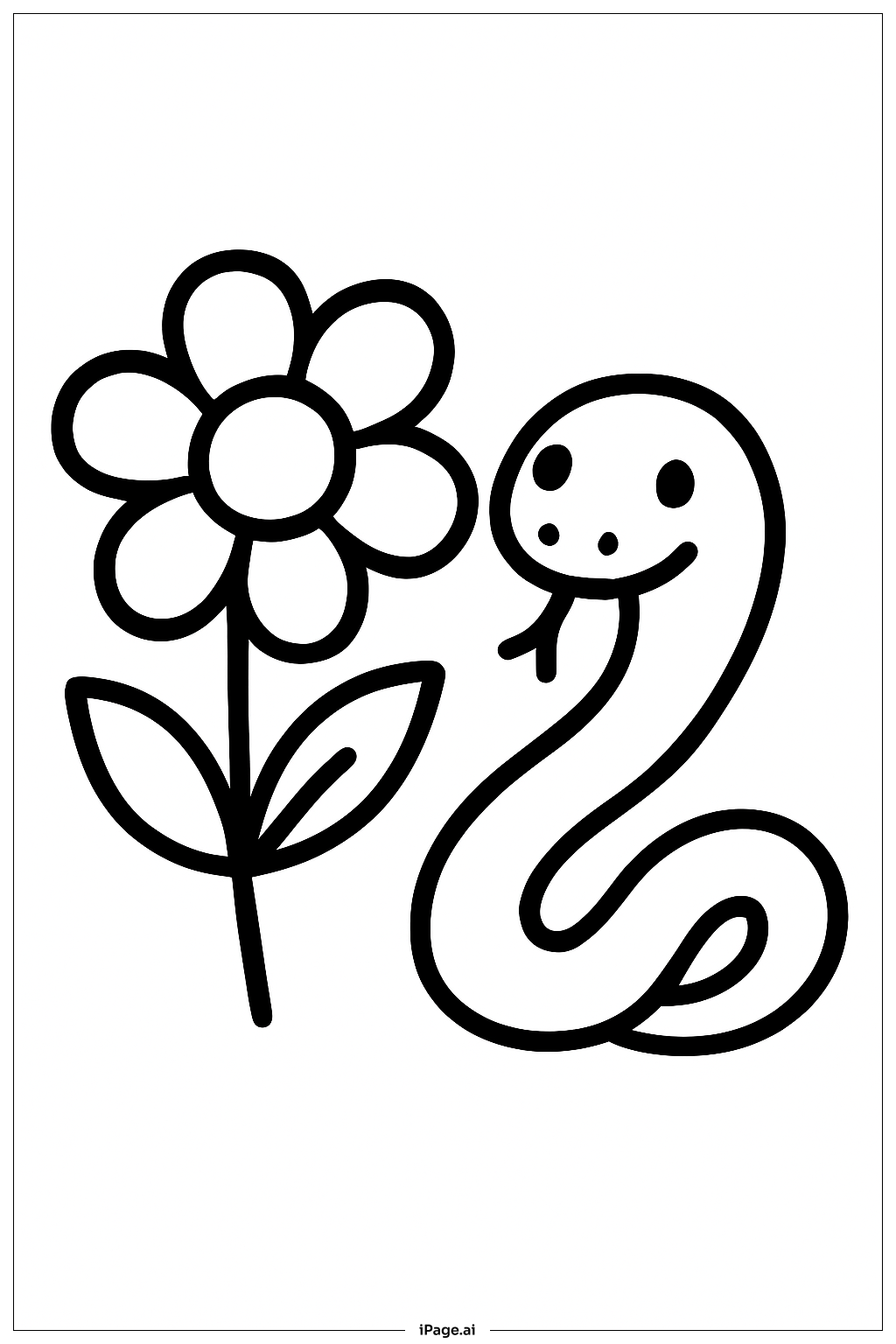
Coloring tips: How to color Snake and Flower coloring page well?
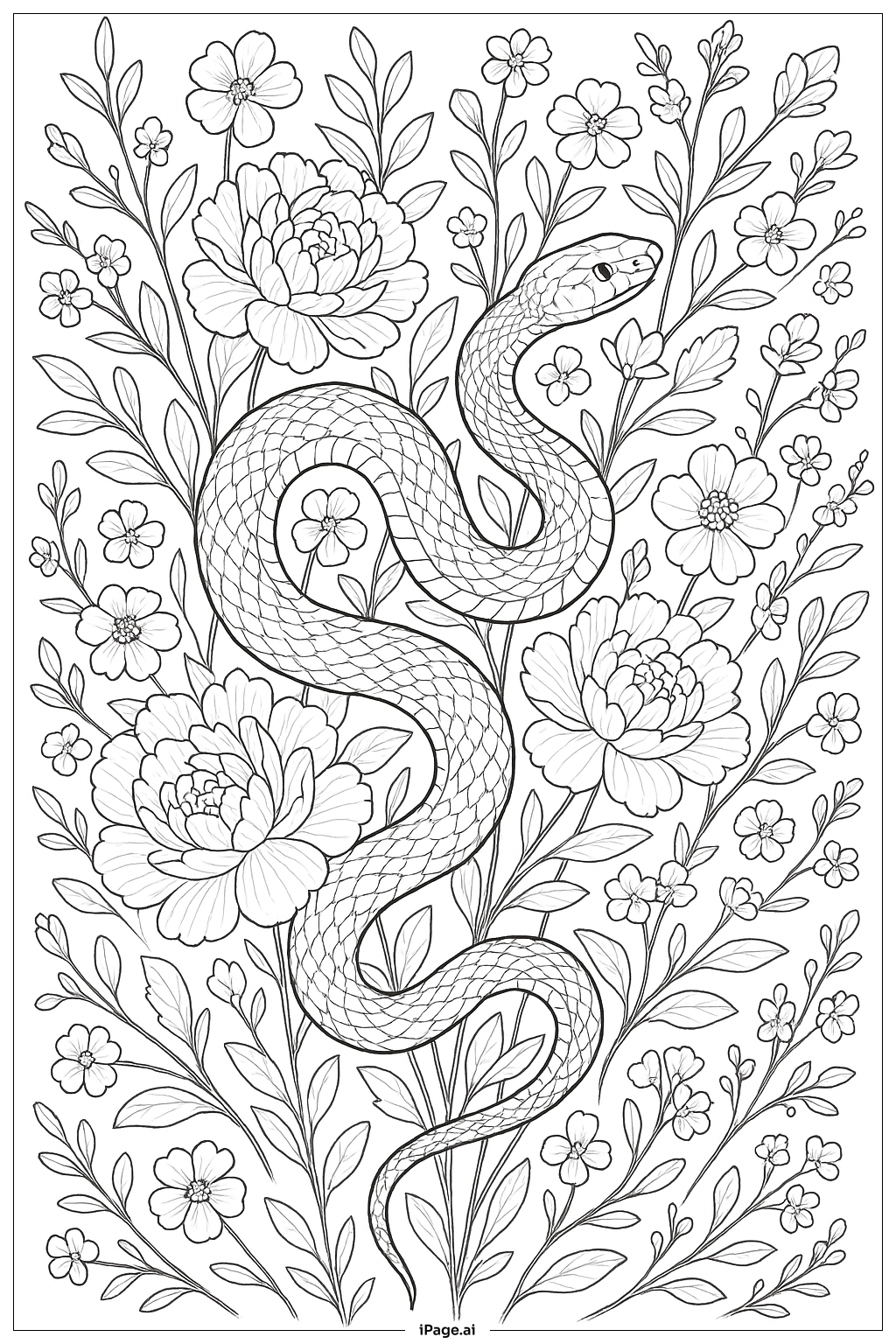
Start with the snake's body by choosing a base color like green, olive, or brown. Use a slightly darker shade to fill in the scale details and add depth. You can make the scales look more realistic by alternating between two close shades. For the flower petals, try soft colors like pink, lavender, yellow, or white. Add a touch of a deeper shade along the edges of each petal to give them a natural look. The flower center can be colored in golden yellow or orange. Use bright green for the leaves and stem, with a darker green along the veins. Feel free to mix bold and soft tones to create a contrast between the lively snake and the gentle flower. There are no rules — let your imagination guide your color choices and make this page your own.
Coloring challenges: Which parts are difficult to color and need attention for Snake and Flower coloring page?
• Scale Patterns on the Snake: The snake's body is covered in many small, repeating scale shapes. Staying inside each tiny section without smudging into the next one requires patience and a fine-tipped coloring tool. Using colored pencils or thin markers works best here to keep each scale neat and clean.
• Shading the Snake's Curved Body: Because the snake is coiled and three-dimensional in design, adding realistic shading can be tricky. The inner curves should be darker, while the outer, raised areas should be lighter. Blending two shades smoothly takes practice, especially for younger colorists.
• Petal Details and Layering: The flower petals have subtle lines running from the center outward. Following these lines with slightly varied shades of the same color can make the petals look soft and lifelike. However, applying too much pressure in one area may result in uneven color distribution across the petal surface.
• Leaf Veins and Green Variations: The leaves feature fine vein lines that divide each leaf into smaller sections. Coloring around these veins — or deliberately leaving them lighter — adds realism but demands careful control of your coloring tool. Switching between two or three shades of green can make the leaves feel natural.
• Balancing Contrast Between Snake and Flower: One of the biggest challenges is making sure the snake and flower both stand out without clashing. Choosing colors that complement rather than compete with each other is key. For example, a bold green snake pairs beautifully with soft pink or purple petals, creating visual harmony across the whole page.
Benefits of coloring books: Advantages of drawing Snake and Flower coloring page
Coloring this Snake and Flower page offers a wide range of benefits for children and young artists. First, it helps build fine motor skills. Carefully filling in the small snake scales and delicate petal shapes trains hand control and strengthens the muscles used for writing and drawing. Second, it encourages focus and patience. Detailed images like this one invite colorists to slow down, pay attention, and work through each section mindfully — a great exercise for building concentration. Third, it sparks creativity. Choosing color combinations for the snake and flower allows kids to express themselves freely and develop their own sense of color and style. Fourth, it builds confidence. Completing a detailed and beautiful coloring page gives children a real sense of pride and accomplishment. Fifth, it offers a calming activity. The rhythmic motion of coloring is known to reduce stress and anxiety, making it a wonderful quiet-time activity. Whether done alone or with friends and family, this page turns coloring into a meaningful, joyful experience.