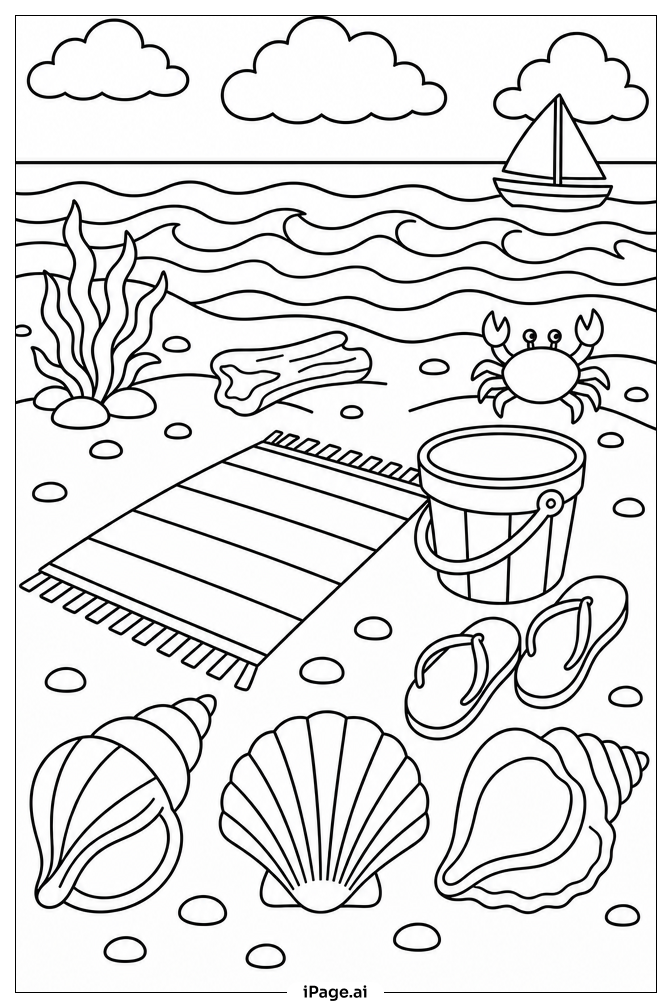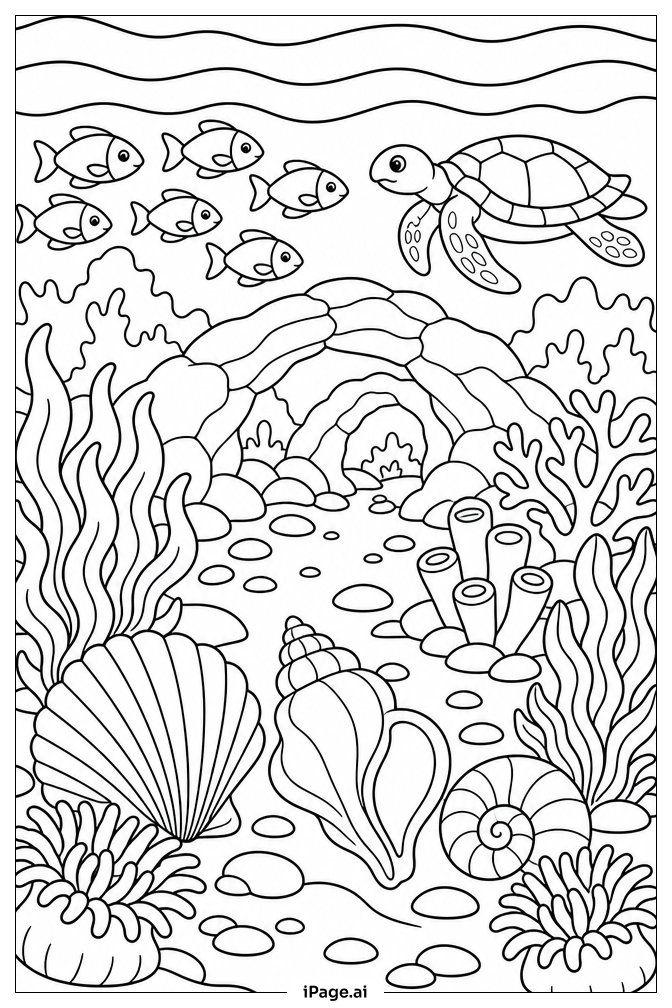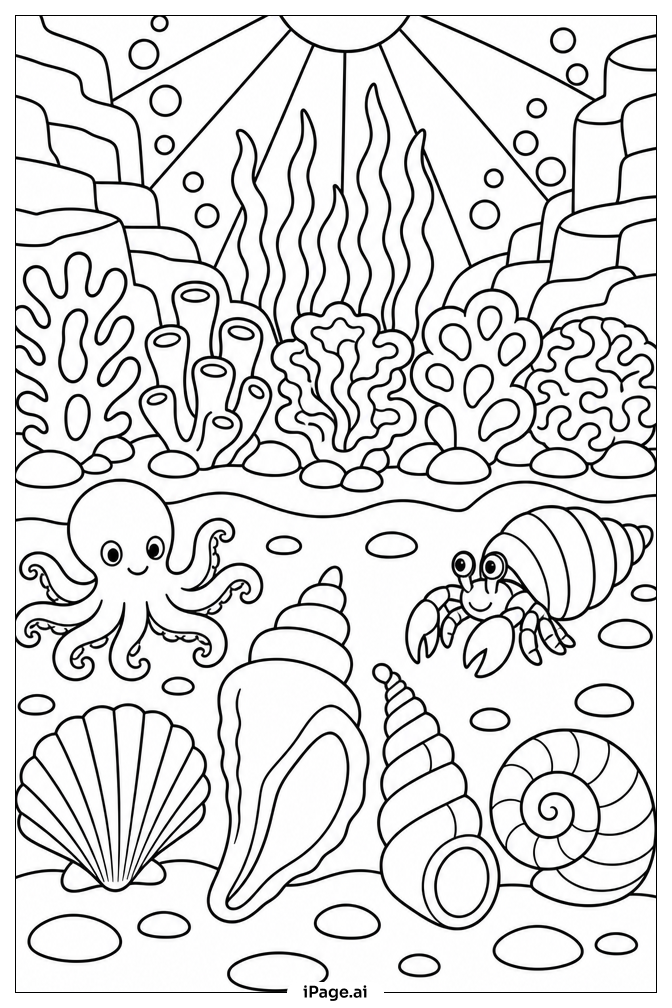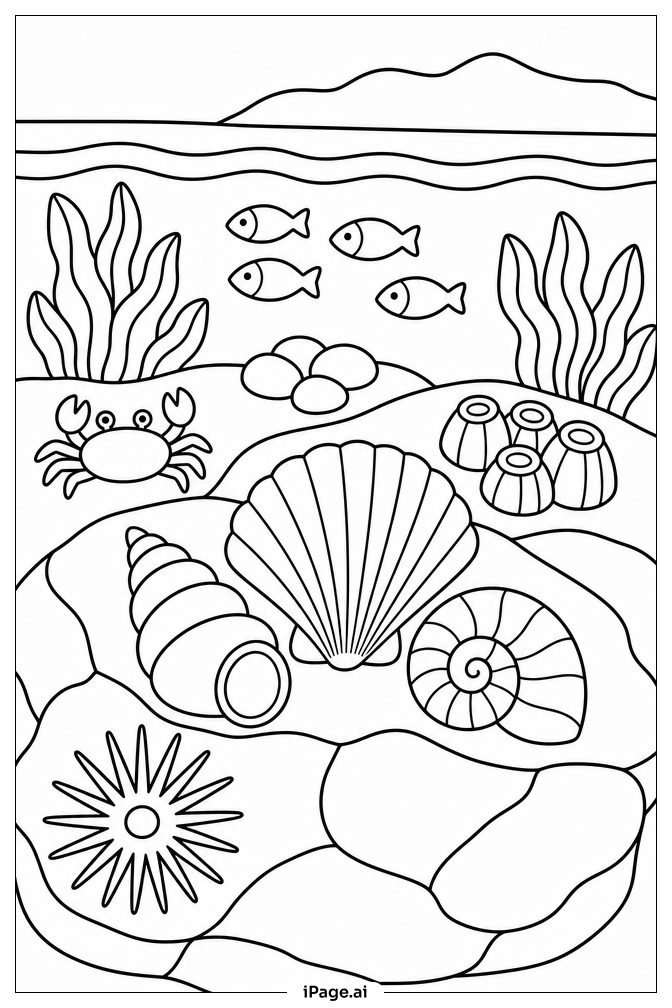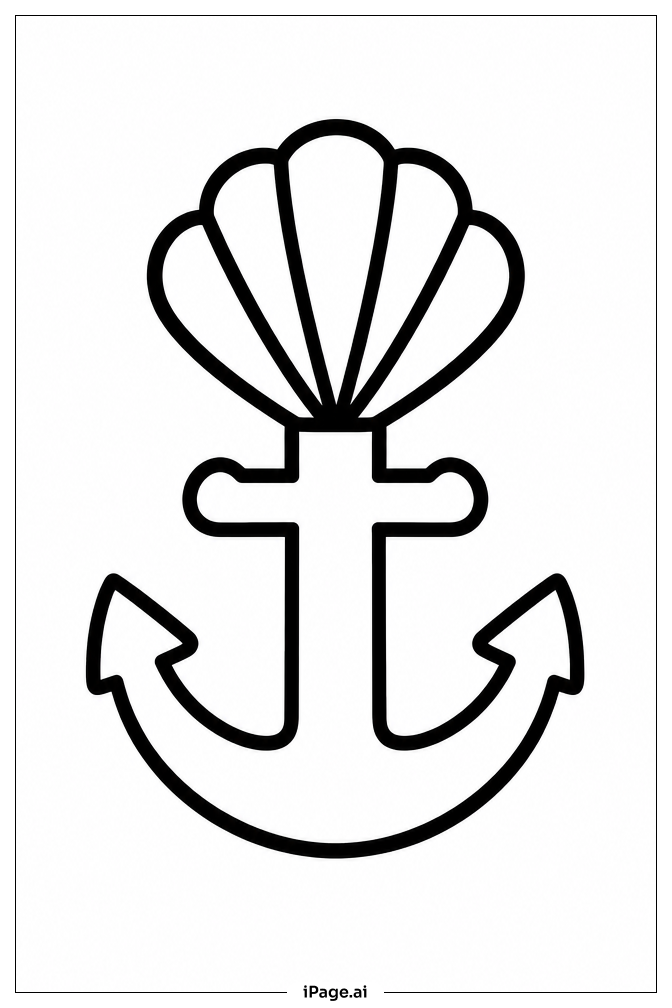
Coloring tips: How to color Seashell Anchor coloring page well?
Start by coloring the anchor itself in a bold metallic tone — try dark gray, navy blue, or rusty brown to give it an aged, nautical feel. For the seashells, use a warm palette of creamy whites, sandy beiges, soft pinks, and peachy corals. Spiral conch shells look great with gradient shading — darker at the tip and lighter toward the opening. Fan-shaped scallop shells can be striped with alternating light and dark tones. Use golden yellow or tan for the rope or vine details to make them pop against the anchor. Add a soft ocean blue or seafoam green as a background wash to bring the whole scene together. Kids can keep it bright and playful with bold colors, while older colorists can experiment with blending and shading for a more realistic look. Have fun with it!
Coloring challenges: Which parts are difficult to color and need attention for Seashell Anchor coloring page?
Coloring this Seashell Anchor image comes with several challenges that make it an engaging but rewarding activity:
• **Intricate shell details:** The various seashells feature fine spiral lines, ridges, and curves that require careful coloring with sharp pencils or fine-tipped markers. Staying within these small, detailed areas without smudging or overlapping into neighboring sections demands steady hands and patience.
• **Blending multiple textures:** The image combines the hard, metallic surface of the anchor with the smooth, organic curves of shells and the rough texture of rope or vines. Each material calls for a different coloring technique — flat tones for metal, gradients for shells, and cross-hatching or layering for rope — which can be tricky to manage across one image.
• **Color coordination across many elements:** With so many shells of different shapes clustered together, choosing colors that look harmonious without making the image feel chaotic is a real challenge. Colorists need to plan ahead to avoid placing two similar colors next to each other, ensuring each shell stands out clearly.
• **Small negative spaces:** The gaps between shells, rope, and anchor edges are narrow and easy to accidentally fill in. Coloring these tight spaces requires precision tools and a slow, deliberate approach, especially for younger or less experienced colorists.
• **Shading the anchor realistically:** Giving the anchor a convincing metallic appearance means layering light and shadow effectively. Achieving depth on a flat anchor shape without overworking the area is a subtler challenge that tests more advanced coloring skills.
Benefits of coloring books: Advantages of drawing Seashell Anchor coloring page
Coloring this Seashell Anchor page offers a wonderful range of benefits for kids and adults alike.
For children, it helps develop fine motor skills as they carefully color within the detailed shell outlines and narrow anchor edges. Choosing colors and planning the overall look encourages creative thinking and boosts confidence in making artistic decisions. It also sparks curiosity about the ocean, seashells, and nautical themes, making it a fun way to explore the natural world.
For older kids and teens, the complexity of the image builds focus and patience. Working through the intricate details teaches them how to slow down, think ahead, and take pride in a finished piece.
For adults, this coloring page is a great stress-relief activity. Focusing on the repetitive, satisfying motion of filling in shells and anchor details helps quiet a busy mind and encourages mindfulness. It's a screen-free way to relax and recharge.
Across all ages, completing this image gives a real sense of accomplishment. The finished artwork is something to be proud of — and it makes a beautiful decoration. Overall, coloring this page is a joyful, calming, and creatively enriching experience for everyone.