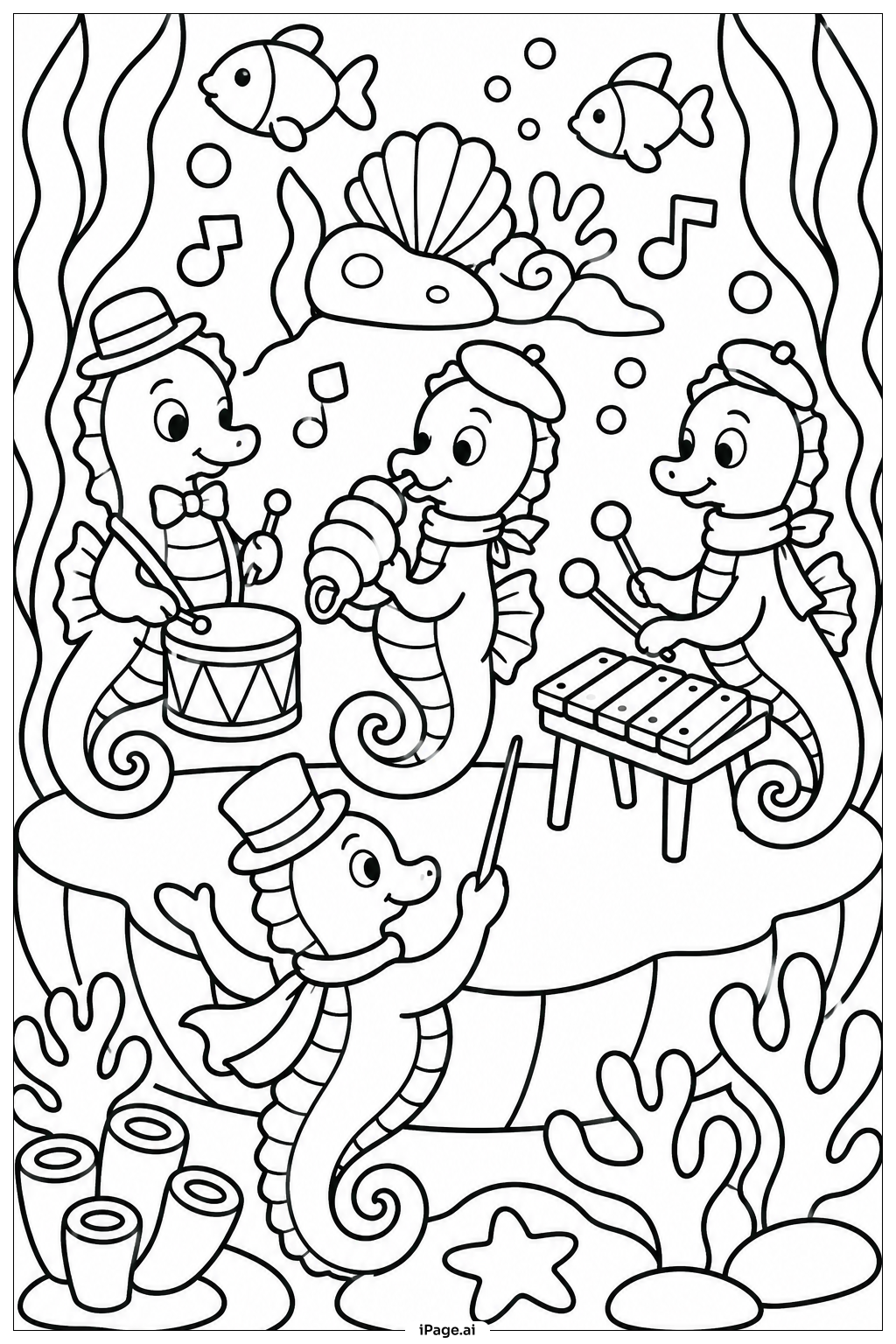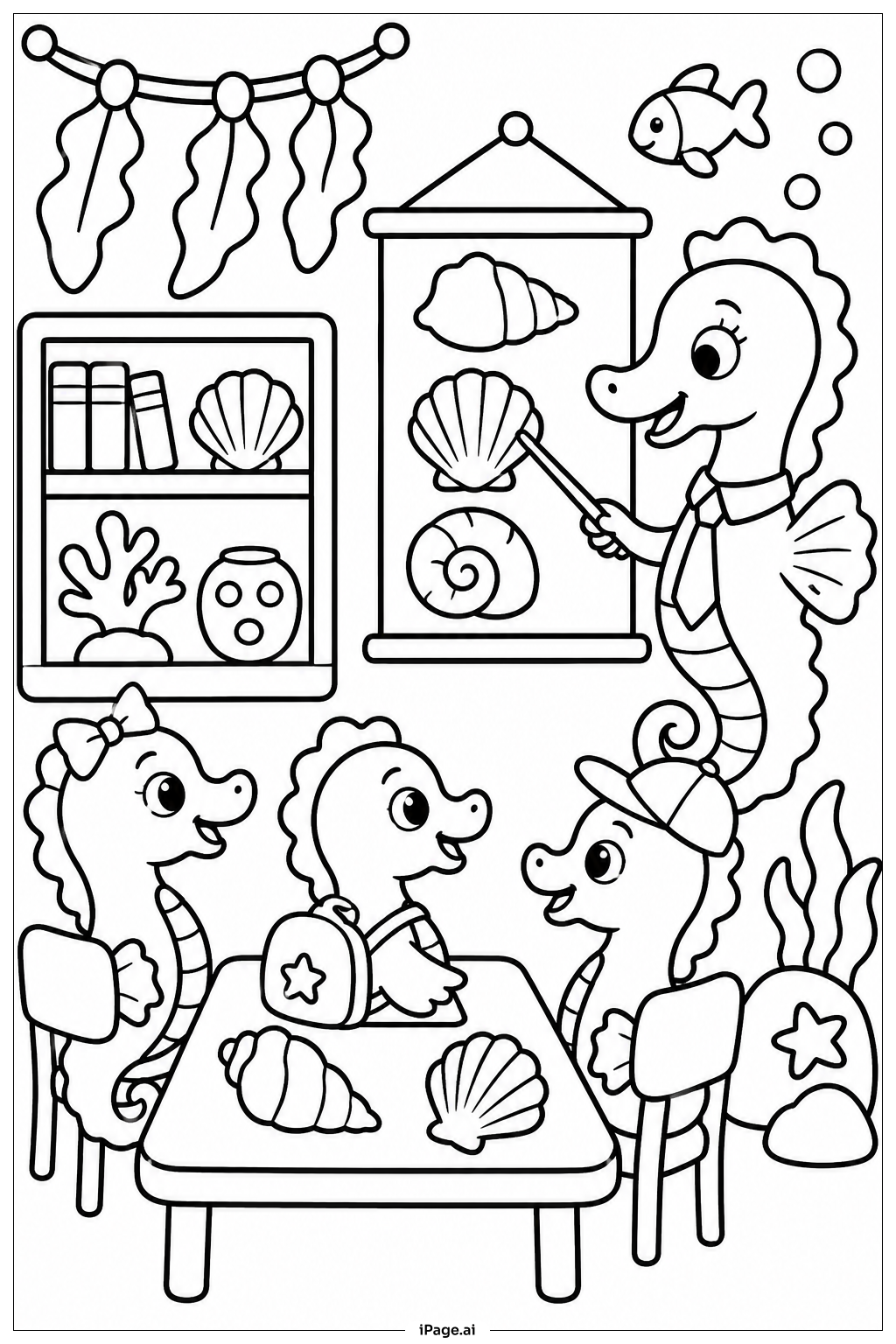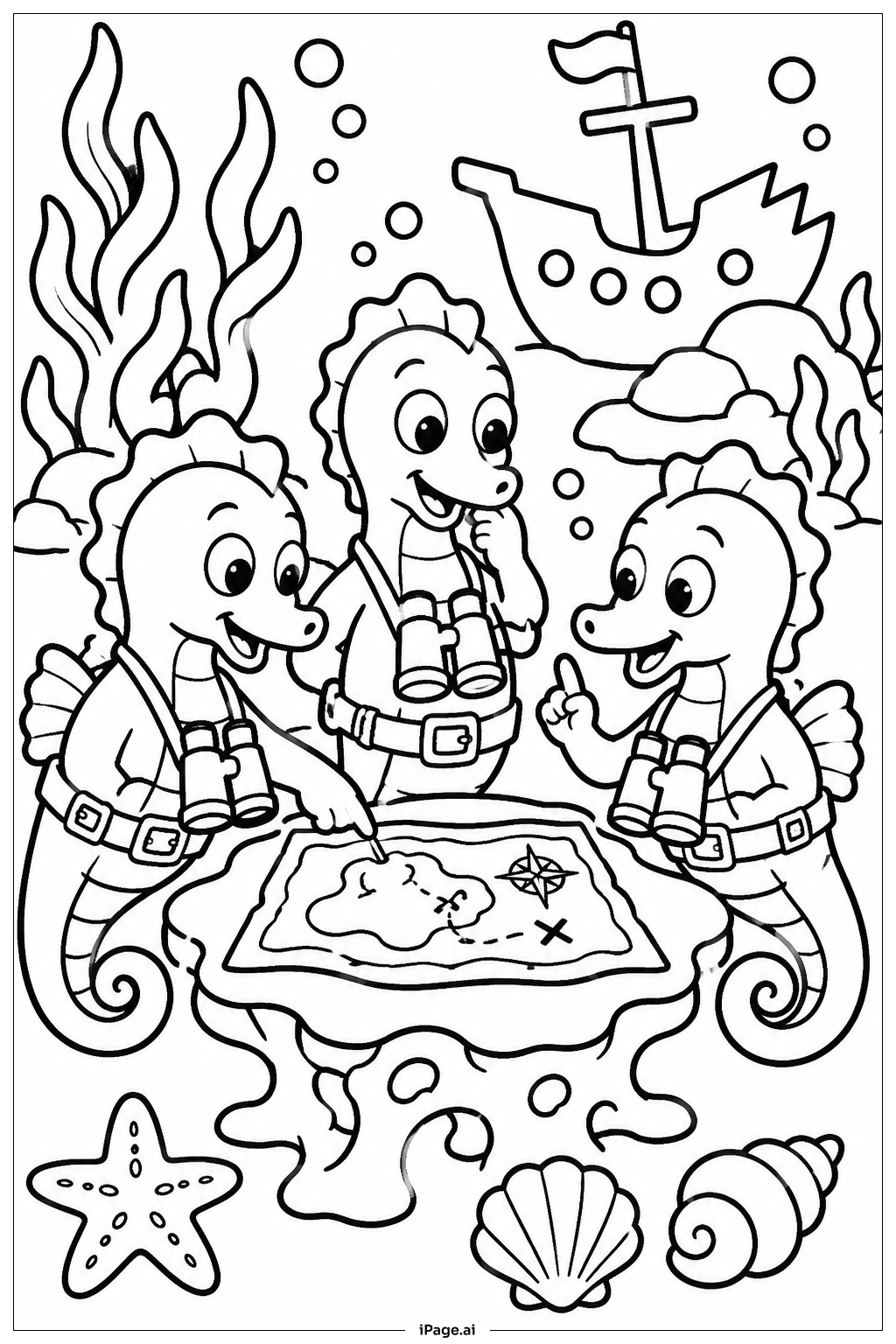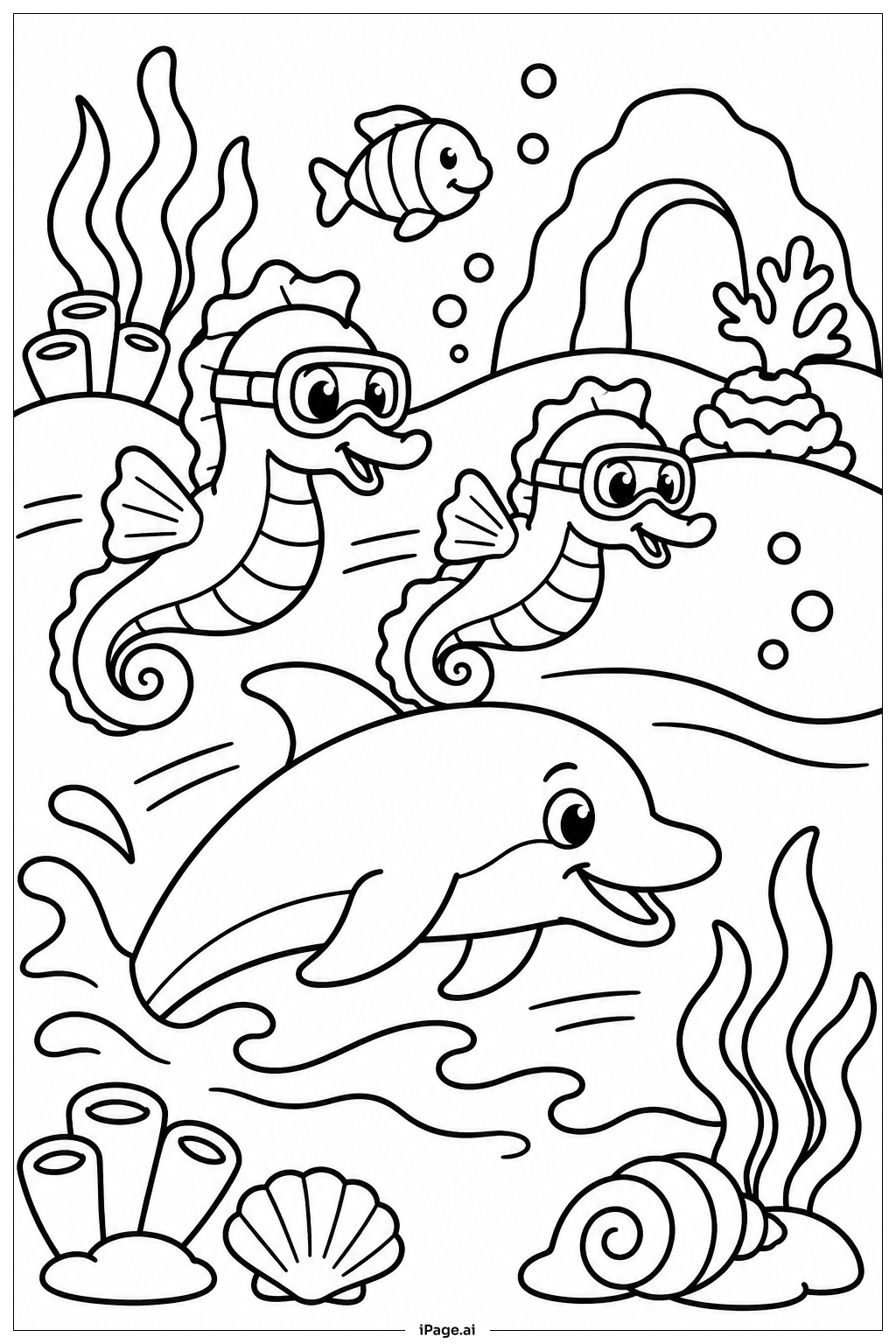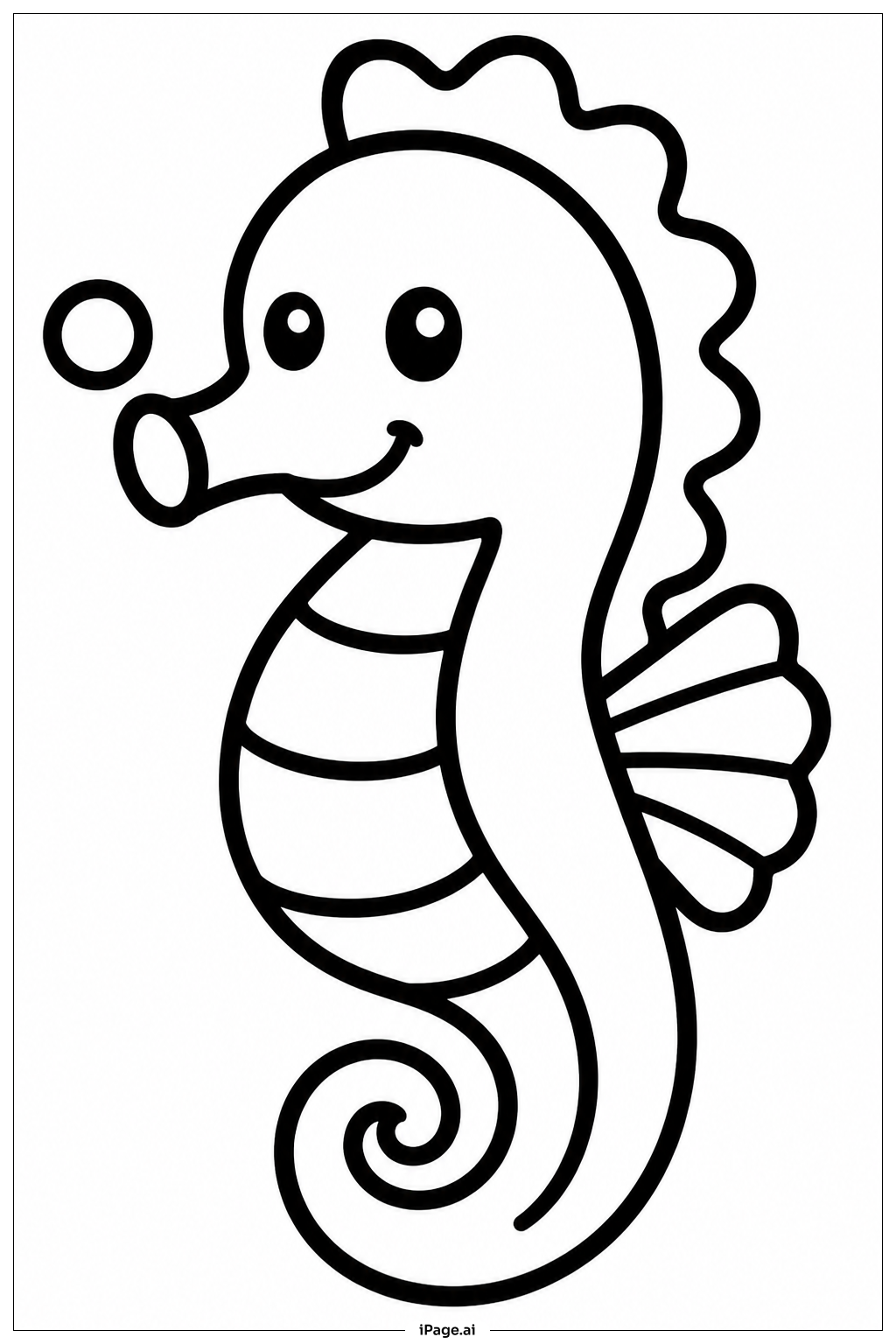
Coloring tips: How to color Smiling Seahorse coloring page well?
Start with the seahorse's body using warm, vibrant colors like golden yellow, bright orange, or coral pink to make it pop. Use a slightly darker shade of the same color for the ridged segments to add depth and dimension. Color the flowing dorsal fin in a soft complementary shade, like light teal or lavender. Give the eye a dark pupil with a bright highlight dot to make it look lively. For the background, use cool ocean blues and aqua greens to contrast beautifully with the warm seahorse. Add purple or pink tones to the coral elements. Scatter light blue or white bubbles throughout the scene for a fun, bubbly underwater feel.
Coloring challenges: Which parts are difficult to color and need attention for Smiling Seahorse coloring page?
• **Segmented body details:** The seahorse's body is made up of many small ridged plates and segments. Carefully coloring each segment without going over the lines requires patience and a fine-tipped coloring tool. Using two shades of the same color — one for the flat surface and one for the raised ridge — can help bring out the texture, but it takes a steady hand.
• **Small fins and delicate curves:** The dorsal fin along the back and the tiny pectoral fins near the head have thin, closely spaced lines. These narrow areas are tricky to fill neatly, especially for younger colorists. Colored pencils or fine markers work best here to stay within the small spaces.
• **The spiraling tail:** The long, curling tail tapers to a fine point and has many tight segments. Keeping colors consistent and smooth along the entire length of the tail — especially where it curves — can be challenging without smudging or overlapping colors.
• **Background ocean elements:** The surrounding bubbles, coral, and water details sit close to the seahorse's outline. Coloring these background elements without accidentally bleeding into the main figure requires careful attention, particularly where the seahorse's body meets the water scene.
• **Balancing warm and cool tones:** Choosing colors that make the seahorse stand out from the ocean background is a creative challenge. If both the seahorse and the water are colored in similar tones, the image can look flat. Thoughtfully contrasting warm body colors against cool background blues creates a visually striking and balanced final result.
Benefits of coloring books: Advantages of drawing Smiling Seahorse coloring page
Coloring this Smiling Seahorse page offers a wonderful range of benefits for kids and beginners alike. The detailed segments and curved shapes help children practice fine motor skills and hand-eye coordination as they carefully fill in each section. Staying within the lines builds focus and concentration, skills that carry over into reading and writing.
The creative freedom of choosing colors encourages self-expression and imagination. Kids can experiment with realistic ocean colors or go wild with fantasy hues — both are equally valid and fun. This kind of open-ended creativity builds confidence and a sense of accomplishment.
The calming, repetitive motion of coloring also helps reduce stress and anxiety, making it a great quiet-time activity after a busy day. The cheerful, smiling subject matter adds a positive emotional tone to the experience.
For older children, the challenge of shading the textured body and balancing warm and cool tones introduces basic color theory concepts in a hands-on, enjoyable way. Overall, this page turns a simple creative activity into a meaningful learning experience.