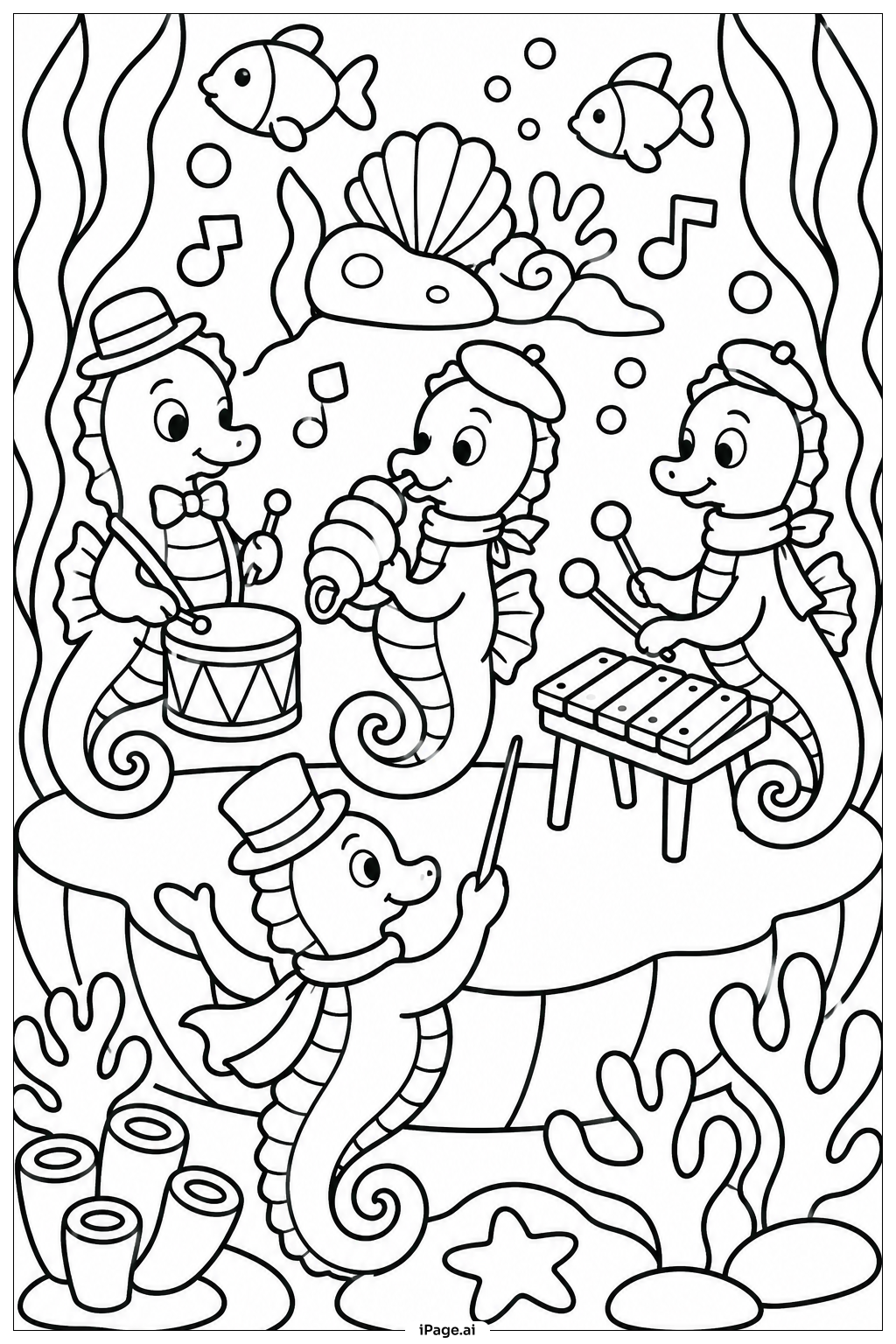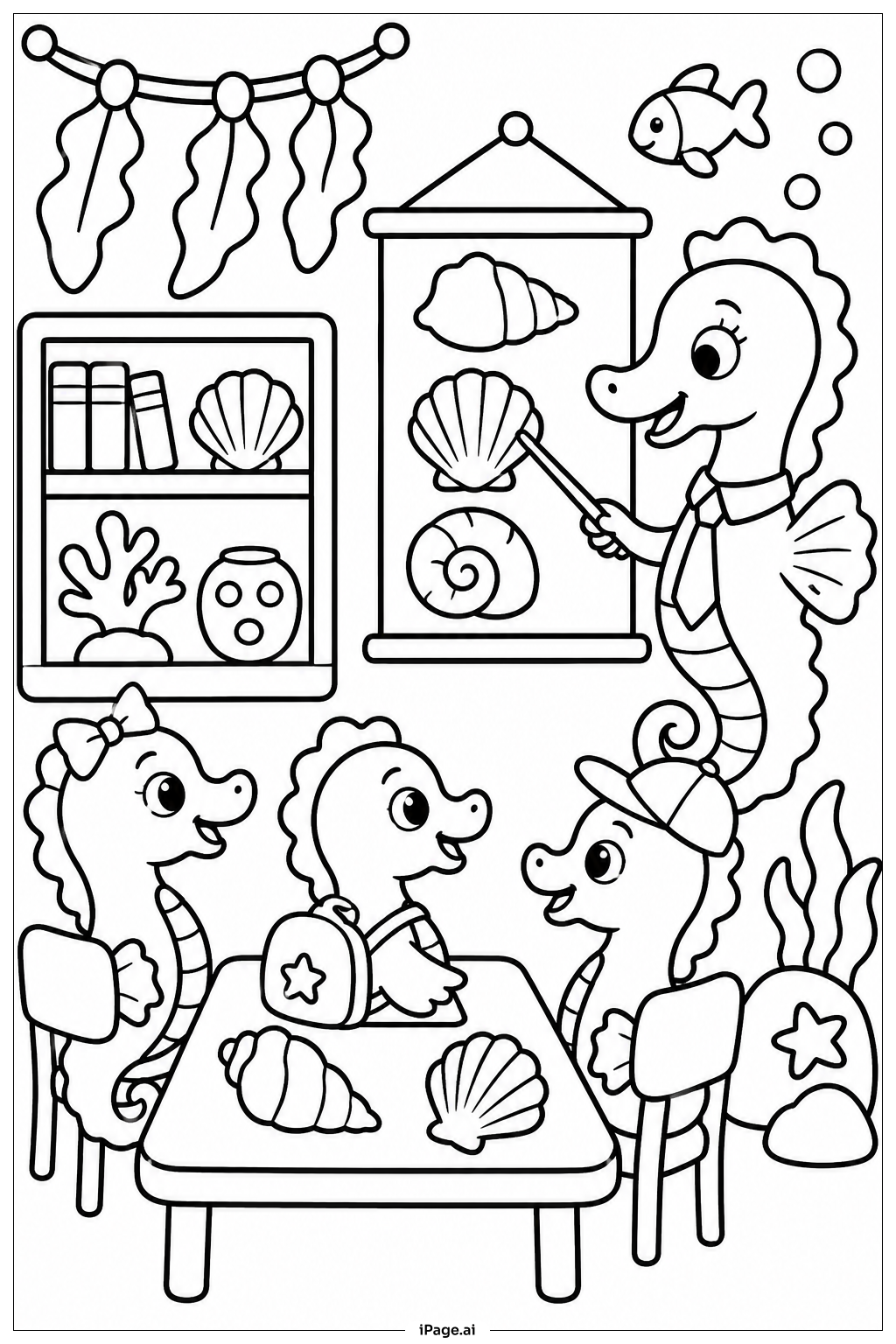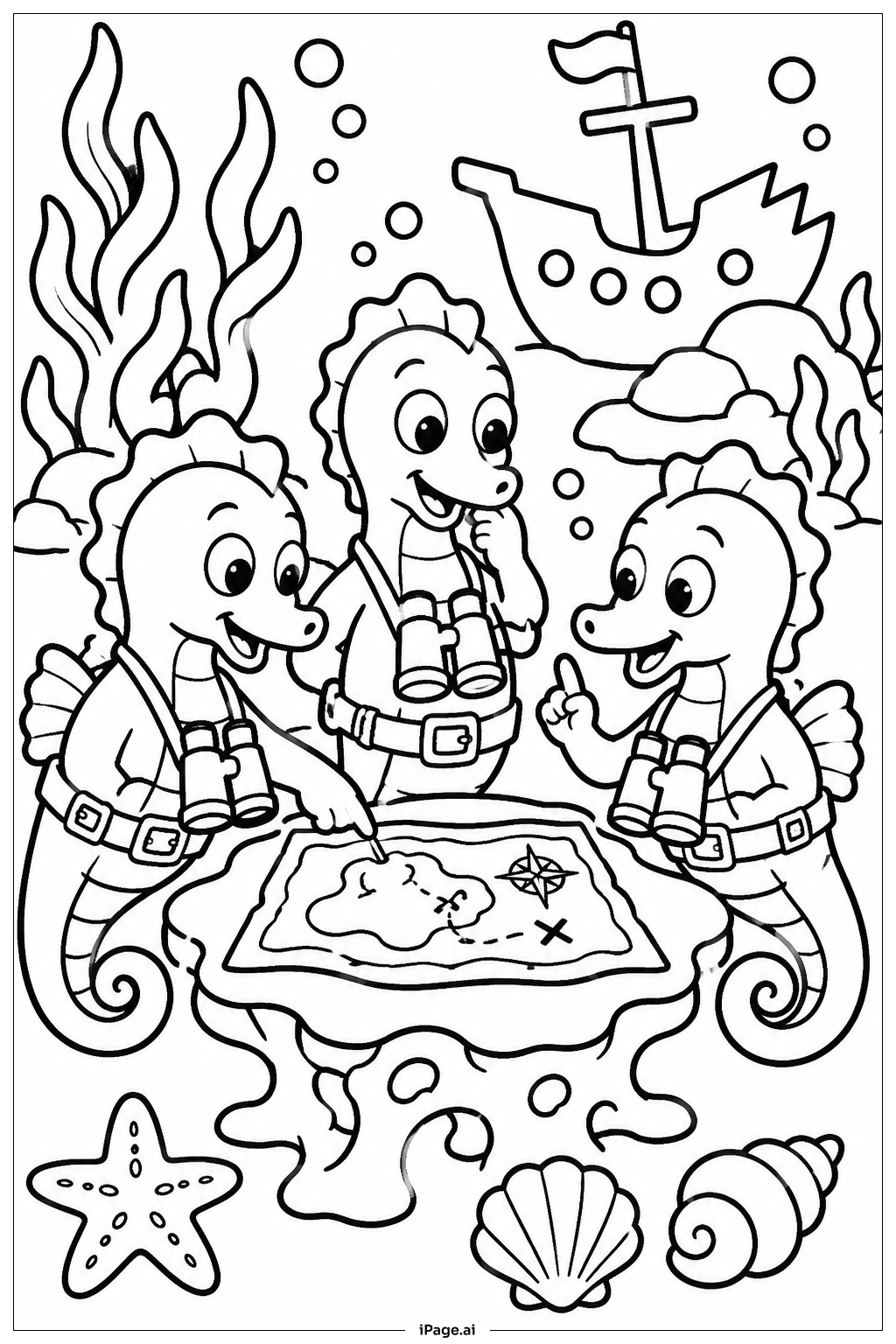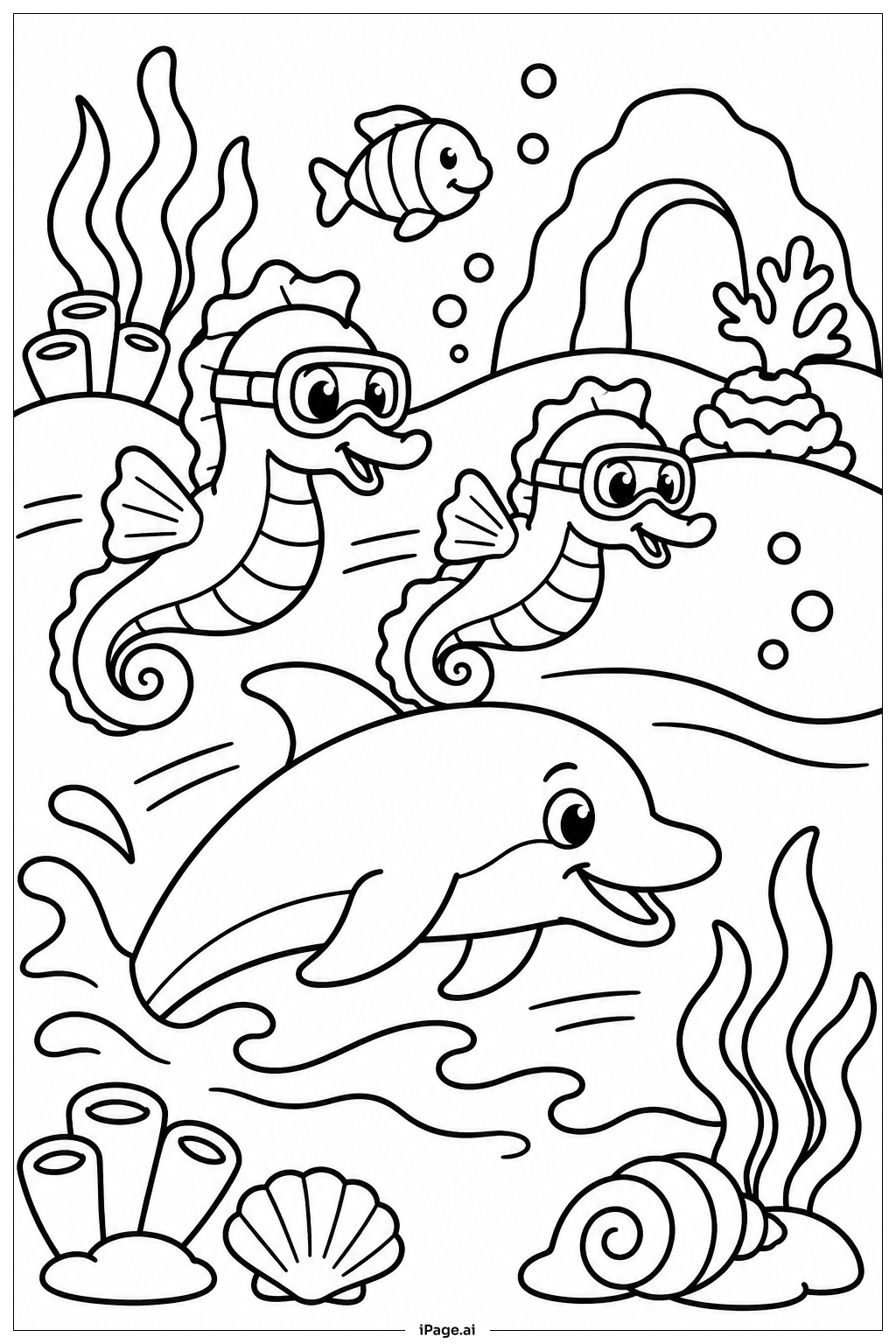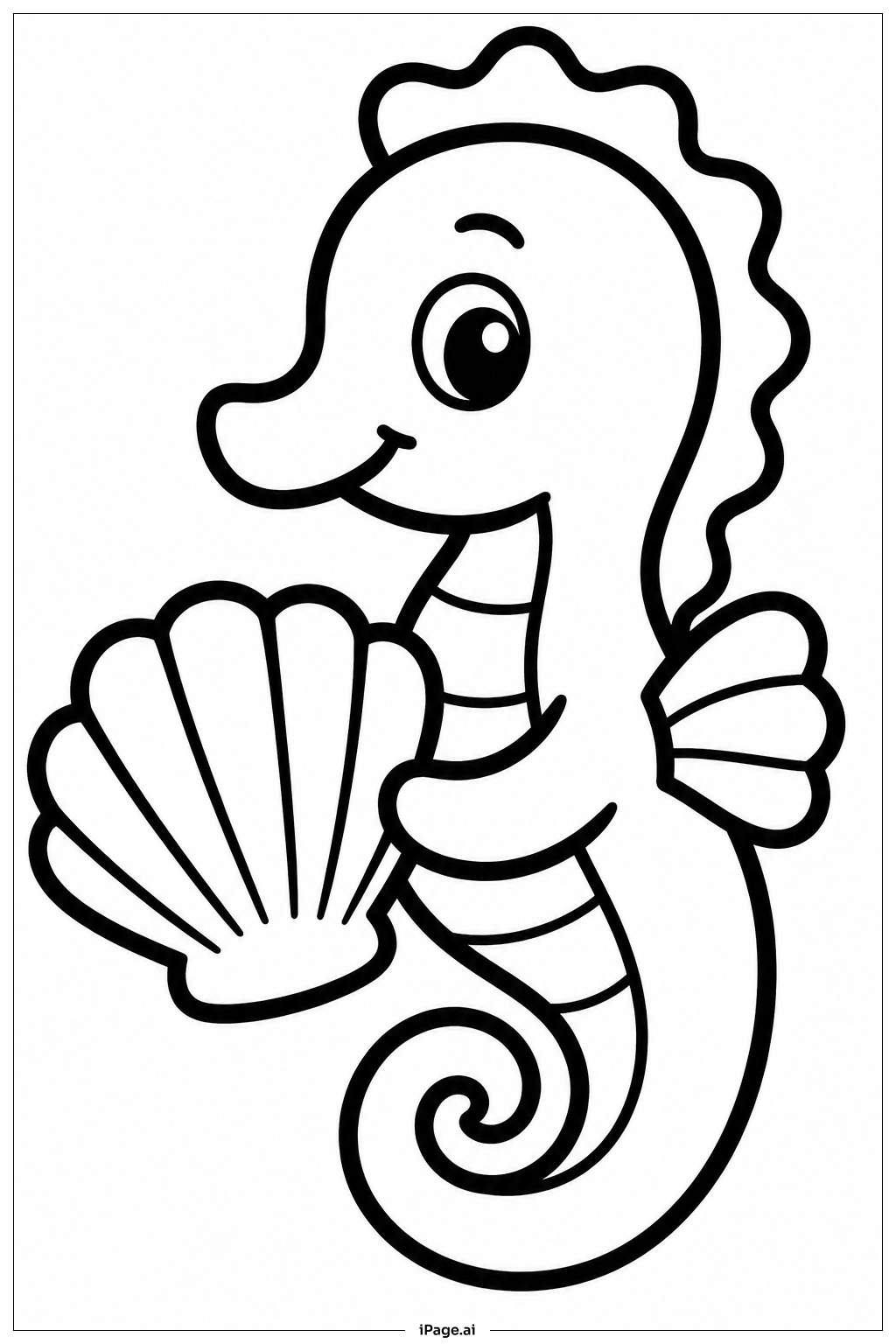
Coloring tips: How to color Seahorse With Shell coloring page well?
Start with the seahorse's body. Use warm golden yellows or bright oranges to make it pop. You can also try a soft teal or purple for a more magical look. Add darker shades of the same color along the edges of each body segment to give it a three-dimensional feel. For the eye, use a dark brown or black center with a bright highlight dot. Color the seashell in creamy whites, soft pinks, or sandy beiges. Use a slightly darker shade inside the spiral to show depth. For the background water swirls, light blues and aquas work beautifully. Try blending two shades of blue together for a flowing, watery effect. Don't be afraid to mix unexpected colors — seahorses in real life come in many stunning shades!
Coloring challenges: Which parts are difficult to color and need attention for Seahorse With Shell coloring page?
• **Segmented body details:** The seahorse's body is made up of many small, overlapping bony plates. Coloring each segment neatly without going over the lines requires a fine-tipped colored pencil or marker. Younger children may find this tricky, so using broader strokes and focusing on the overall shape is a good alternative.
• **Creating depth and shading:** To make the seahorse look rounded and realistic rather than flat, you need to apply lighter colors in the center and darker shades along the edges. This shading technique can be challenging for beginners who are still learning how to blend colors smoothly.
• **The spiral shell:** The seashell has a complex spiral structure with many ridged lines. Keeping colors consistent while following the curves of the spiral takes patience and a steady hand. Switching between two or three tones of the same color along the ridges can help show the shell's natural texture.
• **Small facial features:** The seahorse's tiny eye and delicate snout are very small areas to color. Using a sharp pencil tip or a fine-point marker is important here. Adding a tiny white highlight to the eye can make it look lively, but placing it precisely is a real test of control.
• **Background water swirls:** The flowing lines in the background look simple but can be hard to color evenly. Keeping the pressure consistent while following curved lines helps avoid streaky or uneven patches. Blending two shades of blue softly together gives the best watery result.
Benefits of coloring books: Advantages of drawing Seahorse With Shell coloring page
Coloring this Seahorse With Shell page offers a wonderful mix of fun and learning. For younger children, tracing around the seahorse's curves and shell spirals helps build fine motor skills and hand-eye coordination. Choosing colors and deciding how to fill each section encourages creative thinking and self-expression. Kids learn that there are no wrong answers — a purple seahorse is just as wonderful as a golden one! For older children, the detailed segments and shading opportunities make this a satisfying challenge that builds patience and focus. Spending quiet time coloring is also a great way to relax and reduce stress after a busy school day. As children color, they naturally become curious about seahorses — how they swim, how they change color, and why they carry shells — sparking an interest in ocean life and nature. Completing the page gives a real sense of accomplishment and pride. It is a simple, screen-free activity that the whole family can enjoy together.