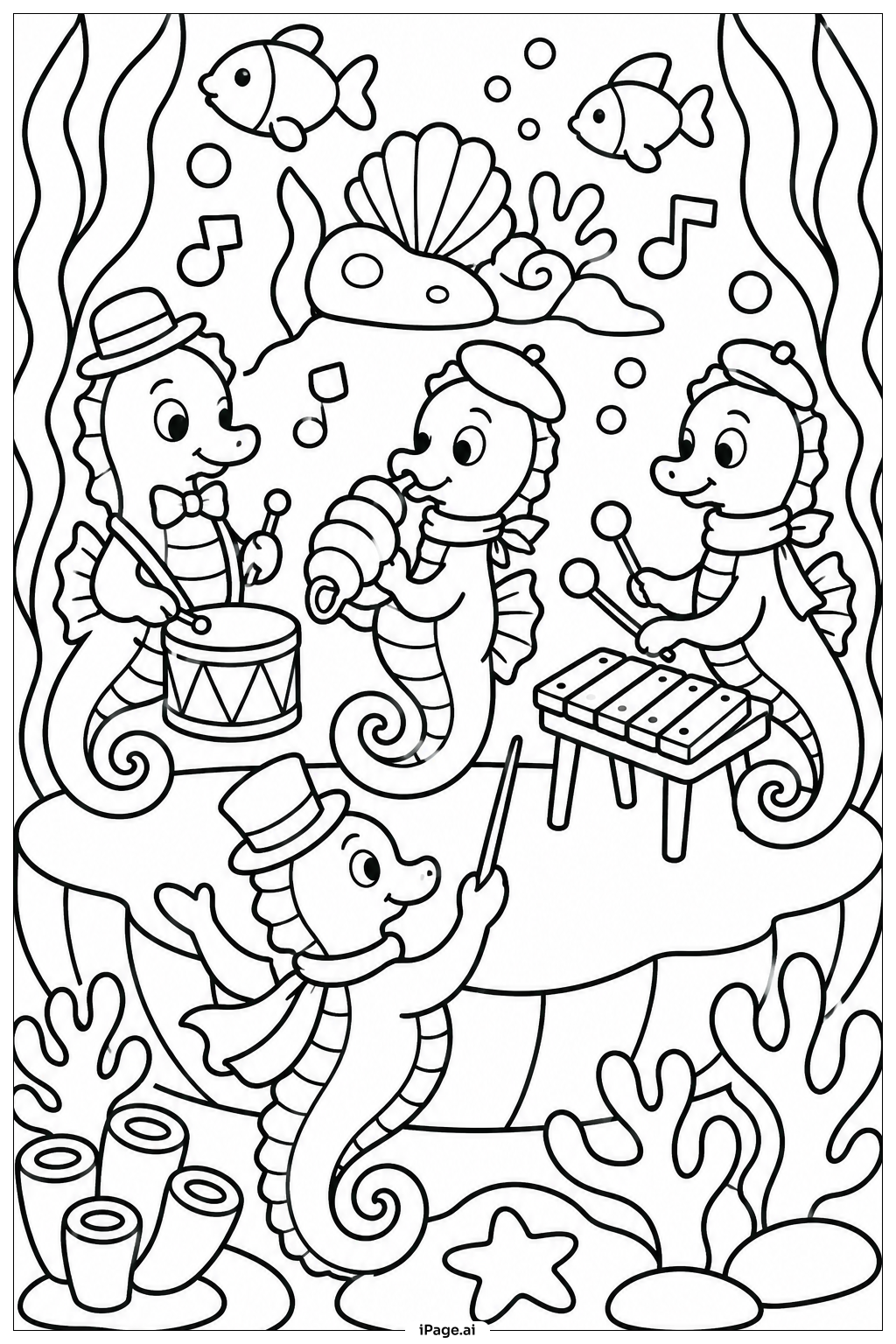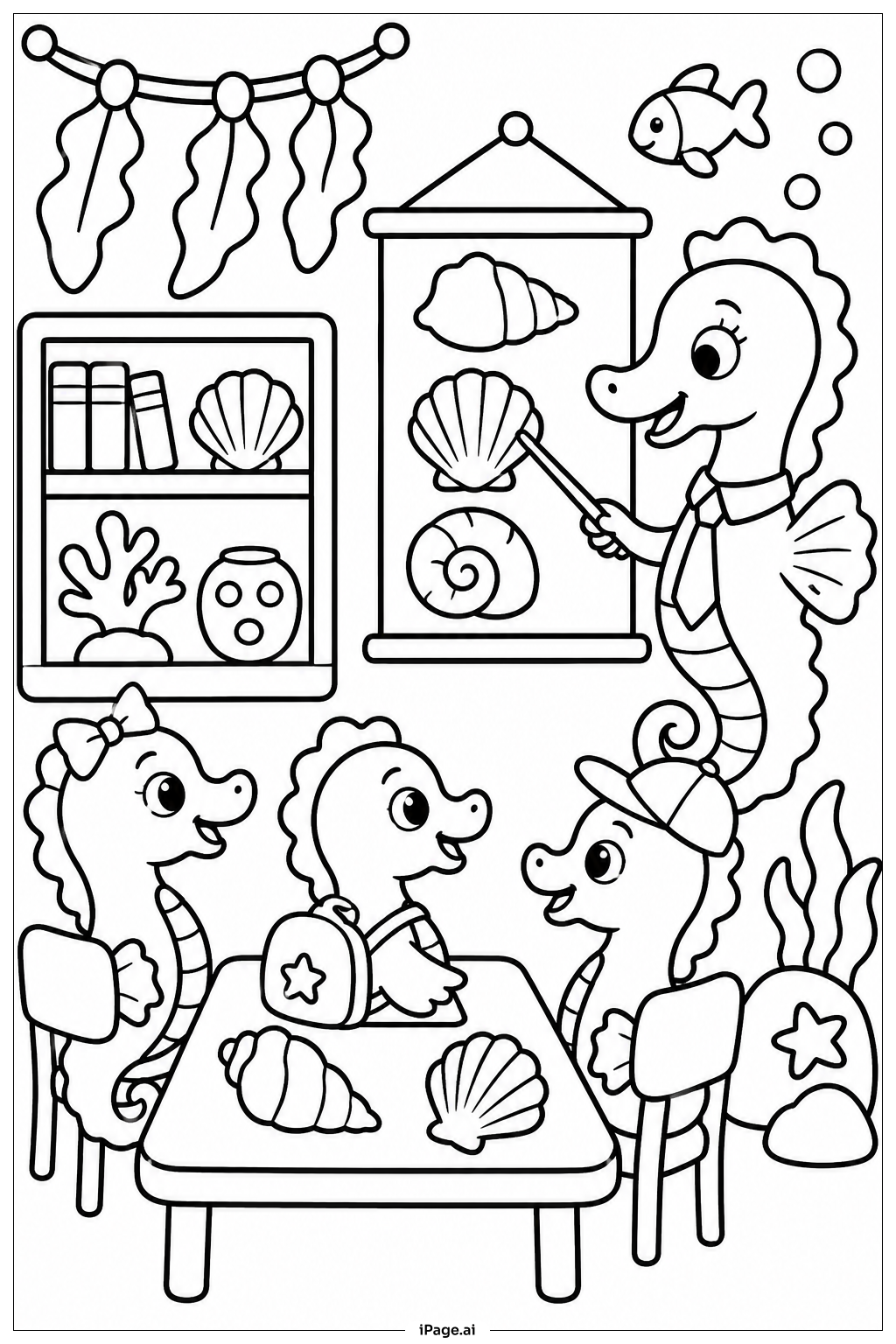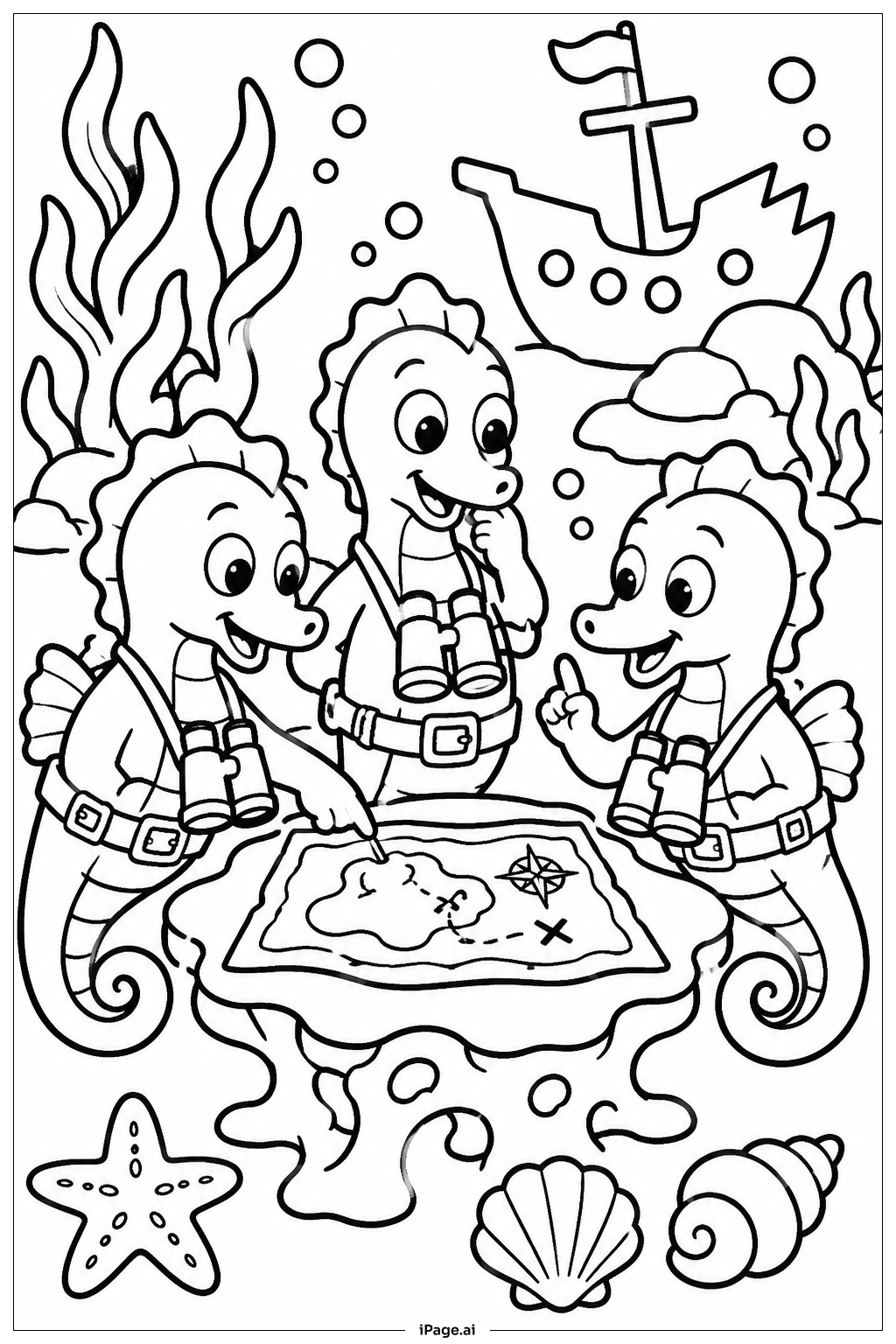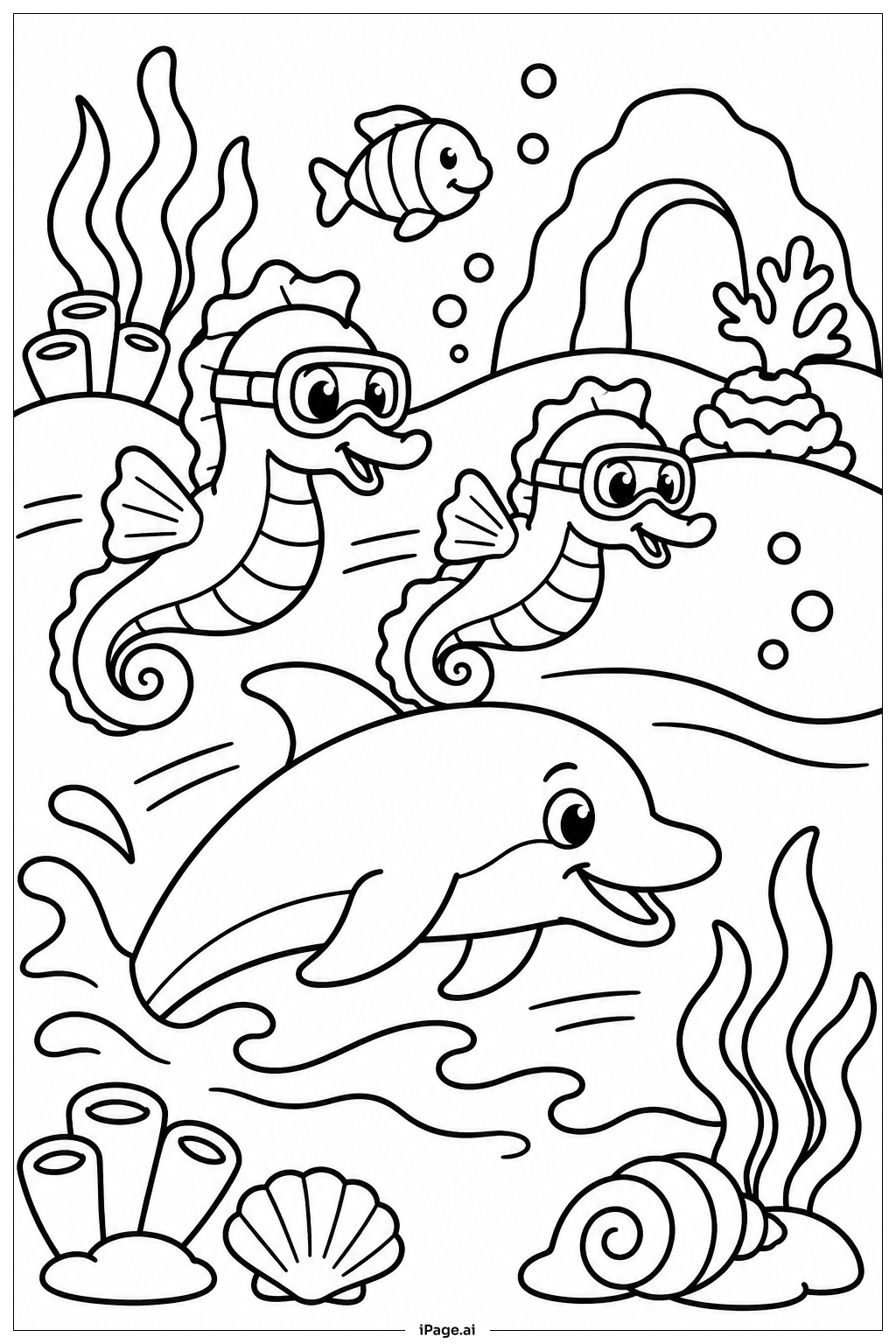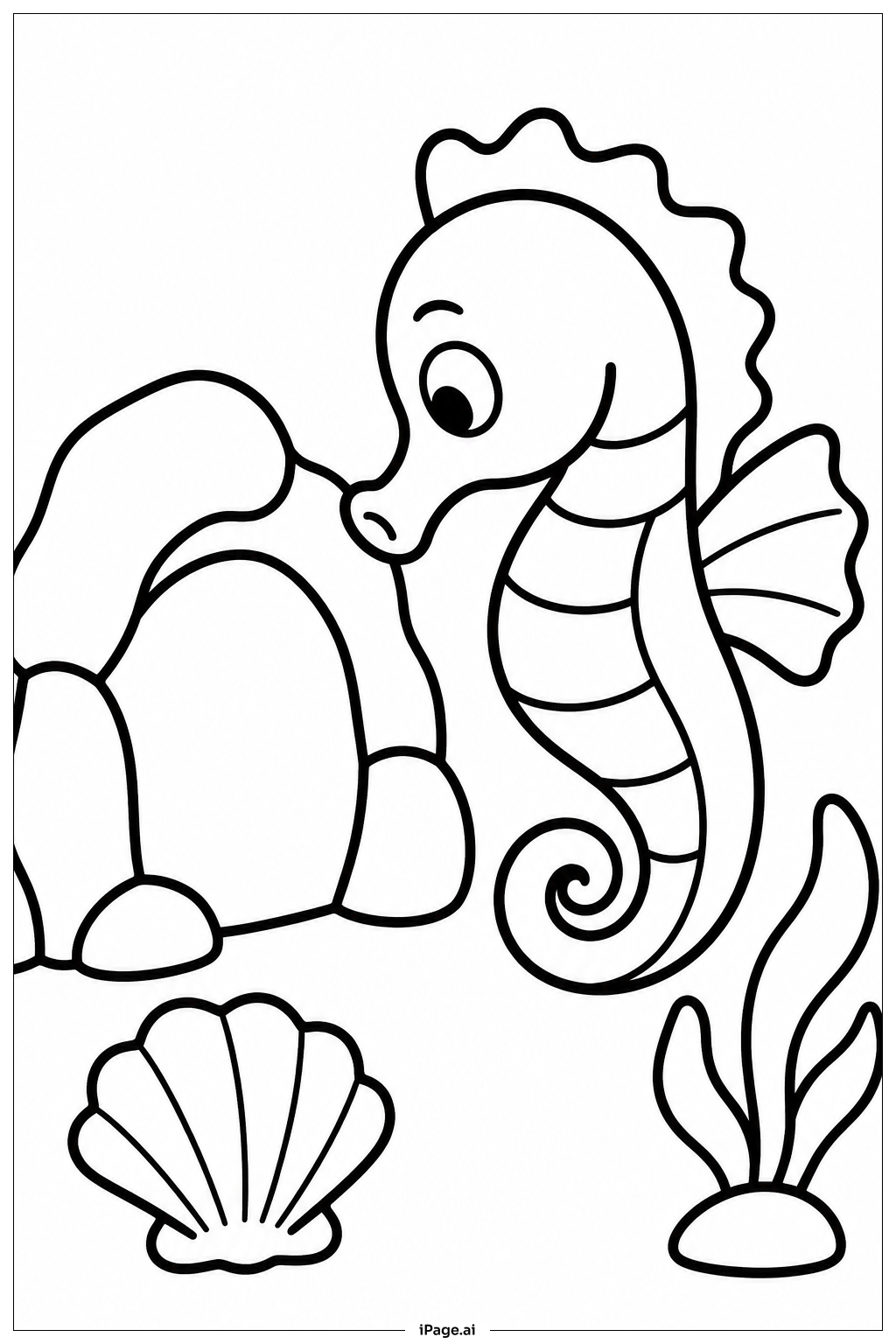
Coloring tips: How to color Seahorse Visiting Underwater Cave coloring page well?
Start with the seahorse itself. Use warm golden yellows or soft oranges for its body to make it stand out. Add darker shading along the ridges to give it a three-dimensional look. For the cave walls, try cool grays and deep blues to create a shadowy, mysterious feel. Mix in some purple and dark teal for the deeper rock areas. Color the coral in bright pinks, reds, and oranges to add pops of color. Use greens for the seaweed, ranging from light lime to deep forest green. Paint the small fish in fun, bright colors like turquoise or yellow. For the water and light rays, use soft light blues and whites to create a glowing underwater atmosphere.
Coloring challenges: Which parts are difficult to color and need attention for Seahorse Visiting Underwater Cave coloring page?
• **The seahorse's textured body:** The seahorse has many small ridges, bumps, and bony plates along its body. Coloring each segment neatly without going over the lines takes patience and a fine-tipped colored pencil or marker. Blending shading along the curves adds extra challenge but makes the seahorse look realistic.
• **The cave's rocky surfaces:** The cave walls are filled with uneven textures, cracks, and layered stone details. Capturing the depth and shadow of the rock requires using multiple shades of the same color. Lighter tones near the cave entrance and darker tones deeper inside help create a convincing sense of space.
• **Small details like anemones and coral:** The tiny sea anemones and coral clusters have many thin, overlapping parts. Staying inside such small shapes requires careful control, especially for younger colorists. Using a very sharp pencil tip or a fine-point marker works best here.
• **Overlapping elements:** Seaweed, coral, and rock surfaces overlap throughout the scene. Deciding which element sits in front and which sits behind — and coloring them accordingly — can be tricky. Planning your color choices before you start helps avoid confusion.
• **Lighting and water effects:** The light rays filtering through the water create a soft, glowing effect. Recreating this with colored pencils or watercolors means blending carefully from bright white-blue at the light source to deeper blue farther away. This gradient technique can be difficult but makes the finished piece look stunning.
Benefits of coloring books: Advantages of drawing Seahorse Visiting Underwater Cave coloring page
Coloring this underwater cave scene offers a wonderful mix of fun and learning. As kids follow the seahorse on its adventure, they naturally learn about ocean life and sea creatures. Choosing colors for the cave, coral, and seaweed encourages creative thinking and helps children explore how colors work together. Carefully coloring the small details — like the seahorse's ridges and the tiny anemones — builds fine motor skills and improves hand control, which supports writing and other everyday tasks. Focusing on a detailed scene also helps children practice patience and concentration. The calm, peaceful underwater setting makes the coloring experience feel relaxing and enjoyable, which can reduce stress and boost mood. For older kids and adults, the layering and shading challenges offer a satisfying creative workout. Overall, this coloring page sparks curiosity about the natural world while providing a screen-free activity that is both educational and deeply rewarding.