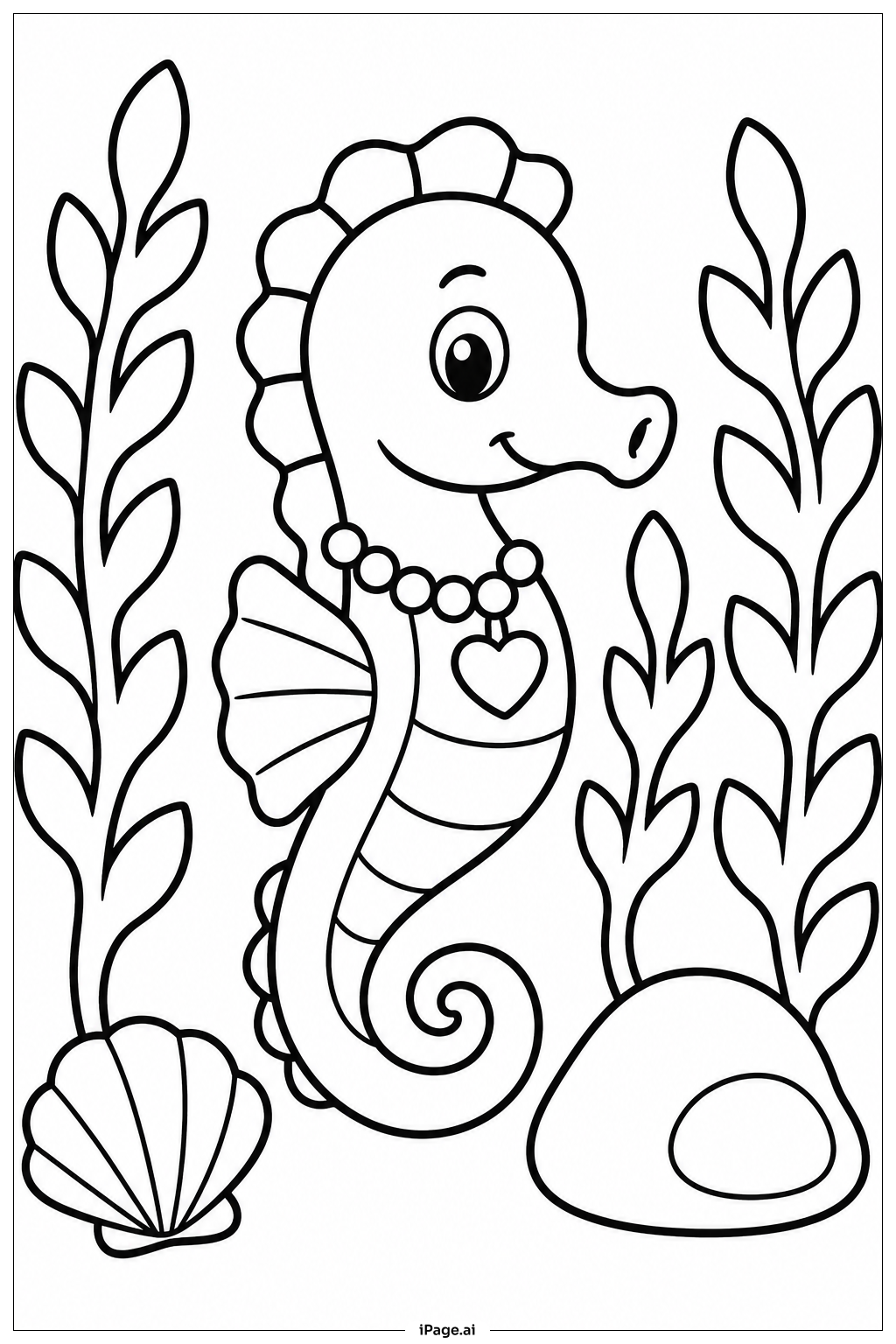
Coloring tips: How to color Seahorse In Kelp Forest coloring page well?
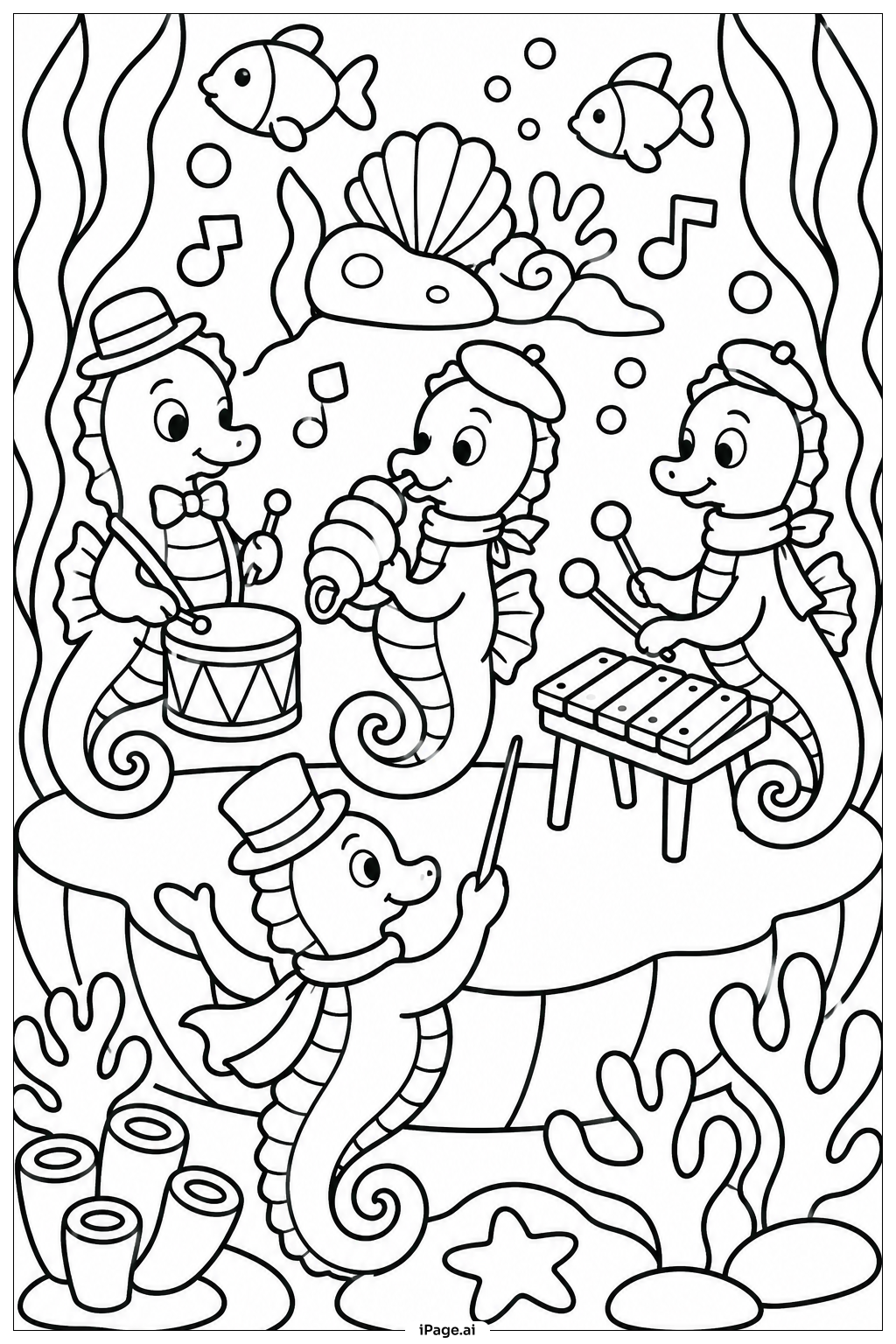
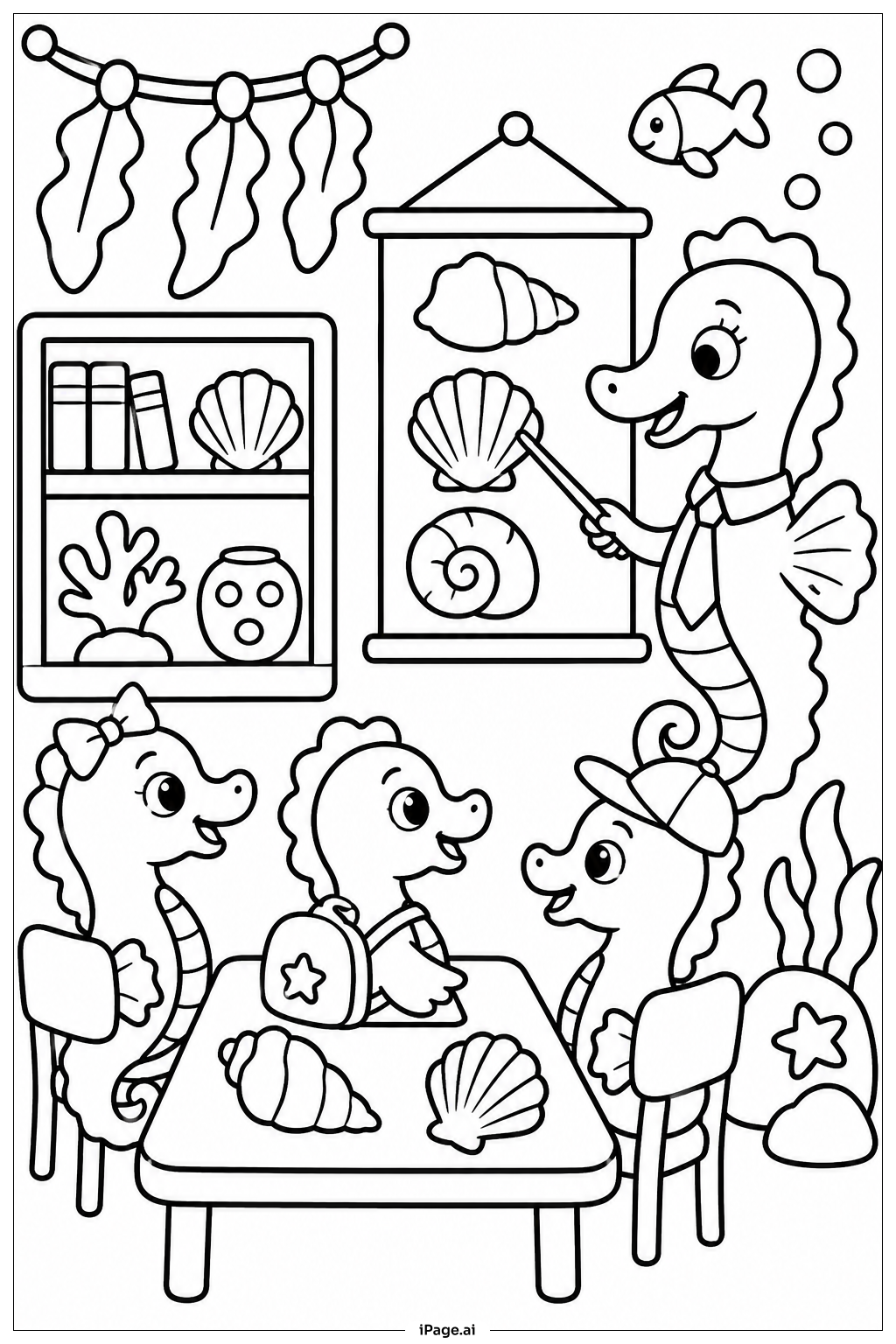
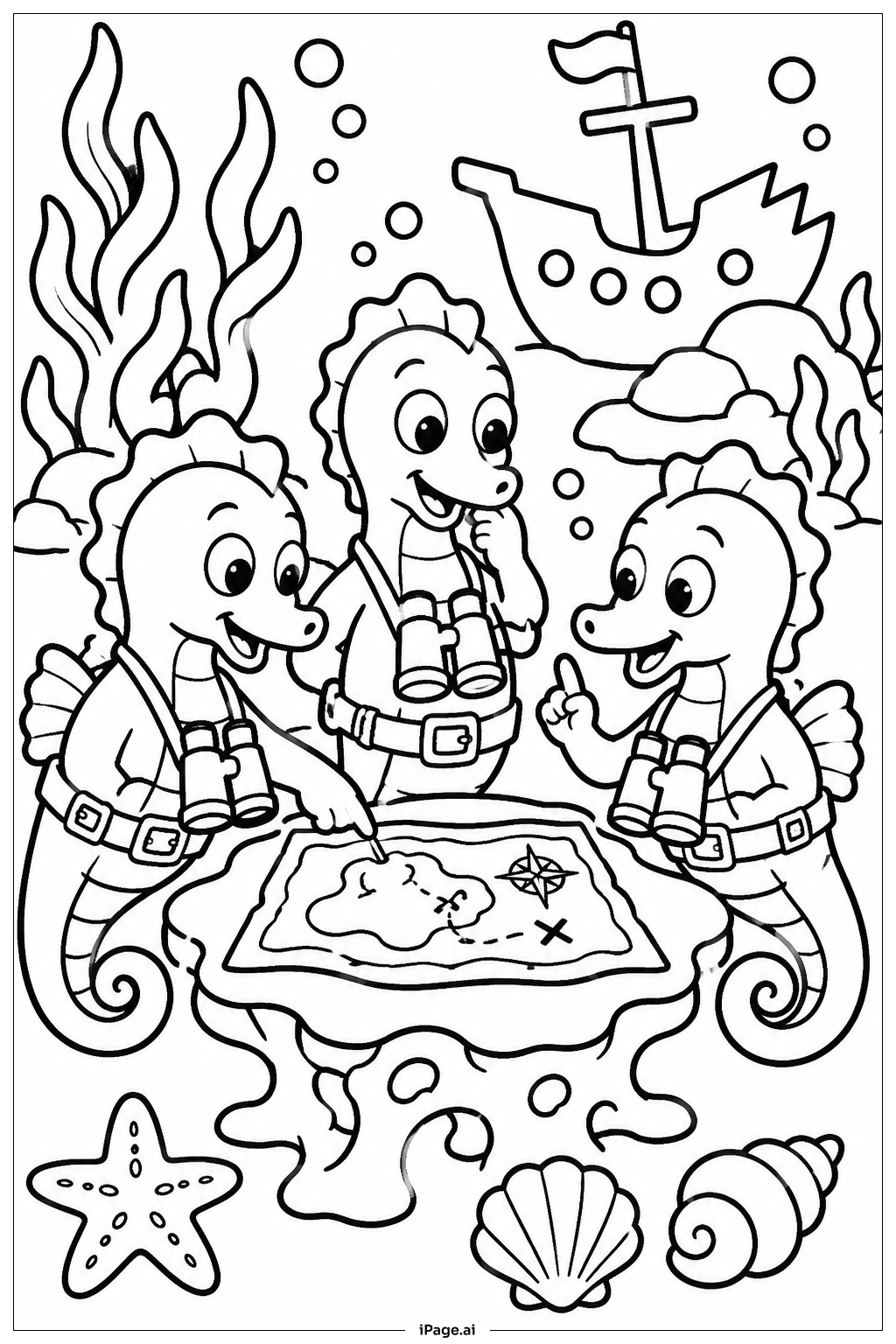
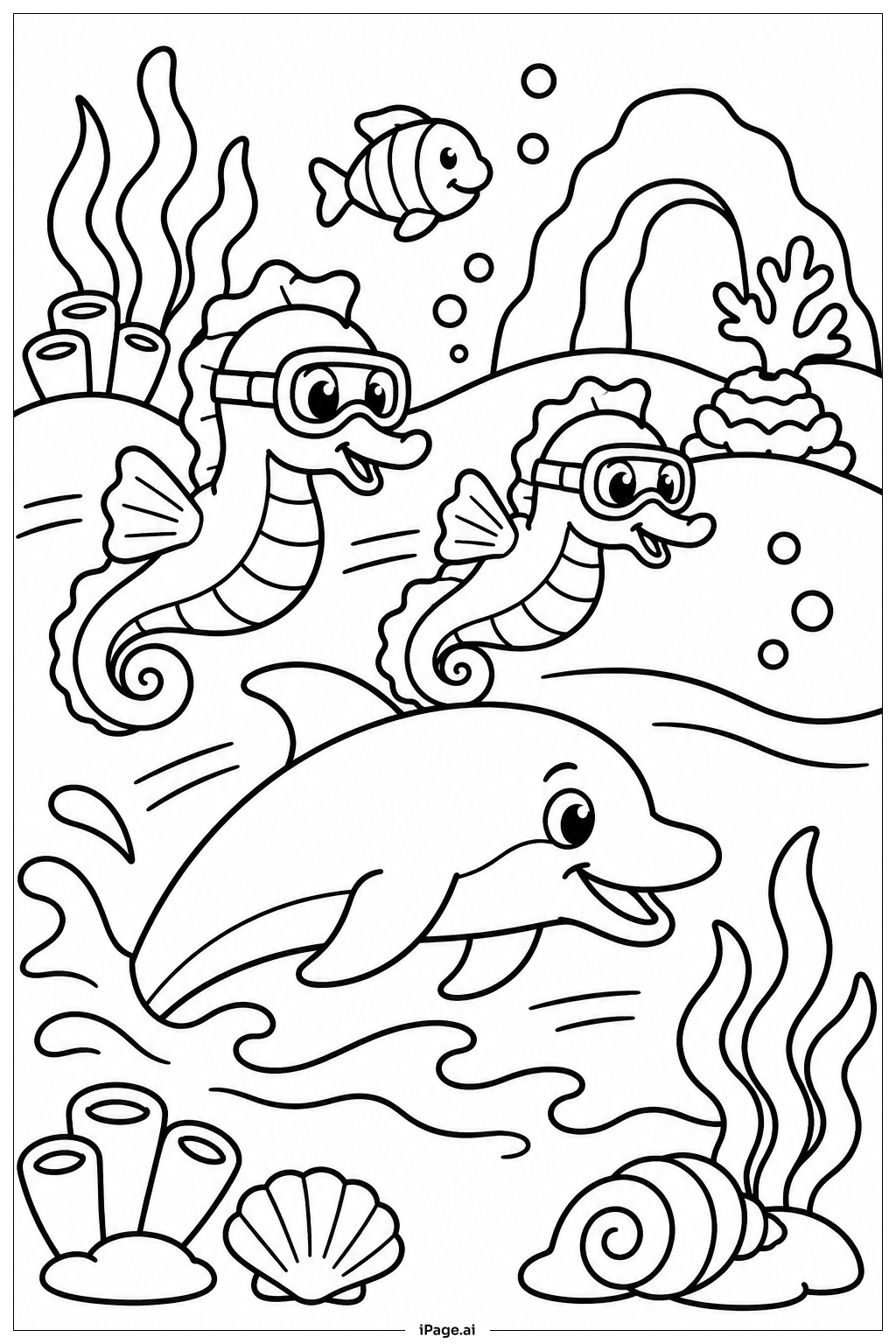
Start with the seahorse itself. Use warm golden yellows or soft oranges for its body to make it stand out. Add darker brown or rust tones along the ridges to give it depth and texture. For the kelp, use rich greens — mix in some yellow-green for the lighter areas and deep forest green for the shadows. The background water can be filled with soft blues and teals, getting darker toward the edges to create a sense of depth. Color the small fish in bright, cheerful colors like coral, yellow, or turquoise. Use purple or reddish-brown for the sea stars on the ocean floor. Keep your strokes smooth and flowing to match the gentle underwater mood of the scene.
Coloring challenges: Which parts are difficult to color and need attention for Seahorse In Kelp Forest coloring page?
• **The seahorse's textured body:** The seahorse is covered in overlapping bony plates and tiny spines. Coloring each ridge individually takes patience and a steady hand. Using a fine-tipped colored pencil or marker helps you stay within the small sections and add shading that brings out the three-dimensional look.
• **The flowing kelp strands:** The kelp leaves are long, curved, and layered on top of each other. It can be tricky to decide where one leaf ends and another begins. Taking your time to trace each strand separately before coloring helps avoid confusion and keeps the image looking clean.
• **Creating depth in the water background:** Open water backgrounds look flat if colored in a single shade. Blending two or three shades of blue and teal — lighter near the surface and darker toward the bottom — takes practice but makes the scene feel truly underwater.
• **Small details like bubbles and fish:** The tiny fish and floating bubbles scattered through the scene are small and easy to accidentally color over. Using a light touch and working around them carefully keeps these details visible and adds life to the finished piece.
• **Balancing colors across the whole scene:** With so many elements — the seahorse, kelp, fish, sea floor, and water — it is easy for the image to feel too busy or unbalanced. Choosing a consistent color palette before you start, and repeating colors in different parts of the image, helps everything feel connected and harmonious.
Benefits of coloring books: Advantages of drawing Seahorse In Kelp Forest coloring page
Coloring this Seahorse In Kelp Forest scene offers a wonderful mix of fun and learning. For younger children, filling in the flowing kelp and the seahorse's bumpy body helps build fine motor skills and hand-eye coordination. Choosing colors for the underwater world sparks creativity and encourages kids to think about nature and ocean life in a playful way. For older children and teens, the detailed textures and layered background offer a satisfying challenge that builds focus and patience. Working through a complex scene teaches them how to plan ahead and make thoughtful color choices. The peaceful underwater theme also has a calming effect — coloring is a great way to unwind after a busy day at school. It gives kids a quiet, screen-free activity that still feels engaging and rewarding. Finishing the page gives a real sense of accomplishment, boosting confidence and pride in their own creative work. Whether done alone or with friends and family, this coloring page turns into a little adventure beneath the sea.