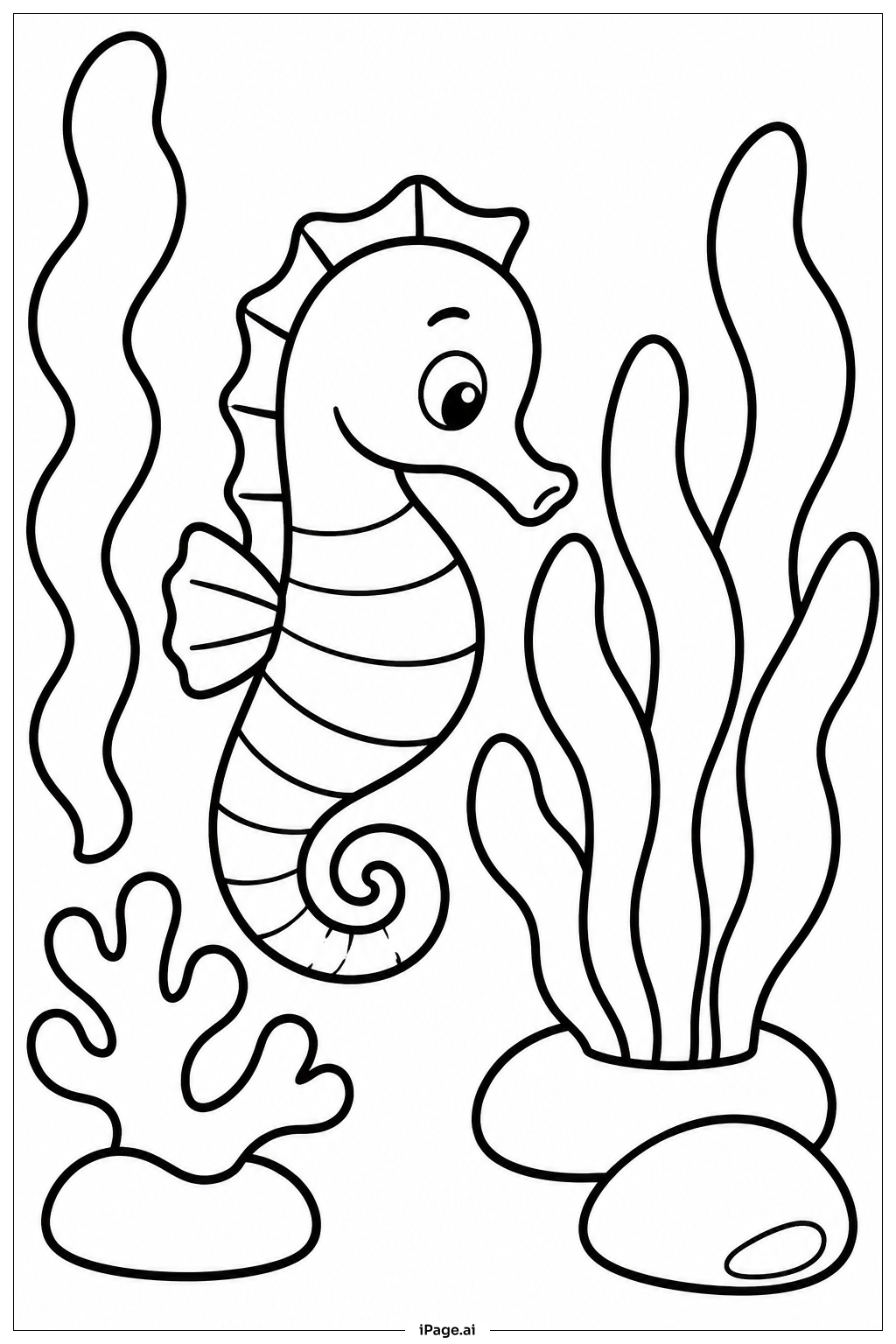
Coloring tips: How to color Seahorse Exploring Seaweed Garden coloring page well?
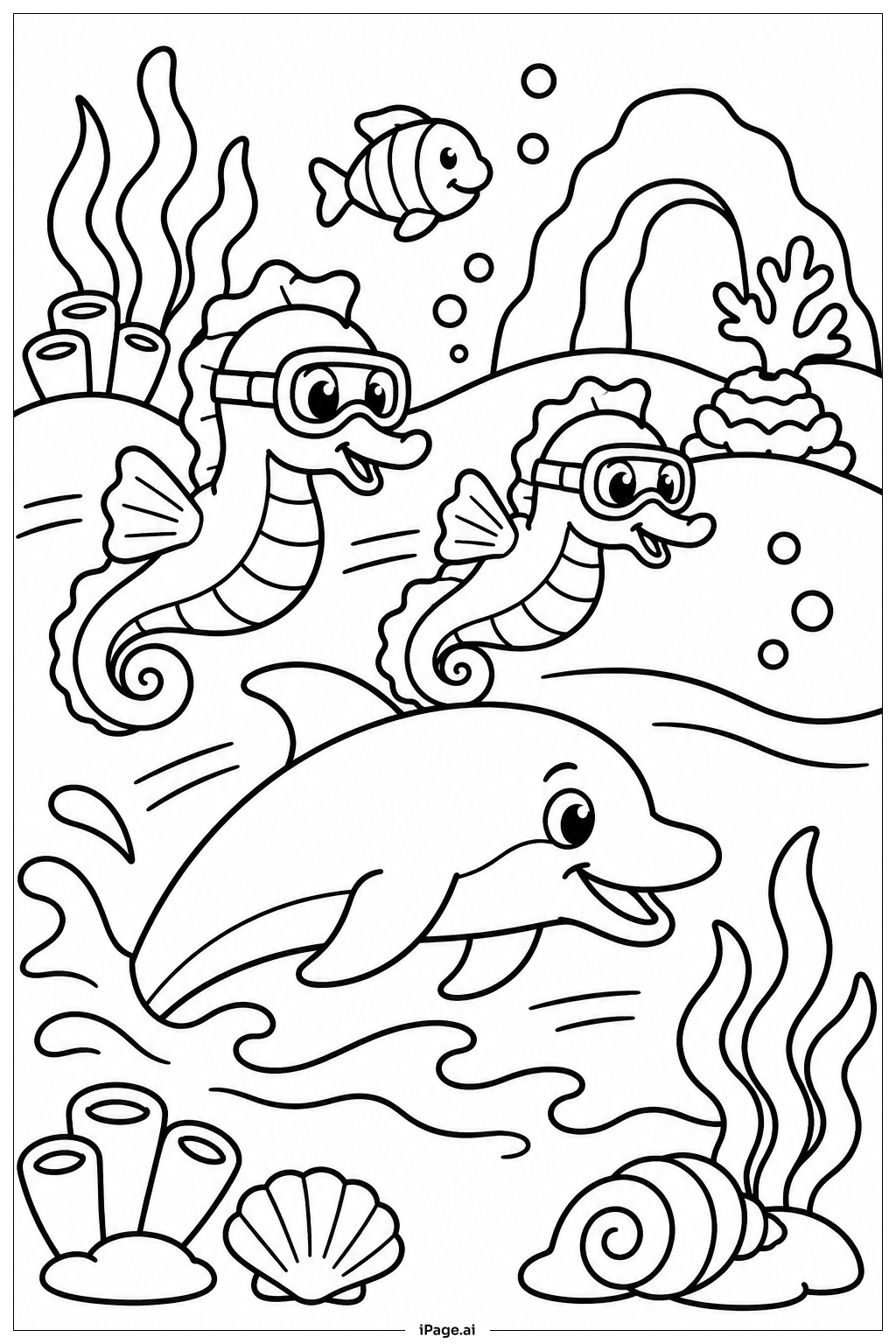
Start with the seahorse itself. Use warm golden yellows or soft oranges for its body to make it stand out. You can add darker shades along the ridges to show texture and depth. For the seaweed, try different shades of green — bright lime green for the tips and deeper forest green toward the base. Mix in some teal or blue-green to keep it feeling underwater. The background water can be filled with soft blues and aquas. Add light purple or pink tones to any coral or small sea creatures in the scene. Use white or very light yellow for the bubbles. Don't be afraid to mix colors and layer them gently for a rich, ocean-like feel.
Coloring challenges: Which parts are difficult to color and need attention for Seahorse Exploring Seaweed Garden coloring page?
• **Seahorse Body Details:** The seahorse has many small ridges, bony plates, and fine lines running across its body. Staying inside these tiny sections requires a sharp pencil or a fine-tipped coloring tool. Rushing through this area can cause colors to bleed into each other, so take your time and work slowly from one section to the next.
• **Layering Seaweed Fronds:** The seaweed has many overlapping leaves and strands. It can be tricky to decide which frond is in front and which is behind. Using slightly different shades of green for each layer helps create a sense of depth. Without this contrast, the seaweed can look flat and hard to read.
• **Blending the Water Background:** Filling the background with a smooth, even ocean color is harder than it looks. Streaks and uneven patches can appear, especially over a large area. Using circular strokes and gradually building up color in thin layers gives a much smoother result.
• **Small Details and Tiny Elements:** Bubbles, small coral pieces, and tiny sea creatures scattered throughout the scene are very small. Coloring these neatly without accidentally covering the outlines takes patience and a steady hand. A fine-tipped marker or a well-sharpened colored pencil works best for these areas.
• **Color Harmony Across the Scene:** With so many different elements — the seahorse, seaweed, coral, and water — keeping all the colors balanced and harmonious is a real challenge. Choosing a consistent color palette before you start helps everything feel like one unified underwater world rather than a collection of separate pieces.
Benefits of coloring books: Advantages of drawing Seahorse Exploring Seaweed Garden coloring page
Coloring this Seahorse Exploring Seaweed Garden page offers a wonderful range of benefits for kids and beginners alike. Working through the seahorse's detailed ridges and tiny body sections builds fine motor skills and strengthens hand control. These are important skills that support handwriting and everyday tasks.
Focusing on a calm, underwater scene also encourages mindfulness. The quiet, flowing shapes of the seaweed and the gentle pose of the seahorse naturally slow the mind down and reduce stress. It becomes a peaceful, screen-free activity that kids can enjoy at their own pace.
Choosing colors for the ocean environment sparks creativity and imagination. Kids learn to think about how colors work together and how light and shadow can make a picture feel more real. This builds early artistic thinking in a fun, low-pressure way.
Finally, completing the full page gives a real sense of achievement. Finishing a detailed coloring page builds confidence and teaches children the value of patience and persistence — skills that carry far beyond the coloring table.