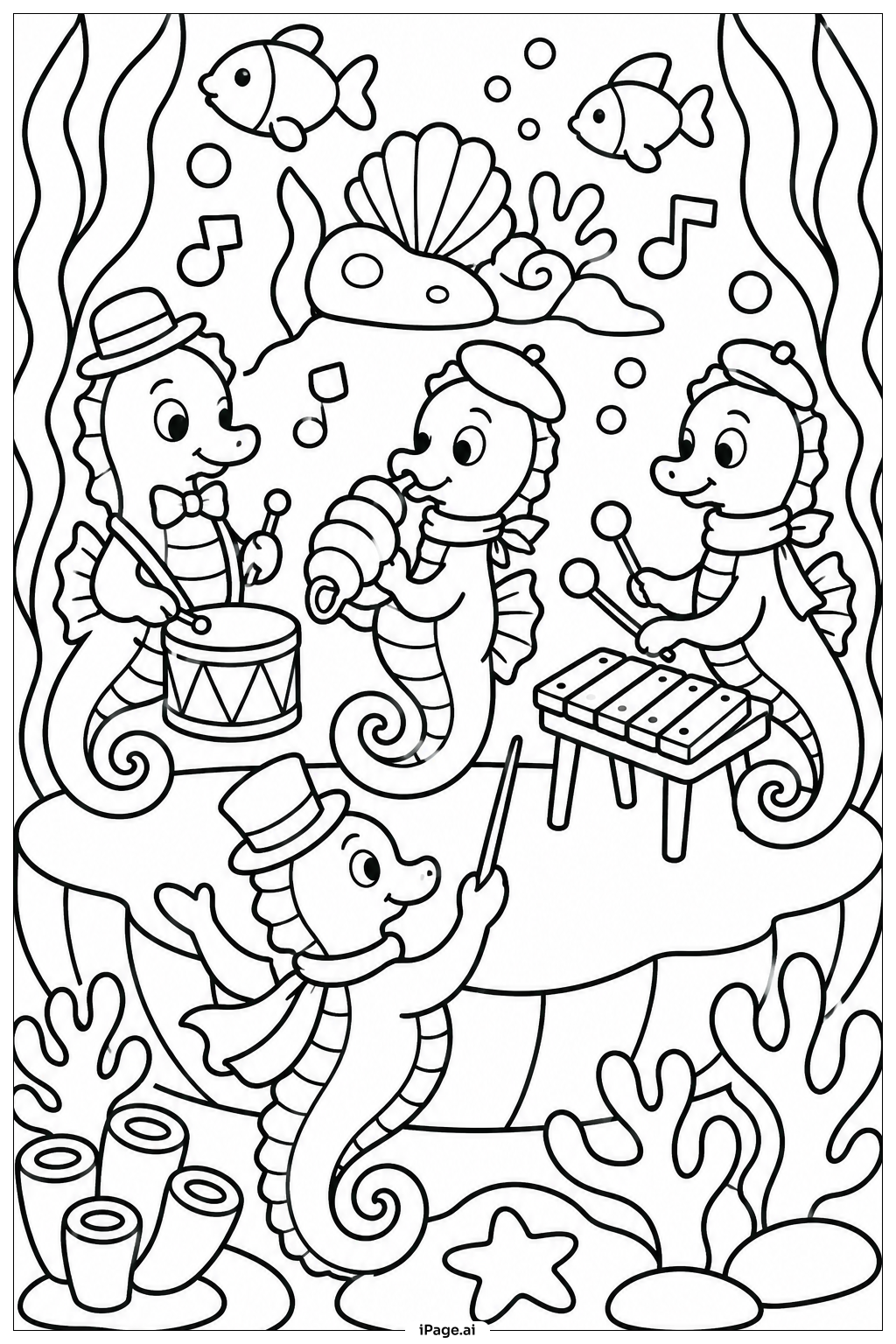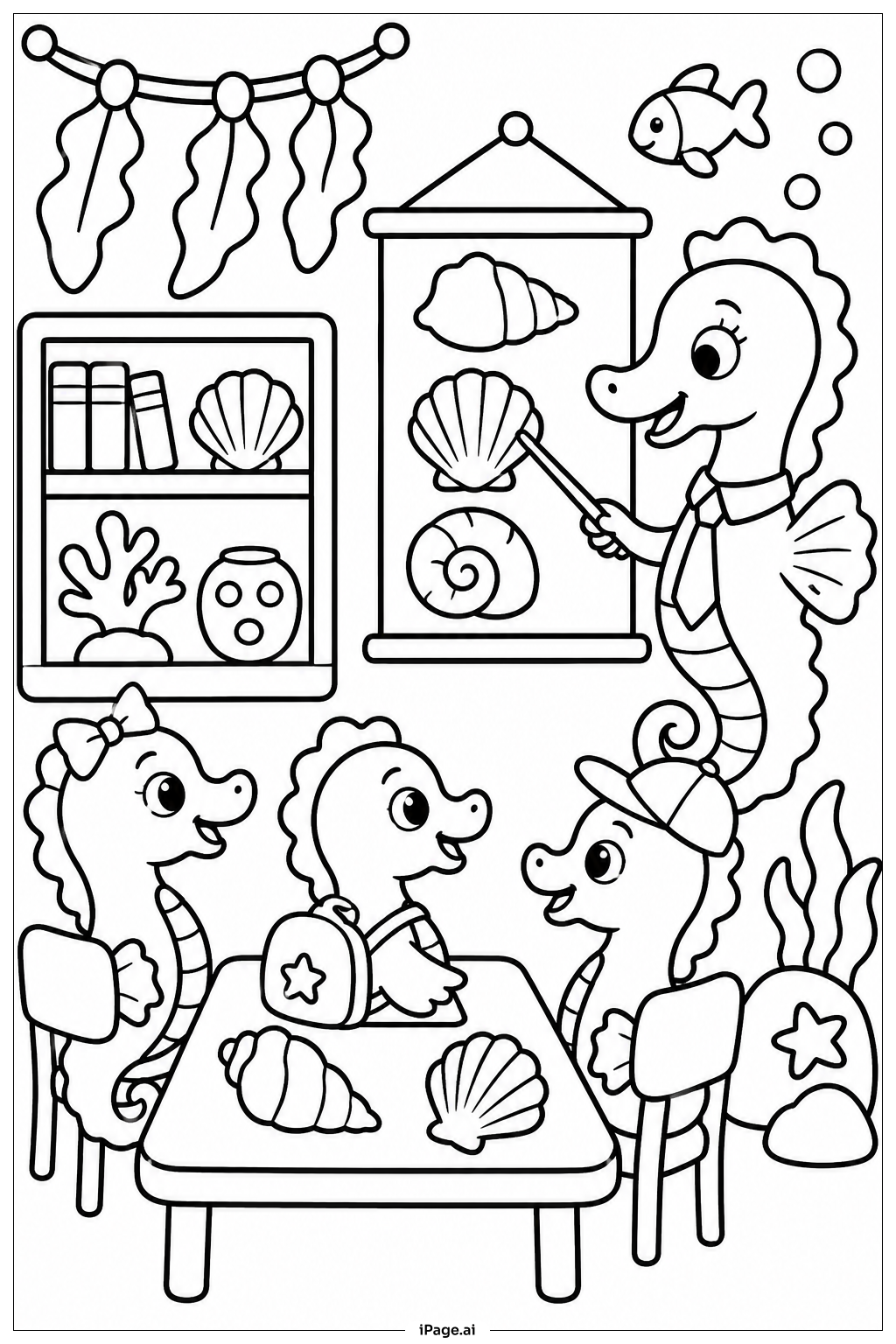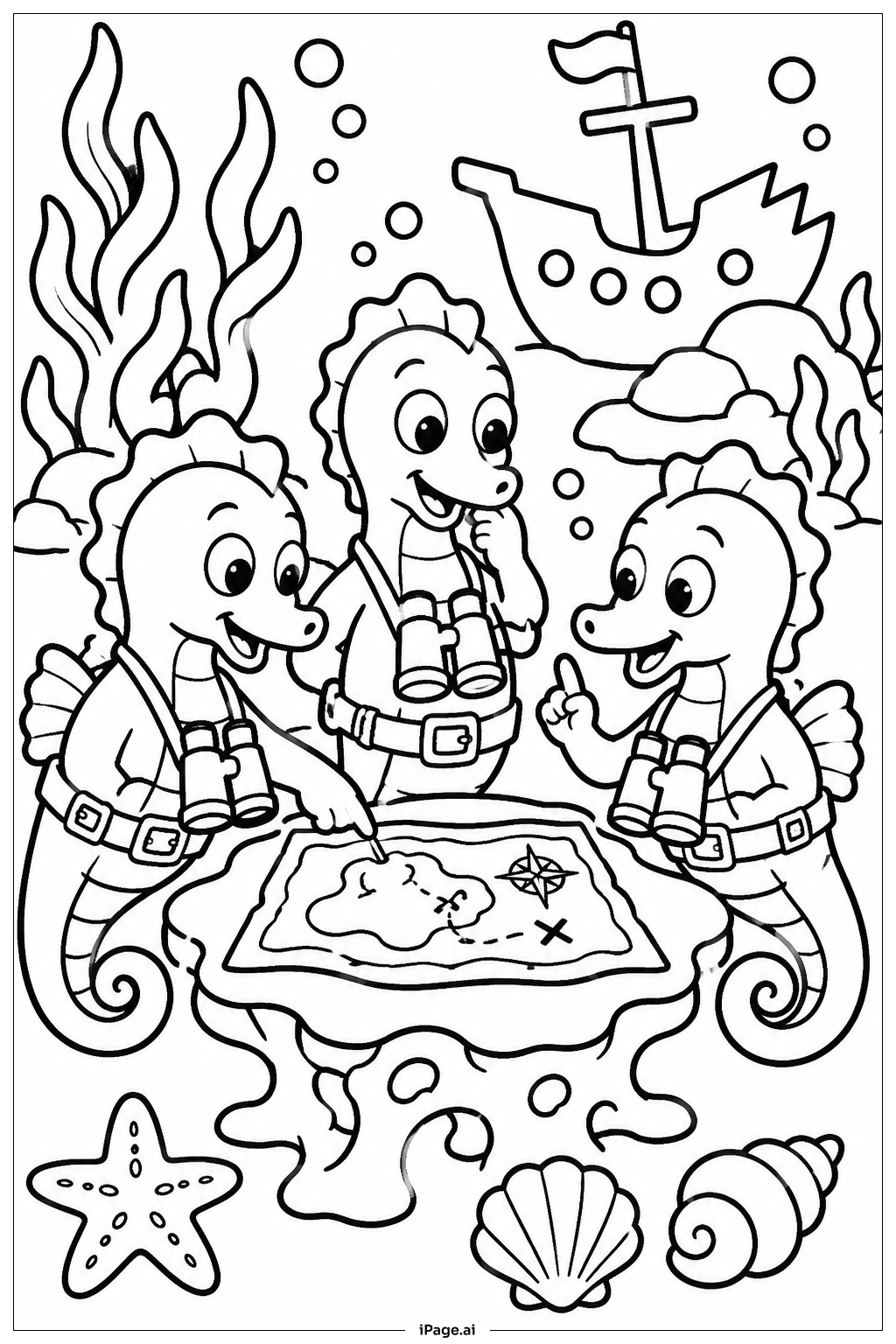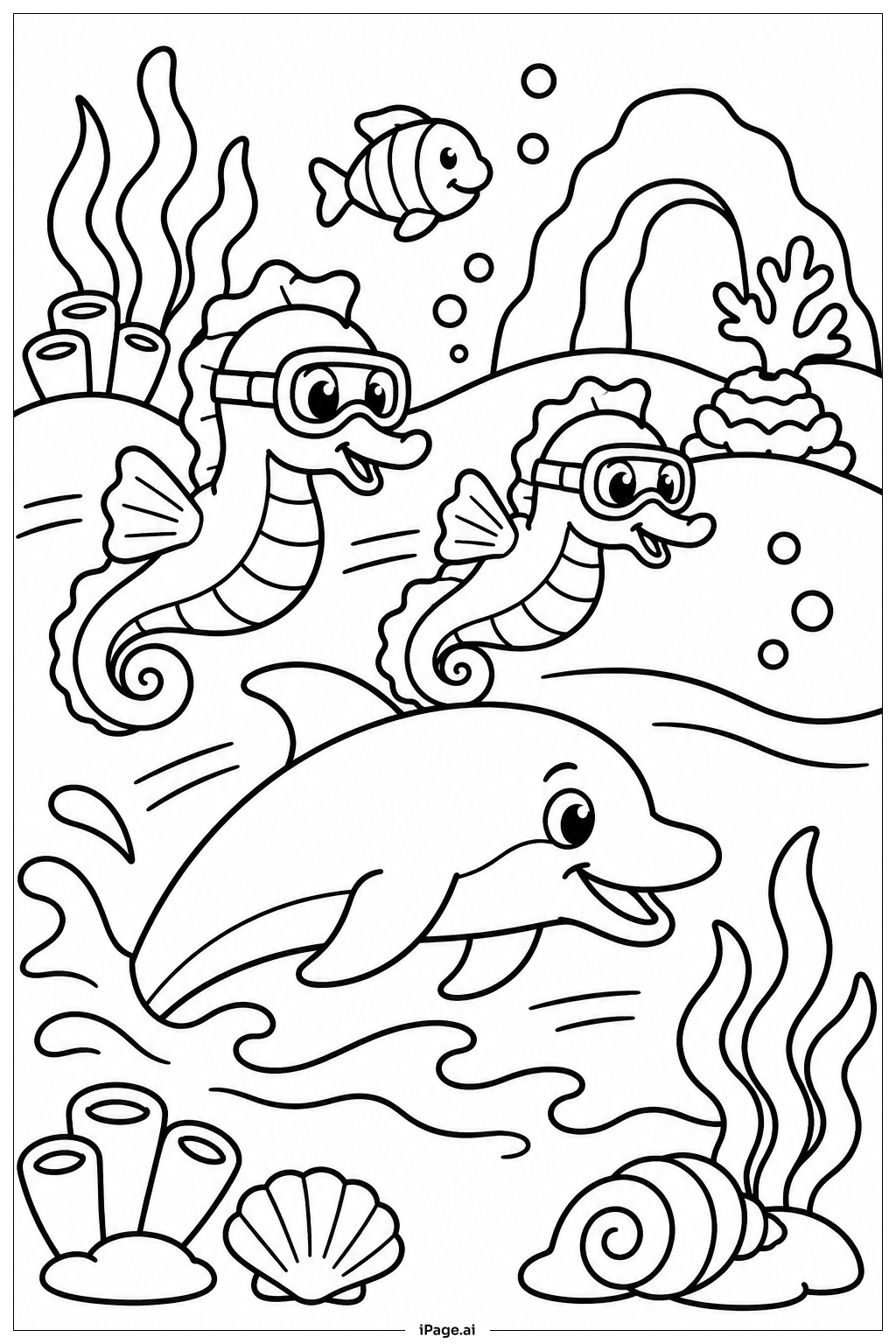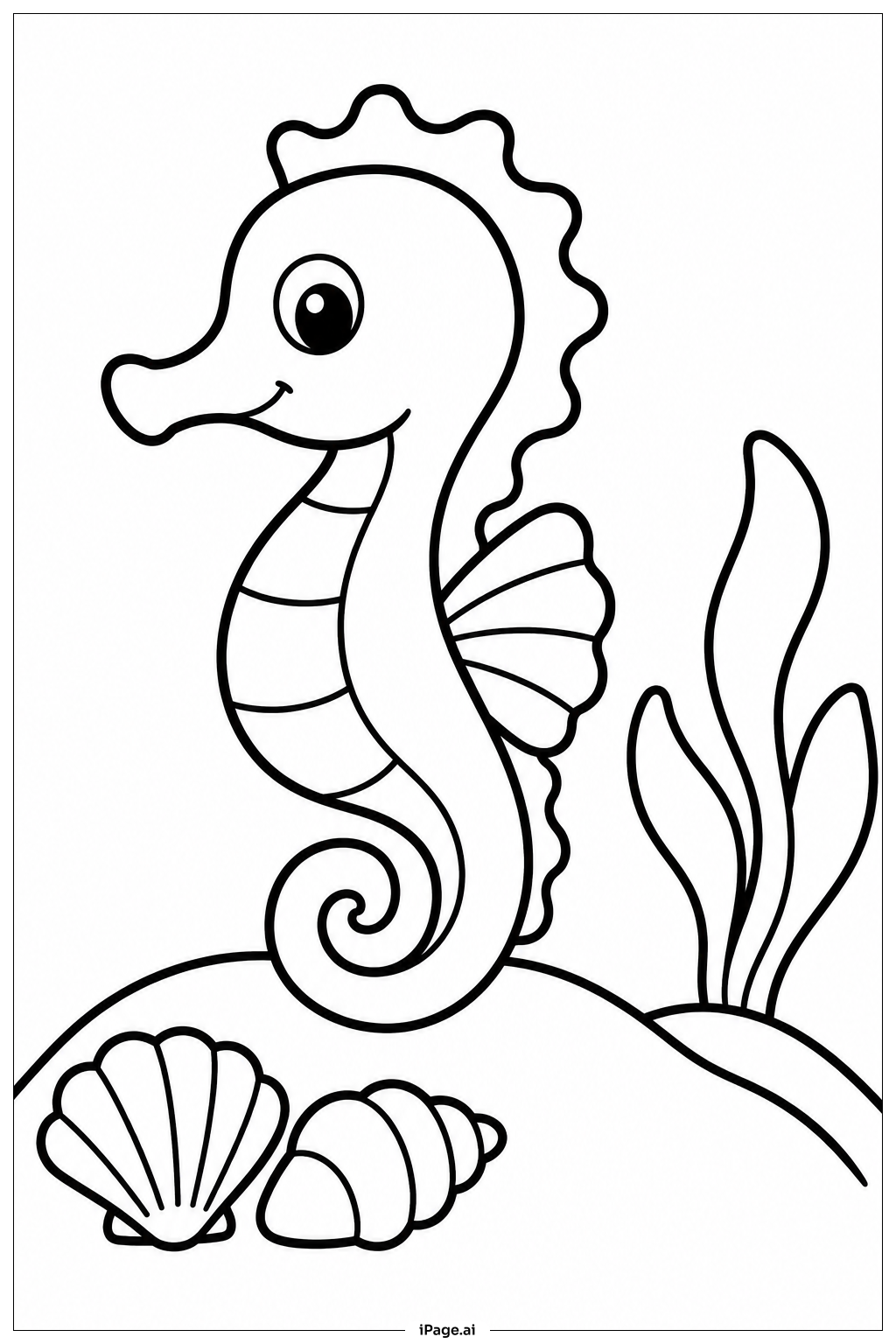
Coloring tips: How to color Seahorse At Sandy Bay coloring page well?
Start with the seahorse itself. Use warm golden yellows or soft oranges for its body to make it stand out. You can add darker brown or amber shading along the ridges to show its bumpy texture. For the seaweed and sea grasses, try different shades of green — bright lime for the tips and deeper olive green at the base. Color the sandy floor in light tan or beige, and scatter hints of pale gold to mimic sunlit sand. The water in the background looks great in soft aqua blue or turquoise. Add a touch of deeper blue toward the edges to create depth. Shells and pebbles can be colored in soft pinks, creams, and grays. Feel free to mix colors and experiment — there are no wrong choices under the sea!
Coloring challenges: Which parts are difficult to color and need attention for Seahorse At Sandy Bay coloring page?
• **Seahorse body texture:** The seahorse is covered in many small ridges, plates, and bumps. Coloring each section neatly without going over the lines takes patience and a sharp pencil or fine-tipped marker. Younger colorists may find this the trickiest part of the whole image.
• **Layering shades for depth:** To make the seahorse and underwater plants look three-dimensional, you need to blend light and dark tones together. This technique — called shading — can be challenging for beginners who are still learning how to apply gradual color transitions smoothly.
• **Small background details:** The shells, pebbles, and tiny bubbles scattered across the seafloor are quite small. Staying inside these tiny shapes requires steady hands and careful control of your coloring tool, especially if you are using markers or thick crayons.
• **Water background:** Coloring the water so it looks natural and flowing is harder than it seems. Blending multiple shades of blue and green without creating harsh lines takes practice. Colored pencils work especially well here, as they allow gentle layering.
• **Seaweed and sea grass variety:** There are several different plants in the scene, each with its own shape and size. Choosing slightly different greens for each plant — rather than using one flat color throughout — helps the image feel more realistic, but it requires thoughtful color selection and careful attention to detail.
Benefits of coloring books: Advantages of drawing Seahorse At Sandy Bay coloring page
Coloring this seahorse scene offers a wonderful mix of fun and learning. As you fill in the details, you practice focus and patience — skills that help in school and everyday life. The many small textures on the seahorse's body are great for building fine motor skills and improving hand control, which is especially helpful for younger children still developing their grip.
Choosing colors for the underwater world sparks creativity and imagination. Kids get to make their own artistic decisions, which builds confidence. Learning about the colors of real seahorses and ocean plants also quietly teaches a little marine biology along the way.
For older children and teens, the shading and blending challenges make this a satisfying artistic exercise. Completing a detailed image like this gives a real sense of accomplishment.
Beyond the skills, coloring is simply calming. The quiet, focused activity helps reduce stress and anxiety, making it a healthy way to unwind after a busy day. Whether you are four or fourteen, spending time with this peaceful bay scene is a gentle reminder to slow down and enjoy the beauty of the natural world.