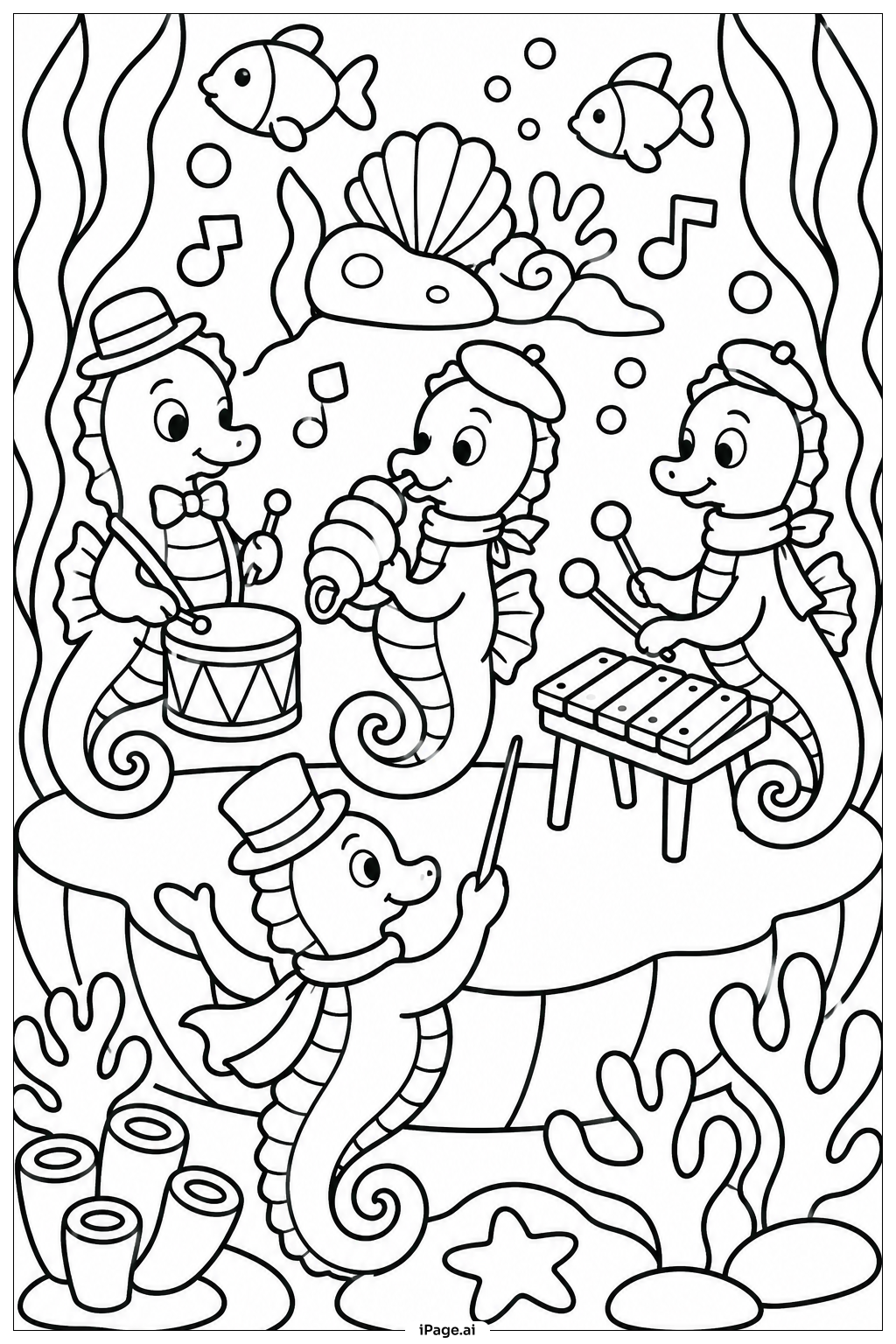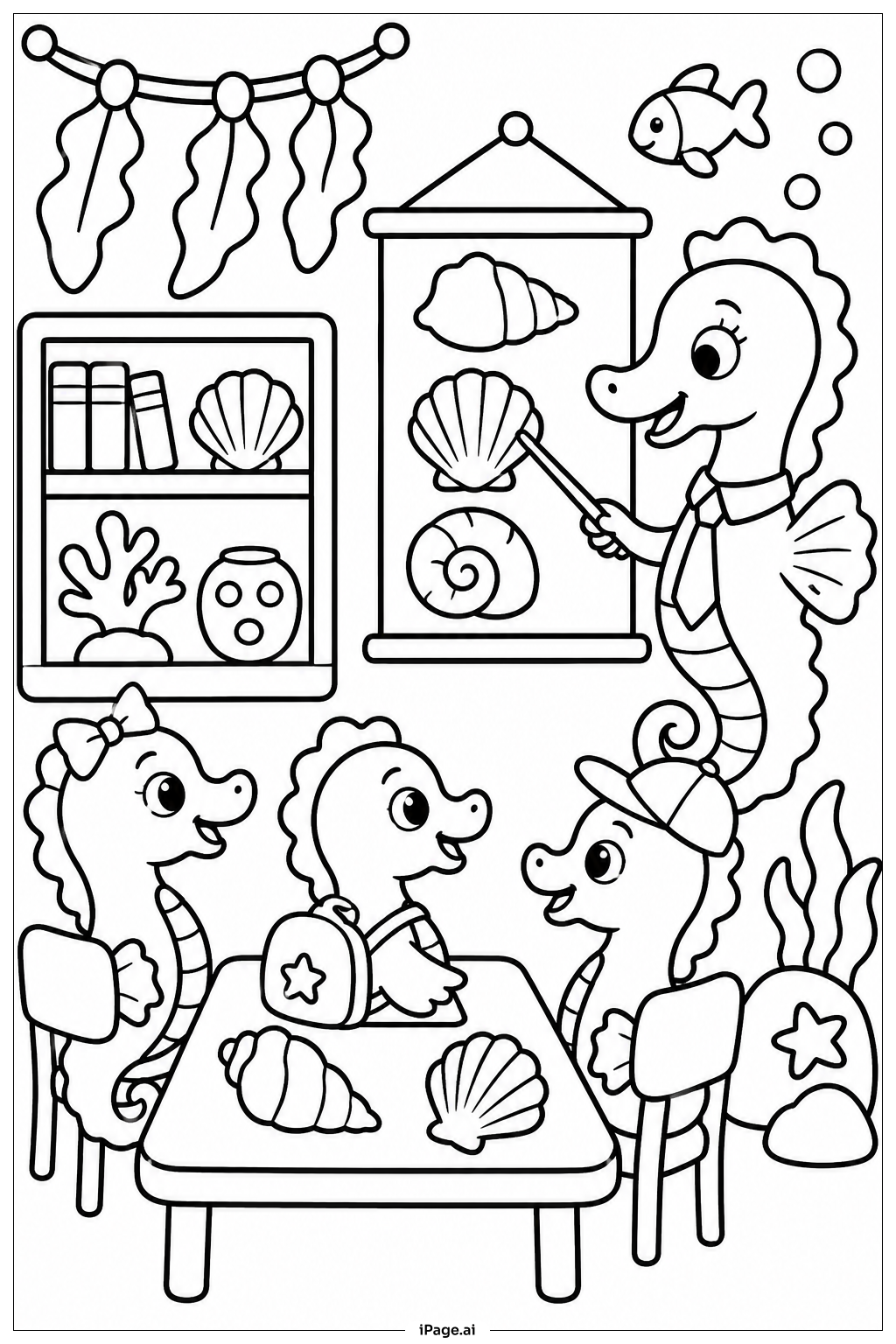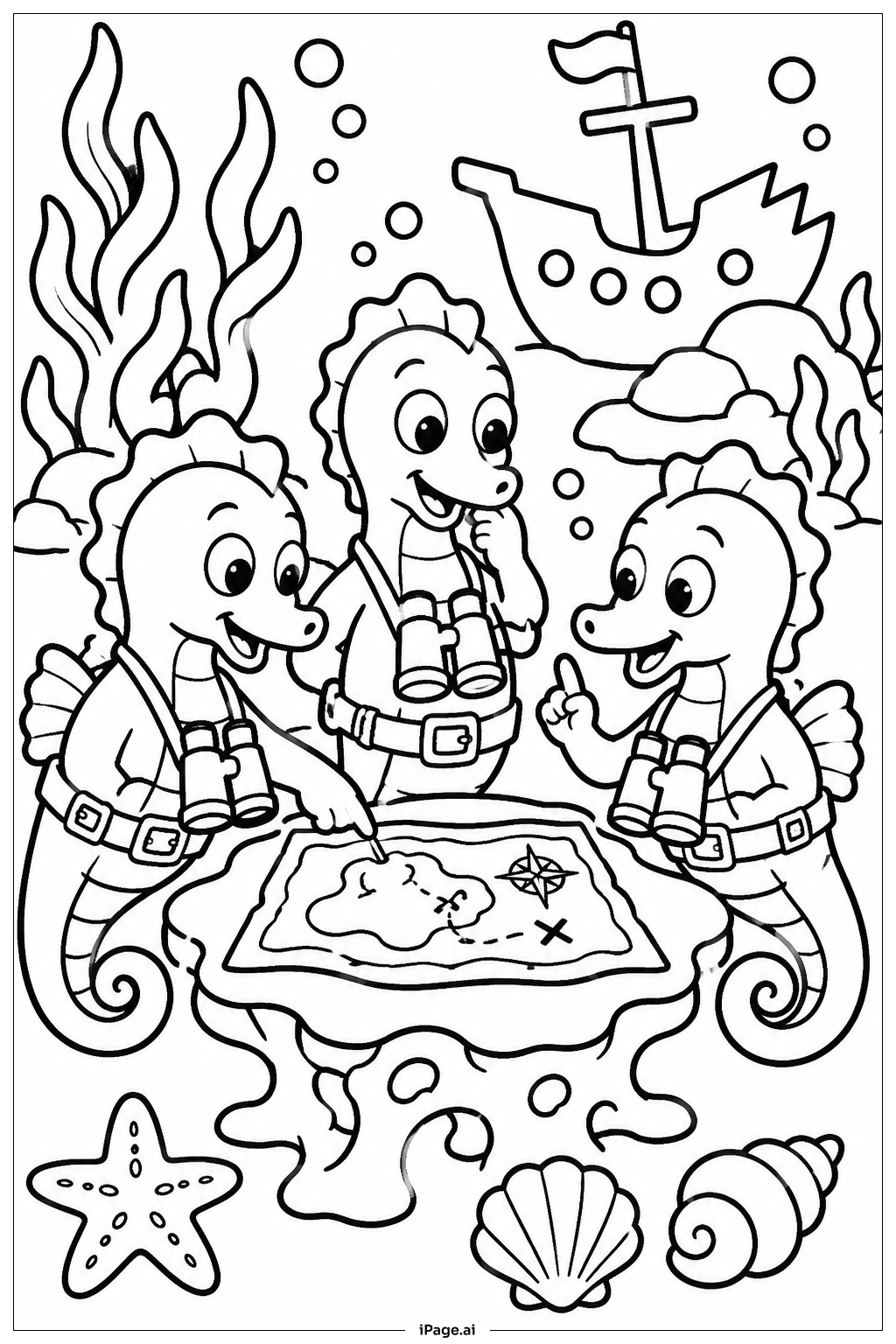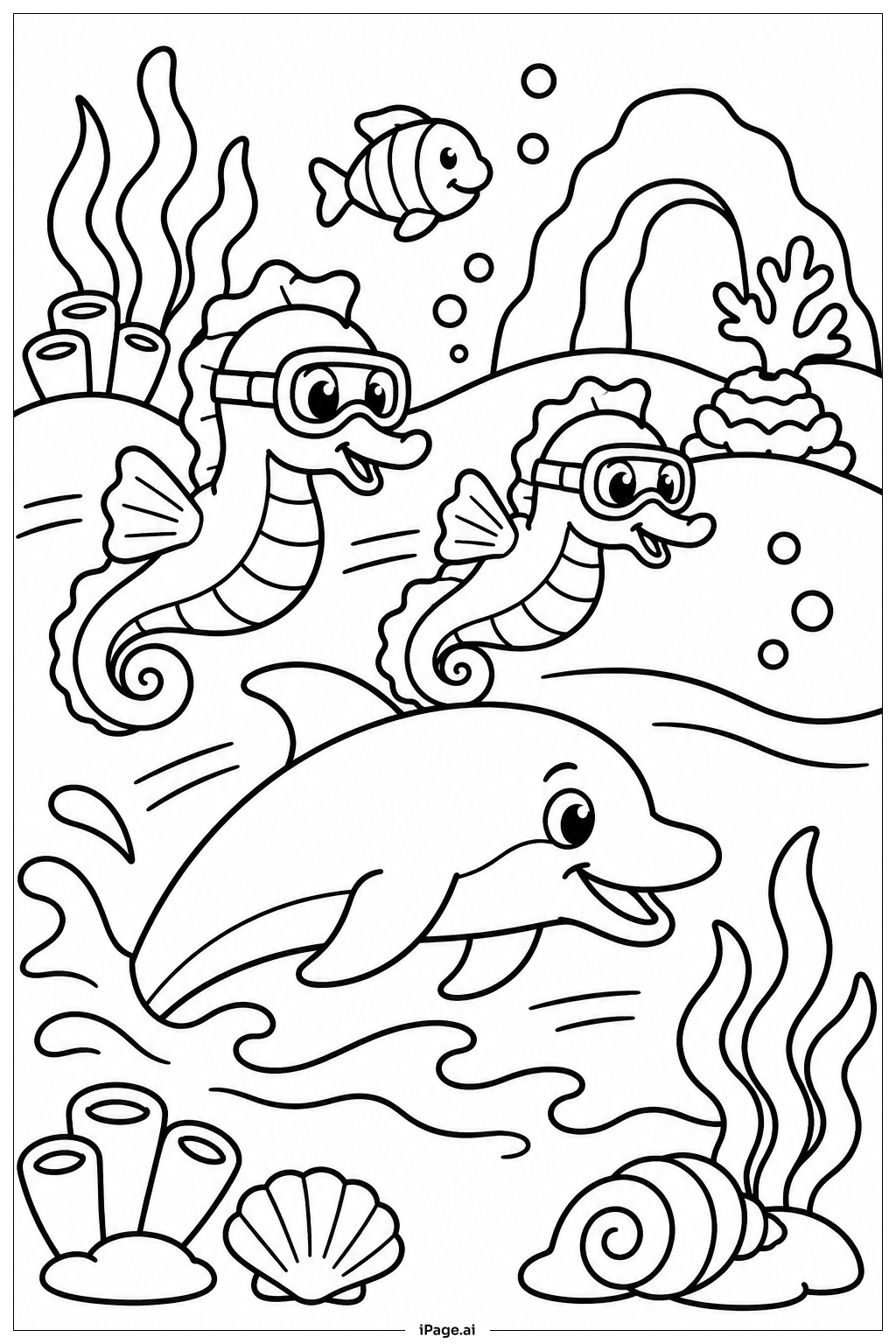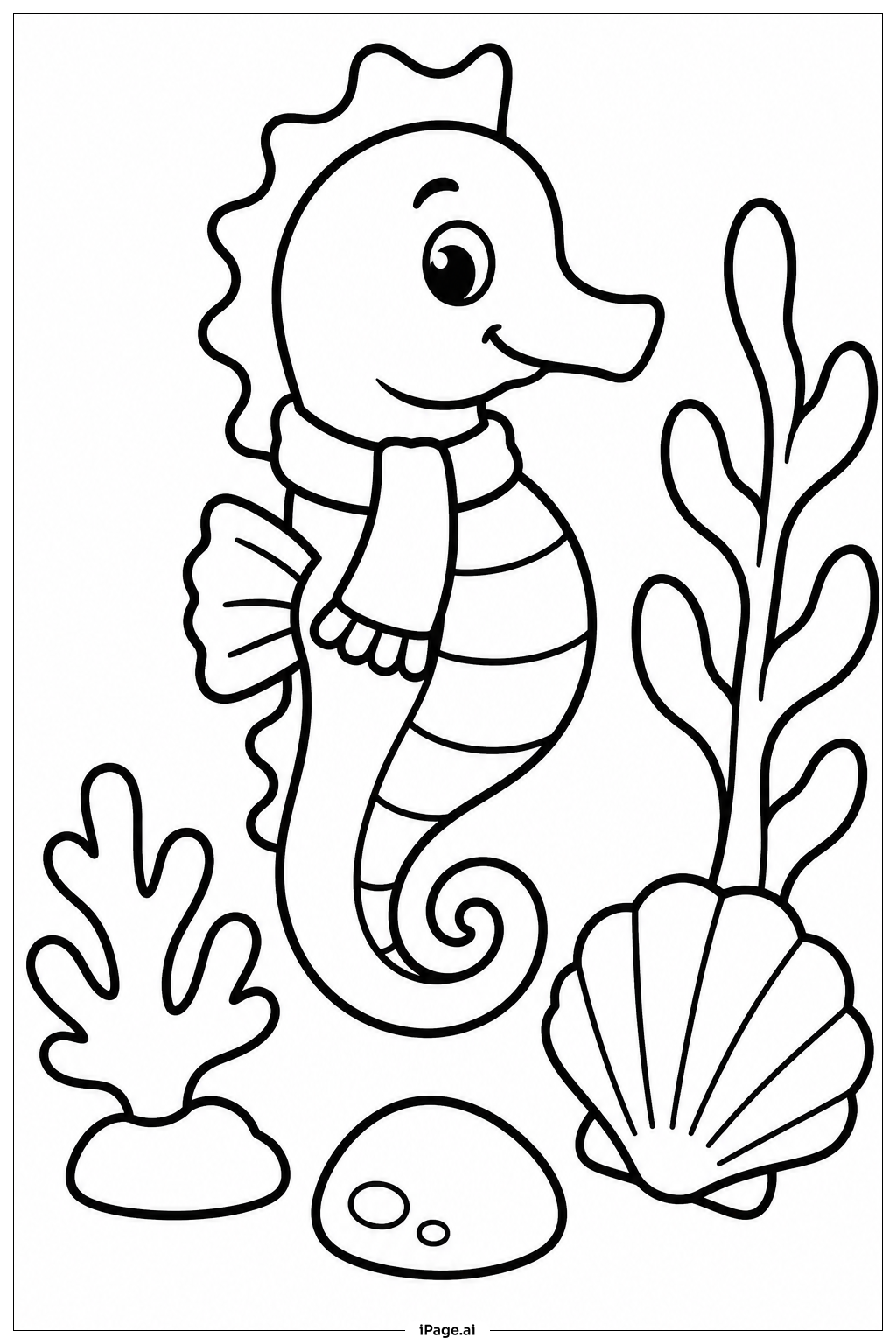
Coloring tips: How to color Seahorse At Coral Reef coloring page well?
Start with the seahorse itself. Use warm golden yellows or soft oranges for its body to make it stand out. You can also try bright colors like purple or teal if you want a fantasy look. Add darker shades along the bony ridges to give the body a three-dimensional feel. For the coral, use pinks, reds, purples, and oranges — coral reefs are full of bright, warm colors. The seaweed and sea plants look great in greens and blue-greens. Color the water background in light blues and aquas, getting darker toward the edges. Tiny fish can be colored in bold, contrasting colors like yellow and black or red and white. Use light blue or white for the bubbles, leaving small white dots to suggest a shine. Take your time with the small details on the coral — even simple dot patterns in two or three colors can look stunning. There is no wrong color choice here. Nature's ocean is full of surprises, so feel free to be creative and experiment with your favorite color combinations.
Coloring challenges: Which parts are difficult to color and need attention for Seahorse At Coral Reef coloring page?
• Seahorse Body Segments: The seahorse's body is made up of many small, stacked bony rings. Each segment is narrow and closely packed, making it tricky to color each one neatly without going over the lines. A fine-tipped marker or a sharpened colored pencil works best here. Take it slow and work one segment at a time.
• Curling Tail Detail: The tail curves and wraps tightly, creating overlapping shapes that can be confusing to follow. It is easy to accidentally blend areas that should be different shades. Try using slightly different tones of the same color to separate each coiled section and give it a rounded, realistic look.
• Coral Reef Patterns: The coral formations are filled with tiny holes, branches, and repeating textures. These small details require patience and a steady hand. If you rush, the colors may bleed into neighboring sections. Coloring just a few sections at a time and letting them dry before moving on can help a lot.
• Background Water Gradients: Creating a smooth water background that looks deep and fluid is a challenge. Getting a natural gradient from light near the surface to darker blue at the bottom takes practice. Layering colors gently and blending in circular motions can help achieve a convincing ocean effect.
• Small Surrounding Elements: Tiny fish, bubbles, and small sea plants scattered around the scene are very small and close together. Coloring these without smudging nearby areas requires careful control. Using a very fine tool and working from the top of the page downward can prevent accidental smearing.
Benefits of coloring books: Advantages of drawing Seahorse At Coral Reef coloring page
Coloring this seahorse and coral reef scene offers a wonderful range of benefits for children and beginners alike. The detailed patterns on the seahorse's body and the coral formations help build fine motor skills and hand-eye coordination. Guiding a pencil or marker through narrow spaces trains the hand muscles in a fun and rewarding way. Choosing colors for the reef encourages creativity and independent thinking. There are no strict rules — kids can experiment freely and discover their own sense of color and style. The calm, flowing shapes of the underwater world make this a very relaxing activity. Focusing on gentle curves and soft organic forms can reduce stress and help children feel settled and focused. The scene also sparks curiosity about marine life. Children may start asking questions about real seahorses, coral reefs, and ocean ecosystems, turning a simple coloring activity into a learning opportunity. Completing such a detailed image builds patience and a sense of accomplishment. Finishing a challenging piece gives children a real confidence boost and motivates them to take on more creative projects. Overall, this image is a perfect blend of fun, relaxation, learning, and artistic growth.