Coloring tips: How to color Seahorse And Pebble Path coloring page well?
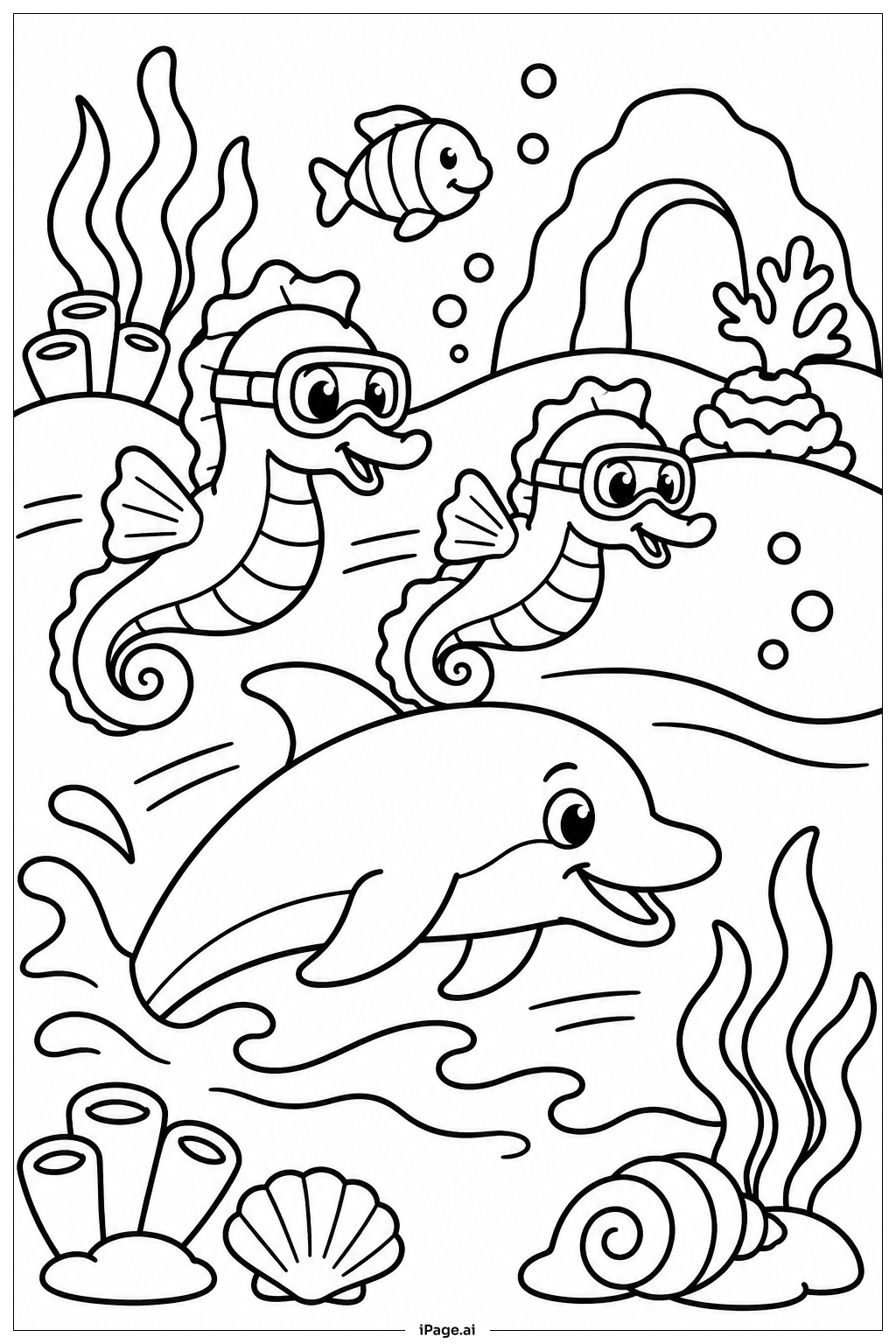
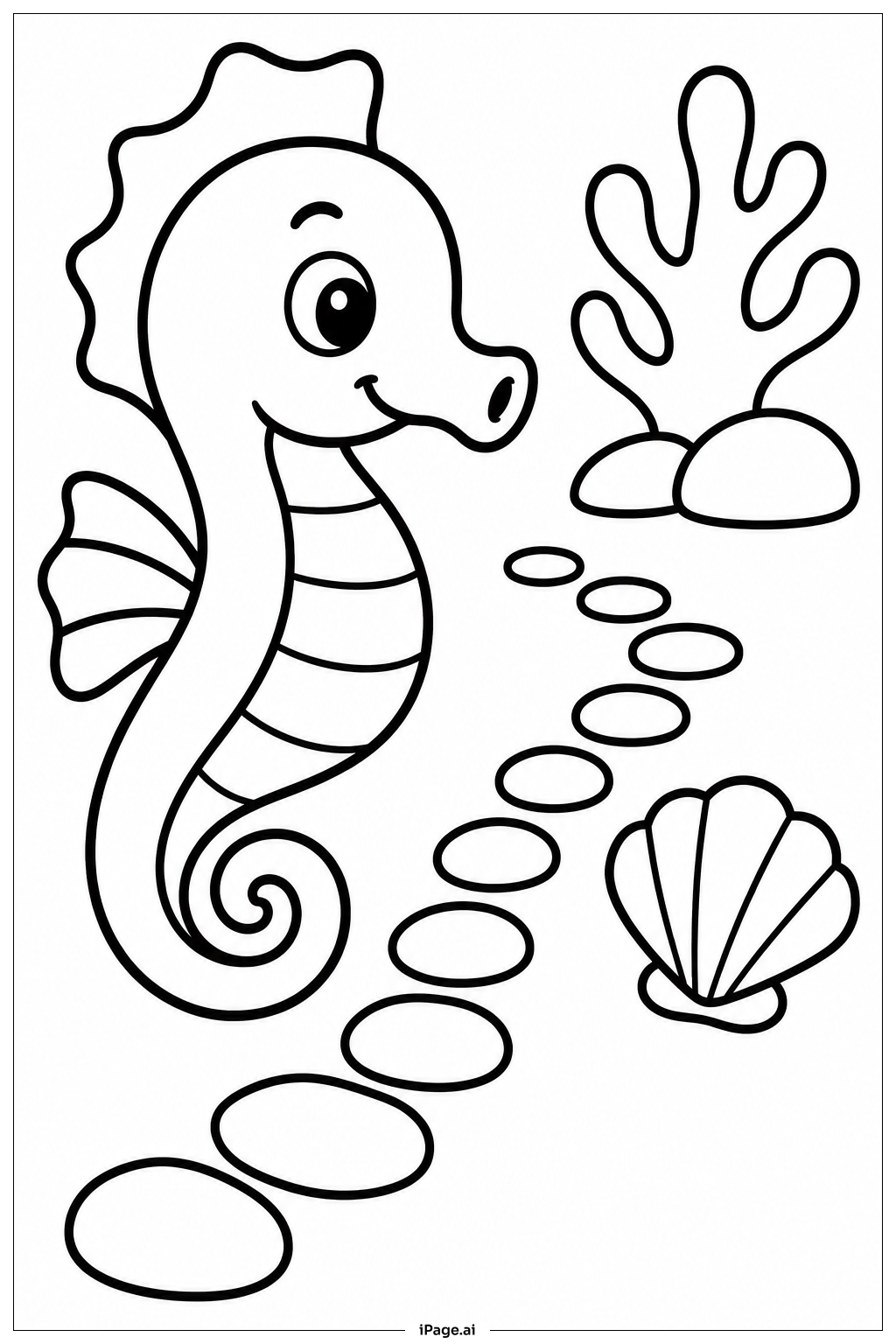
Start with the seahorse itself. Use warm golden yellows or soft oranges for its body to make it stand out. Add darker shades along the ridges to give it depth. For the pebbles on the path, try mixing light grays, tans, and soft browns — no two pebbles need to be the same color! The water background looks great in light blues and aquas. Use greens for the sea plants and seaweed. Coral pieces can be pink, red, or orange. The small bubbles can stay white or be given a light blue tint. Try blending colors gently to create a soft, underwater glow throughout the whole scene.
Coloring challenges: Which parts are difficult to color and need attention for Seahorse And Pebble Path coloring page?
• **The Seahorse's Ridged Body:** The seahorse has many small segments and ridges running along its body. Staying within each section while adding shading or gradient effects can be tricky. Young colorists may find it helpful to use a fine-tipped marker or a sharpened colored pencil to carefully fill each ridge without going over the lines.
• **The Pebble Path Details:** The path is made up of many individual pebbles of different sizes. Coloring each one separately while keeping the overall path looking natural and cohesive takes patience. Choosing a limited palette of earth tones and alternating them across the pebbles helps create a realistic, textured look without becoming overwhelming.
• **Creating Depth in the Water Background:** The open water areas around the seahorse and path need to feel like a real underwater environment. Simply filling them with one flat blue can look dull. Blending two or three shades of blue and aqua, or adding soft circular strokes to suggest water movement, adds dimension but requires some color-mixing skill.
• **Small Accent Details:** Tiny starfish, bubbles, and coral pieces are scattered throughout the scene. These small elements are easy to overlook but make a big difference in the finished result. Their small size makes them challenging to color neatly, especially for younger children. Using a very fine tool and working slowly helps keep these details crisp and clean.
• **Balancing the Overall Color Harmony:** With so many different elements — the seahorse, pebbles, plants, and water — it can be hard to make everything feel like one unified scene. Planning a color palette before starting, and repeating certain colors in different parts of the image, helps tie the whole picture together beautifully.
Benefits of coloring books: Advantages of drawing Seahorse And Pebble Path coloring page
Coloring this Seahorse And Pebble Path page offers wonderful benefits for kids and beginners alike. The seahorse's detailed body encourages children to practice staying within lines, which builds fine motor skills and hand control. Working through the many pebbles on the path teaches patience and persistence — two skills that help in school and everyday life.
Choosing colors for the underwater scene sparks creativity and imagination. Kids get to decide what their ocean world looks like, which builds confidence in their own ideas. Mixing and blending colors for the water background introduces basic color theory in a fun, hands-on way.
Coloring is also a calming activity. Focusing on filling in each section of the image helps quiet busy minds and reduce stress, even for young children. It encourages a sense of focus and mindfulness without feeling like work.
Finishing the page gives a real sense of accomplishment. Seeing a completed, colorful underwater scene is rewarding and motivating. It encourages kids to keep creating and trying new things. Overall, this page is a fun, educational, and relaxing experience for anyone who picks up a crayon or colored pencil.