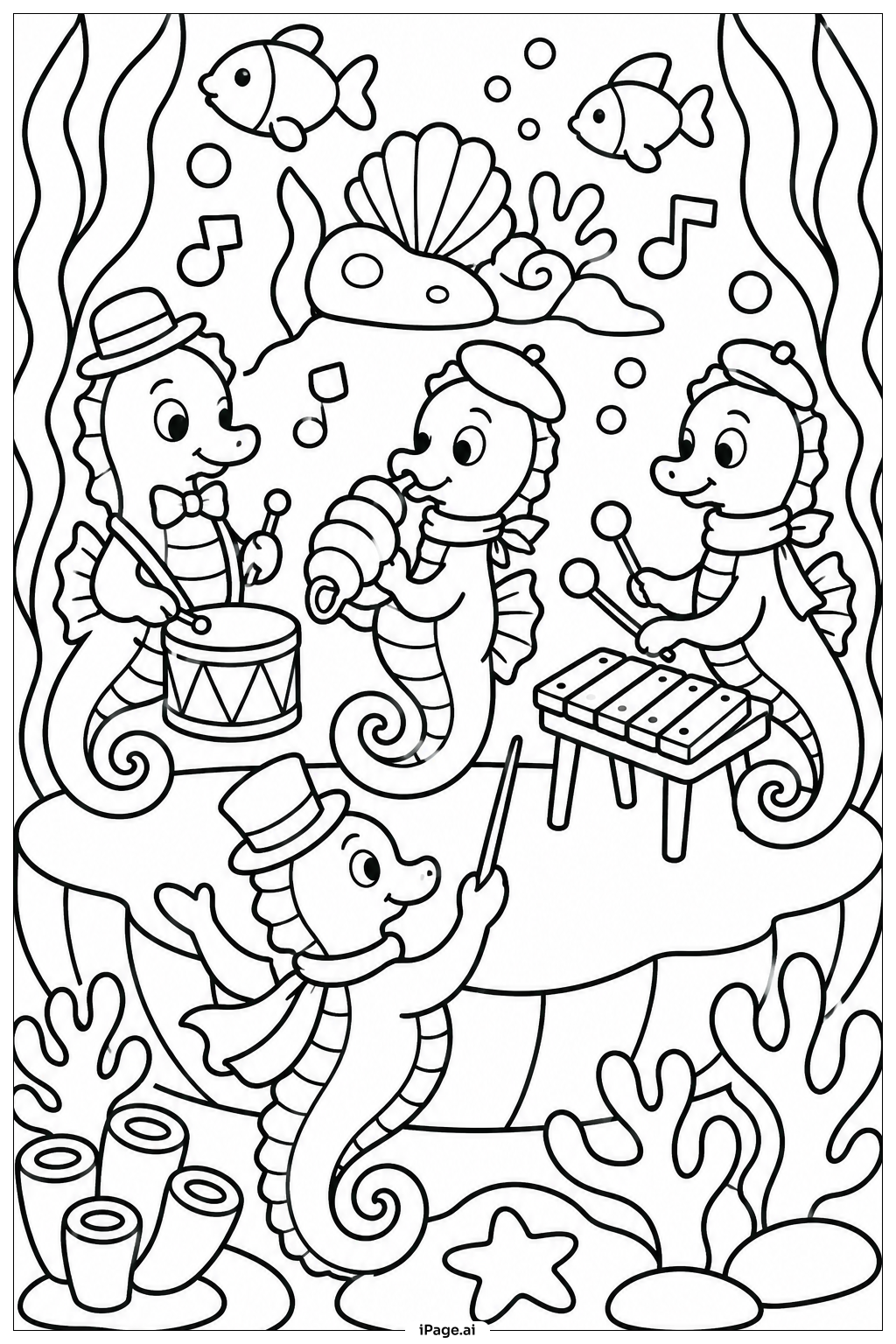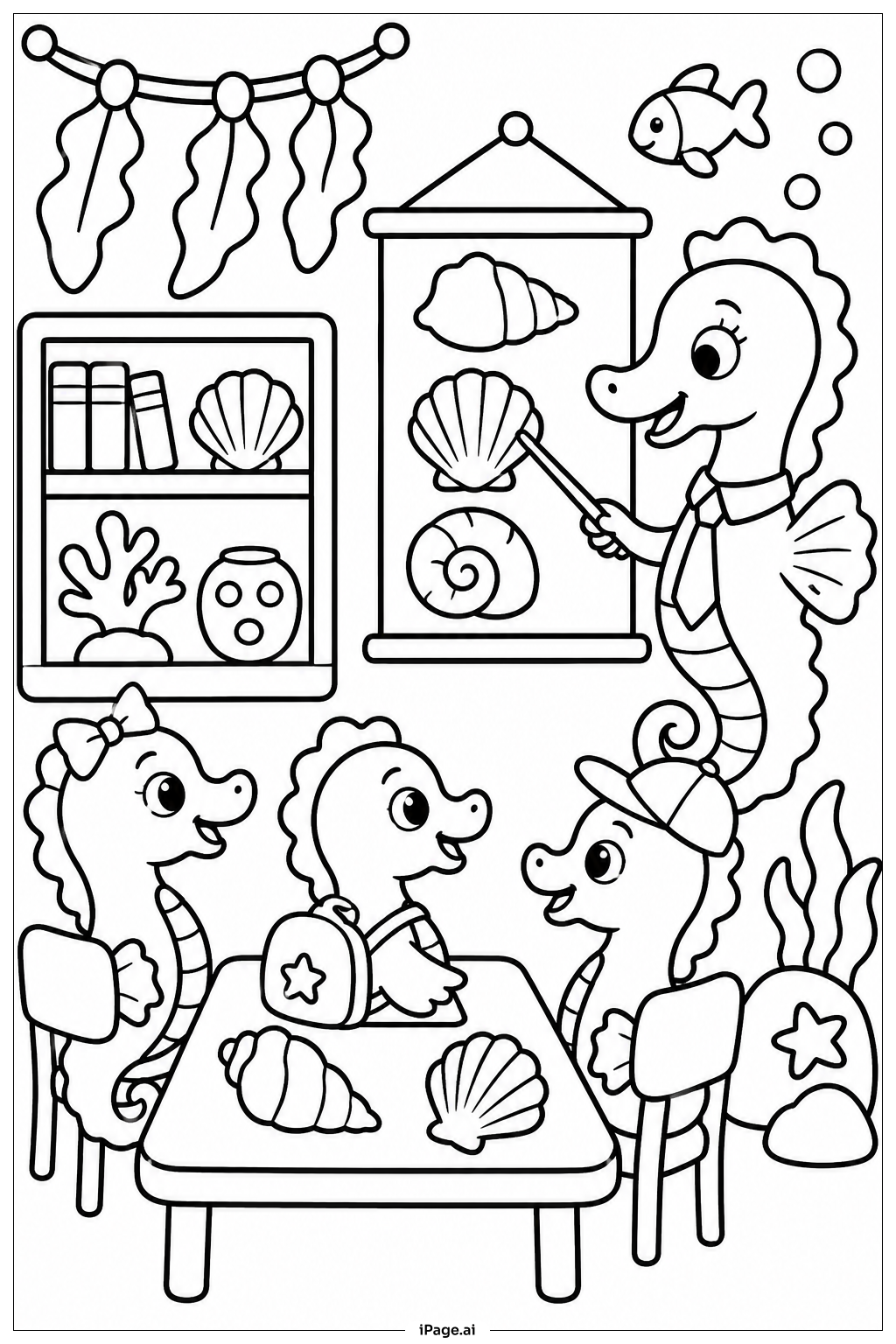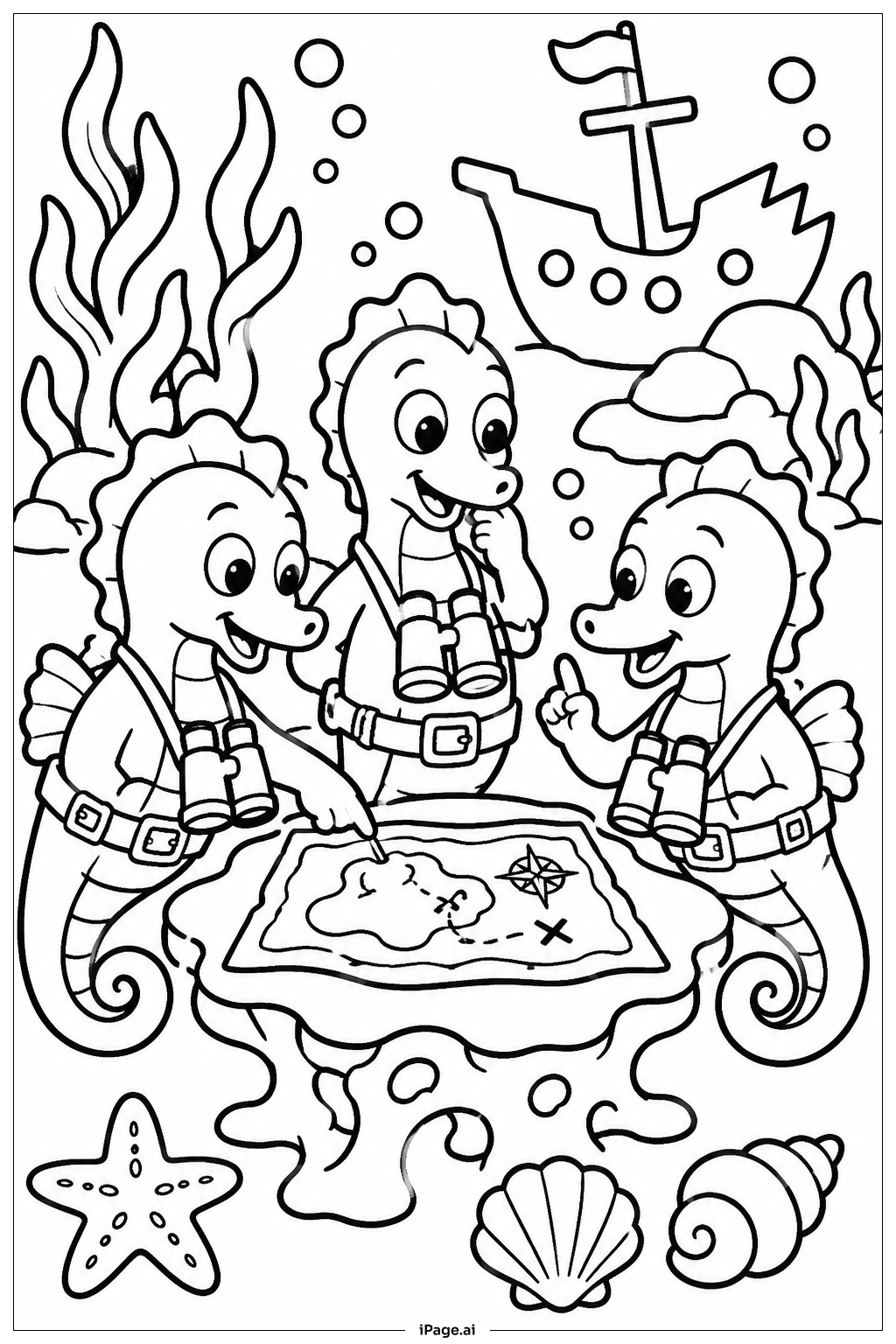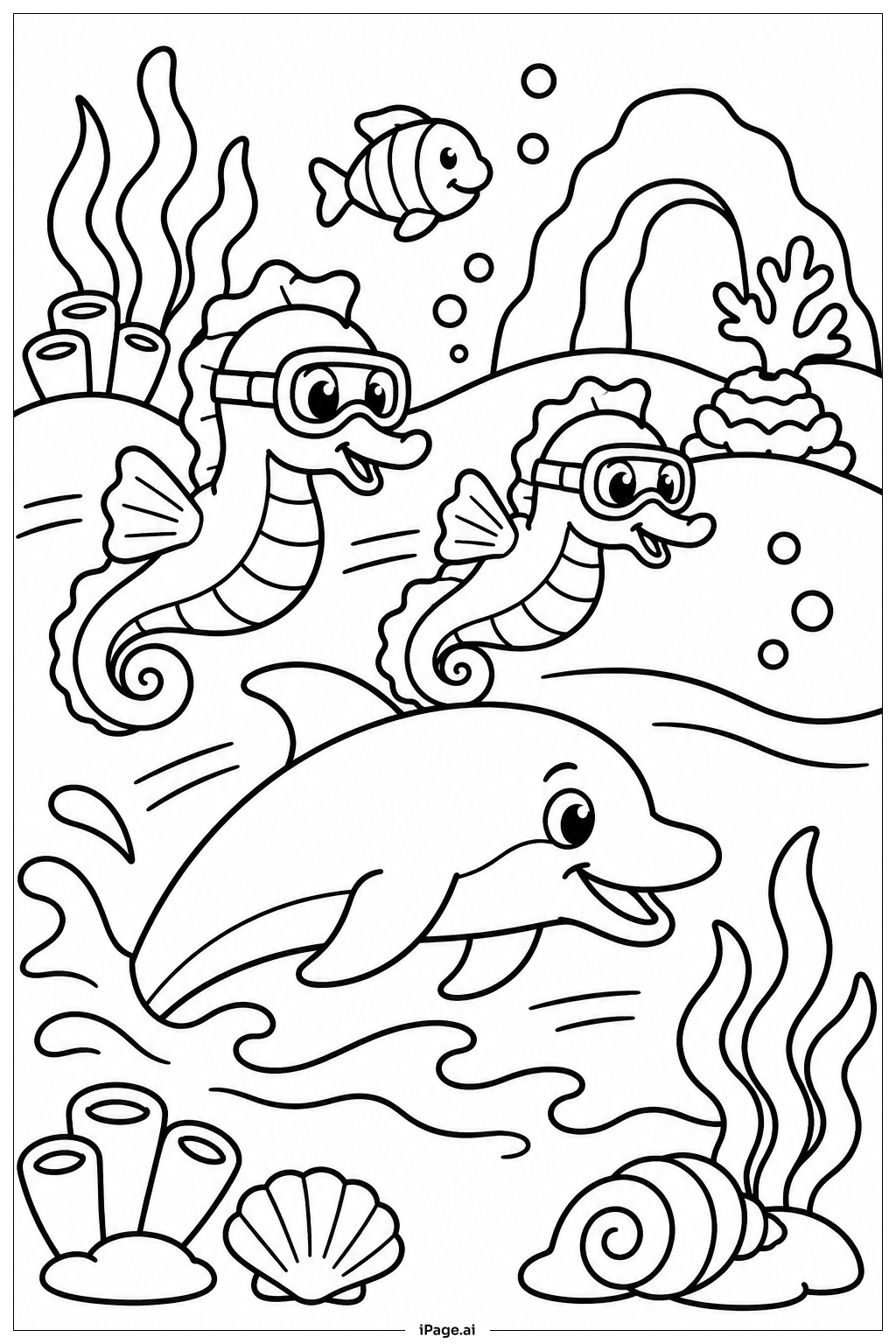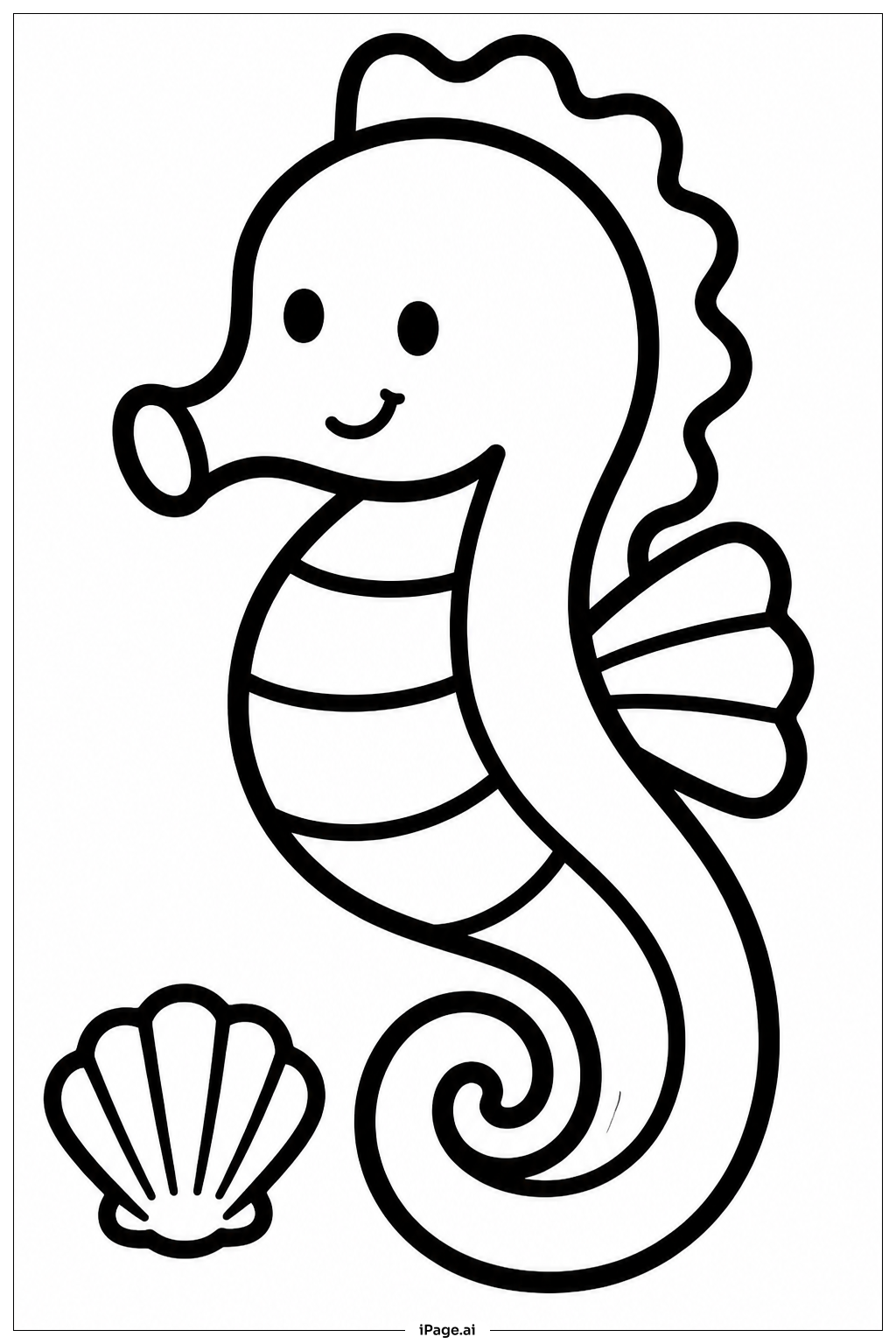
Coloring tips: How to color Curly Tail Seahorse coloring page well?
Start with the seahorse's body using warm golden yellows or soft oranges to give it a sunny, tropical feel. You can also try a cool teal or turquoise for a more ocean-inspired look. Use a slightly darker shade of the same color to add depth to the bony rings and ridges along its body. Color the curly tail in a contrasting but complementary shade, like a deeper amber or coral pink, to make it stand out. The dorsal fin looks lovely in a translucent light blue or pale lavender. For the background seaweed, use various shades of green — from lime to forest green — to add life and variety. Color the bubbles in light blue or leave them white for a sparkling effect. Don't be afraid to mix colors and experiment with gradients to make your seahorse truly unique!
Coloring challenges: Which parts are difficult to color and need attention for Curly Tail Seahorse coloring page?
• **Intricate body texture:** The seahorse's body is covered in overlapping bony rings and ridged plates. Coloring each segment neatly without going over the lines requires a sharp pencil or fine-tipped marker and a steady hand. This level of detail can be tricky, especially for younger colorists.
• **The spiral tail:** The tightly coiled tail curves in on itself, creating overlapping sections that are close together. Keeping colors consistent and clean within each curved segment — while also showing depth and shadow — is one of the most challenging parts of this image.
• **Small fins and delicate features:** The dorsal fin and pectoral fins are small and lightly detailed. Applying color evenly in these tiny areas without smudging or bleeding into the body requires careful control and patience.
• **Background details:** The seaweed strands and floating bubbles in the background are layered and intertwined with the seahorse's outline. Deciding which elements go in front and which go behind — and coloring accordingly — demands attention to spatial awareness and planning.
• **Color consistency and shading:** Achieving a smooth, realistic look across the entire seahorse means maintaining consistent color pressure and blending transitions between light and shadow. This is especially challenging on the curved, three-dimensional form of the body and tail, where highlights and shadows shift direction frequently.
Benefits of coloring books: Advantages of drawing Curly Tail Seahorse coloring page
Coloring this Curly Tail Seahorse page offers a wonderful range of benefits for kids and beginners alike. The detailed body rings and spiral tail help children practice fine motor skills and hand-eye coordination as they carefully stay within the lines. Choosing colors for the seahorse's body, fins, and background encourages creative thinking and self-expression — there is no wrong answer!
Working through the intricate sections builds focus and patience, which are valuable skills both in and out of the classroom. The calming, repetitive motion of coloring also helps reduce stress and anxiety, making it a great quiet-time activity.
As children color, they naturally learn about seahorses — their unique body shape, how they use their tails to hold on to coral, and where they live. This makes the activity both fun and educational. Completing the page gives a real sense of accomplishment and boosts confidence. Whether done alone or with friends, coloring this seahorse is a joyful, screen-free way to spark imagination and curiosity about the ocean world.