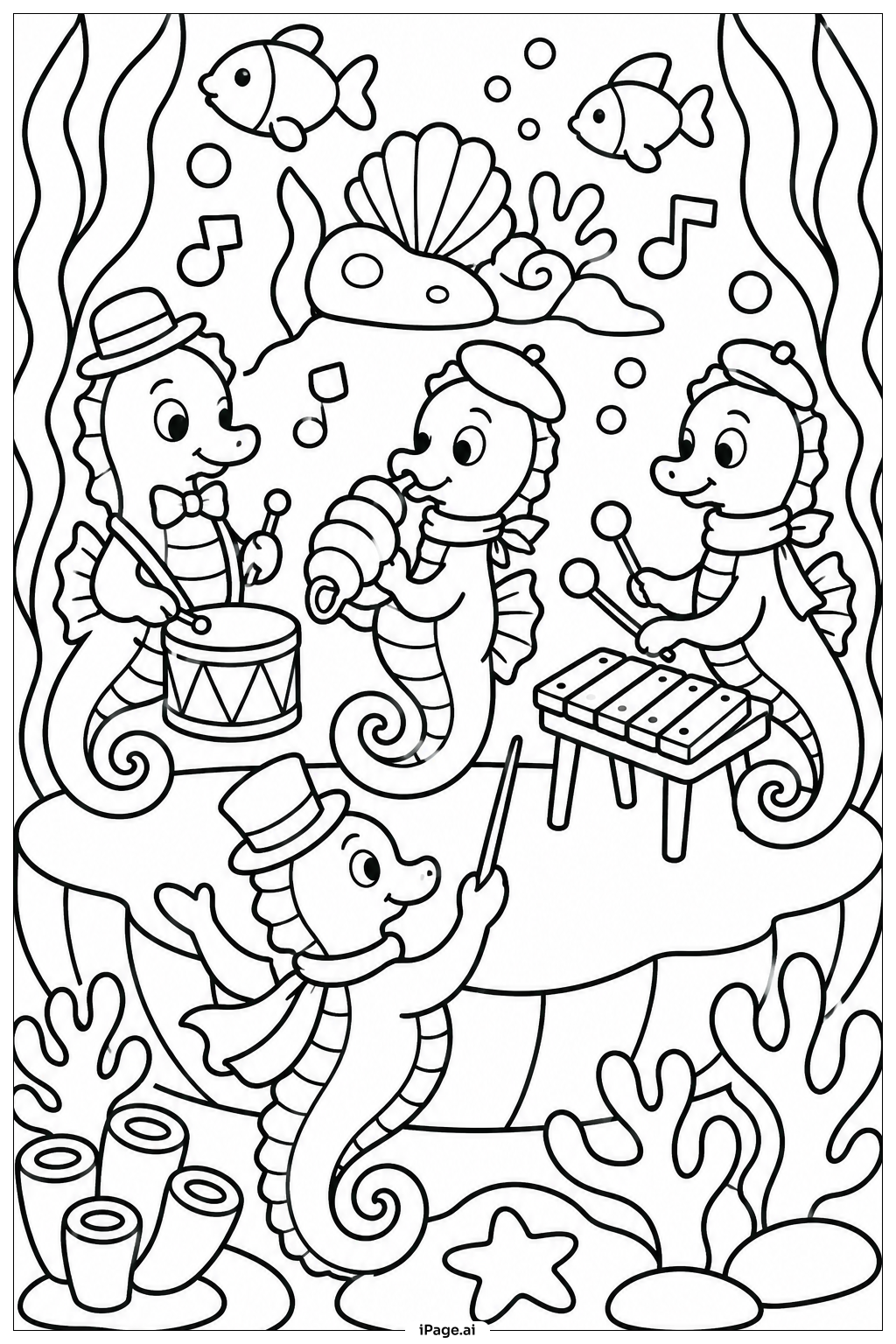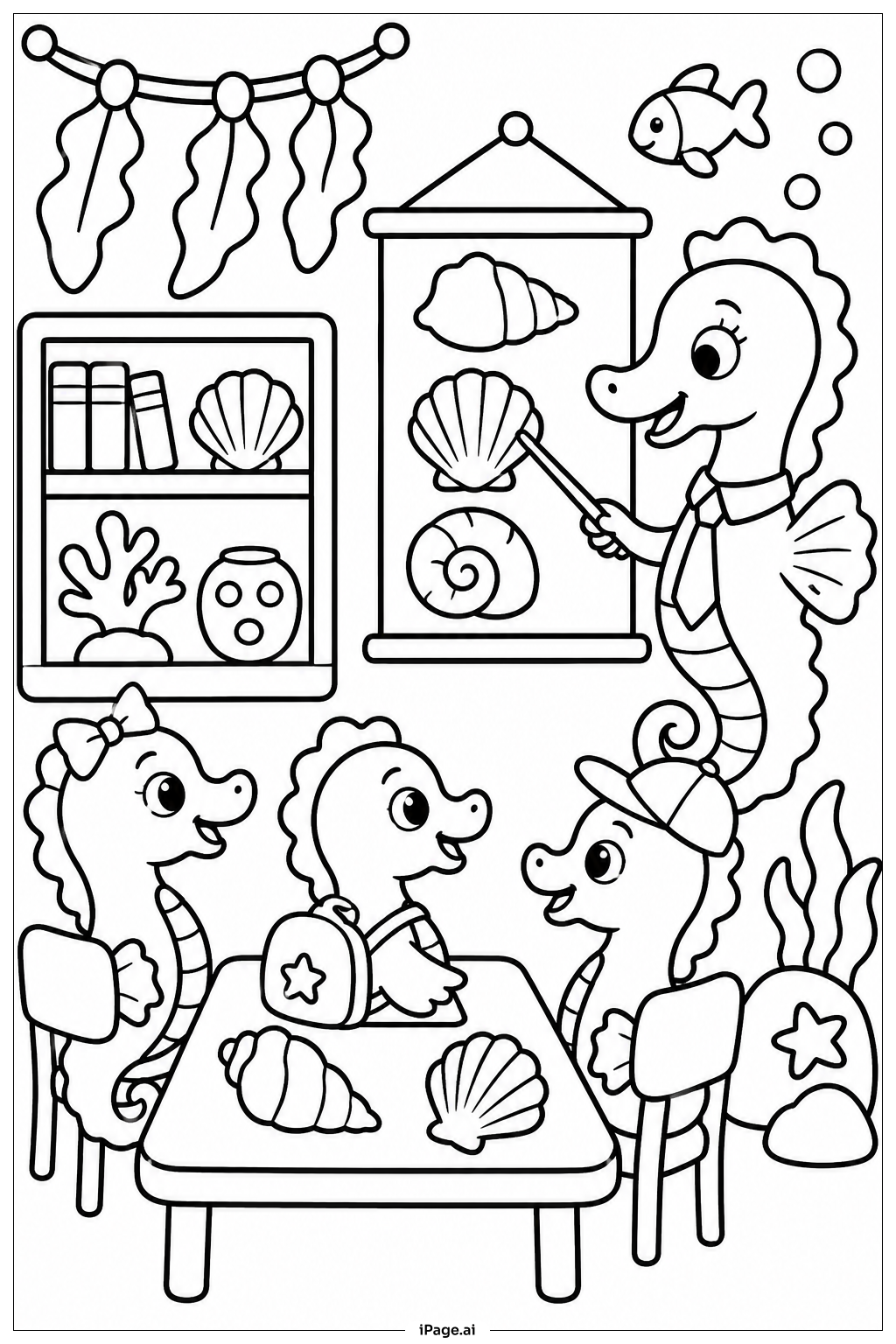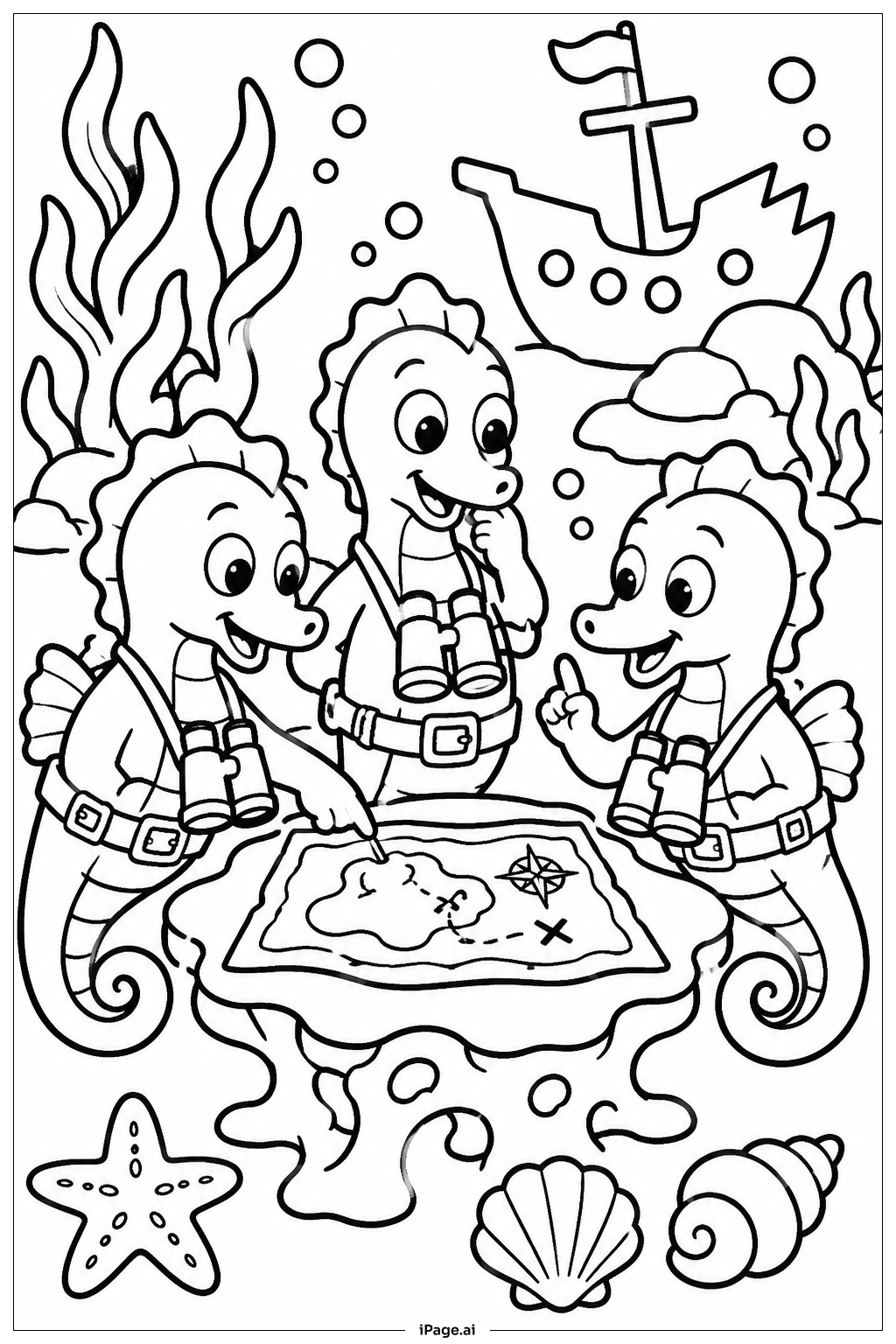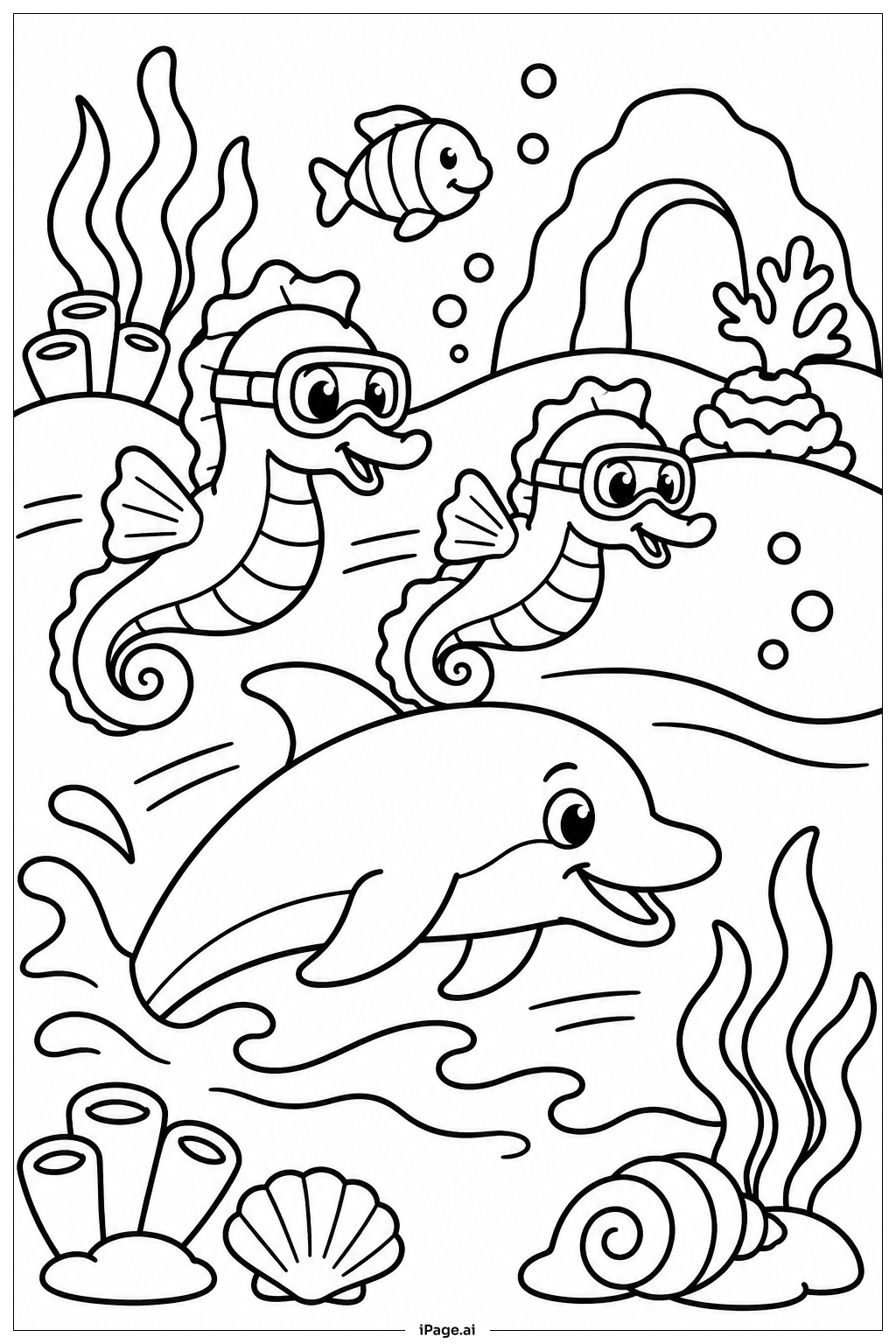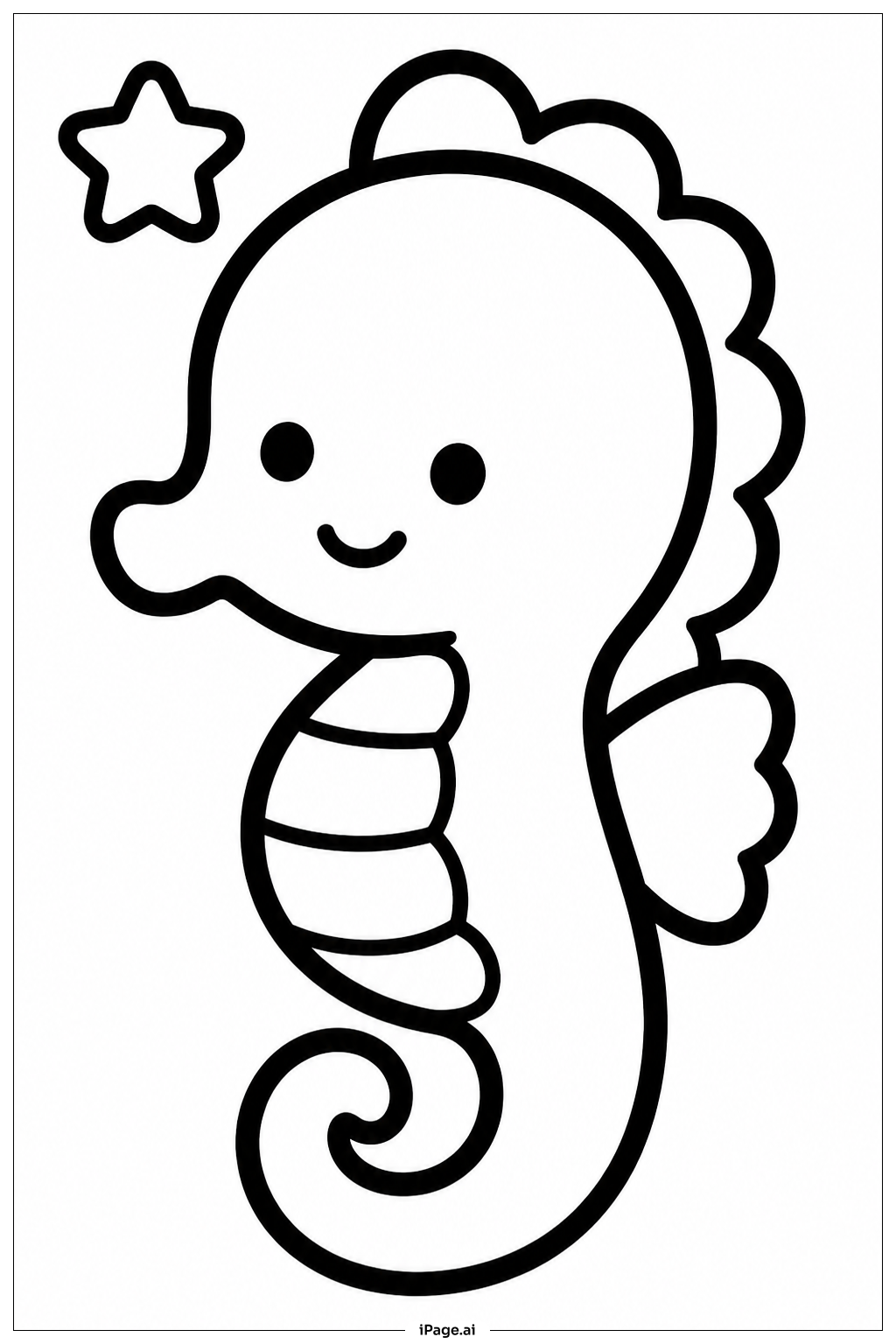
Coloring tips: How to color Baby Seahorse coloring page well?
Start with the baby seahorse's body. Use warm golden yellow or soft orange for the main body to give it a sunny, cheerful look. Add light brown or tan shading along the ridges to bring out the texture. The curled tail can be a slightly deeper shade of the same color. Color the coral in pink or red, and use bright green for the seaweed. Fill the background with soft shades of blue and teal to create a calm ocean feel. Add purple or lavender to the starfish for a pop of color. Use white or pale yellow for the bubbles. Don't be afraid to mix colors and experiment — the ocean is full of surprises!
Coloring challenges: Which parts are difficult to color and need attention for Baby Seahorse coloring page?
• **Textured body plates:** The baby seahorse's body is made up of many small overlapping ridges and bony segments. Staying within each tiny section while adding shading or gradient effects can be tricky, especially for younger colorists. Take your time and use a sharp pencil or fine-tipped marker for the best results.
• **The curled tail:** The spiral shape of the tail curves tightly, creating narrow spaces that are hard to fill evenly. Colored pencils with fine tips work best here. Try following the curve of the tail with your strokes to keep the color smooth and consistent.
• **Small background details:** Elements like tiny bubbles, distant fish, and scattered starfish are small and closely spaced. Coloring these without accidentally going outside the lines or blending them into the background requires a steady hand and careful attention.
• **Creating depth in the ocean background:** The underwater setting calls for a layered, gradient effect — darker blues at the top fading into lighter teals near the seafloor. Blending multiple shades smoothly without streaks can be challenging, particularly with crayons. Watercolor pencils or soft pastels can make this step easier.
• **Balancing colors across the whole scene:** With so many elements — the seahorse, coral, seaweed, fish, and background — choosing colors that look good together without making the image feel too busy takes some planning. Picking a simple color palette of three to five colors before you start can help keep everything looking balanced and harmonious.
Benefits of coloring books: Advantages of drawing Baby Seahorse coloring page
Coloring a Baby Seahorse page offers a wonderful mix of fun and learning for kids of all ages. It helps children develop fine motor skills as they carefully fill in the seahorse's tiny ridges and delicate details. Staying within the lines builds hand-eye coordination and focus, skills that are useful in school and everyday life.
This image also sparks curiosity about ocean life. Kids may want to learn more about real seahorses — like the fact that dads carry the babies! That natural curiosity encourages reading and exploration beyond the coloring page.
Choosing colors for the seahorse, coral, and sea background gives children a chance to express their creativity freely. There are no wrong choices, which builds confidence and a love of art. The calming, repetitive motion of coloring also helps reduce stress and anxiety, making it a great quiet-time activity.
For older kids, the challenge of blending colors and creating depth in the ocean scene introduces basic art concepts like shading and color harmony. Overall, this sweet underwater scene makes coloring both a joyful and enriching experience.