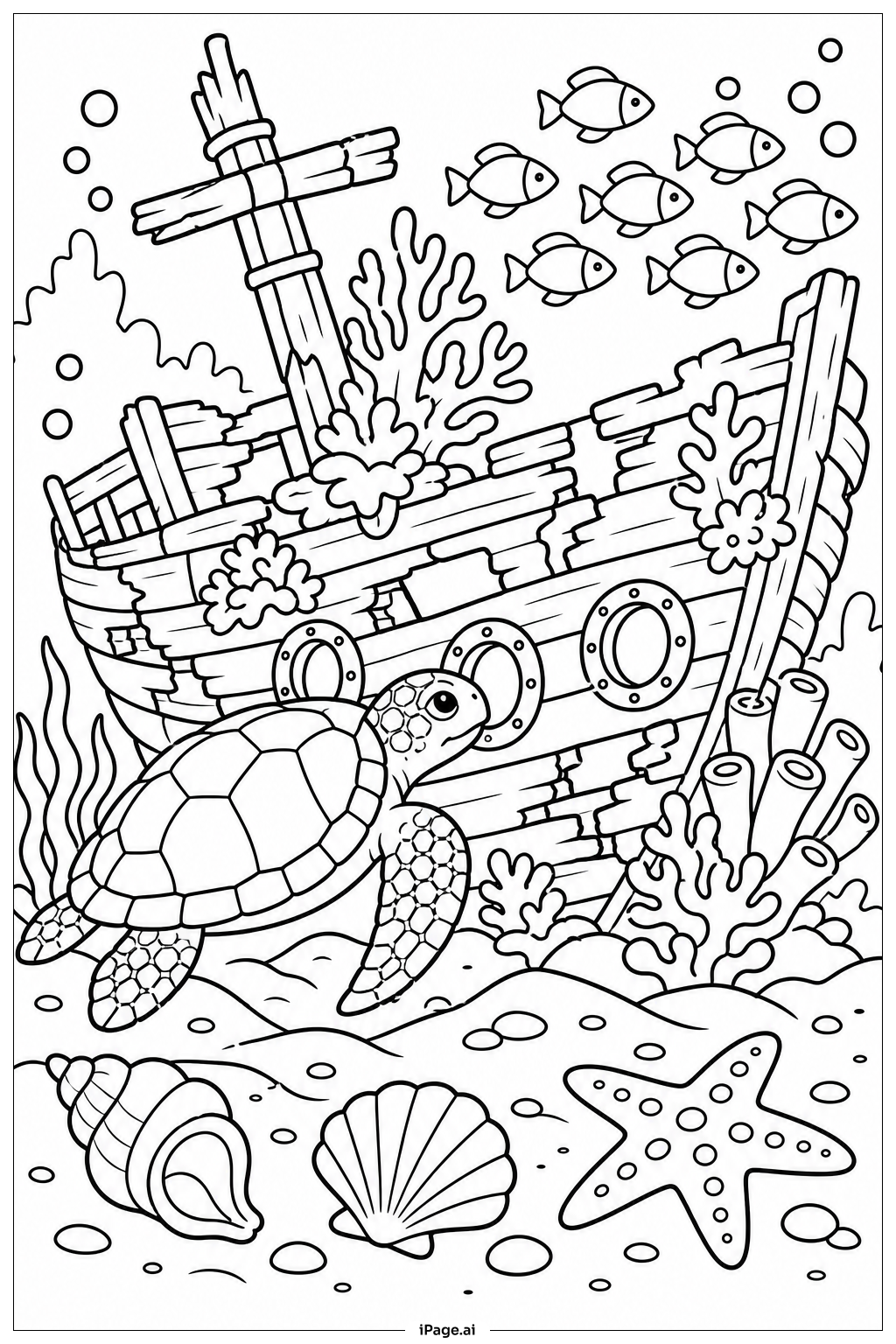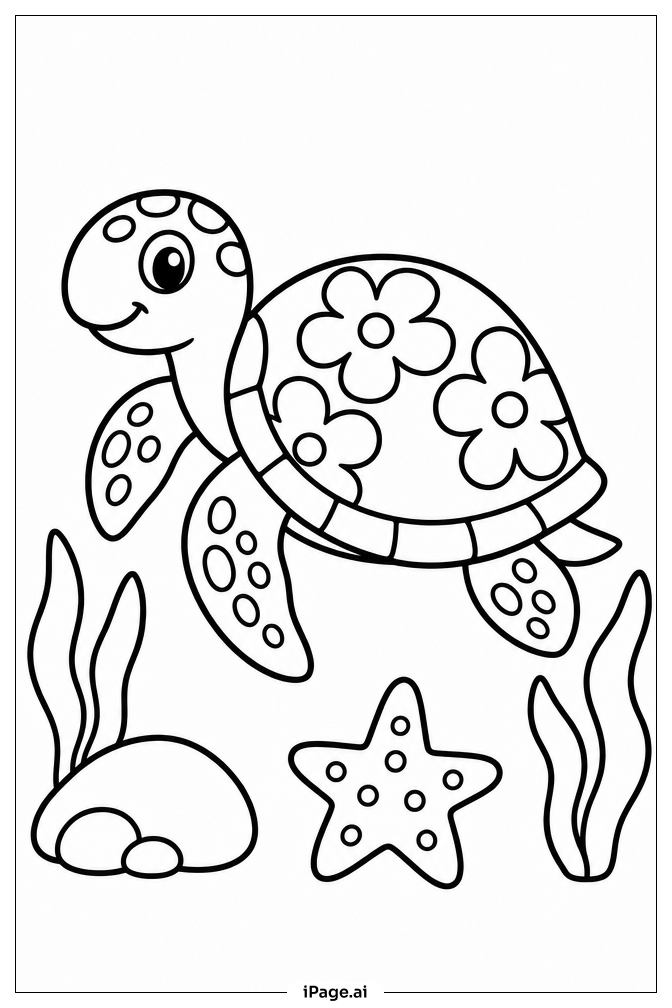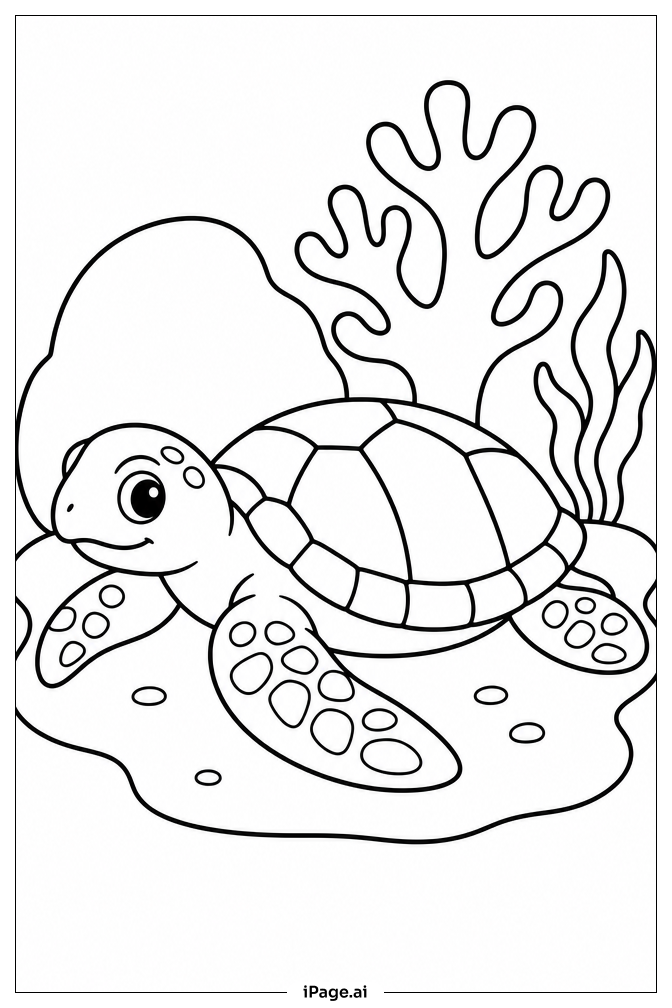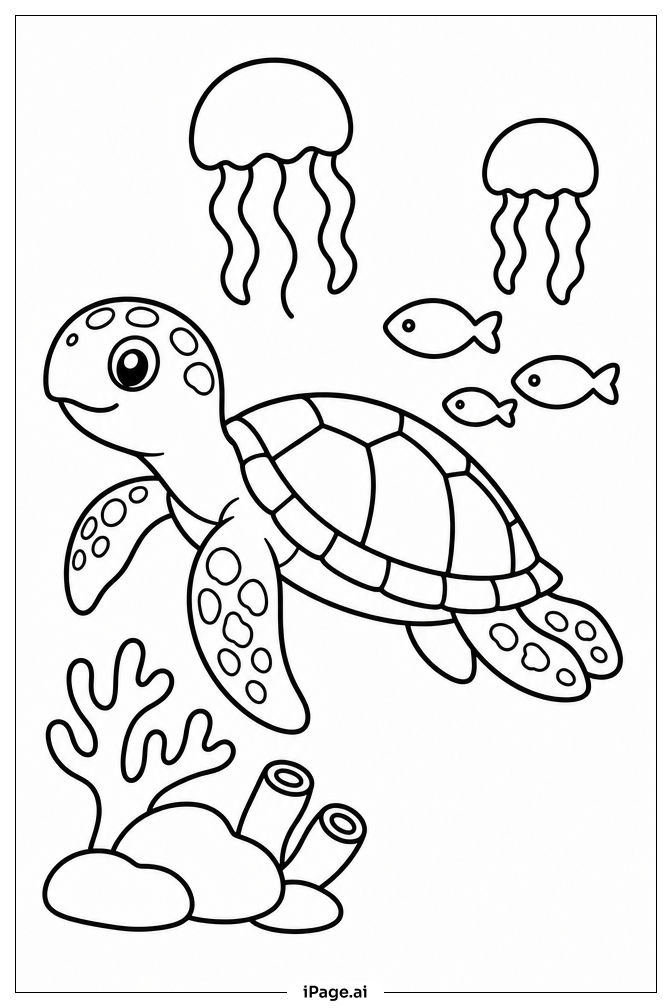
Coloring tips: How to color Sea Turtle And Jellyfish coloring page well?
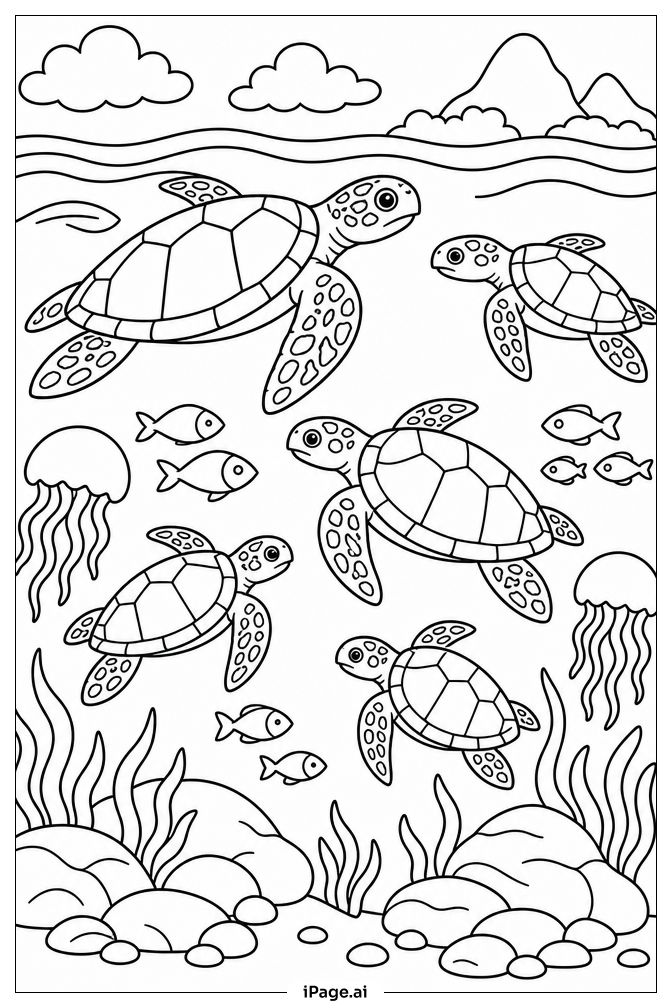
Start with the sea turtle's shell. Use different shades of green and brown to fill each section of the shell, making each panel a slightly different tone to add depth. For the turtle's skin and flippers, try a medium olive green with darker green shading along the edges. The jellyfish look beautiful in soft, glowing colors. Try light pink, lavender, or pale blue for the bell tops. Use a slightly darker shade of the same color for the trailing tentacles. For the ocean background, fill it with shades of blue and teal, going lighter near the surface and deeper blue toward the bottom. Add small white or pale yellow dots for bubbles. Keep the overall palette cool and calming to capture the peaceful feeling of the underwater world. Kids can also get creative and use bright, bold colors for the jellyfish to make them look magical and glowing.
Coloring challenges: Which parts are difficult to color and need attention for Sea Turtle And Jellyfish coloring page?
• Shell Pattern Complexity: The sea turtle's shell is divided into many separate sections, each with its own unique shape. Coloring each panel neatly without going over the lines takes patience and careful control. Using a fine-tipped colored pencil or marker will help keep each section clean and distinct.
• Layering Depth on the Shell: To make the shell look three-dimensional and realistic, you need to blend at least two or three shades of color within each section. Transitioning smoothly from light to dark without creating harsh lines is a skill that requires practice, especially for younger colorists.
• Jellyfish Tentacles: The long, thin, flowing tentacles of the jellyfish are very narrow and close together. Staying within those fine lines while still applying color evenly is one of the trickiest parts of this image. A sharp pencil tip or a thin marker works best here.
• Creating a Glowing Jellyfish Effect: Jellyfish in real life often appear to glow softly from within. Recreating this translucent, luminous look on paper is challenging. One technique is to leave the center of the bell slightly lighter and deepen the color toward the edges, which mimics the natural glow.
• Background Water Blending: Filling the ocean background with a smooth, gradual color blend from light to deep blue can be difficult without the right tools. Uneven pressure or mismatched colors can make the background look patchy rather than fluid and immersive.
Benefits of coloring books: Advantages of drawing Sea Turtle And Jellyfish coloring page
Coloring this Sea Turtle And Jellyfish page offers a wonderful range of benefits for kids and beginners alike. First, working with the turtle's detailed shell helps children develop fine motor skills and hand-eye coordination as they carefully stay within each small section. This kind of focused, precise work also builds patience and concentration. Second, choosing colors for the ocean scene sparks creativity and imagination. Kids get to decide whether their jellyfish glow pink, purple, or electric blue, which encourages self-expression and artistic confidence. Third, the calming underwater theme makes this a relaxing activity. Focusing on soft ocean colors and gentle shapes can help reduce stress and anxiety, making coloring a great way to unwind after a busy day. Fourth, learning about sea turtles and jellyfish while coloring can spark curiosity about marine life and the natural world, blending art with early science learning. Finally, completing this detailed page gives children a real sense of accomplishment, boosting their self-esteem and motivation to keep creating. It is a fun, educational, and deeply satisfying activity for all ages.