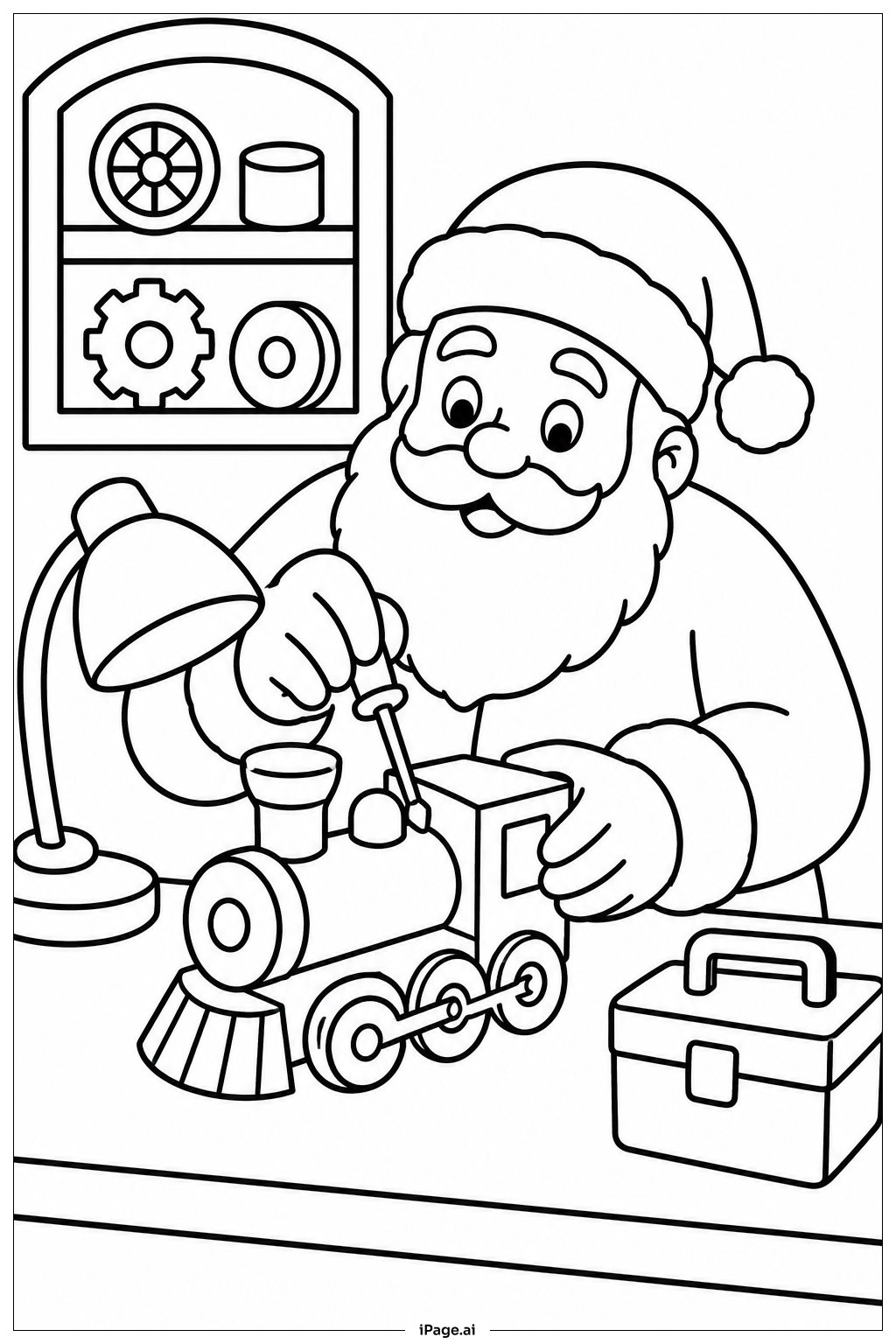
Coloring tips: How to color Santa Repairing Toy Train coloring page well?
Start with Santa's suit. Use a bold, bright red for his jacket, pants, and hat. Color the fluffy trim on his hat and cuffs with creamy white. His beard and eyebrows should be soft white or light gray. Use a peachy skin tone for his rosy cheeks and nose. For the toy train, try classic colors like red, green, or blue for the body, with dark gray or silver for the wheels and metal parts. Color the workbench with warm brown shades to give it a wooden feel. Use golden yellow or orange for any lantern or lamp lighting the scene. Add darker browns and grays to tools and small parts on the bench. For the background shelves, mix greens, reds, and yellows to show a variety of colorful toys. Keeping the overall palette warm and festive will make the scene feel full of Christmas spirit.
Coloring challenges: Which parts are difficult to color and need attention for Santa Repairing Toy Train coloring page?
• Santa's Suit Texture: Santa's red suit has folds, creases, and fluffy white trim all in one outfit. Keeping the red sections vibrant while adding shading to show the fabric's depth can be tricky. The white trim also needs careful coloring to avoid looking flat — using light gray in the shadowed areas helps it look soft and three-dimensional.
• Small Train Parts and Tools: The toy train pieces and tools scattered on the workbench are tiny and closely packed. Staying within the small outlines without smudging neighboring areas requires a fine-tipped tool or pencil. Each part may need a slightly different shade of gray, silver, or brown to look distinct and realistic.
• Facial Details: Santa's face includes a round nose, rosy cheeks, expressive eyes, and a thick white beard — all close together. Blending a warm flush on the cheeks while keeping the beard bright white takes patience. Avoid coloring the beard too dark, as it can make the face look muddy.
• Workbench and Background Depth: The bench, shelves, and background toys sit at different distances. Using lighter shades for farther-away objects and darker, richer tones for closer items helps create a sense of depth. Without this layering, the scene can look flat and two-dimensional.
• Lighting and Shadows: The warm glow of a workshop lamp creates soft highlights and shadows across Santa and the table. Showing this lighting effect — brighter tones near the light source and gradually darker shades moving away — adds realism but requires careful, gradual color blending.
Benefits of coloring books: Advantages of drawing Santa Repairing Toy Train coloring page
Coloring this Santa Repairing Toy Train page offers a wonderful mix of fun and learning for kids and families alike. It helps children develop fine motor skills as they carefully color small details like train parts, tools, and Santa's facial features. Staying within the lines builds hand control and focus, skills that carry over into writing and other school activities.
The scene also sparks creativity. Children get to choose their own color combinations for the train, the workshop, and Santa's surroundings, encouraging imaginative thinking. Mixing and blending colors to show light, shadow, and texture introduces basic art concepts in a playful way.
Beyond the skills, this page brings the joy of the holiday season to life. Coloring Santa in his cozy workshop helps children connect with the spirit of Christmas — the idea of care, hard work, and giving. It can inspire conversations about how gifts are made and why thoughtfulness matters.
For older children and adults, the detailed elements offer a relaxing, meditative coloring experience. It is a great way to unwind, reduce stress, and enjoy a moment of quiet creativity. Completing the page also gives colorists a real sense of accomplishment, boosting confidence and pride in their work.