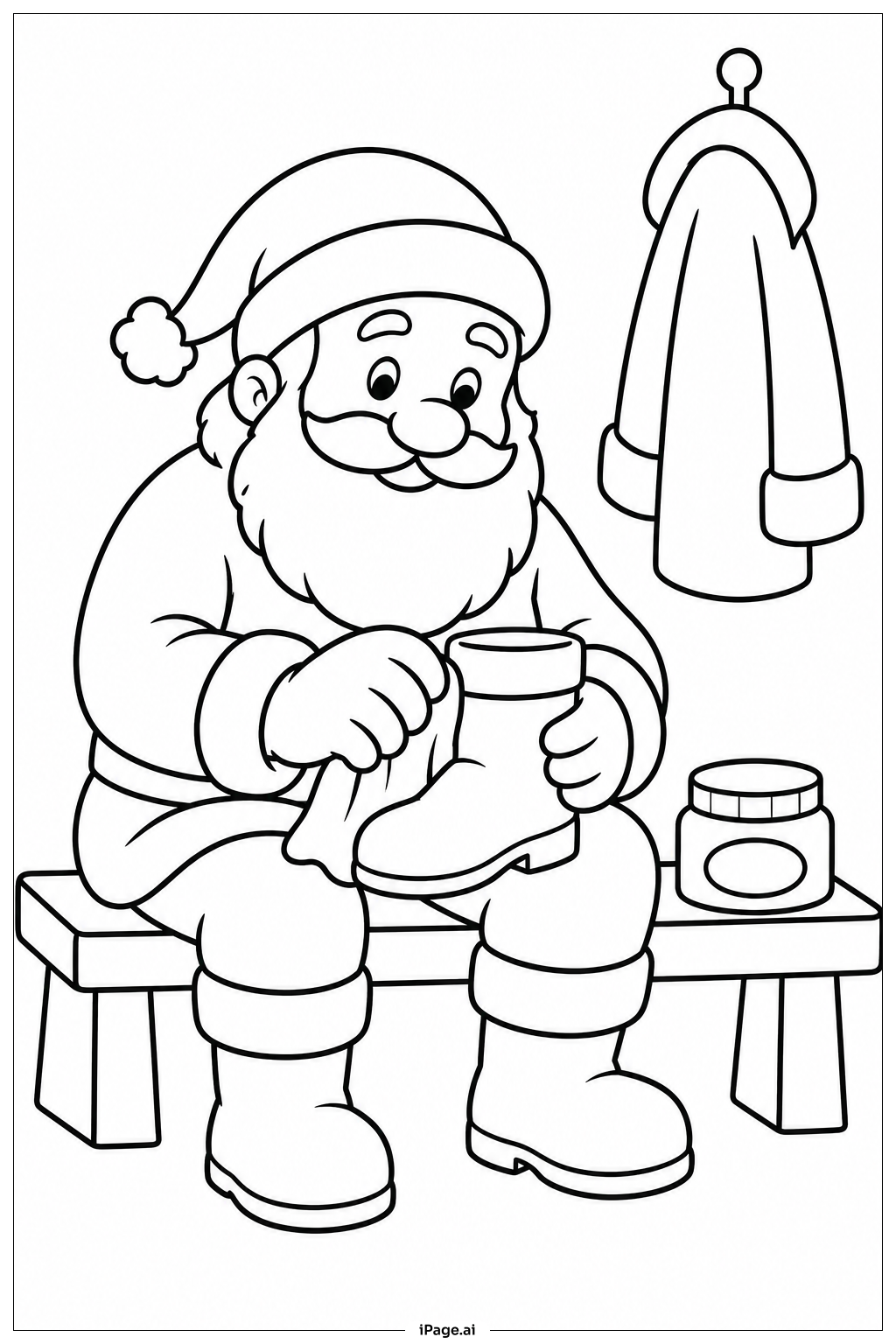
Coloring tips: How to color Santa Polishing Boots Bench coloring page well?
Start with Santa's suit by filling it in with a bold, bright red. Use a slightly darker red or brick tone for shadows on the folds and sleeves to add depth. Color the fur trim, beard, and mustache with soft white or light gray, adding a touch of pale blue in the shadows to make it look fluffy. His belt and boots are classic black, but try adding dark brown highlights to keep them from looking flat. Use warm tan or golden yellow for the boot polish tin and bench wood. Color the bench with light brown and add darker brown lines along the grain to give it a natural wood look. A warm beige or cream works well for Santa's skin. For the background, soft greens or snowy whites can set a festive holiday mood. Keep the overall palette warm and cheerful to match the cozy, jolly spirit of the scene.
Coloring challenges: Which parts are difficult to color and need attention for Santa Polishing Boots Bench coloring page?
• Santa's Red Suit Folds and Shadows: Santa's suit has many wrinkles and folds from sitting down. Coloring these areas with smooth, even shading is tricky. You need to pick a lighter red for raised areas and a deeper red or burgundy for the shadows inside each fold. Rushing through this section can make the suit look flat and uninteresting.
• White Fur Trim and Beard Details: The fluffy white trim on the hat, cuffs, and suit hem, along with Santa's long beard, have many small curved lines showing texture. Staying within these thin lines while keeping the white areas bright and soft is challenging. Using very light gray or pale lavender in the shadows helps, but too much dark color can make the fur look dirty instead of fluffy.
• Black Boots with Shine Effects: The boots are deep black, which seems simple but is actually hard to do well. A pure flat black looks dull, so adding subtle dark gray or dark navy highlights along the toe and heel helps suggest a polished shine. Keeping the highlight shapes smooth and consistent on both boots requires a steady hand.
• Wooden Bench Texture: The bench has natural wood grain lines and plank edges. Coloring wood realistically means layering warm browns and leaving thin lighter streaks along the grain. It is easy to overcolor this area and lose the natural feel of the wood.
• Small Props and Fine Details: Items like the boot polish tin, the polishing cloth, and the belt buckle are small and packed with detail. Filling these tiny sections neatly without bleeding color into neighboring areas takes patience and a fine-tipped coloring tool.
Benefits of coloring books: Advantages of drawing Santa Polishing Boots Bench coloring page
Coloring this Santa Polishing Boots Bench page offers a wonderful mix of fun and learning. For younger children, it builds essential fine motor skills as they practice staying within the lines of Santa's detailed outfit, his fluffy beard, and the small props around him. Guiding a crayon or marker carefully across the page strengthens hand control and prepares little ones for writing.
For older kids and teens, the scene encourages creative thinking. Choosing the right shades for the shiny boots, the soft fur trim, and the warm wooden bench teaches color theory in a practical, hands-on way. Experimenting with light and shadow on a familiar, beloved character makes learning about shading feel natural and enjoyable.
Beyond skills, coloring this cheerful holiday scene has real emotional benefits. Focusing on a calm, cozy activity like this helps reduce stress and brings a sense of peace. The festive theme connects children to the joy and warmth of the Christmas season, sparking imagination about Santa's world and holiday traditions.
Completing the page also builds confidence. Finishing a detailed coloring image gives kids a genuine sense of achievement. Displaying their finished Santa artwork adds to the holiday spirit at home, making this page both a creative activity and a small celebration of the season.