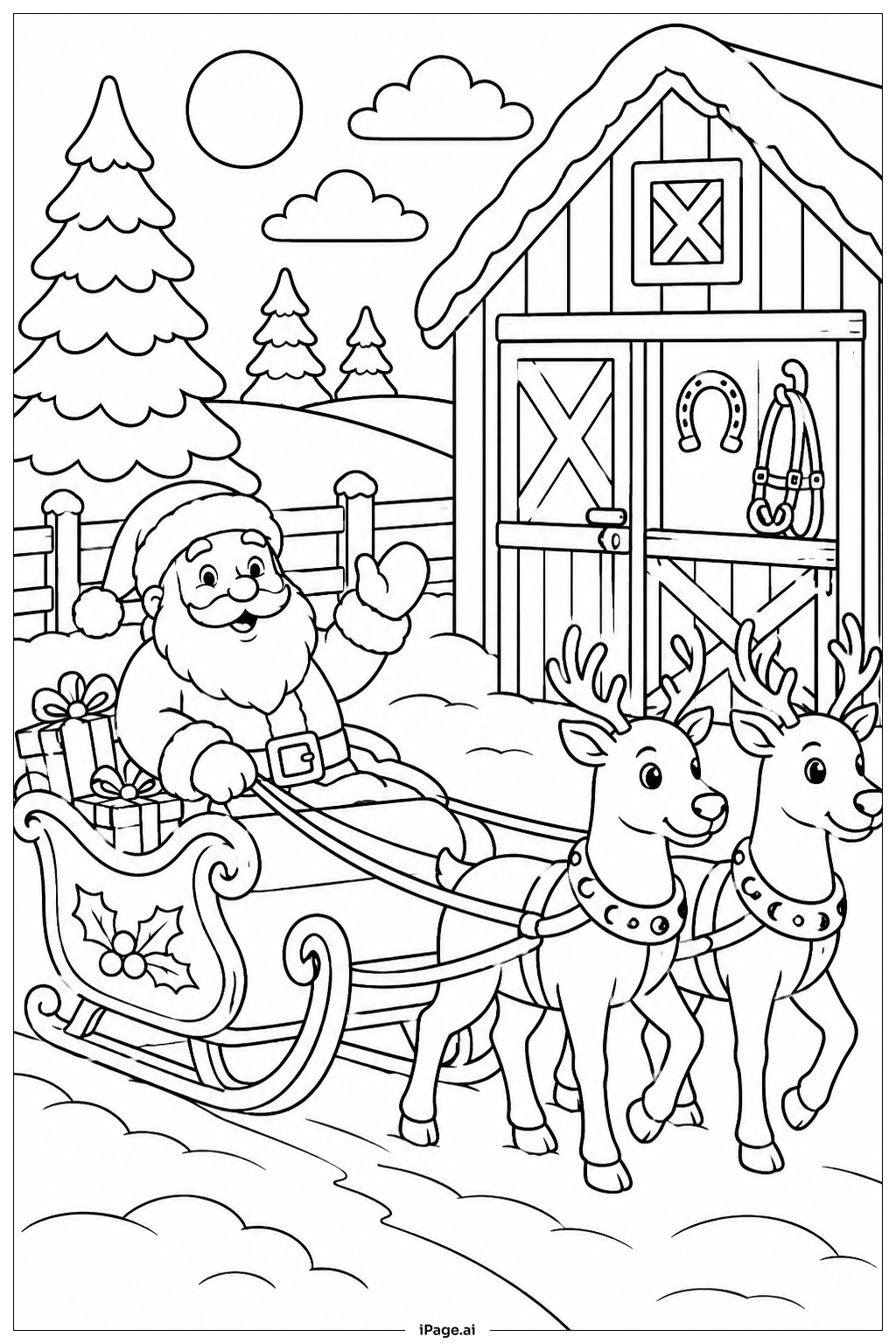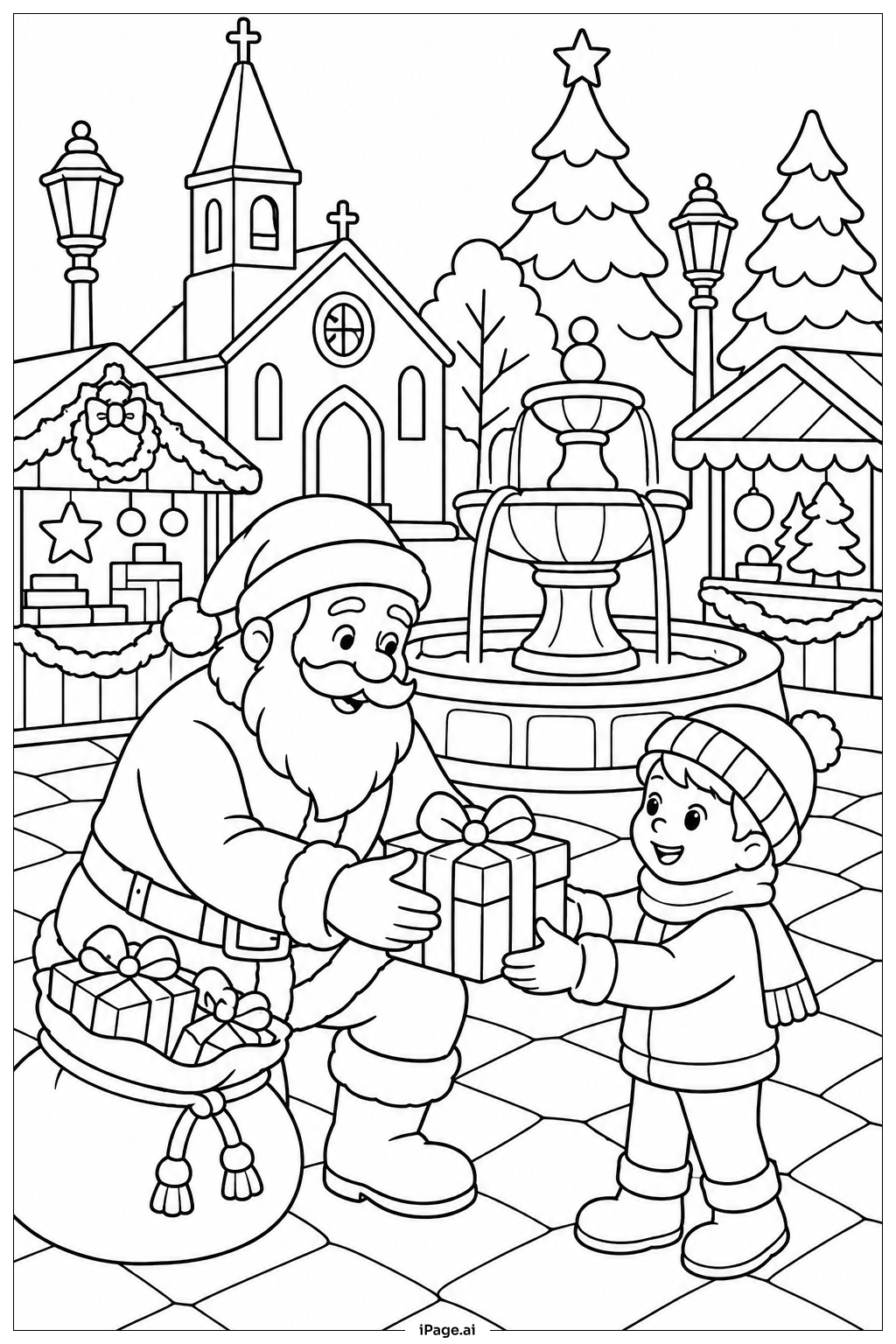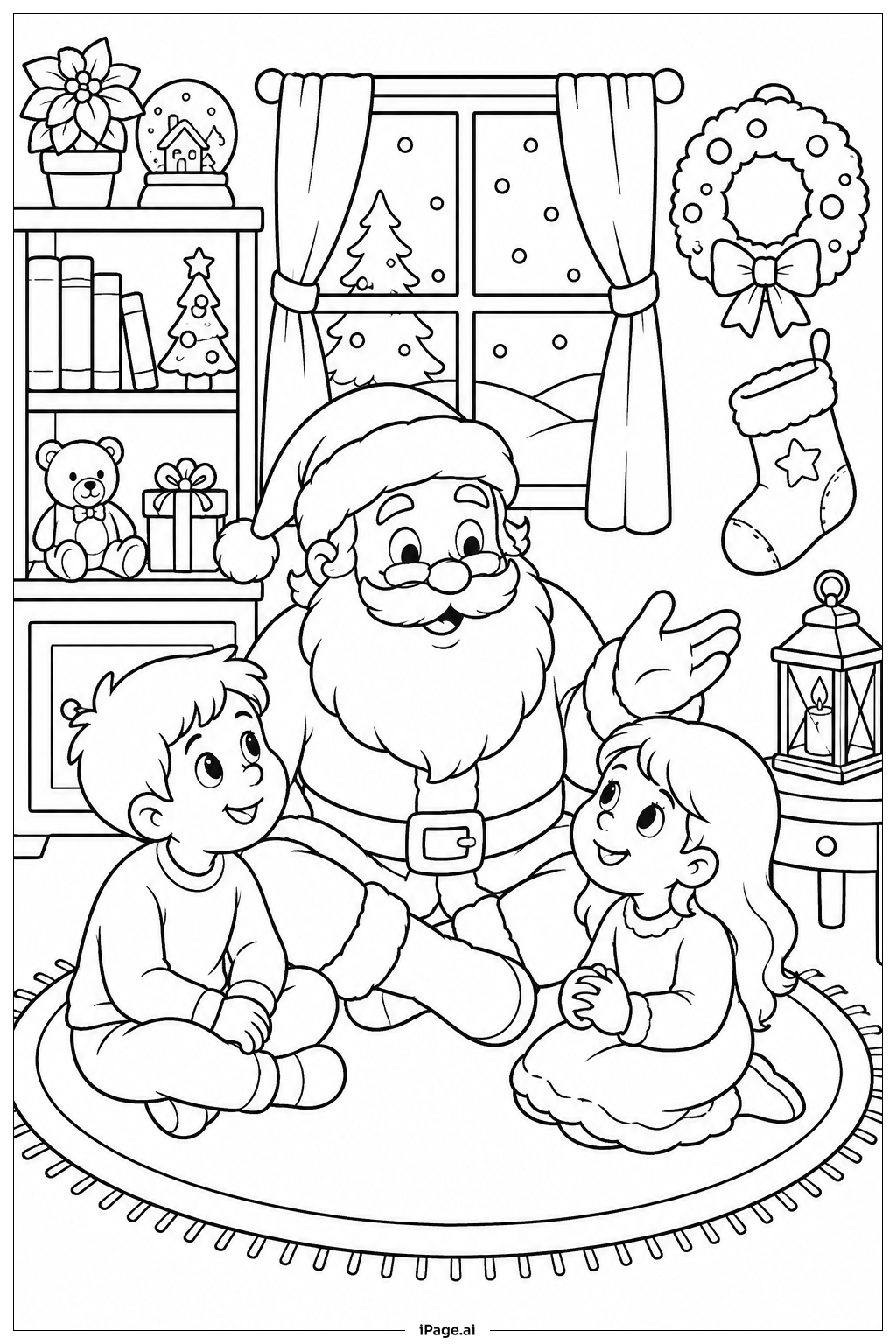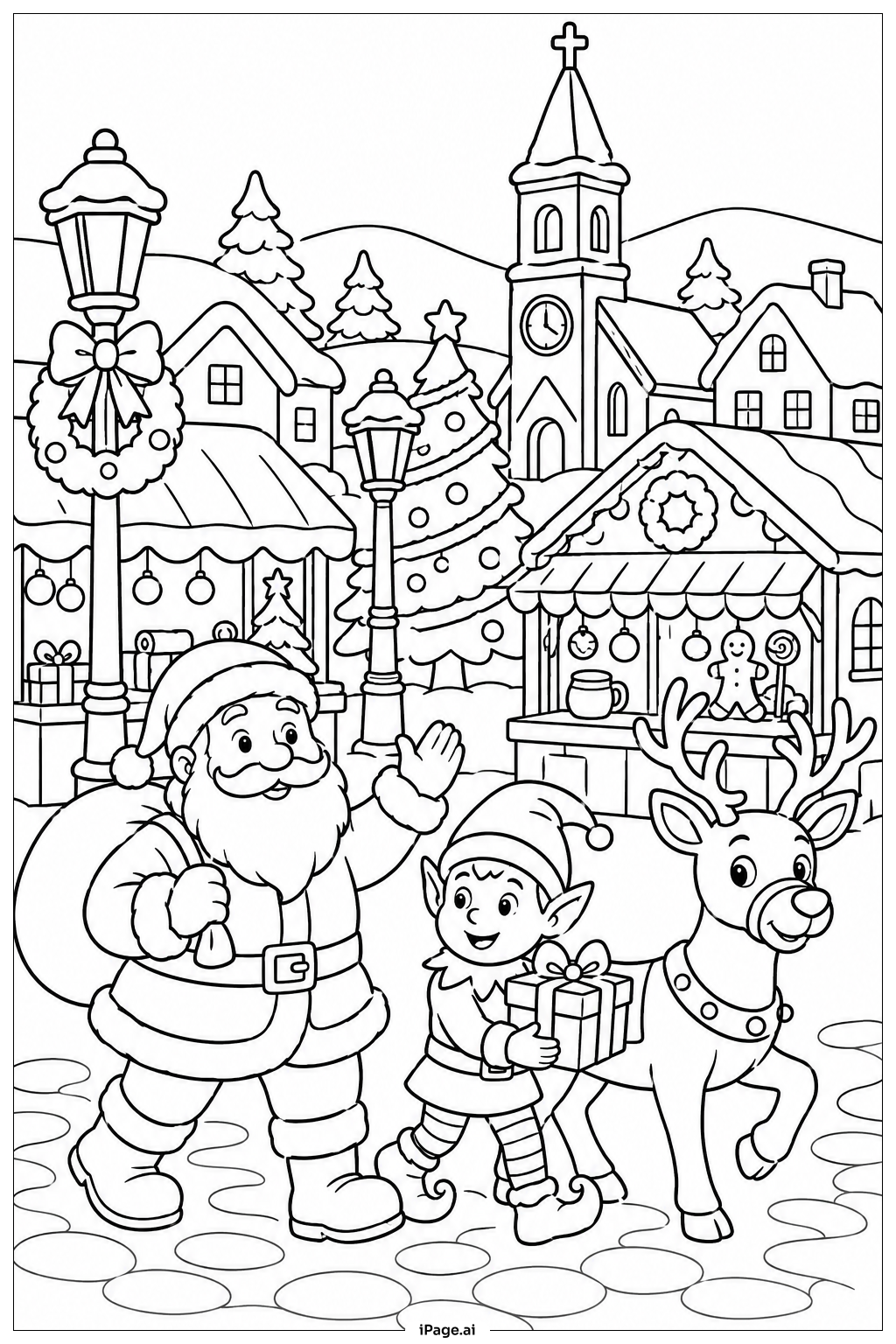
Coloring tips: How to color Santa Checking List Table coloring page well?
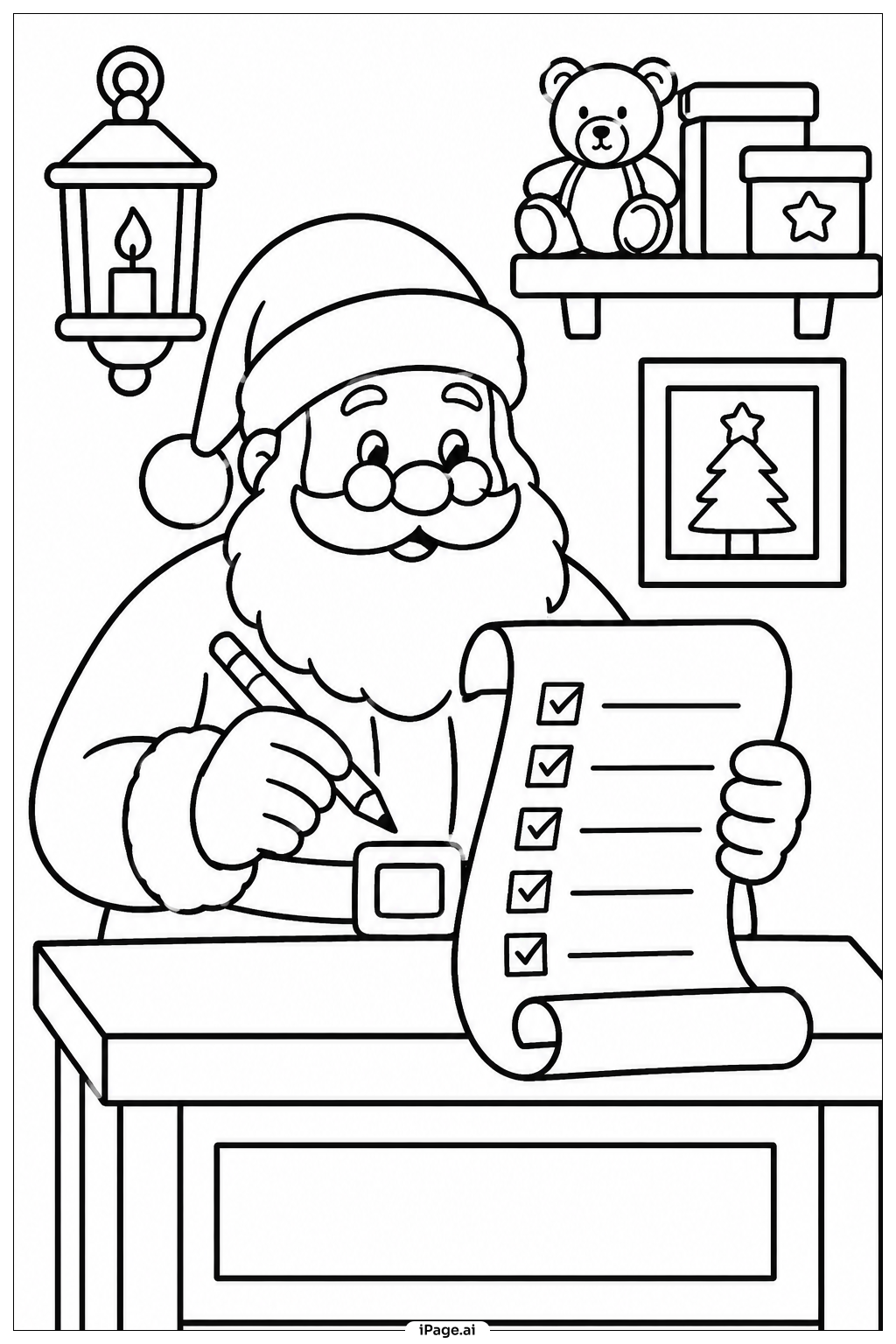
Start with Santa's suit. Use a rich red for his jacket and hat, and bright white for his beard, fur trim, and cuffs. His belt should be black with a golden buckle. Color the wooden table in warm browns and tans to give it a cozy, rustic feel. Use creamy yellows or off-whites for the scrolls and papers scattered across the table. The quill pen can be a soft ivory or light grey. Add a warm golden glow around the lantern or candle to bring light and warmth to the scene. For background decorations like holly and ribbons, use deep greens and festive reds. Small stars can be colored in bright yellow or gold. Encourage kids to use lighter shades first and layer darker tones on top for depth. There is no single right color choice — have fun and make it your own holiday masterpiece!
Coloring challenges: Which parts are difficult to color and need attention for Santa Checking List Table coloring page?
• Santa's Suit Texture and Details: Santa's outfit includes fur-trimmed edges, a wide belt, large buttons, and fabric folds. Keeping the red consistent while adding shading to show the folds and texture of the fabric can be tricky. Using a slightly darker red or orange-red in the shadow areas helps create a three-dimensional effect without muddying the overall look.
• The Beard and Fur Trim: Santa's long, flowing beard and the fluffy white trim on his suit are challenging because they need to look soft and voluminous. Since white on white can appear flat, try using very light grey or pale blue in the shadowed areas to define the curls and layers of the beard and trim without losing the overall white appearance.
• Scrolls, Papers, and Books on the Table: The desk is cluttered with overlapping lists, open books, and rolled scrolls. Coloring each element a slightly different shade of cream, tan, or yellow helps separate them visually. Adding faint lines or shading on the edges of each scroll helps show where one document ends and another begins.
• The Wooden Table Surface: Wood grain patterns require patience and a steady hand. Using two or three shades of brown — light, medium, and dark — and drawing thin curved lines along the grain direction gives the table a realistic, warm look. Avoid pressing too hard with dark colors early on, as it is difficult to lighten mistakes.
• Small Festive Decorations: Holly leaves, stars, ribbons, and tiny ornamental details require fine-tipped coloring tools. These small elements can easily bleed into surrounding areas if tools are too broad. Working slowly with sharpened colored pencils or fine markers gives the best control over these delicate details.
Benefits of coloring books: Advantages of drawing Santa Checking List Table coloring page
Coloring this Santa Checking List Table scene offers a wide range of benefits for kids and adults alike. For younger children, filling in Santa's detailed outfit, scrolls, and table accessories helps build fine motor skills and hand-eye coordination as they work within the lines and navigate small spaces. It also strengthens color recognition and decision-making as they choose which shades work best for each element. For older kids and teens, the scene encourages creative thinking and artistic expression — experimenting with shading, layering colors, and creating depth on the wooden table or Santa's clothing builds real artistic technique. The festive holiday theme makes the activity feel joyful and meaningful, connecting children to the magic of Christmas traditions. Coloring together as a family around the holidays also creates a relaxed, screen-free bonding experience. For adults, the intricate details of the scrolls, books, and decorative elements provide a satisfying, mindful activity that helps reduce stress and encourage focus. Overall, this image combines holiday cheer with creative skill-building, making it a rewarding coloring experience for everyone.