Coloring tips: How to color Kids Planting Flowers coloring page well?
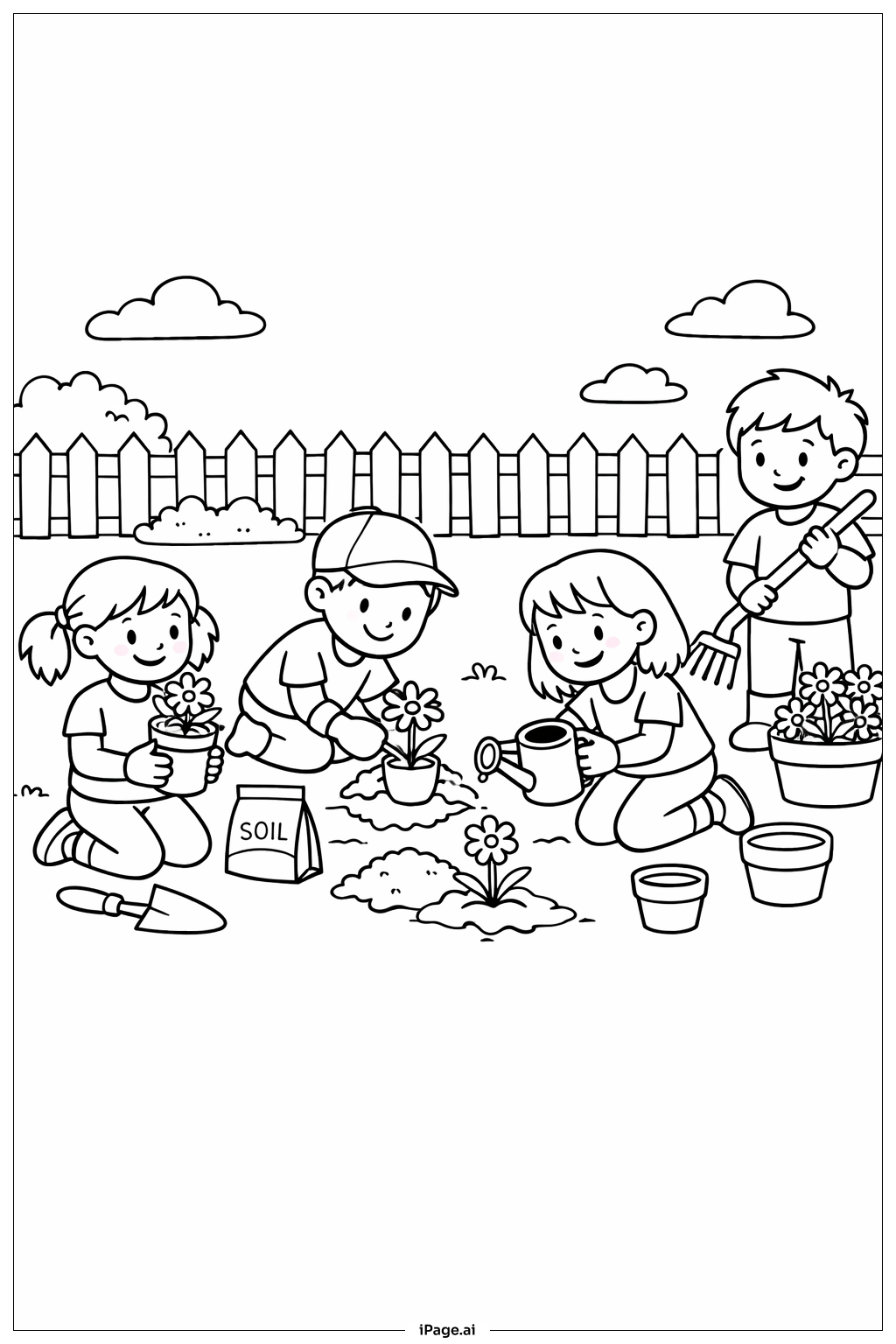
Start with the sky using a soft, light blue. Add white or pale yellow for the fluffy clouds and sunshine. Color the grass a bright, fresh green to set a lively outdoor mood. For the flowers, use a cheerful mix of colors — red and pink for tulips, yellow for sunflowers, and white or purple for daisies. The flower pots can be orange, red, or terracotta brown. Give each child a different outfit color so they stand out from one another. Use warm skin tones for the children's faces and hands. The soil can be a rich dark brown. Add light pastel shades to the butterflies to keep the scene feeling light and magical. Don't be afraid to mix colors freely — this scene is all about celebrating new growth and the beauty of springtime. Let your creativity bloom just like the flowers on the page!
Coloring challenges: Which parts are difficult to color and need attention for Kids Planting Flowers coloring page?
• Small Facial Features: The children's faces include tiny eyes, noses, and smiles. Coloring these small details neatly requires a fine-tipped colored pencil or a thin marker. Going slowly and using light pressure will help keep the lines clean and avoid smudging.
• Layered Flower Petals: Many flowers in the scene have multiple overlapping petals. Keeping each petal a slightly different shade — or using light and dark tones of the same color — adds depth and realism. This technique can be tricky for younger colorists but makes the flowers look truly alive.
• Distinguishing the Children: Several kids appear close together in the scene. Choosing clearly different colors for each child's clothing is important so the figures don't blend into one another. Planning your color choices before you begin can save a lot of rework later.
• Soil and Ground Textures: The dirt and garden soil area benefits from blending two or three shades of brown to look natural. Using short, varied strokes rather than flat solid color can create the look of real earth without requiring advanced skills.
• Busy Background Elements: The background includes a fence, grass, clouds, butterflies, and sunlight all at once. Coloring each element a distinct but harmonious shade keeps the scene readable. Working from back to front — sky first, then ground, then figures — is the best approach to avoid confusion in this layered composition.
Benefits of coloring books: Advantages of drawing Kids Planting Flowers coloring page
Coloring this Resurrection-themed page of kids planting flowers offers a wonderful range of benefits for children of all ages. First, it builds fine motor skills. Carefully staying within the lines and handling small details like flower petals and tiny faces strengthens hand-eye coordination and pencil control. Second, it encourages creativity. Choosing colors for outfits, flowers, and the sky gives children real freedom to express themselves and develop their own sense of style and beauty. Third, it teaches patience and focus. Working through a detailed scene with multiple characters and background elements helps children practice sitting still and concentrating, which supports learning in school too. Fourth, this image carries a meaningful message about new life and growth — themes at the heart of Resurrection. As children color the blooming flowers and happy kids working together, they naturally connect with ideas of hope, renewal, and caring for the world around them. Finally, completing the page gives a healthy sense of achievement and pride. Whether done alone or with family, this coloring activity is a calming, enriching, and joyful experience.