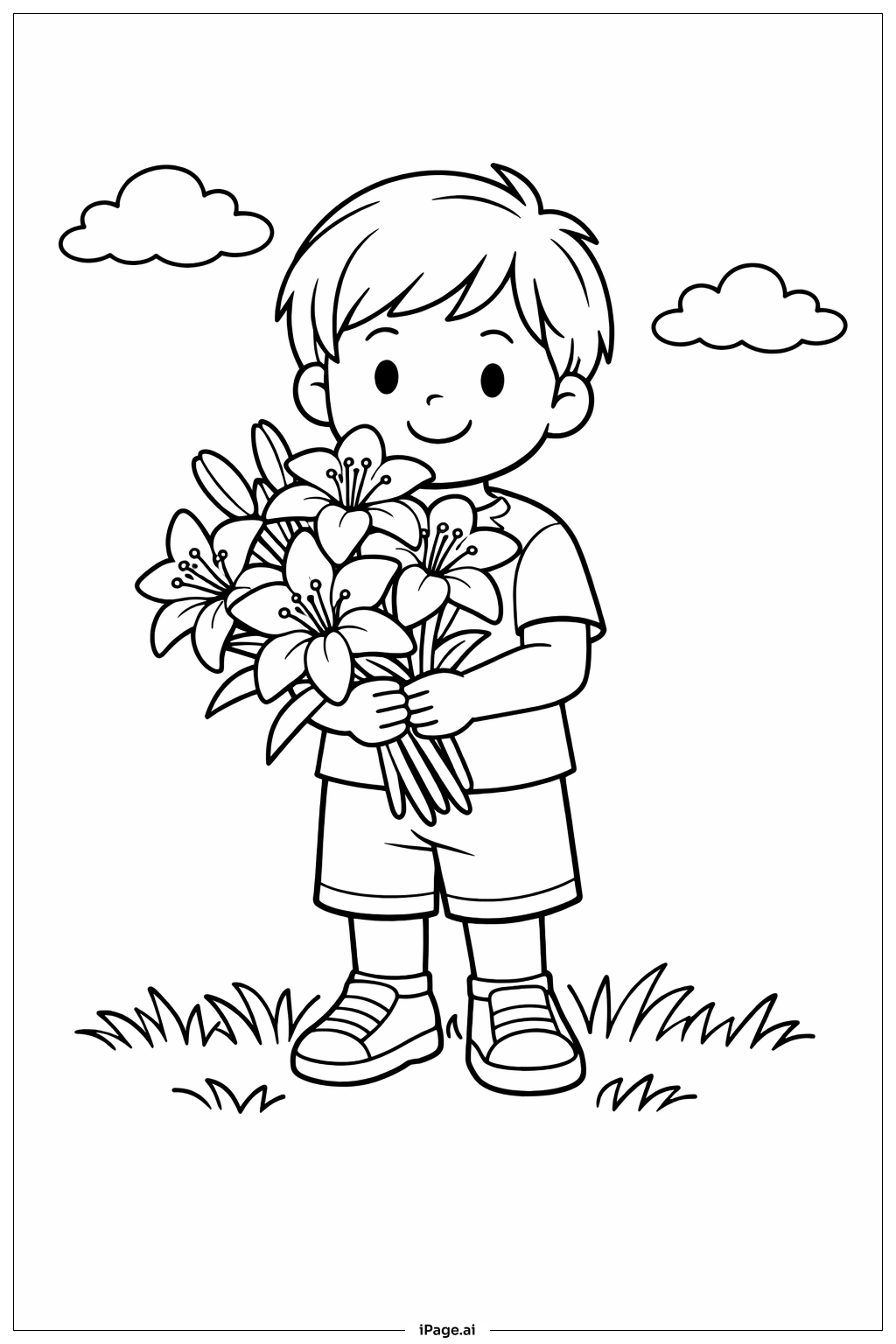
Coloring tips: How to color Resurrection Child With Lilies coloring page well?
For the child's clothing, choose soft pastel colors like light blue, lavender, or pale yellow to create a gentle, peaceful feeling. The Easter lilies are traditionally white, but you can add subtle shading with light gray or cream tones to show depth in the petals. Color the centers with bright yellow or golden orange for a natural touch. Use various shades of green for the stems and leaves, mixing light and dark greens to add dimension. The background rays of light can be colored with warm yellows, soft golds, or even rainbow pastels to create a heavenly glow. For the grass and ground, use spring greens mixed with touches of yellow-green to suggest fresh new growth. Consider adding touches of pink or purple to flower buds for extra interest and variety in your coloring page.
Coloring challenges: Which parts are difficult to color and need attention for Resurrection Child With Lilies coloring page?
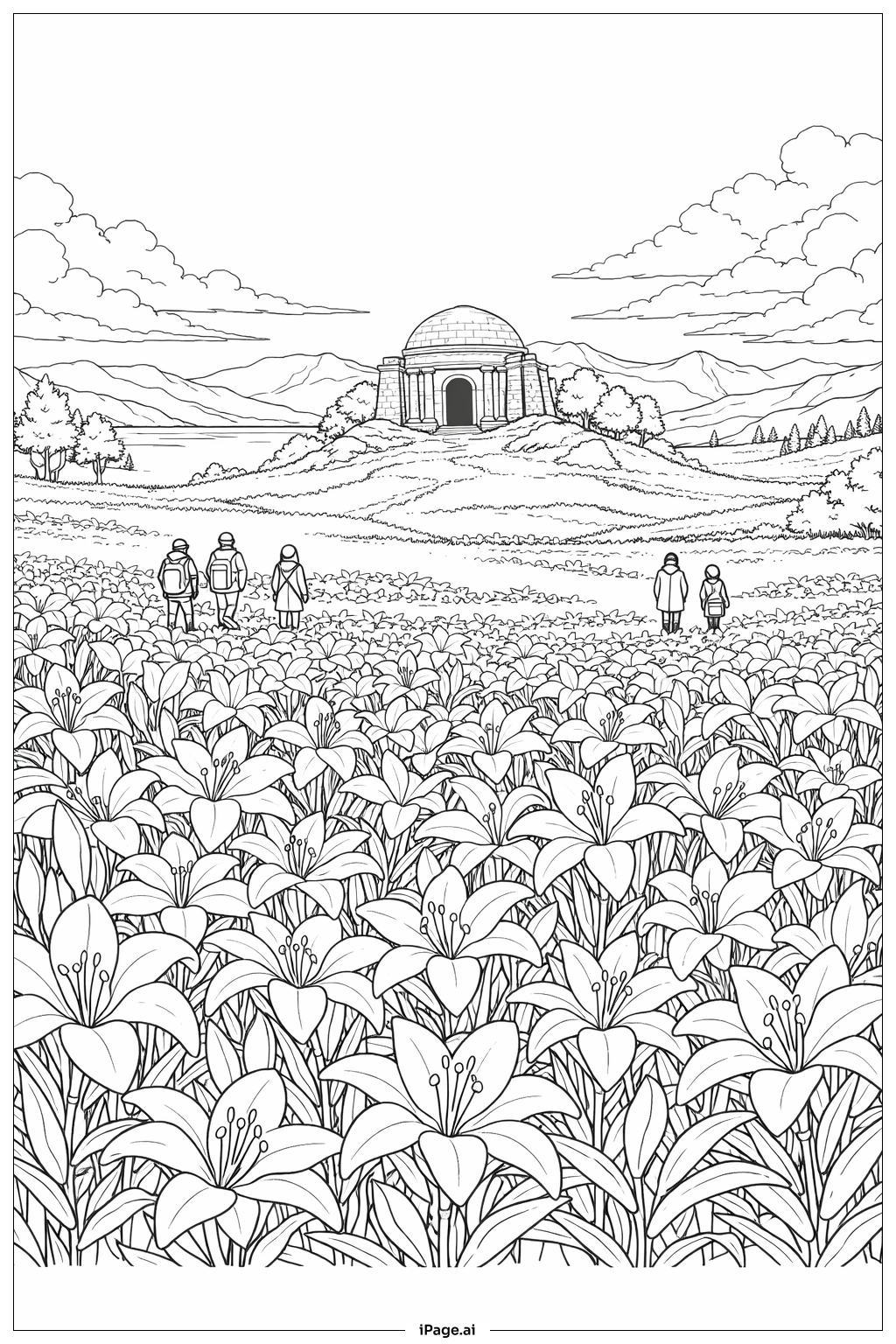
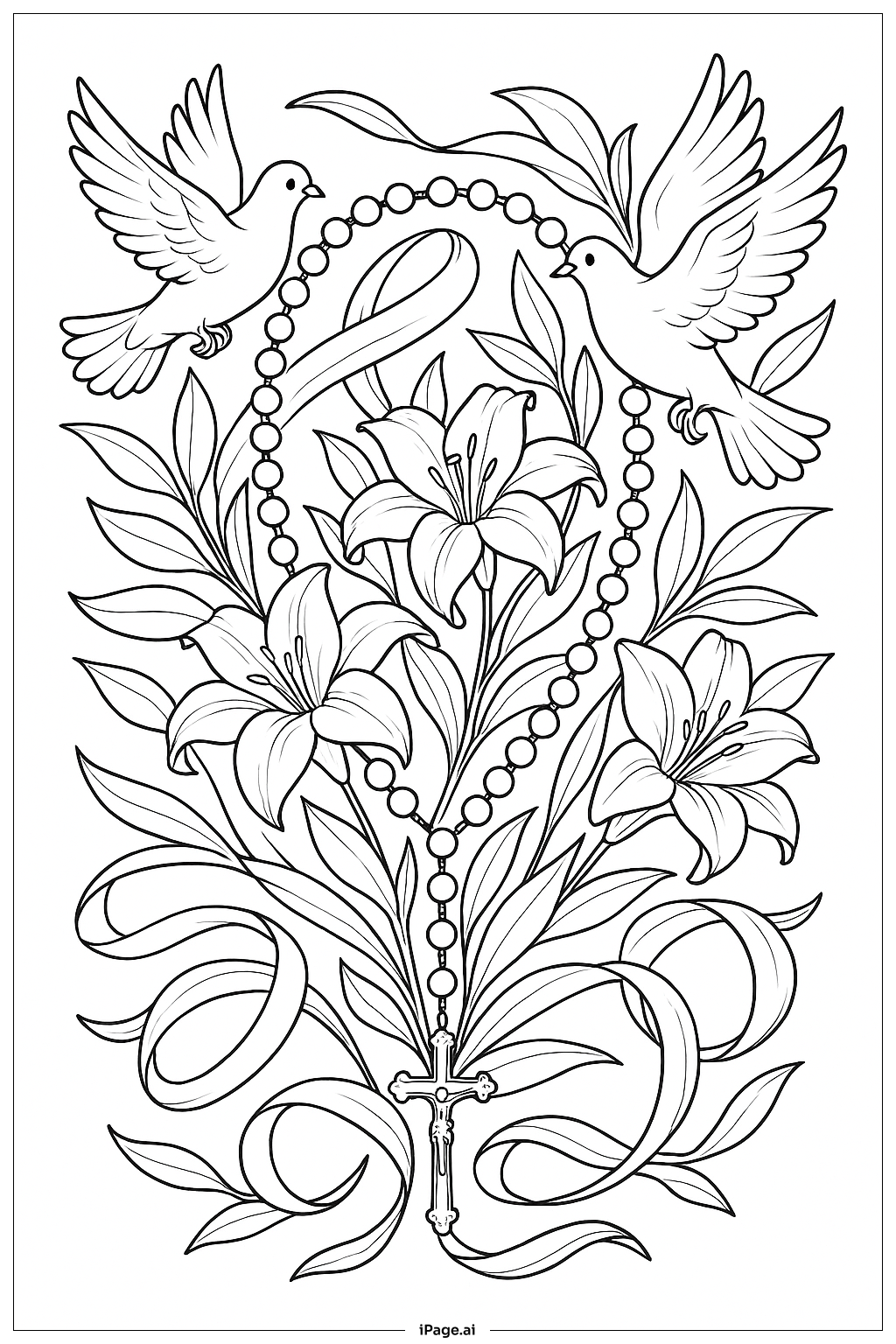
• Lily Petal Details: The trumpet-shaped lily flowers feature curved petals with natural folds and overlapping sections that require careful attention to shading and color transitions. Young colorists may find it challenging to distinguish between individual petals and maintain consistent coloring within the detailed petal edges and curves, especially where petals overlap or curl backward.
• Light Ray Effects: The background light rays streaming down create a dimensional effect that needs thoughtful color blending to appear luminous and heavenly. Achieving a gradient effect from bright center to softer edges requires patience and either layered coloring or careful pressure control, which can be difficult for beginners who may create harsh lines instead of smooth transitions.
• Leaf and Stem Layering: Multiple lily stems with long, blade-like leaves cross and overlap throughout the composition, creating complex layered areas where one element appears behind another. Keeping track of which leaf belongs to which stem and maintaining color consistency while showing depth through darker and lighter green shades presents a spatial reasoning challenge for younger children.
• Clothing Fabric Folds: The child's flowing garment includes natural fabric folds, creases, and shadows that suggest movement and three-dimensional form. Properly shading these areas to show depth while maintaining the overall color choice requires understanding of light and shadow placement that may be advanced for beginning colorists.
• Small Background Details: Tiny elements like grass blades, small flower buds, and decorative details require fine motor control and precision coloring to stay within small boundaries without overwhelming the delicate features with too-dark colors or accidental marks outside the lines.
Benefits of coloring books: Advantages of drawing Resurrection Child With Lilies coloring page
Coloring this Resurrection scene helps children connect with the meaningful story of Easter while developing important skills. The variety of elements from large flowers to small details allows colorists to practice both broad strokes and fine motor control, strengthening hand-eye coordination and pencil grip. The spiritual theme provides opportunities for family conversations about faith, hope, and renewal while creating art together. Working with the lily flowers teaches children about nature and plant structure in an engaging way. The layered composition encourages spatial awareness as children decide which elements are in front or behind others. Choosing colors for the peaceful scene promotes emotional regulation and calm focus, while the joyful subject matter creates positive associations with creative time. Completing this detailed page builds patience, concentration, and a sense of accomplishment, especially for children who take time to carefully shade and blend colors to bring the Easter celebration to life.