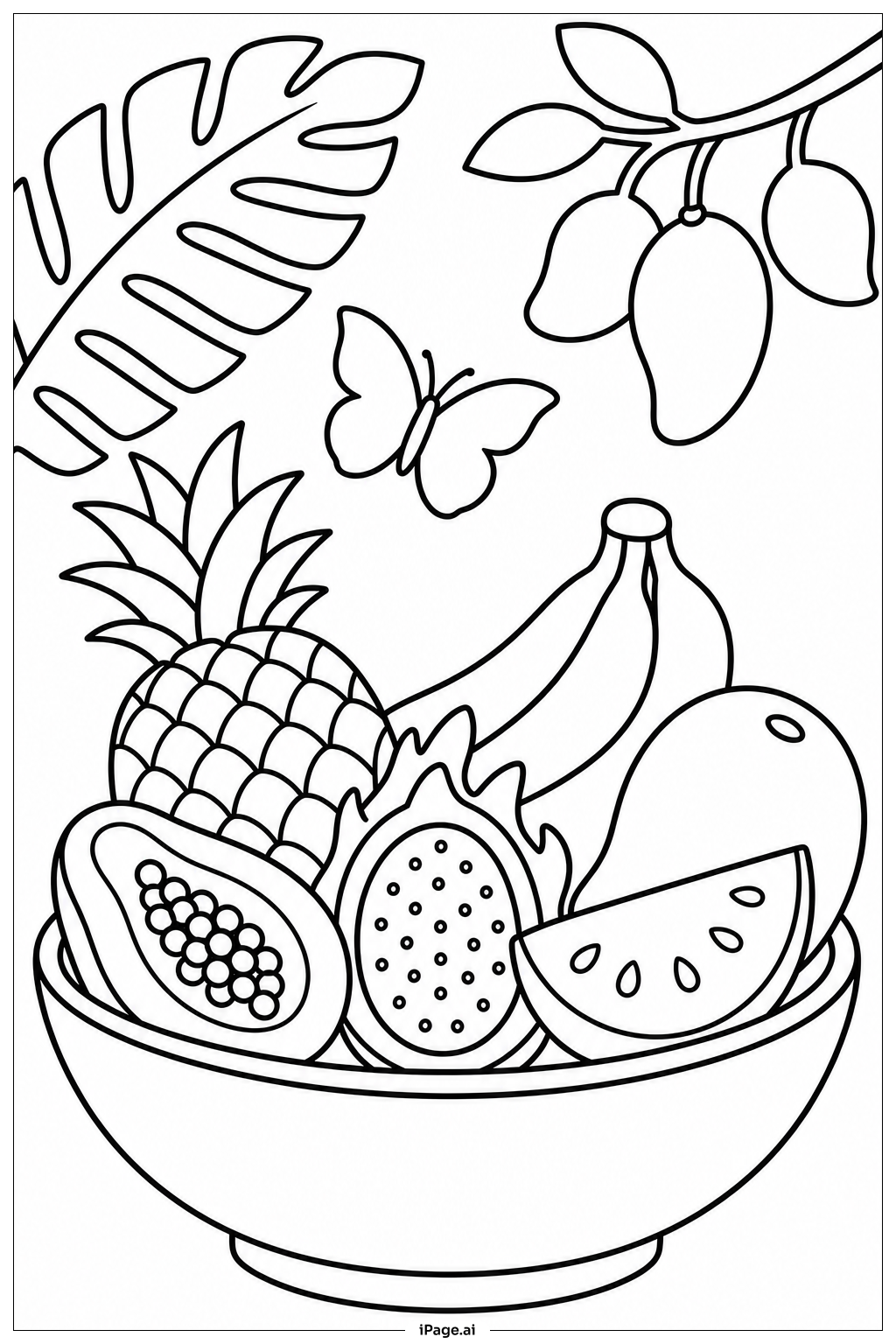
Coloring tips: How to color Rainforest Fruit Feast coloring page well?
Start with the background leaves using different shades of green to create depth. Use light green for young leaves and dark green for older, fuller ones. Color each fruit in its natural tone — bright yellow for bananas, golden-orange for mangoes, red and yellow for papayas, and deep orange for pineapples. Add warm brown tones to tree trunks and branches. Use bright pops of color for any flowers or small insects hidden in the scene. Try blending two close shades together on larger fruit surfaces to make them look round and juicy. Keep the overall palette warm and vibrant to capture the tropical rainforest mood. This image is great for experimenting with color mixing and layering techniques.
Coloring challenges: Which parts are difficult to color and need attention for Rainforest Fruit Feast coloring page?
• Complex Leaf Layers: The scene contains many overlapping leaves of different sizes and shapes. It can be tricky to decide where one leaf ends and another begins. Take your time and outline each leaf lightly before filling it in with color. Using slightly different shades of green for each leaf will help separate them clearly.
• Fruit Variety and Accuracy: Each fruit has its own unique color and texture. Keeping each fruit looking realistic while staying consistent throughout the whole image requires careful attention. Study the shape of each fruit before choosing your colors so that bananas, mangoes, and papayas each look distinct.
• Small Details and Textures: The pineapple skin, the tiny seeds on fruits, and the fine lines on leaves all require a fine-tipped tool to color neatly. These small areas are easy to smudge or overfill. Using colored pencils or thin markers works best for these detailed sections.
• Depth and Shading: Creating a sense of depth in a jungle scene means adding shadows under leaves and behind fruit clusters. Without shading, the image can look flat. Try adding a slightly darker tone along the edges of each fruit and under heavy leaf bunches to give the scene a three-dimensional feel.
• Background Density: The background is filled with foliage and vines, leaving very little empty space. Coloring such a dense composition without letting colors bleed into the wrong areas takes patience and a steady hand, especially around the gaps between fruits and leaves.
Benefits of coloring books: Advantages of drawing Rainforest Fruit Feast coloring page
Coloring this Rainforest Fruit Feast page offers a wonderful range of benefits for children and young artists. Working through the many fruits and leaves helps build fine motor skills and hand control, especially when filling in smaller details like pineapple patterns or tiny flower petals. The variety of shapes and textures encourages kids to think creatively about how colors work together in nature. Choosing the right shades for each fruit introduces basic color theory and teaches children to observe the natural world more carefully. The rich, layered composition also builds focus and patience, as completing the full scene requires sustained attention. For older children, adding shading and depth to the fruits and foliage can be a rewarding challenge that develops more advanced artistic skills. Beyond the technical benefits, coloring a lush jungle scene is simply a fun and calming activity. It can reduce stress, spark curiosity about tropical environments, and inspire conversations about rainforest ecosystems, wildlife, and the foods that grow in them. It is a creative experience that educates and relaxes at the same time.