Coloring tips: How to color Intricate Rainbow Garden coloring page well?
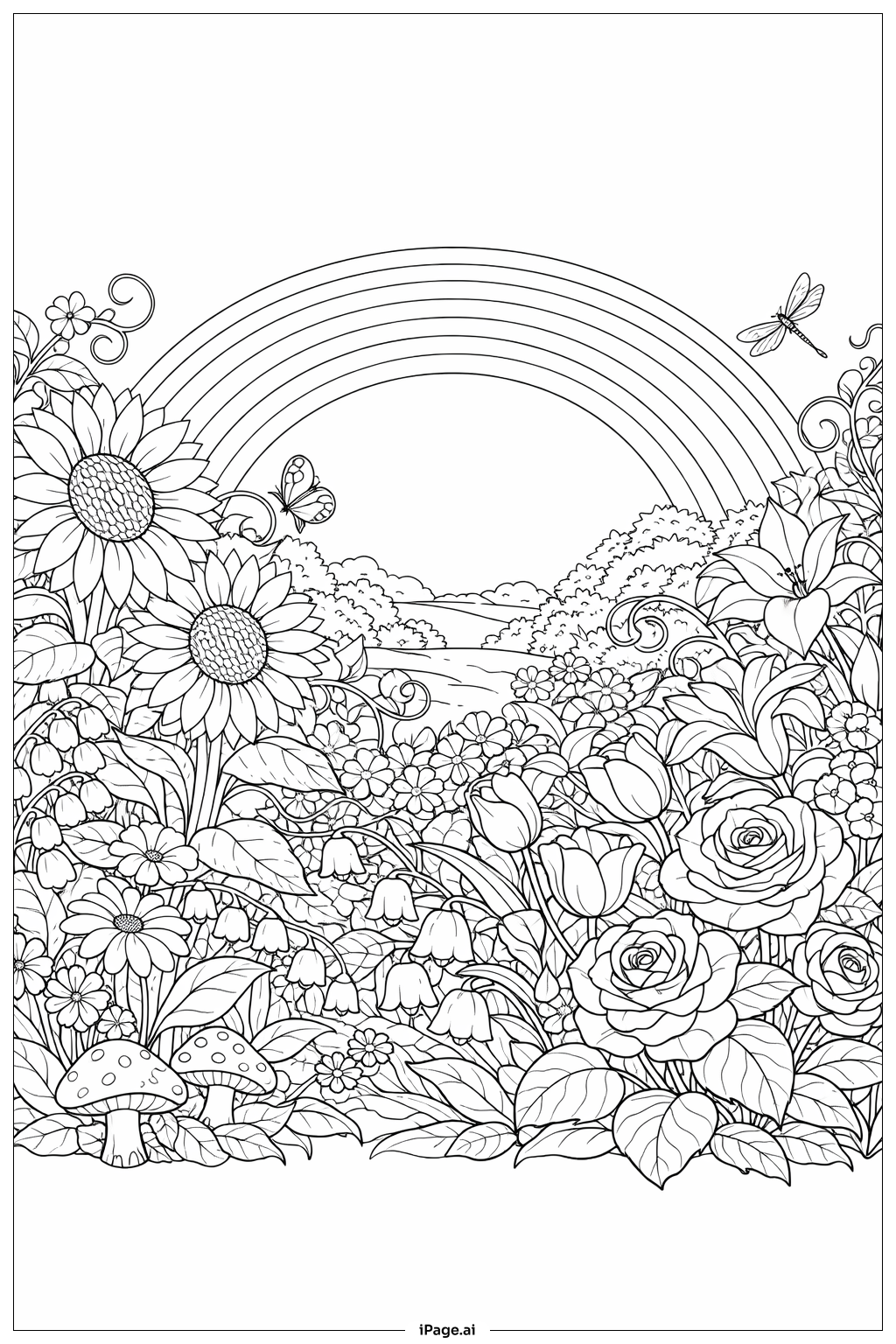
Start with the rainbow in the background. Use red, orange, yellow, green, blue, and violet in smooth bands. Then move to the flowers. Give each bloom its own color family — try warm pinks and corals for some, cool purples and blues for others. Use a lighter shade at the petal edges and a darker shade near the center to add depth. Color the leaves in different greens — lime, forest, and mint all work great together. For the butterflies and dragonflies, pick bright, bold colors that stand out from the flowers behind them. Use fine-tipped colored pencils or markers for the tiny details on wings and vines. Work from the background forward so layers do not bleed into each other. Do not be afraid to mix unexpected colors — this is a rainbow garden, so anything goes!
Coloring challenges: Which parts are difficult to color and need attention for Intricate Rainbow Garden coloring page?
• Dense Floral Overlaps: Many flowers and leaves are layered on top of each other throughout the scene. Keeping each element visually separate requires careful color choices. You need to pick contrasting shades for neighboring shapes so they do not blend together and lose definition. Planning your color palette before you start can save a lot of time and frustration.
• Fine Line Details on Wings: The butterflies and dragonflies feature very thin, decorative lines across their wings. Staying inside these tiny sections without smudging or crossing into adjacent areas is tricky, especially for younger colorists. Using a sharp, fine-tipped tool is strongly recommended for these sections.
• Rainbow Gradient Accuracy: The background rainbow must display a smooth, natural color progression from red through to violet. Achieving clean transitions without harsh lines between colors takes patience and a gentle blending technique. Colored pencils with a light hand work best here to layer tones gradually.
• Vine and Tendril Pathways: The curling vines snake through the entire composition, passing behind and in front of many other elements. Tracking where each vine goes and coloring it consistently along its full length — even when it disappears behind a flower — requires close attention and a steady hand throughout the process.
• Balancing Visual Harmony: With so many colors all competing for attention across the page, keeping the whole image feeling balanced and unified is a real challenge. Too many clashing hues can make the scene feel chaotic. Repeating certain colors in different areas of the garden helps tie everything together into one cohesive, beautiful piece.
Benefits of coloring books: Advantages of drawing Intricate Rainbow Garden coloring page
Coloring this Intricate Rainbow Garden is a wonderful activity for both kids and adults. Here is why it is so good for you:
It builds focus and patience. The detailed sections — like tiny wing patterns and layered petals — train the mind to slow down and concentrate. This kind of quiet, careful work is great for building attention skills in children and helping adults unwind after a busy day.
It encourages color creativity. A rainbow garden has no strict rules. Kids get to experiment freely with color combinations, building confidence in their own artistic choices.
It develops fine motor skills. Carefully filling small shapes and following fine lines strengthens hand control and pencil grip, which directly supports handwriting and other precise tasks.
It is calming and stress-relieving. The repetitive, flowing motion of coloring has a meditative quality. Spending time with this garden scene can lower anxiety and bring a sense of peace and accomplishment.
It sparks a love of nature. The garden setting introduces children to flowers, insects, and natural patterns in a fun, engaging way, quietly building curiosity about the living world around them.