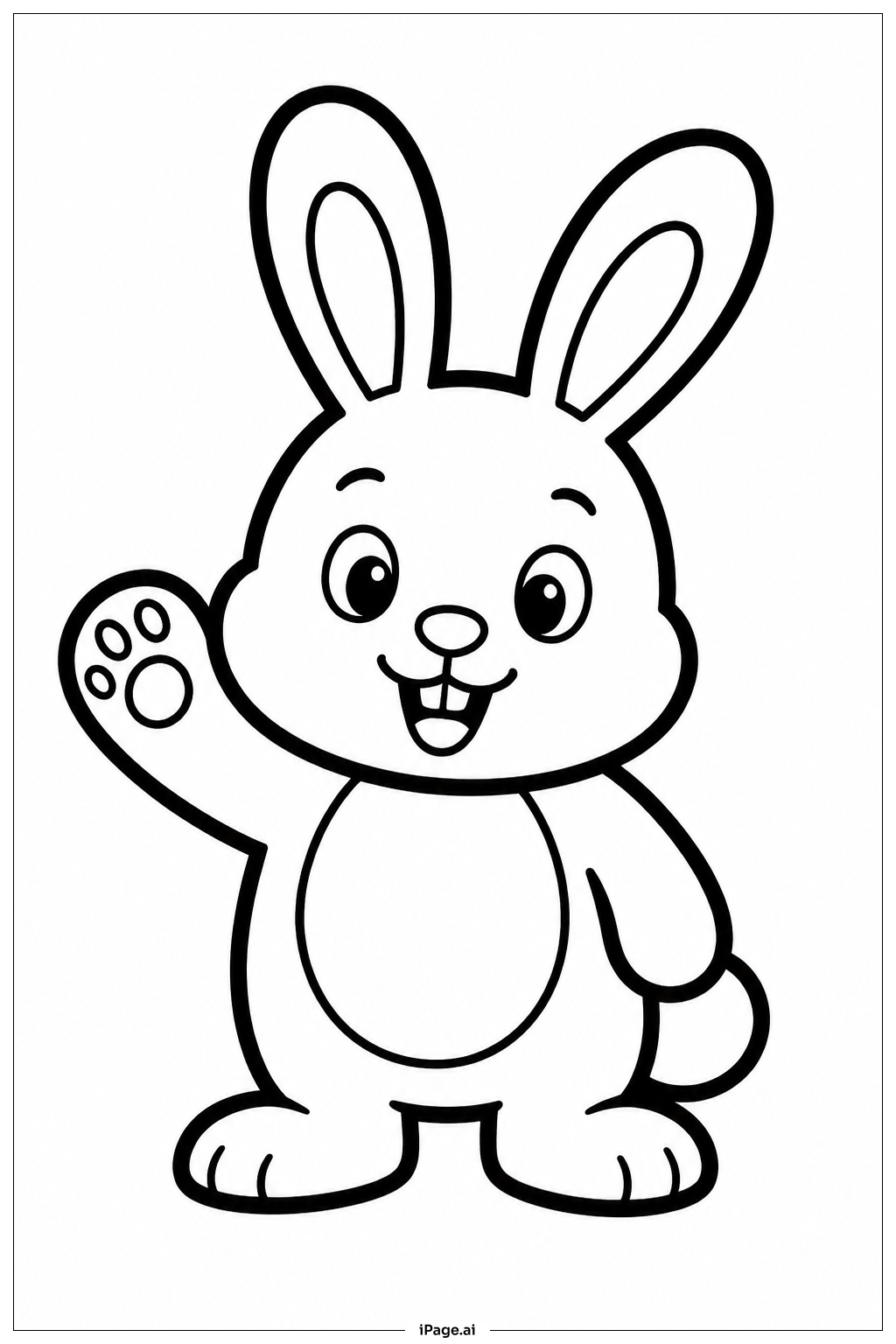
Coloring tips: How to color Waving Rabbit coloring page well?
Start with the rabbit's fur using soft shades of brown, gray, or white for a realistic look, or choose fun colors like pink, blue, or purple for a more imaginative approach. The inner ears can be colored with a lighter pink or peach tone to create depth and contrast. Use black or dark brown for the eyes, leaving small white spots to make them sparkle with life. Color the nose with a gentle pink shade. For the mouth area, keep it light or use a very soft pink. Don't forget to add shading around the edges of the body, under the arms, and along the legs to give your rabbit dimension. You might also consider adding a colorful background with grass, flowers, or a simple sky to complete your picture.
Coloring challenges: Which parts are difficult to color and need attention for Waving Rabbit coloring page?
• Fur Texture and Direction: The rabbit's body offers an opportunity to practice showing fur texture through coloring techniques. Young artists may find it challenging to create the appearance of soft, fluffy fur using colored pencils or crayons. They need to consider which direction the fur grows and use light strokes that follow that direction, rather than solid coloring that might make the rabbit look flat.
• Eye Details and Expression: The large eyes require careful attention to maintain the rabbit's friendly expression. Children must color inside the small circular shapes while leaving white highlights to create a lively, sparkling look. If they accidentally color over these highlight areas, the eyes can lose their lifelike quality and appear dull.
• Shading for Dimension: Creating a three-dimensional appearance requires understanding where shadows naturally fall. The areas under the raised paw, beneath the chin, along the sides of the body, and under the legs need darker shading. Beginners may struggle with blending colors smoothly to transition from light to shadow, or they might apply shading inconsistently.
• Inner Ear Contrast: The inner ear sections need to be colored differently from the outer ears to show depth. Children must carefully stay within these smaller curved spaces and choose colors that contrast nicely with the main fur color. This requires steady hand control and patience with detailed areas.
Benefits of coloring books: Advantages of drawing Waving Rabbit coloring page
Coloring this friendly waving rabbit helps children develop fine motor skills and hand-eye coordination as they carefully fill in the various sections. The clear, defined spaces make it perfect for practicing staying within lines, building confidence and precision. The simple yet engaging design encourages creativity in color selection, allowing kids to express themselves through their choice of realistic or imaginative color schemes. This activity promotes focus and concentration as children work on completing different areas of the picture. The cheerful, welcoming character can also have positive emotional benefits, creating a sense of accomplishment and joy when finished. Additionally, coloring this rabbit provides an opportunity to learn about animal features and anatomy in a fun, relaxed way while developing artistic skills.