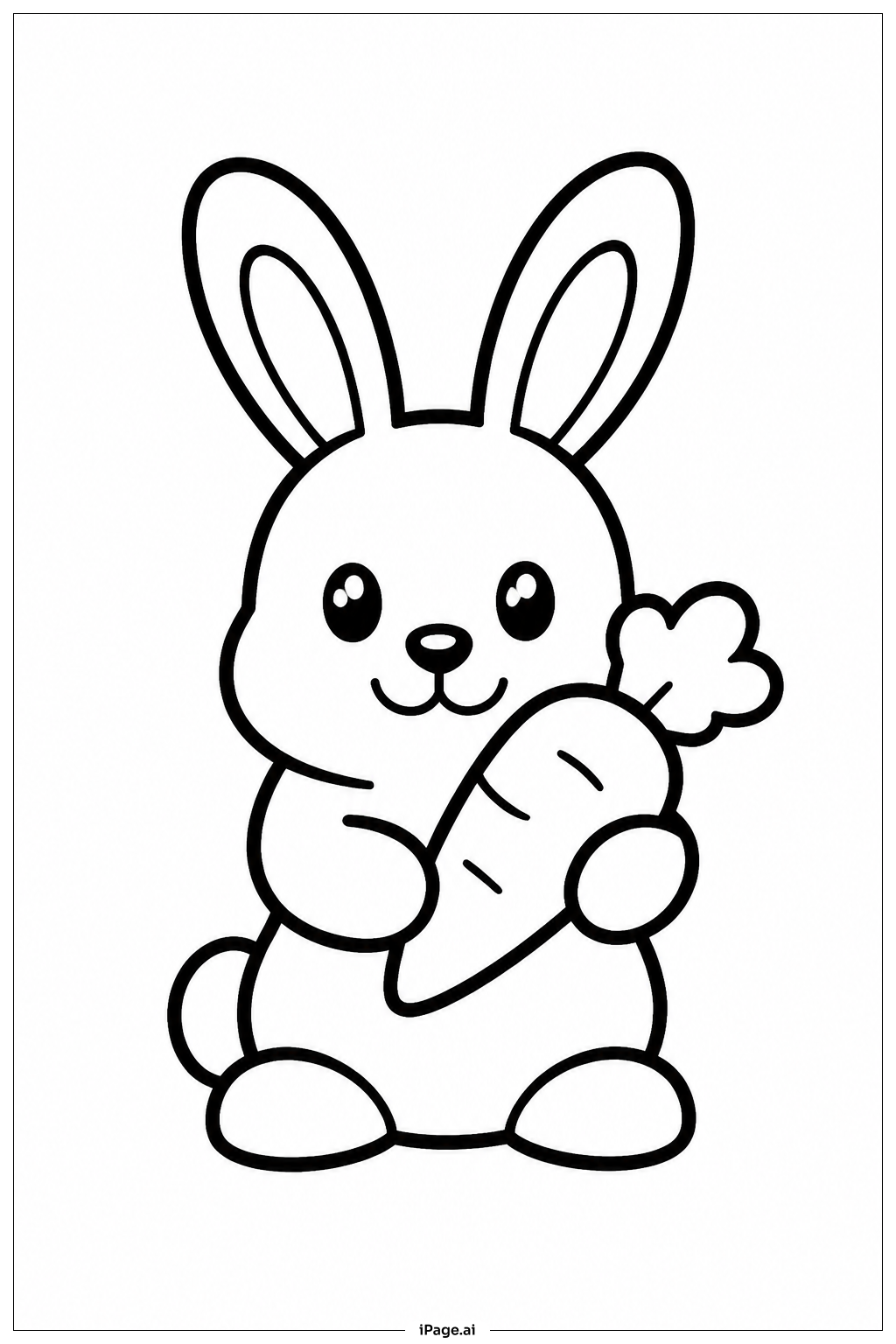
Coloring tips: How to color Rabbit With Carrot coloring page well?
Start with the rabbit's body using light, soft colors. Light gray, cream, or white work beautifully for the fur. You can add a soft pink blush to the inner ears and around the nose for a warm, lively touch. Use brown or tan shading along the edges of the body to give the fur some depth and dimension. For the carrot, fill it with a bright orange color. Leave a few thin white streaks to show shine and texture. Color the leafy carrot tops with different shades of green — dark green for the outer leaves and a lighter, yellowy green for the inner ones. The rabbit's eyes can be colored deep brown or black, with a tiny white highlight dot to make them look bright and alive. Keep the background simple — a soft pastel yellow, sky blue, or light green will make the rabbit and carrot pop without overwhelming the image.
Coloring challenges: Which parts are difficult to color and need attention for Rabbit With Carrot coloring page?
• Fur Texture and Shading: The rabbit's body is covered in soft, flowing fur lines that require careful blending. Coloring each stroke in the same direction as the fur lines creates a realistic effect. Using two or three shades of the same color — light in the center and darker at the edges — adds dimension. This can be tricky for younger colorists who are still learning blending techniques.
• Small Facial Details: The rabbit's face includes tiny features like whiskers, a small nose, and bright eyes. These areas are very small and close together, making it easy to color outside the lines. Using a fine-tipped pencil or a thin marker helps keep each detail clean and precise. The inner ear also requires a delicate pink fill without smudging into the surrounding fur.
• Carrot Texture and Leaf Layering: The carrot has a smooth, tapered body and a bushy cluster of leaves at the top. Coloring the carrot with gradient orange — darker at the top and lighter at the tip — adds a natural look. The leafy tops have overlapping shapes that need different shades of green to separate them visually, which requires patience and color planning.
• Paw and Claw Details: The rabbit's small paws grip the carrot, creating a slightly complex overlapping area. Keeping the paw color distinct from the carrot color while staying within the lines takes a steady hand and good color contrast choices.
• Background Balance: Choosing a background color that complements but does not overpower the rabbit and carrot can be challenging. A color that is too bold may compete with the main subject, while one too pale may look unfinished.
Benefits of coloring books: Advantages of drawing Rabbit With Carrot coloring page
Coloring this Rabbit With Carrot image offers a wide range of wonderful benefits for children and creative minds alike. The image combines a beloved animal with a familiar object, making it engaging and fun from the very start.
For young children, carefully filling in the rabbit's fur, face, and the bright carrot helps strengthen fine motor skills and hand-eye coordination. Choosing colors and staying within the lines builds focus and patience over time.
The image also sparks creativity. Kids get to decide whether their rabbit is gray, white, brown, or even a fantasy color like purple or blue. There are no wrong choices, which builds confidence and encourages free expression.
Coloring has a naturally calming effect. The repetitive motion of applying color is soothing and helps children — and adults — reduce stress and quiet a busy mind. It can also serve as a healthy screen-free activity that brings a sense of accomplishment when finished.
For older children and teens, the detailed fur lines and layered carrot leaves offer a satisfying challenge that develops shading and blending skills. These are foundational techniques used in drawing and illustration.
Sharing or displaying a finished piece also builds pride and a sense of achievement. Overall, this simple, joyful image delivers big creative and developmental rewards for colorists of all ages.



