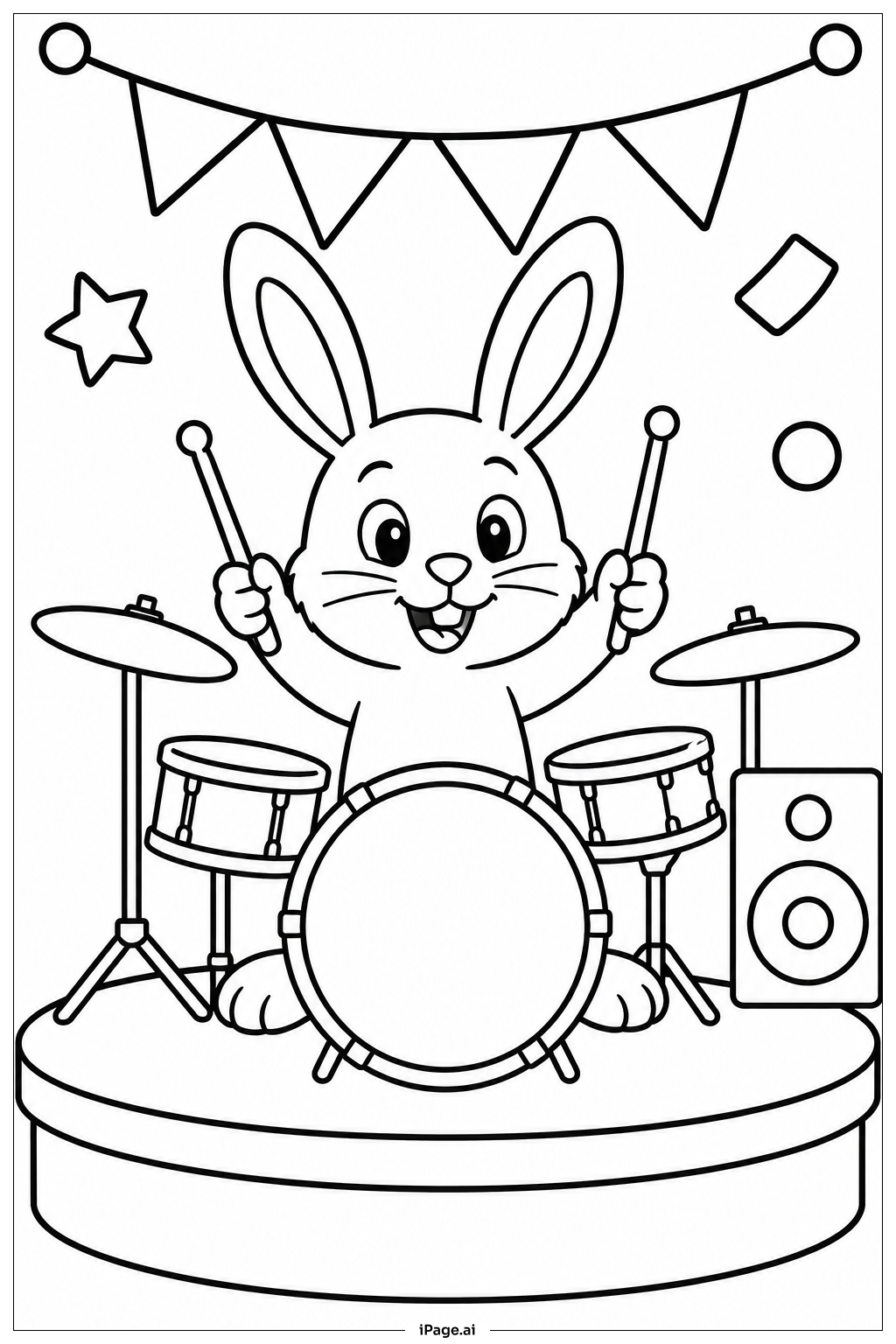
Coloring tips: How to color Rabbit Playing Drums coloring page well?
Start with the rabbit's body using soft, warm colors like light tan, cream, or pale gray. Use pink inside the ears to keep it looking natural and cute. For the drum kit, go bold and bright — try red, blue, or yellow for the drums to make them pop. Use silver or light gray for the cymbals and metal parts. The drumsticks can be simple brown or tan. Add a fun background color like light purple, sky blue, or sunny yellow to set the stage mood. Color the musical notes in gold or orange to make them stand out. If the rabbit is wearing clothes, pick any bright colors you like — stripes or patterns make it even more fun. Don't be afraid to mix and match colors. There are no wrong choices here. The goal is to make the scene feel alive, loud, and full of music. Have fun and let your creativity lead the way!
Coloring challenges: Which parts are difficult to color and need attention for Rabbit Playing Drums coloring page?
• Drum Kit Complexity: The drum set has many separate parts — bass drum, snare, tom-toms, hi-hat, and cymbals. Each piece should be colored differently to look realistic and visually interesting. Keeping track of so many small sections without accidentally overlapping colors can be tricky, especially for younger colorists.
• Small Details on the Hardware: The drum kit includes thin metal stands, bolts, rims, and pedal parts. These are very small and tightly spaced. Coloring them neatly requires a fine-tipped marker or a sharpened colored pencil. Staying inside the lines in these areas takes patience and a steady hand.
• Rabbit Fur Texture: The rabbit's fluffy body has curved outline lines that suggest soft fur. To make the fur look natural, try using short, light strokes in the same direction as the lines. Blending two similar shades of the same color adds depth. Flat coloring can make the rabbit look stiff, so taking time on this area pays off.
• Musical Notes and Background Elements: The floating musical notes scattered around the scene are small and oddly shaped. Coloring them carefully without smudging nearby areas can be a challenge. Using a thin tool and letting each section dry before moving on helps keep things clean.
• Balancing the Overall Color Scheme: With so many elements in one scene — the rabbit, the outfit, the drum kit, and the background — it can be hard to choose colors that work well together. Planning the color palette before starting helps avoid clashing colors and makes the final result look more polished and cohesive.
Benefits of coloring books: Advantages of drawing Rabbit Playing Drums coloring page
Coloring this Rabbit Playing Drums image brings a wide range of benefits for kids and creative minds of all ages. First, it builds fine motor skills. Carefully coloring small drum parts and thin outlines trains hand muscles and improves pencil control, which also helps with writing. Second, it sparks creativity. Choosing colors for the drum kit, the rabbit's fur, and the background encourages kids to think imaginatively and express their own style. Third, it introduces kids to music. The image shows a real drum setup with named parts, making it a fun and gentle way to learn about musical instruments. Fourth, it supports focus and patience. A detailed scene like this one asks colorists to slow down, pay attention, and work through each section carefully — great practice for building concentration. Fifth, it boosts confidence. Finishing a complex, lively image like this one gives a real sense of accomplishment. Kids feel proud to show off their colorful creation. Overall, this page turns a simple coloring activity into a joyful, educational, and rewarding experience.