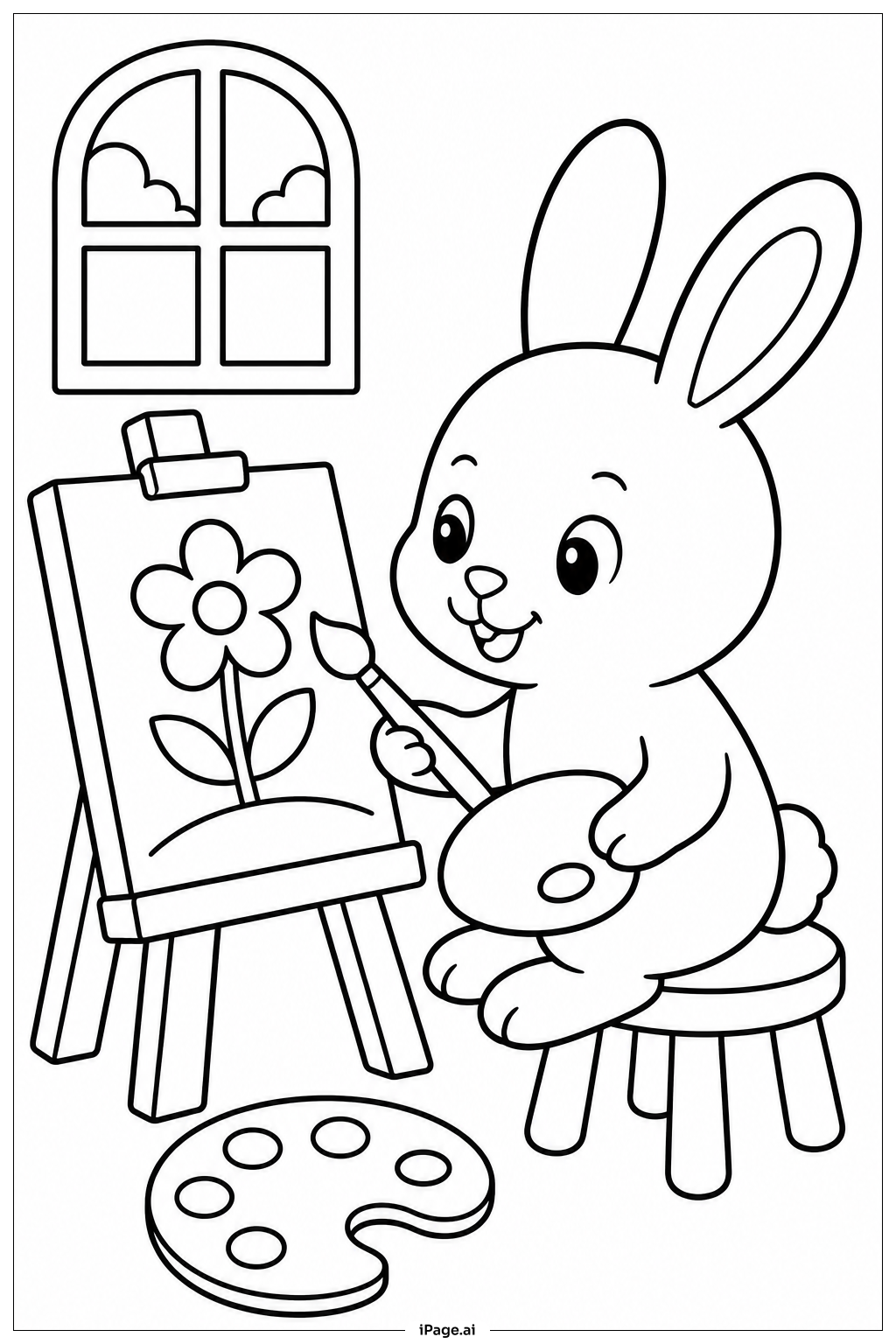
Coloring tips: How to color Rabbit Painting Scene coloring page well?
Start with the rabbit's body. Use soft white or light gray for the fur. Add a tiny bit of pink inside the ears to make them look realistic. For the artist's smock, try a light blue or pale yellow — something bright and fun. The beret looks great in red, dark blue, or purple. Use warm browns or tans for the wooden easel. The paint jars on the ground are a perfect place to go wild with color — use red, yellow, green, blue, and orange to show a full rainbow of paints. The canvas on the easel can show a little painting within the painting, so try adding a simple colorful design like a flower or a sun. Use soft greens for any leaves or grass in the background, and bright colors for flowers. Keep the rabbit the main focus by using softer, lighter shades in the background. Have fun and let your creativity shine just like the little rabbit artist!
Coloring challenges: Which parts are difficult to color and need attention for Rabbit Painting Scene coloring page?
Coloring this image is a joyful experience, but it does come with a few tricky spots to watch out for. Here are the main challenges:
• Rabbit Fur Texture: The rabbit's fur has many fine lines and curves that define its soft, fluffy appearance. Staying within these small areas while trying to blend colors or add shading can be difficult, especially for younger colorists. Using colored pencils with a sharp tip helps keep things neat.
• Small Accessory Details: The beret, smock, and tiny buttons or folds in the clothing are quite small. These details require careful control to color each part separately without letting colors bleed into one another. A fine-tipped marker or sharpened pencil works best here.
• Paint Jars and Palette: The collection of paint jars and the palette each need different colors to look realistic and vibrant. Keeping each jar a distinct color while staying inside the small outlined shapes takes patience and a steady hand. This is a fun challenge but requires focus.
• Easel and Canvas Area: The wooden easel has thin vertical and horizontal lines that can be hard to color evenly. The canvas area is small and may include a mini painting, which requires coloring within a very tight space. Choosing contrasting colors for the canvas design helps it stand out clearly.
• Background Balance: The background includes flowers, leaves, and studio elements that should feel secondary to the rabbit. Choosing colors that are soft enough not to overpower the main character while still looking complete and colorful is a balancing act that challenges more advanced colorists.
Benefits of coloring books: Advantages of drawing Rabbit Painting Scene coloring page
Coloring this Rabbit Painting Scene offers a wide range of wonderful benefits for children and creative minds of all ages. First, it encourages imagination and self-expression. Choosing colors for the rabbit's outfit, the paint jars, and the canvas allows colorists to make every page uniquely their own. Second, it helps build fine motor skills. Carefully coloring the small details — like the tiny paint jars, the easel legs, and the rabbit's facial features — strengthens hand-eye coordination and pencil control, which are important skills for writing and drawing. Third, this scene introduces children to the world of art in a playful way. Seeing a rabbit act as an artist sparks curiosity about painting, creativity, and artistic tools. It can inspire kids to try painting or drawing themselves. Fourth, focusing on a detailed coloring page like this helps improve concentration and patience. Working through each section of the image teaches children to slow down and pay attention to details. Finally, completing the page gives a real sense of accomplishment and pride. It is a relaxing, screen-free activity that brings joy and calm to both children and adults who love cute, creative themes.