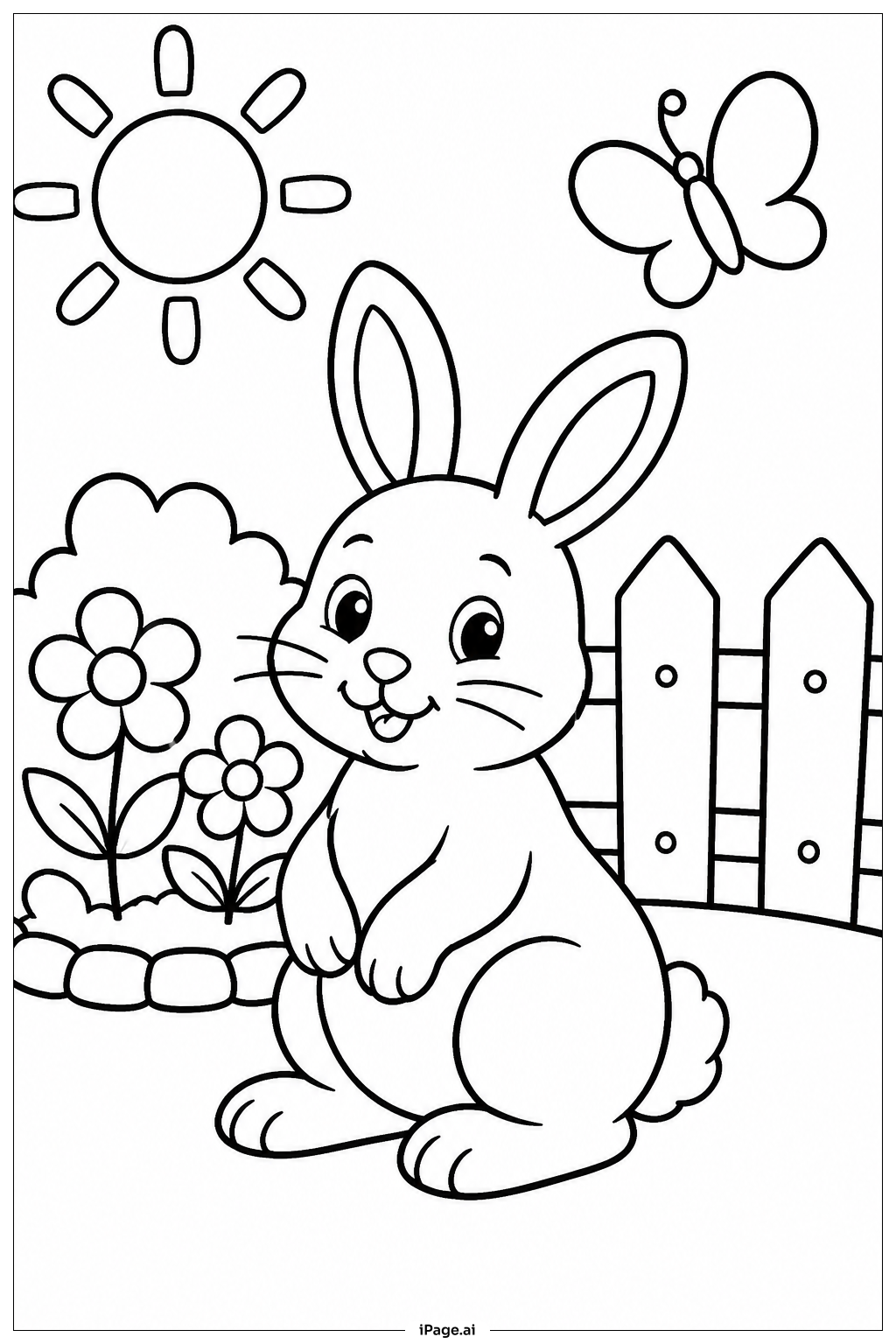
Coloring tips: How to color Rabbit In Garden coloring page well?
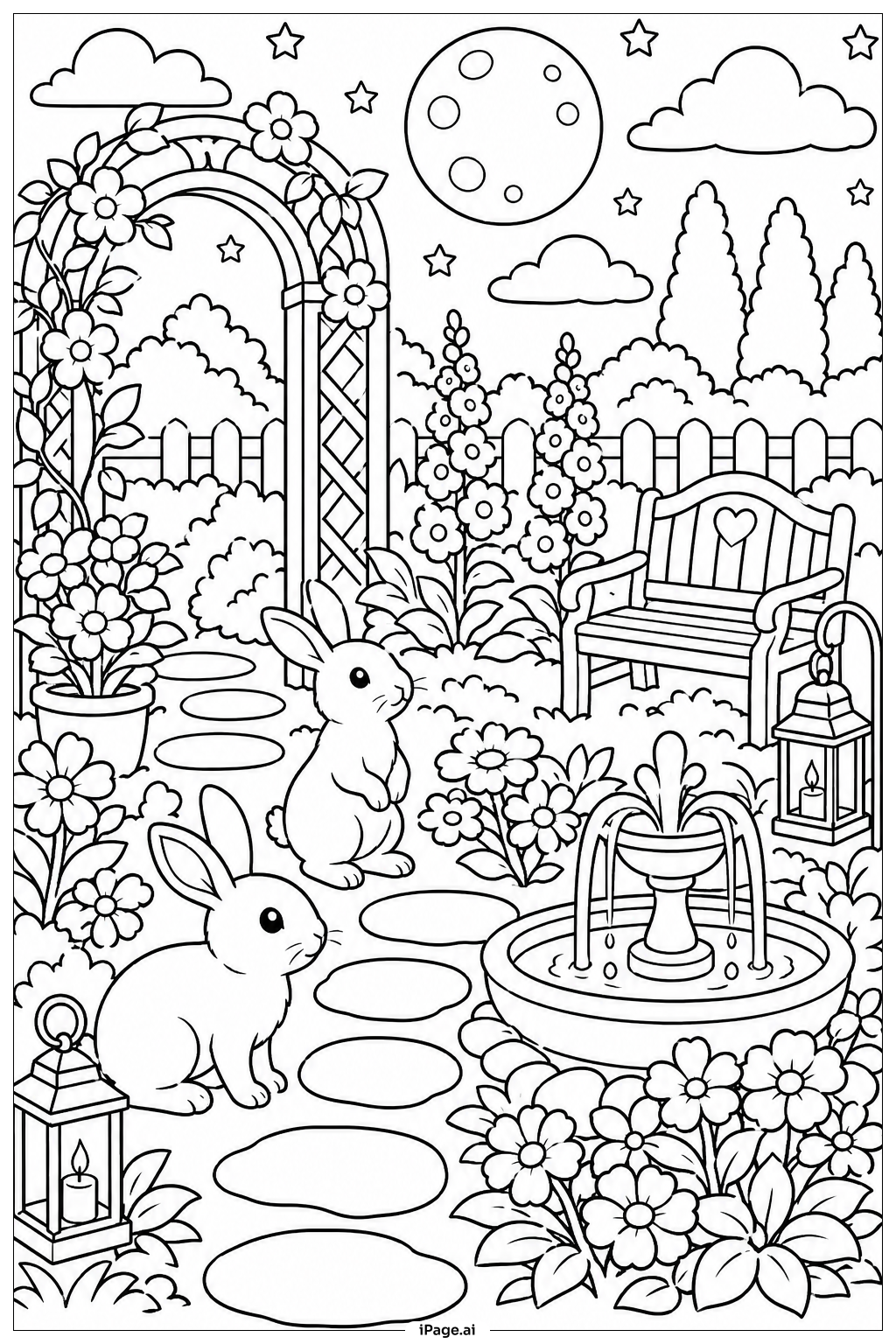
Start by coloring the rabbit first. Use soft white, light gray, or creamy beige for its body to keep it looking gentle and fluffy. Add a pale pink to the inner ears and nose for a sweet touch. For the garden, use bright greens for the leaves and grass. Make the flowers pop with cheerful colors like yellow, pink, purple, orange, and red. You can mix different shades of the same color to add depth to each petal. Use a light blue for the sky and a sunny yellow for the sun. Give the butterflies vibrant wings using two contrasting colors. Feel free to use your favorite color combinations — this garden is yours to design! Light colored pencils or crayons work beautifully here, but watercolor or markers can also create a wonderful effect.
Coloring challenges: Which parts are difficult to color and need attention for Rabbit In Garden coloring page?
• Rabbit Fur Texture: The rabbit's body looks best with soft, layered strokes rather than flat color. Blending white, light gray, and beige together takes patience, especially around the curved edges of the body, ears, and tail. Getting the fur to look fluffy without smudging requires a gentle hand and careful shading.
• Small Facial Details: The rabbit's face includes tiny features like the eyes, nose, and mouth. These small areas need precision. Using the tip of a pencil or a fine marker helps keep the details clean. Coloring the eyes with a dark center and a lighter shine adds life to the character.
• Flower Variety and Petal Separation: The garden contains many different flowers, each with multiple petals close together. It can be tricky to color each petal individually without the colors bleeding into one another. Taking your time and using a thin tool near the edges will help keep each flower looking neat and distinct.
• Layered Leaves and Overlapping Plants: The garden background has leaves and plants that overlap each other. Choosing slightly different shades of green for each layer helps separate them visually. Without variation, the background can look flat and hard to read.
• Butterfly Wings: The butterflies have small, symmetrical wings with inner patterns. Keeping both wings balanced in color and making the patterns stand out against the background requires careful attention to detail and steady coloring within the lines.
Benefits of coloring books: Advantages of drawing Rabbit In Garden coloring page
Coloring this Rabbit In Garden scene brings a wide range of wonderful benefits for children and beginners alike. The mix of a cute animal and a vibrant garden setting makes it especially enjoyable and engaging.
Working on the rabbit's soft, rounded form helps children practice smooth, even coloring strokes, building better motor control over time. The garden's many flowers, leaves, and details encourage kids to make creative color choices, boosting imagination and artistic confidence.
Focusing on small areas like the rabbit's face or the butterfly wings trains concentration and patience — skills that help in school and everyday life. Deciding which colors to use for each flower or plant also sharpens decision-making and develops a natural sense of color harmony.
The peaceful garden theme has a calming effect. Coloring scenes like this one can help reduce stress and anxiety, making it a great quiet-time activity after a busy day. It also sparks curiosity about nature, plants, and animals in a fun, hands-on way.
For younger children, this page builds hand-eye coordination and pencil control. For older kids, it offers a relaxing creative outlet. Overall, this image is a joyful, rewarding coloring experience that nurtures both artistic growth and emotional well-being.