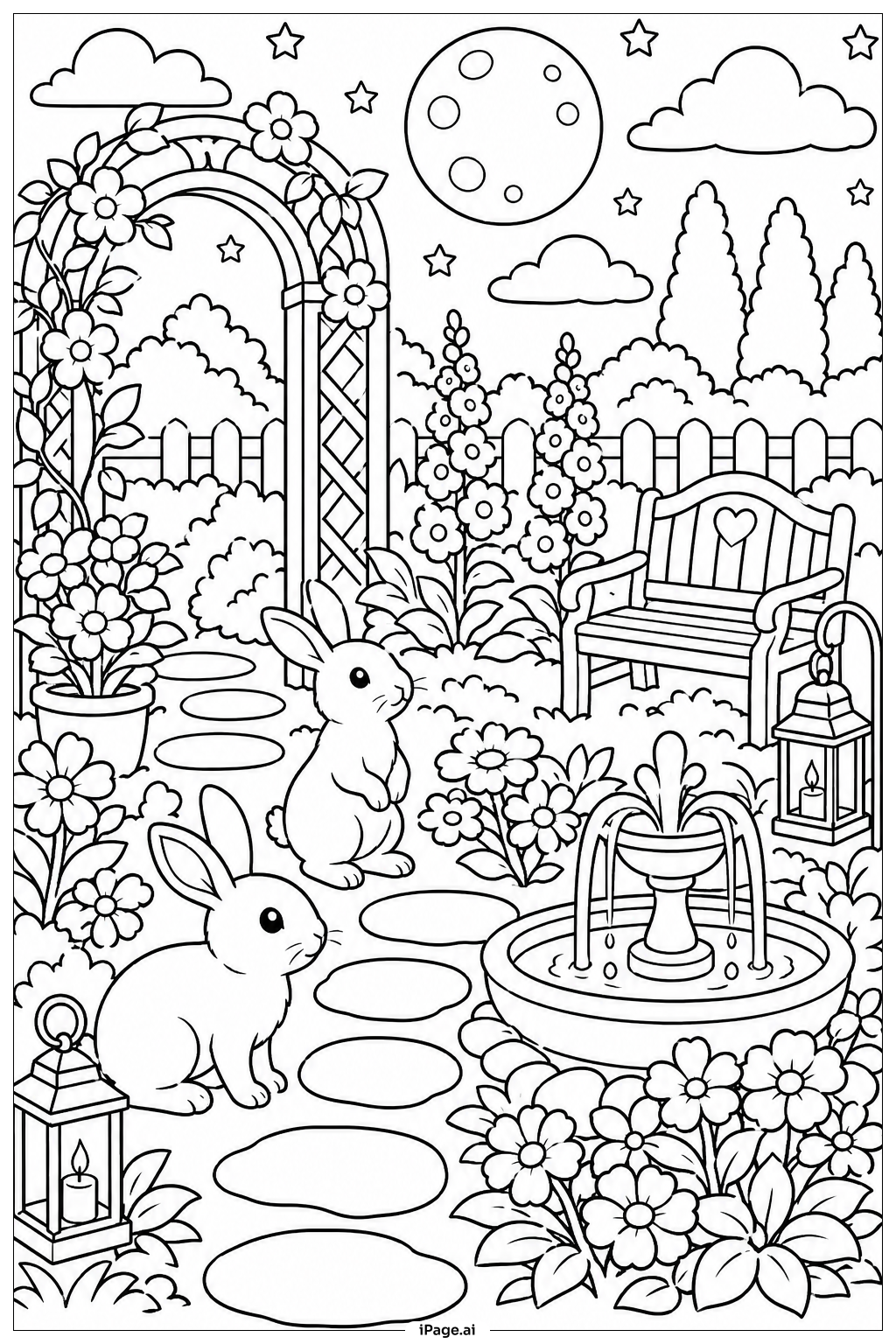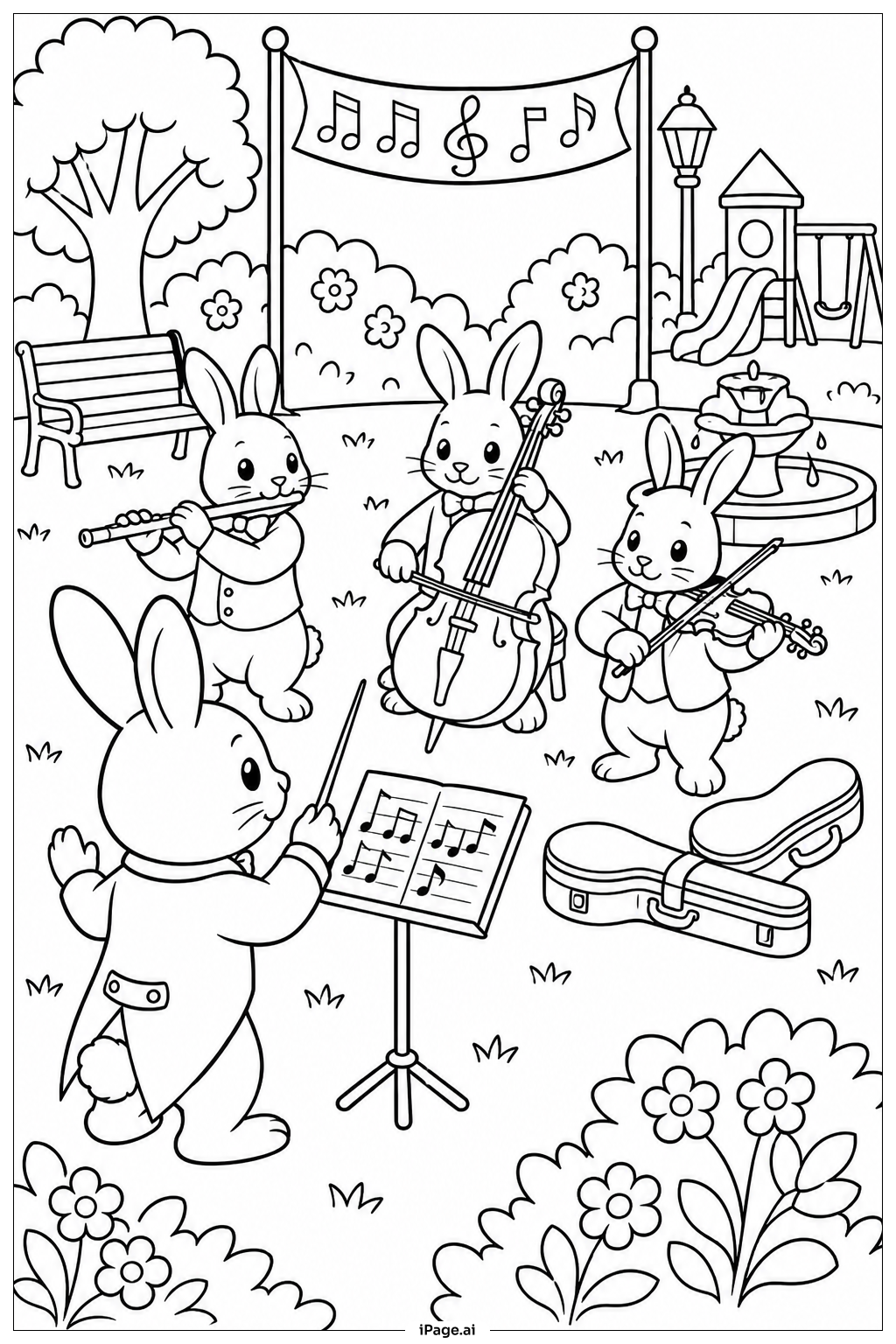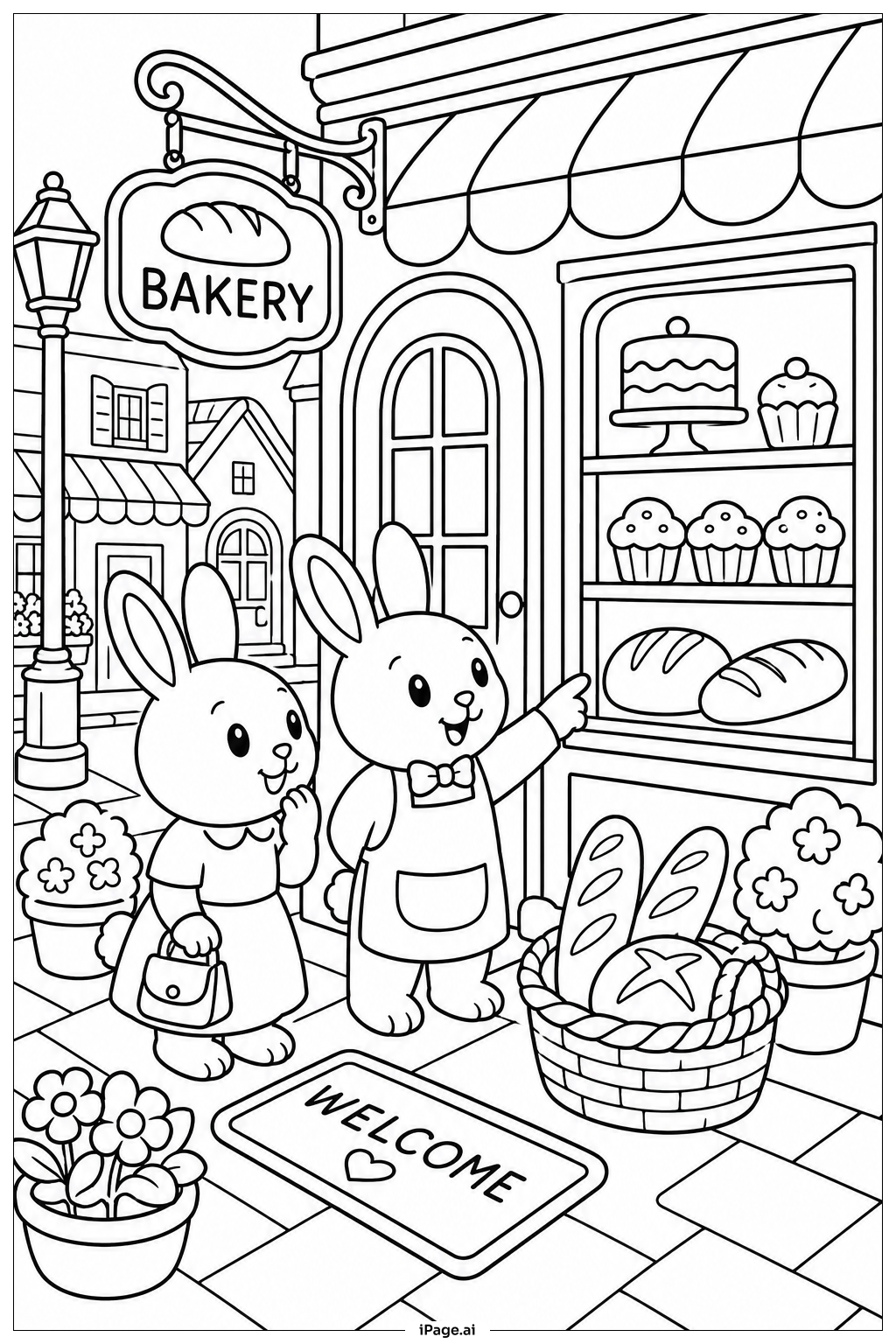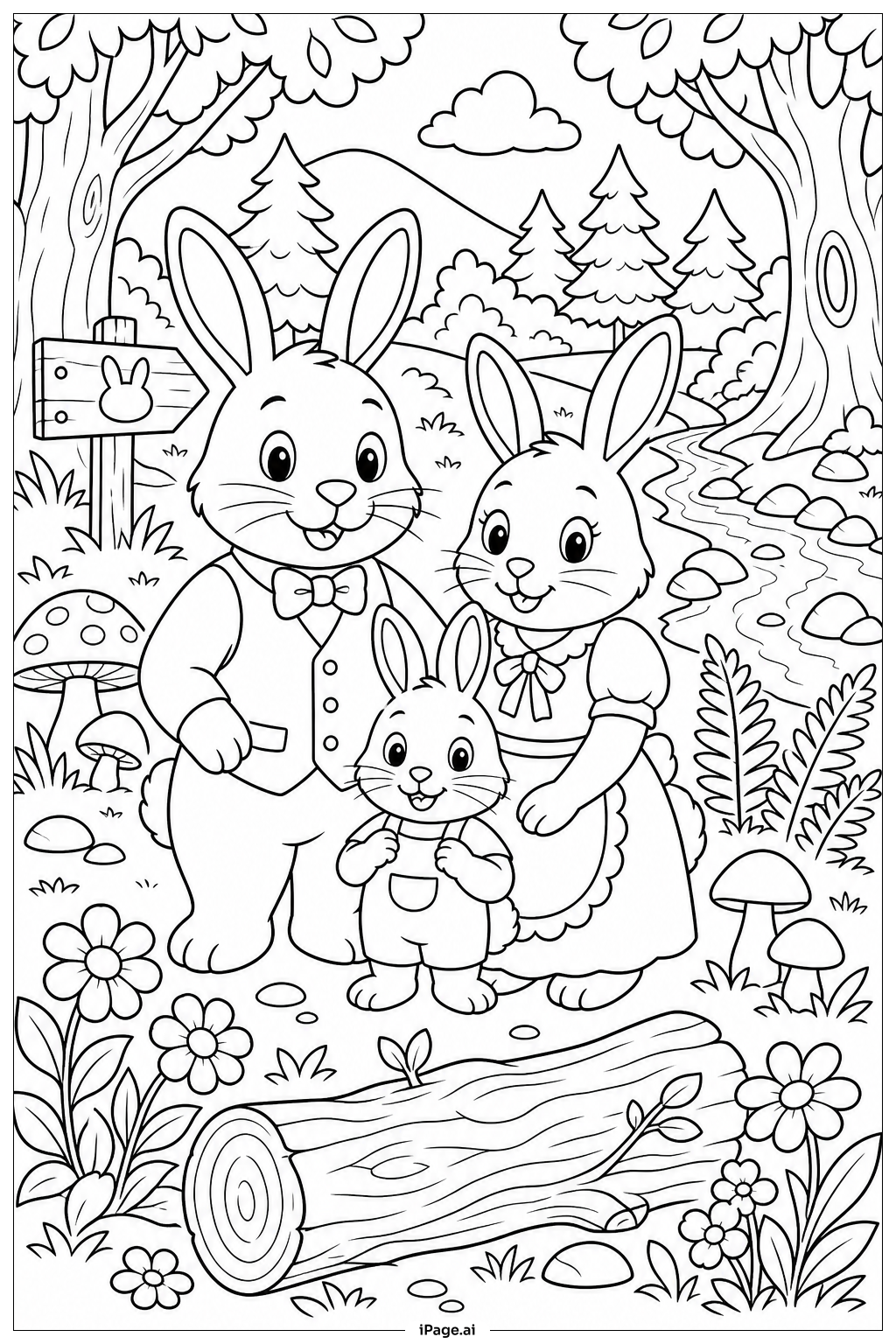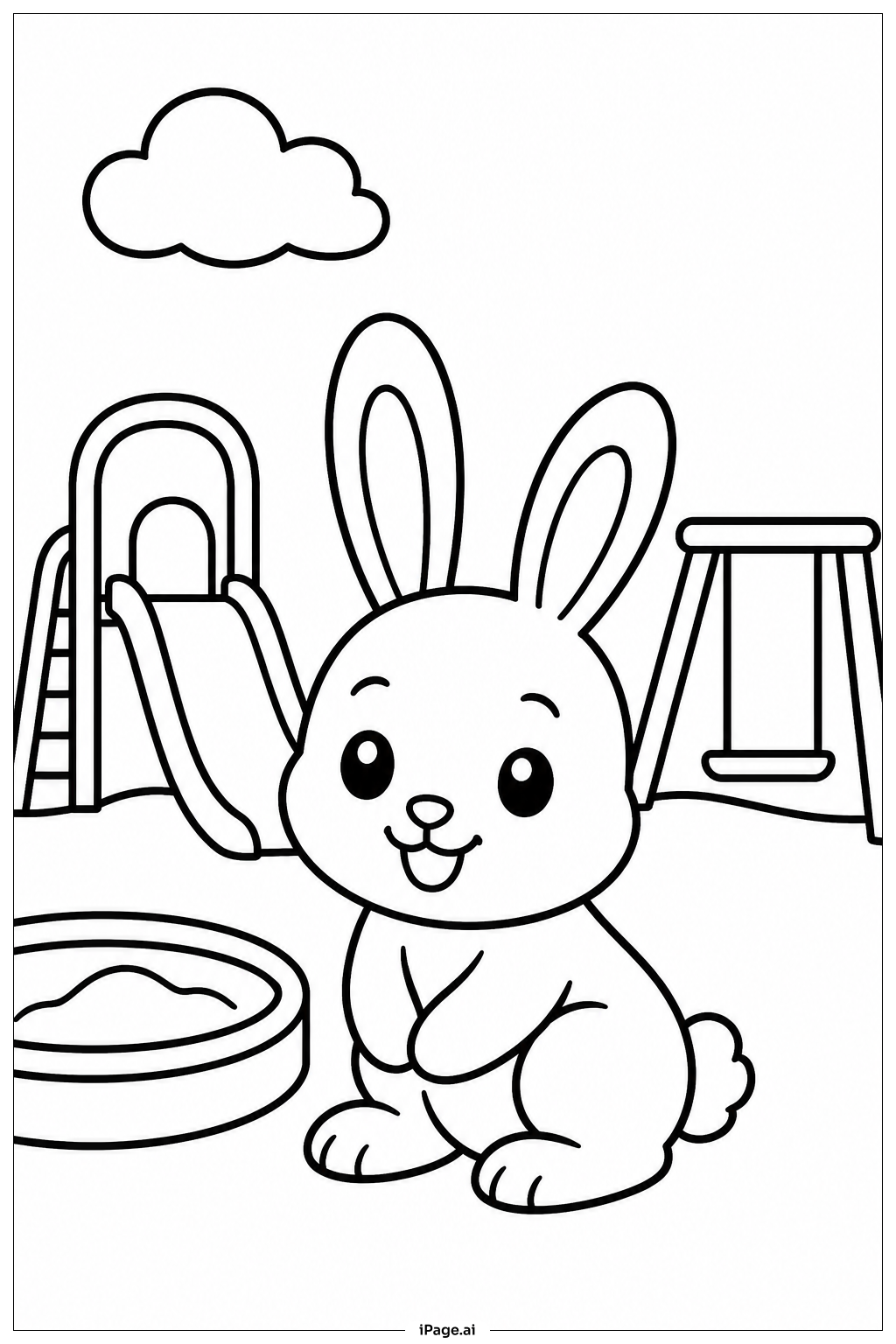
Coloring tips: How to color Rabbit At Playground coloring page well?
Start with the rabbit's body using a soft white or light gray. Add a warm pink to the inner ears and nose to give it a lifelike feel. For the playground equipment, think bold and bright — use red, yellow, and blue to make the swings and slide pop. The ground can be colored sandy beige or green for a grassy look. Paint the sky a gentle light blue and add white or pale yellow for the clouds. Use darker greens for any trees or bushes in the background. Feel free to mix and match colors to make the playground look as fun and exciting as possible. There are no wrong choices here — let your imagination lead the way and make this scene your own!
Coloring challenges: Which parts are difficult to color and need attention for Rabbit At Playground coloring page?
• Rabbit Fur Texture: The rabbit's body may look simple at first, but adding depth to the fur takes patience. Try using short, light strokes with a slightly darker shade around the edges of the body to create a soft, fluffy effect. Avoid filling it in with one flat color, as this can make the rabbit look stiff and two-dimensional.
• Small Facial Features: The rabbit's eyes, nose, and mouth are tiny details that require a steady hand. Using fine-tipped markers or sharpened colored pencils will help you stay inside the lines. The inner ears and cheeks also benefit from a gentle blush of pink, which needs careful blending so the color gradients look smooth and natural.
• Playground Equipment Details: The slide, swings, and climbing frame each have different parts — rails, chains, steps, and platforms. Keeping each part a distinct color while still making the whole scene look unified is a real challenge. Plan your color scheme ahead of time so contrasting colors sit next to each other without clashing.
• Background Depth: The trees, sky, and ground in the background need to feel further away than the rabbit and the equipment in the foreground. Using lighter, cooler tones in the background and warmer, richer tones in the foreground helps create a natural sense of depth and distance in the scene.
• Avoiding Color Bleed: When working in small spaces between the rabbit and the playground structures, it is easy for colors to bleed into each other. Work slowly and use a lighter touch near the edges to keep each section clean and clearly defined.
Benefits of coloring books: Advantages of drawing Rabbit At Playground coloring page
Coloring this Rabbit At Playground scene offers a wide range of benefits for children and young artists. First, it helps build fine motor skills. Carefully coloring the rabbit's small ears, facial features, and the playground equipment trains the hands and fingers to move with control and precision. Second, it encourages creativity. Choosing colors for the fur, the slide, the swings, and the sky lets kids express their own ideas and artistic vision. There are no rules — a purple rabbit on a rainbow slide is just as wonderful as a realistic one. Third, it supports focus and concentration. Staying inside the lines and planning a color scheme requires sustained attention, which is great practice for school and everyday tasks. Fourth, it is relaxing and joyful. The playful nature of the scene — a happy rabbit having fun outdoors — creates a positive emotional experience while coloring. It can reduce stress and bring a sense of calm. Finally, completing a finished piece builds confidence and a sense of pride, motivating kids to keep creating and exploring their artistic abilities.