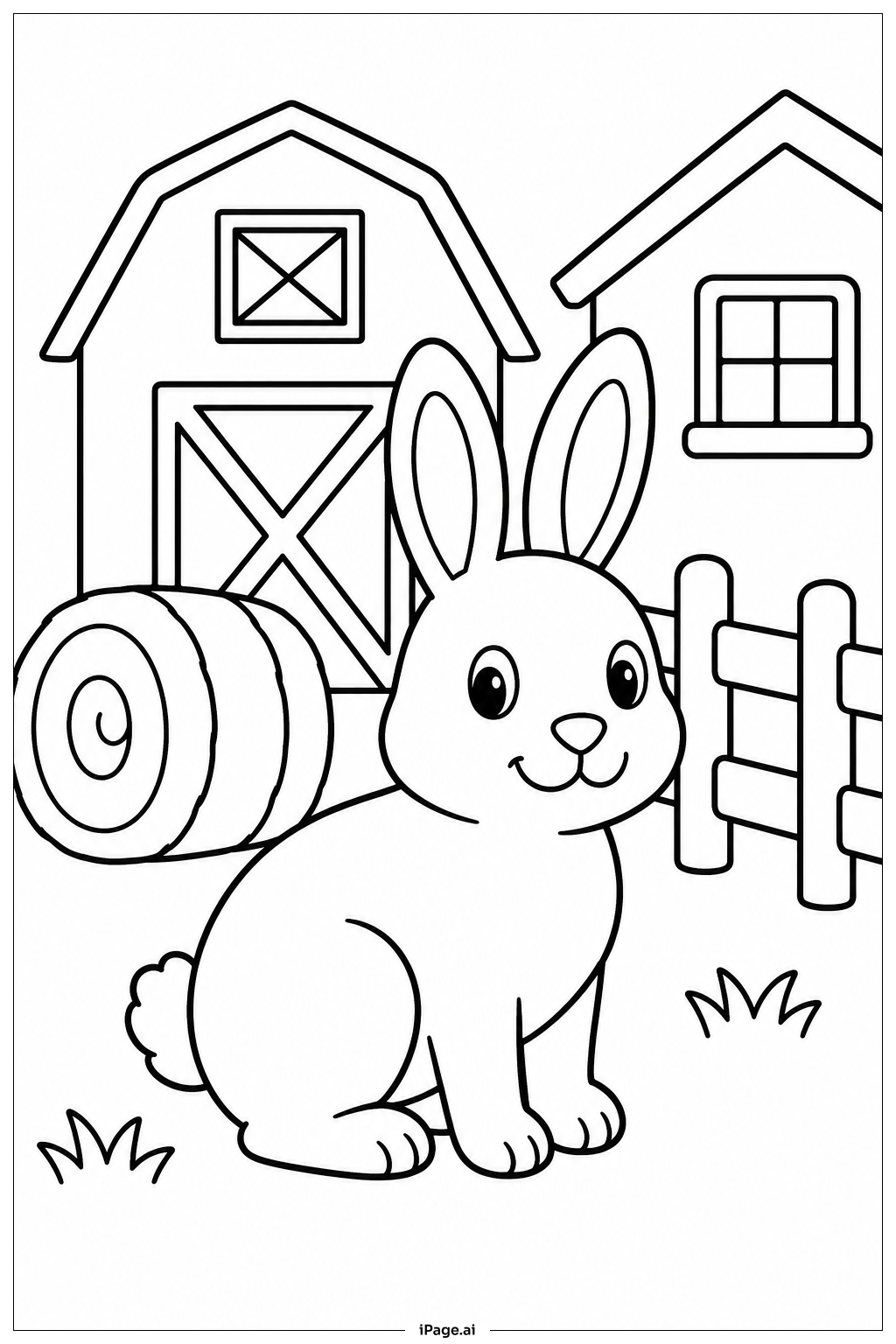
Coloring tips: How to color Rabbit At Farm coloring page well?
Start with the rabbit's body using soft, light colors. White, cream, or pale gray work great for the fur. Use a gentle pink for the inner ears, the nose, and the paw pads. Give the eyes a warm brown or deep black with a tiny white highlight to make them sparkle.
For the farm background, use earthy tones. Paint the fence in tan or light brown. Color the soil in warm shades of dark brown or orange-brown. Use bright greens for the grass and vegetable leaves. Add pops of orange for carrots, red for tomatoes, and yellow for sunflowers.
The barn in the distance can be colored red with a brown or gray roof. Use a bright blue or soft golden yellow for the sky to give the scene a cheerful, sunny feel.
Encourage kids to use many different shades within the same color family to add depth. Blending light and dark greens in the grass, for example, makes the scene feel more alive. Don't forget small details like the rabbit's whiskers — use a thin black or gray stroke for those.
Coloring challenges: Which parts are difficult to color and need attention for Rabbit At Farm coloring page?
• Rabbit Fur Texture: The rabbit's fluffy body requires careful shading to look soft and natural. Simply filling it with one flat color can make it look stiff. Try using short, light strokes going in the direction of the fur. Layering a slightly darker shade along the edges helps create a rounded, three-dimensional look. This technique takes patience, especially for younger children.
• Small Facial Details: The rabbit's face includes tiny features like the eyes, nose, whiskers, and smile. These areas are very small and close together, making precise coloring a challenge. Using a sharpened colored pencil or a fine-tipped marker is recommended. Staying inside the lines around the eyes without smudging the surrounding fur can be tricky.
• Layered Background Elements: The farm scene has multiple overlapping elements — the fence, crops, grass, barn, and sky all sit behind each other. Coloring these layers without accidentally blending colors across borders requires focus. It helps to color each layer separately and allow time to dry before moving to the next section.
• Vegetable and Plant Variety: The garden area features several different plants, each needing distinct colors. Keeping track of which leaf or stem belongs to which plant can be confusing. Looking closely at the shapes before choosing colors will help avoid mistakes.
• Consistent Light Source: To make the scene feel realistic and unified, all shadows and highlights should come from the same direction. Deciding where the sun is — for example, upper left — before starting helps maintain consistency across the rabbit, fence, barn, and ground throughout the entire image.
Benefits of coloring books: Advantages of drawing Rabbit At Farm coloring page
Coloring this rabbit farm scene offers a wide range of benefits for children and young artists.
First, it builds fine motor skills. Carefully filling in the rabbit's fur, the tiny vegetables, and the fence details trains hand muscles and improves pencil control — skills that support handwriting and everyday tasks.
Second, it sparks creativity. Choosing colors for the barn, the sky, and the rabbit's outfit encourages children to make their own artistic decisions. There is no wrong answer, and that freedom builds confidence.
Third, it teaches about nature and farm life. As children color the crops, soil, and animals, they naturally think about where food comes from and how farms work. It becomes a gentle, fun learning moment.
Fourth, coloring promotes focus and patience. Staying inside the lines, layering colors, and finishing a detailed image teaches children to slow down and concentrate — a valuable skill in everyday life.
Finally, it is calming. The repetitive, soothing motion of coloring reduces stress and anxiety. Completing the page gives children a real sense of accomplishment and pride. Whether done alone or with friends, this Rabbit At Farm Coloring Pages activity is a joyful, rewarding experience for Boys, Girls, and even Adults who enjoy a quiet creative moment.