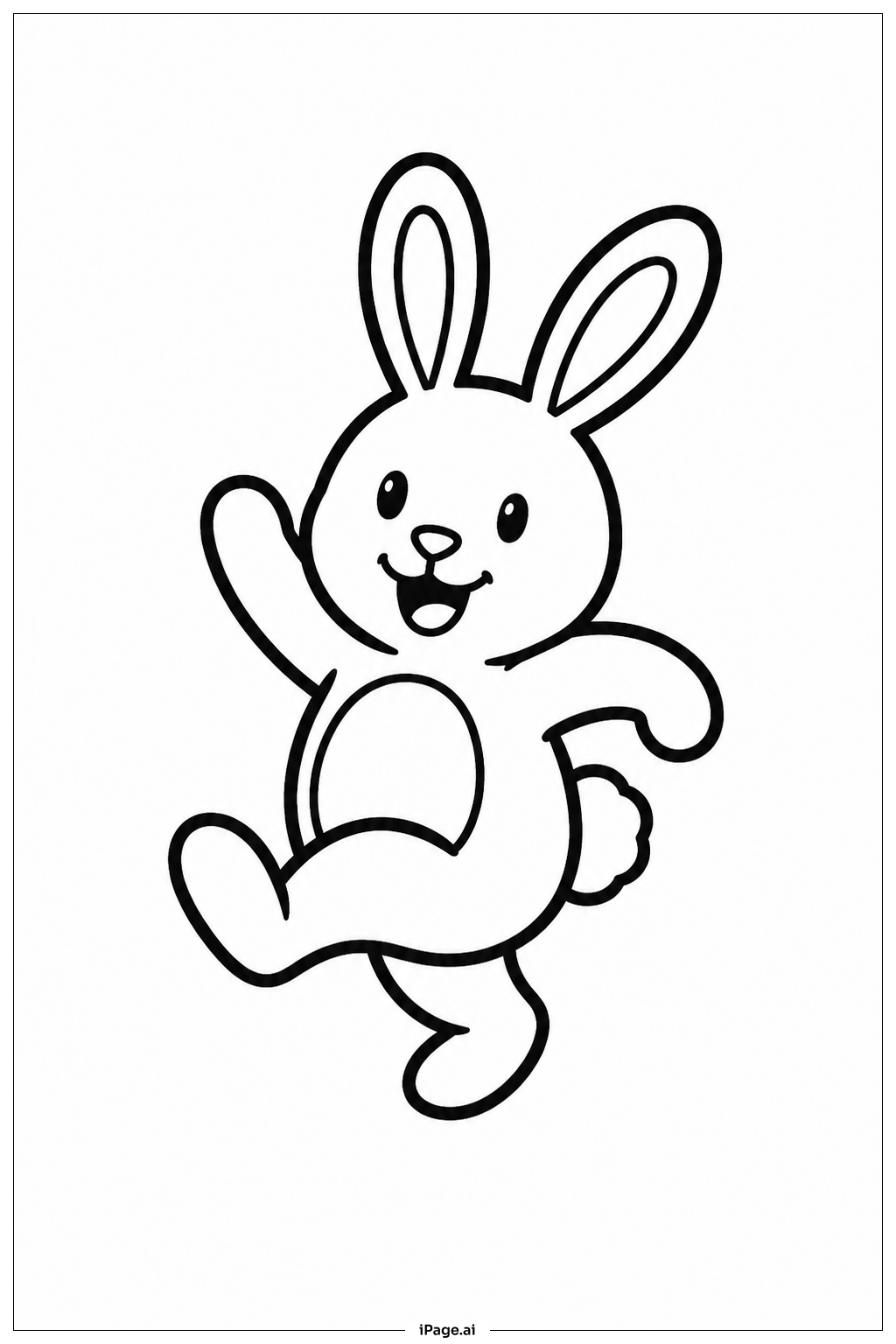
Coloring tips: How to color Dancing Rabbit coloring page well?
Start with the rabbit's body using a light base color — soft white, cream, or pale gray works beautifully. You can add a second, slightly darker shade on the inner ears and belly to create a natural look. For a fun twist, try a pastel pink or lavender to give the rabbit a magical, storybook feel. Use a warm peach or rosy pink inside the ears. Color the eyes with a deep brown or black, and add a tiny white dot to make them sparkle. For the background, think about where this rabbit might be dancing — a grassy meadow, a cozy stage, or a starry night sky. Use bright greens, sunny yellows, or cool blues to set the scene. Don't be afraid to mix colors and experiment with shading. Adding gentle shadows under the paws and along the body will make the rabbit look more three-dimensional and full of life.
Coloring challenges: Which parts are difficult to color and need attention for Dancing Rabbit coloring page?
• Fur Texture and Shading: Giving the rabbit's coat a natural, fluffy look can be tricky. You need to apply soft, layered strokes that follow the direction of the fur. Blending two or three close shades — like white, light gray, and cream — helps create depth without making the rabbit look flat or stiff.
• Inner Ear Coloring: The ears have a delicate inner area that calls for a softer, warmer tone compared to the outer fur. Keeping the color transition smooth between the outer ear and the inner pink section requires a careful, light hand, especially for younger colorists still building brush or pencil control.
• Expressive Facial Features: The rabbit's eyes, nose, and smile are small but important. These tiny details carry all the character and emotion of the image. Coloring them neatly without smudging or going outside the lines takes patience and a fine-tipped tool, such as a colored pencil or thin marker.
• Conveying Motion and Energy: The flowing lines around the rabbit suggest dancing and movement. Deciding how to color these motion lines — whether to leave them light, use a gradient, or match them to a glowing background — is a fun creative challenge that requires thinking about color temperature and contrast.
• Background Composition: The open background gives colorists freedom, but that can also feel overwhelming. Choosing colors that complement the rabbit without overpowering it takes some planning. Warm and cool color balance is key to making the dancing rabbit truly stand out as the star of the page.
Benefits of coloring books: Advantages of drawing Dancing Rabbit coloring page
Coloring this Dancing Rabbit page offers a wonderful mix of fun and learning for children of all ages. Filling in the rabbit's fur and details helps build fine motor skills and hand-eye coordination, as kids practice staying within lines and making controlled strokes. Choosing colors for the body, ears, and background encourages creative thinking and self-expression — there are no wrong answers here. The joyful, dancing subject also lifts the mood, making the coloring experience feel playful rather than like a task. For younger children, naming colors and deciding where to place them supports early language and cognitive development. For older kids, experimenting with shading and blending introduces basic art concepts in a relaxed, low-pressure way. The act of focusing on the page also promotes mindfulness and calm, helping children settle their thoughts and practice patience. Completing the finished piece gives a real sense of pride and accomplishment. Most of all, this page sparks imagination — kids can dream up the music the rabbit is dancing to, the world it lives in, and the story it is telling through its joyful moves.