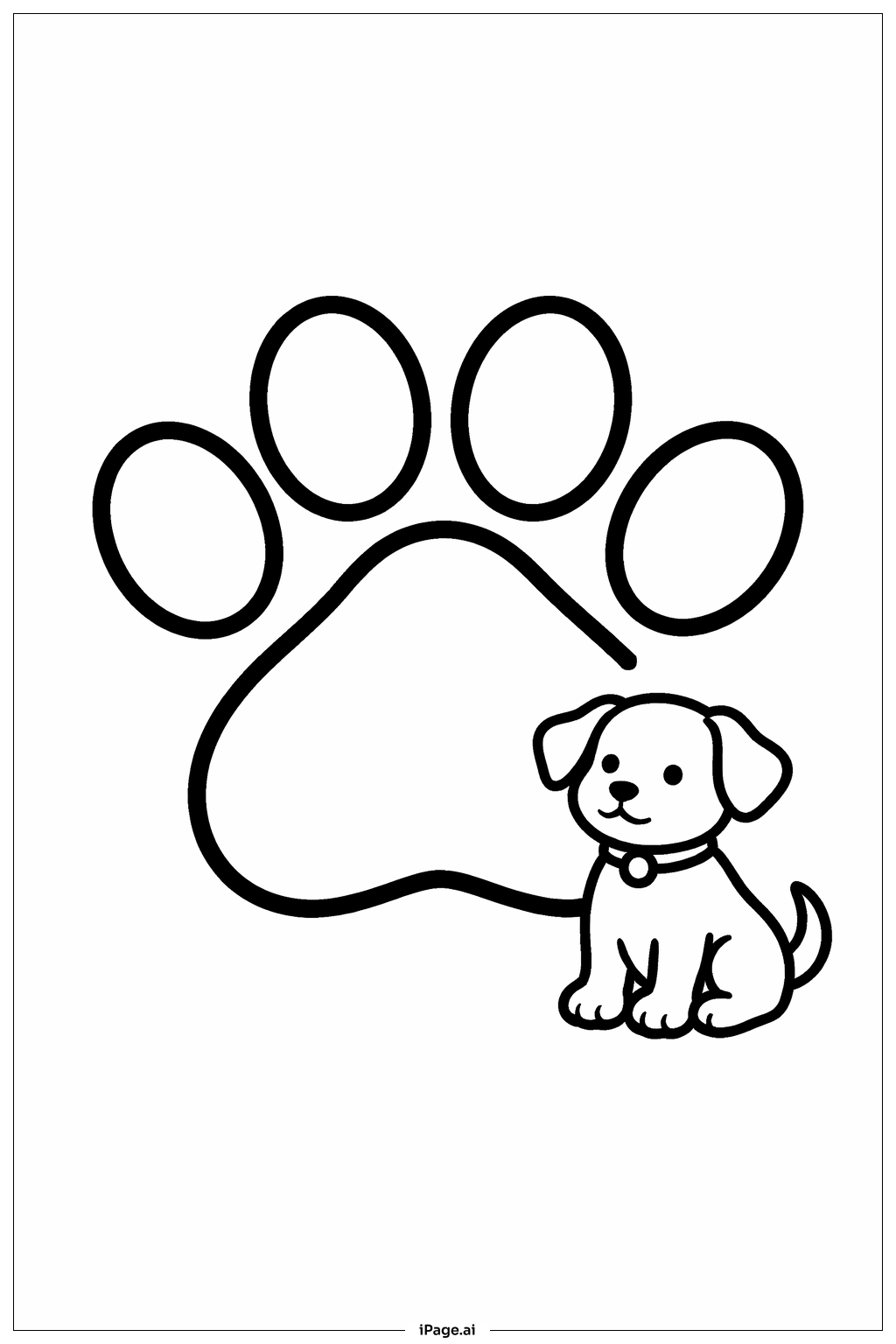
Coloring tips: How to color Puppy Paw Print coloring page well?
Start with the large central pad and use a warm, soft color like light pink, peach, or tan to fill it in. For the four smaller toe pads, you can use the same color to keep things uniform, or pick slightly different shades to add variety and depth. If you want a more playful look, try using pastel purple, baby blue, or soft lavender for the toe pads. Leave a small highlight spot uncolored or use white to give each pad a plump, glossy appearance. For any decorative hearts or stars around the paw, bright colors like red, yellow, or orange work great. You can also add a light background color such as sky blue or mint green to make the paw print stand out. Use colored pencils for smooth blending or markers for bold, vivid results. Have fun and make it your own!
Coloring challenges: Which parts are difficult to color and need attention for Puppy Paw Print coloring page?
• Staying Inside the Curved Lines: The paw pads have soft, rounded outlines that curve in multiple directions. It can be tricky to follow these curves neatly, especially for younger colorists. Using a fine-tipped tool near the edges before filling in the center helps keep colors inside the lines cleanly.
• Coloring Small Toe Pads Evenly: The four toe beans at the top are noticeably smaller than the main pad. Fitting color into these tight spaces without going over the edges requires patience and a sharpened pencil or a fine marker tip. Rushing this step often leads to uneven patches or color bleeding outside the shapes.
• Creating Depth and Dimension: A flat, single-color fill can make the paw look dull. Adding subtle shading around the edges and a lighter tone in the center gives each pad a rounded, three-dimensional look. This technique takes practice and a steady hand, especially for beginners who are just learning how to blend colors gradually.
• Blending Multiple Colors Smoothly: If you choose to use more than one color, blending them so they transition naturally without harsh lines is a real challenge. Layering light strokes and working from light to dark helps, but it requires time and careful pressure control.
• Keeping Decorative Details Neat: Any surrounding stars, hearts, or small paw trail accents are tiny and detailed. Coloring these small elements without accidentally smudging the nearby areas demands extra attention and a fine, controlled touch.
Benefits of coloring books: Advantages of drawing Puppy Paw Print coloring page
Coloring this puppy paw print page brings a wonderful mix of fun and learning for kids and beginners alike. The simple, recognizable shape of a paw print makes it an approachable and encouraging design, especially for younger children who are just getting started with coloring activities.
Working through this page helps develop fine motor skills as children carefully trace and fill the rounded outlines of the pads. Gripping a crayon or pencil and staying within the curved lines strengthens hand muscles and improves coordination, skills that also support handwriting.
Choosing colors for the paw pads encourages creative thinking and self-expression. Kids get to make their own artistic decisions, which builds confidence and a sense of ownership over their work.
The calm, repetitive motion of coloring also has a soothing effect. It helps children slow down, focus, and practice patience, making it a great quiet-time activity after a busy day.
For animal lovers, this design adds an extra layer of emotional connection. Coloring something that reminds them of a beloved puppy can spark joy, storytelling, and imaginative play.
Overall, this page is a simple but powerful tool for building creativity, focus, and fine motor development while delivering plenty of smiles along the way.