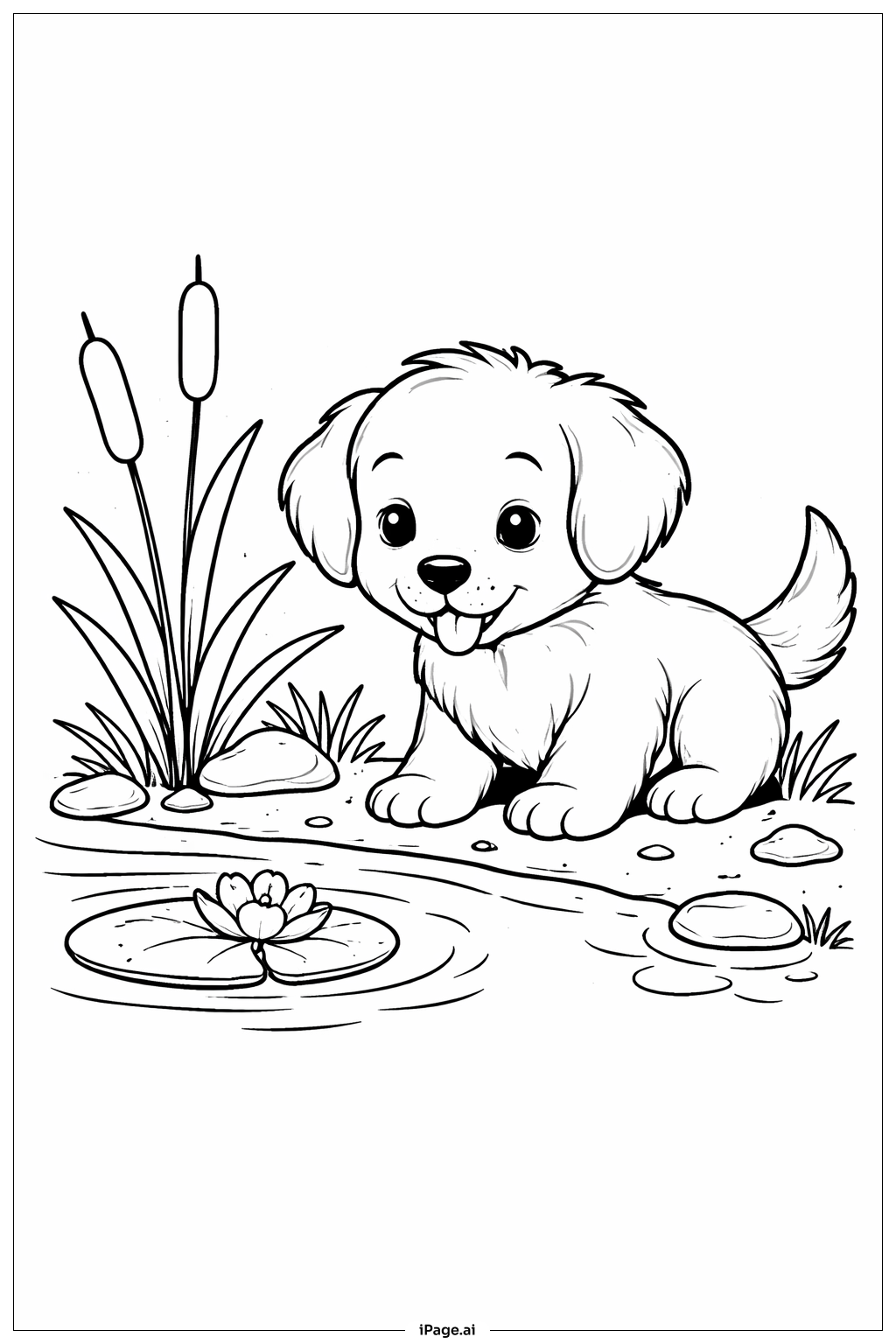
Coloring tips: How to color Puppy At Pond coloring page well?
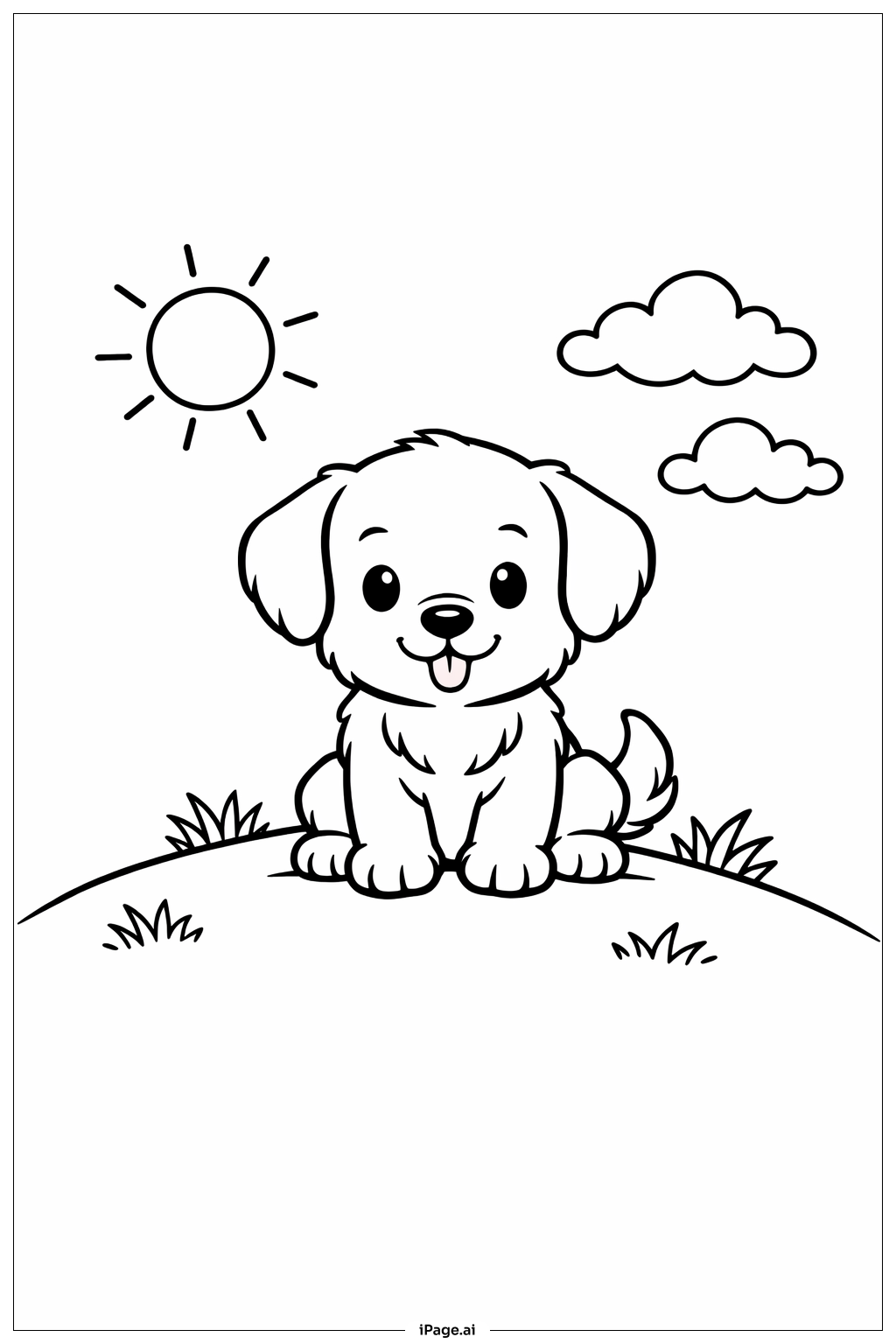
Start with the puppy as your focal point. Consider warm browns, golden yellows, or even playful colors like cream or tan for the fur. The eyes can be bright blue, brown, or green to add personality. For the nose, use black or dark brown. The pond offers wonderful opportunities for blues and greens—try lighter blues for the water and darker shades for depth. Lily pads look beautiful in various shades of green, from lime to forest green. Color the cattails in rich browns with touches of tan. The reeds and grasses can be different green tones to create variety. Make the hills in the background soft greens or even purple for distance. The sun can be bright yellow or orange, with the sky in light blue, pink, or lavender. Don't forget to add shadows under the puppy and lily pads for dimension.
Coloring challenges: Which parts are difficult to color and need attention for Puppy At Pond coloring page?
• Puppy Fur Texture: Creating realistic fur texture requires careful color blending and layering techniques. Young colorists may find it challenging to show the fluffy quality of the puppy's coat using directional strokes that follow the fur's natural flow. Building up layers from light to dark helps achieve depth and dimension in the fur.
• Water Surface Details: The pond presents unique challenges because water requires showing both transparency and reflection. Colorists need to balance lighter and darker blue tones to suggest depth, while leaving some areas lighter to indicate reflections and surface ripples. The interaction between water and lily pads adds complexity to the shading work.
• Depth and Distance: This scene contains multiple layers from foreground to background, requiring an understanding of atmospheric perspective. The puppy should appear closest and most vibrant, while the hills in the distance need softer, lighter colors to show they are farther away. Managing this gradual color transition challenges spatial awareness skills.
• Small Detailed Elements: The cattails, reeds, and lily pads contain fine lines and small spaces that require precision and steady hand control. Younger children may struggle with staying within these narrow boundaries, while the repetitive nature of coloring multiple similar elements like reeds demands patience and consistency throughout the image.
Benefits of coloring books: Advantages of drawing Puppy At Pond coloring page
Coloring this puppy at pond scene offers wonderful developmental benefits for children. It helps improve fine motor skills and hand-eye coordination through careful coloring within lines and detailed areas. The variety of elements—from the puppy's fur to the pond plants—encourages creative color choices and artistic expression. Children learn about nature and animals while engaging with the peaceful outdoor setting. The scene promotes emotional calm and mindfulness as they focus on bringing the tranquil landscape to life. Working with different textures like fur, water, and plants builds observation skills and attention to detail. Completing this charming picture builds confidence and provides a sense of accomplishment. The image also offers opportunities to discuss pets, nature, and outdoor environments, expanding vocabulary and knowledge while having fun with colors.