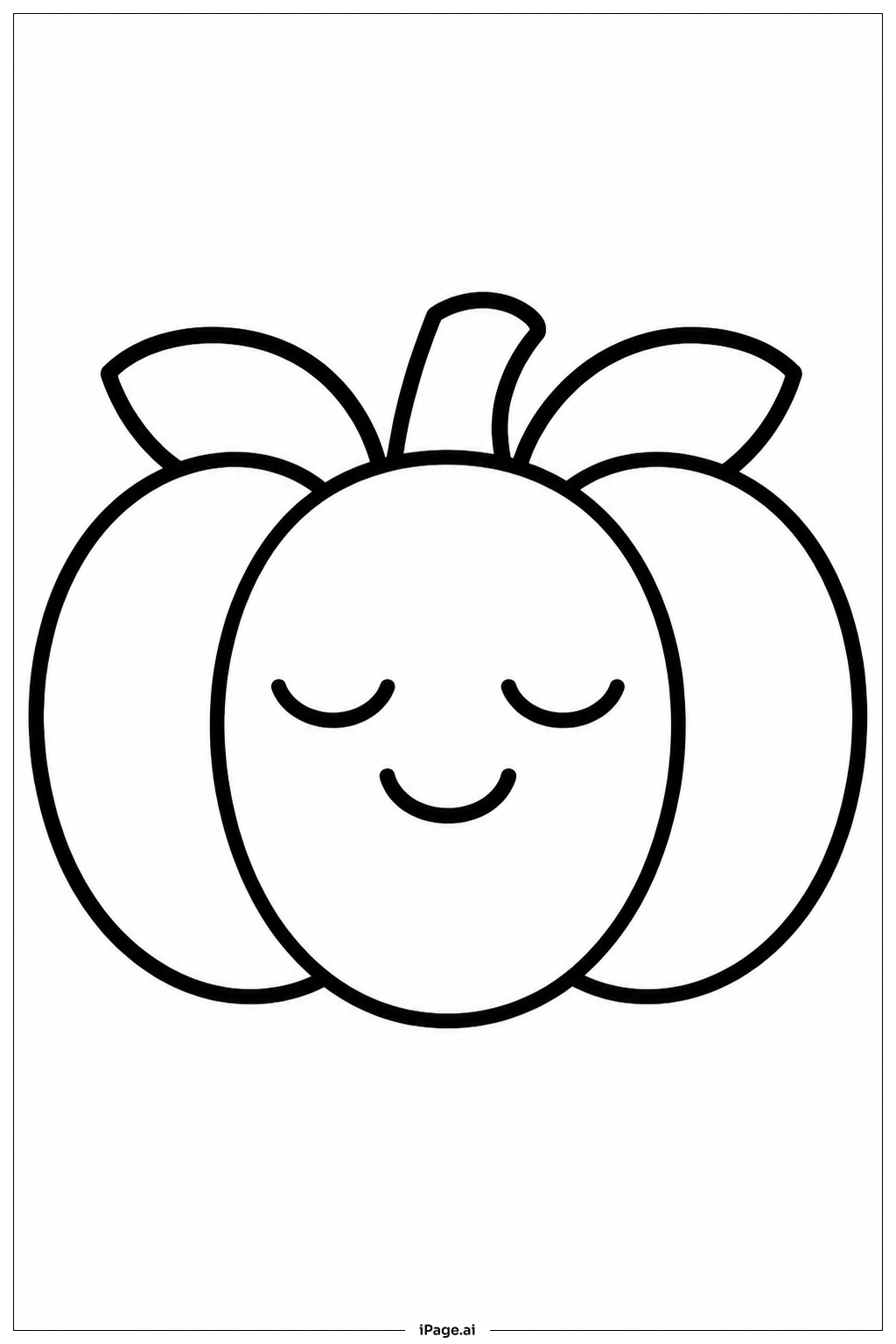
Coloring tips: How to color Sleeping Pumpkin coloring page well?
Start with the pumpkin's body using shades of orange. You can use a bright orange for the raised ridges and a slightly darker orange or burnt sienna in the deeper grooves to create a rounded, three-dimensional look. For the stem, try brown or dark green. The small leaf looks lovely in bright or olive green. Color the closed eyes and smile with a warm dark brown or black. The "Z" sleep bubbles can be colored in soft lavender, light blue, or pale yellow to give them a dreamy feel. If there is a background, use soft nighttime colors like deep blue, purple, or a starry sky to set a cozy sleeping mood. Feel free to add your own stars or moon to complete the dreamy scene. Use light, gentle strokes throughout to keep the image feeling soft and peaceful, just like a good night's sleep.
Coloring challenges: Which parts are difficult to color and need attention for Sleeping Pumpkin coloring page?
• Pumpkin Ridge Shading: The pumpkin body has multiple curved ridges that require careful shading to look three-dimensional. Coloring each ridge section with slightly different tones of orange — lighter on the top curves and darker in the valleys — takes patience and a steady hand. Young colorists may find it tricky to stay within the narrow ridge lines without blending colors together.
• Tiny Facial Features: The sleeping face includes small closed eyes, curved eyelashes, and a gentle smile. These details are quite small and delicate. Using the tip of a colored pencil or a fine-tipped marker is important here. Pressing too hard or using a thick tool can easily smear or cover these fine lines, making the expression look unintended.
• Curly Stem and Leaf: The stem on top of the pumpkin is thin and curvy, and the small leaf has its own vein details. Staying inside these narrow, winding shapes requires good control, especially for younger children. Choosing the right green shades and avoiding overlap with the orange body adds an extra layer of difficulty.
• Floating "Z" Shapes: The small "Z" letters or bubbles floating near the pumpkin represent sleep sounds. They are small and oddly shaped, making them hard to color neatly. Deciding on a color that stands out from the background without clashing with the pumpkin takes some planning ahead.
• Background Blending: Creating a smooth, dreamy nighttime background requires blending colors gradually. Achieving a seamless gradient from dark blue to purple, or adding soft glow around a moon, can be challenging without smearing or creating harsh lines.
Benefits of coloring books: Advantages of drawing Sleeping Pumpkin coloring page
Coloring this Sleeping Pumpkin page offers a wide range of benefits for kids and beginners alike. The image's soft, rounded shapes make it a gentle introduction to shading and blending, helping children develop early art skills in a fun and stress-free way.
Working on the pumpkin's ridges teaches kids about light and shadow, encouraging them to think about how colors can make flat shapes look round and real. This builds visual thinking and spatial awareness over time.
The small facial details — the closed eyes and tiny smile — require focused, careful work. This kind of concentration strengthens fine motor skills and improves hand-eye coordination, which supports handwriting and other precise tasks.
The dreamy theme of the image — sleep, cozy nights, and quiet moments — has a naturally calming effect. Coloring this page can help children wind down, reduce anxiety, and enter a more relaxed state of mind, making it a great activity before bedtime.
Choosing colors for the background, the "Z" bubbles, and the stem encourages creative decision-making and self-expression. There are no wrong answers, which builds confidence and a love of art. Overall, this page is a wonderful blend of gentle challenge and joyful creativity.