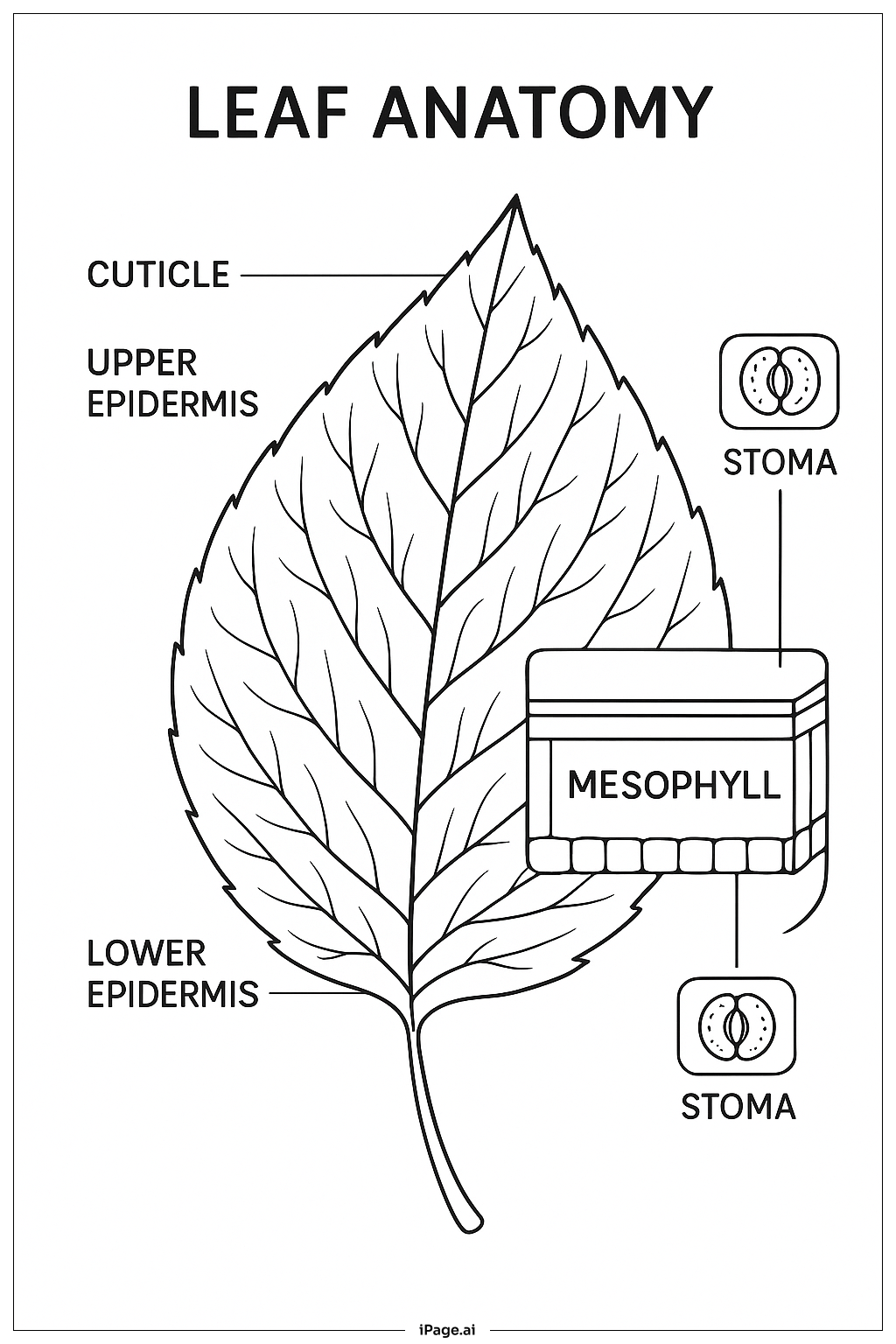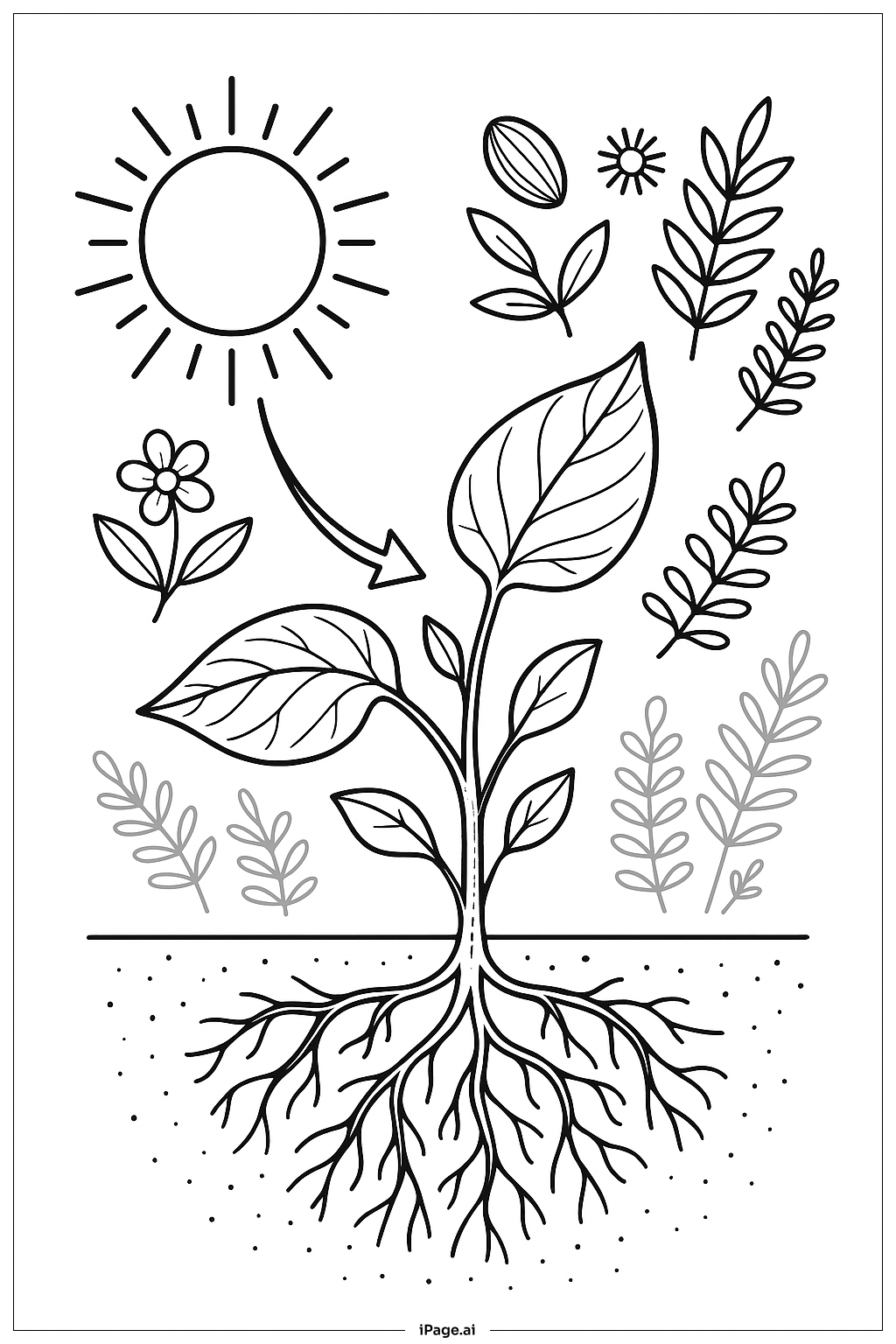
Coloring tips: How to color Photosynthesis Plant and Butterfly coloring page well?
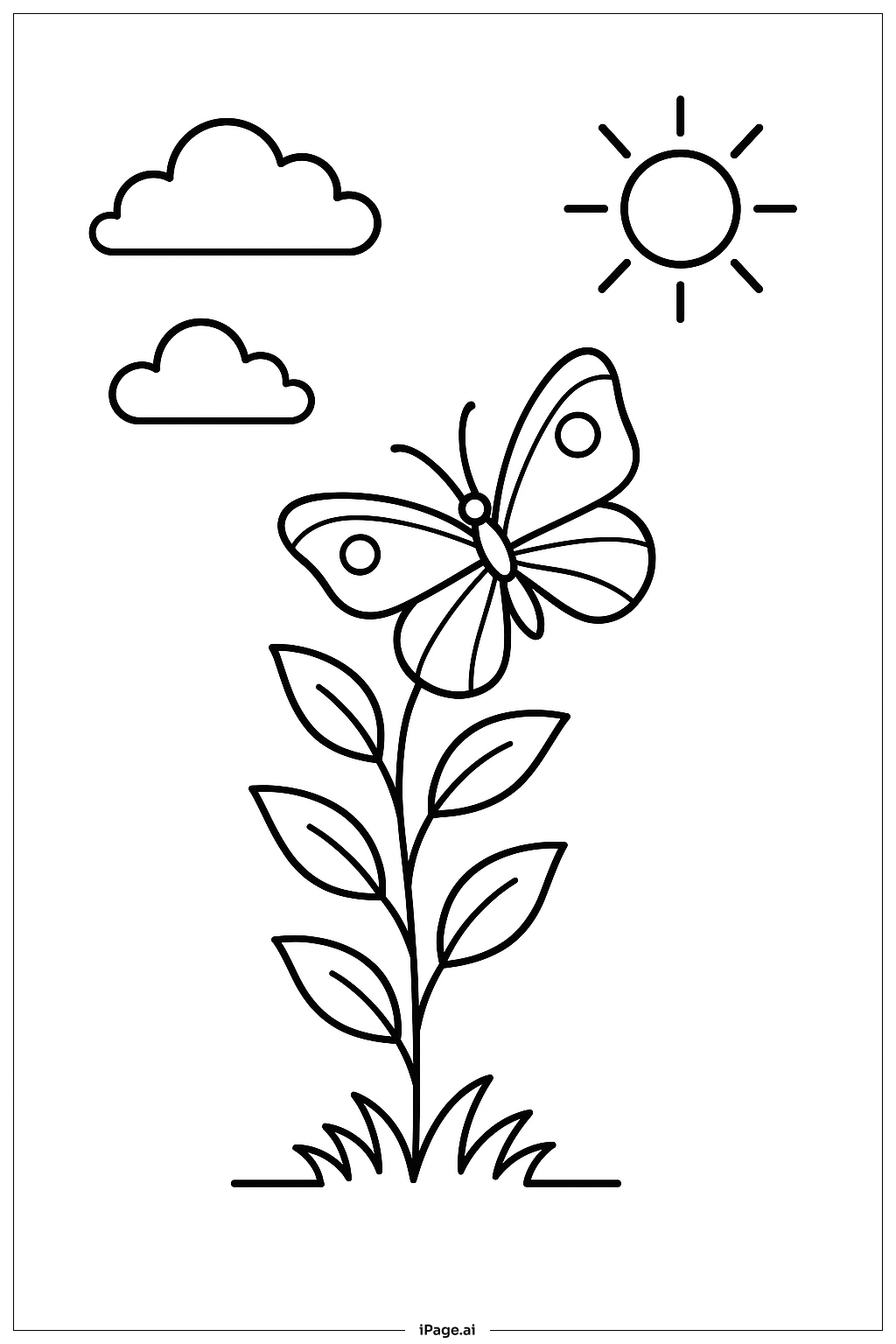
Use bright green shades for the plant's leaves and stem to show it is healthy. Color the butterfly with vibrant colors like orange, yellow, or purple to make it stand out. The sun can be bright yellow or orange, representing sunlight. The clouds can be light blue or white with some soft shading to add depth. The grass at the bottom can be colored in a darker green. Try to use different shades for each part to make the picture colorful and lively. Using crayons or colored pencils will help add texture and different tones.
Coloring challenges: Which parts are difficult to color and need attention for Photosynthesis Plant and Butterfly coloring page?
1. Coloring the butterfly wings evenly can be hard because of the small sections and patterns. It needs careful attention to not color outside the lines. 2. The leaves are close together, so it might be tricky to fill each leaf without mixing colors accidentally. 3. Adding shading to the sun and clouds can be difficult for younger kids, as it requires gradual color changes. 4. Maintaining neatness along the thin plant stem can be challenging because the stem is narrow. 5. Using different green shades for leaves and grass while keeping the color natural might be tricky for beginners.
Benefits of coloring books: Advantages of drawing Photosynthesis Plant and Butterfly coloring page
Coloring this picture helps children learn about plants and butterflies in a fun way. It improves hand-eye coordination and fine motor skills through careful coloring. Working on the butterfly and leaves teaches patience and attention to detail. Using different colors encourages creativity and imagination. The sun and clouds help children understand nature and the importance of sunlight for plants. Overall, coloring this page can make learning about photosynthesis interesting while building artistic skills.